
Body Care
The New ‘Futurama’ Trailer Just Dropped A Hilarious Joke About the Death of America
May
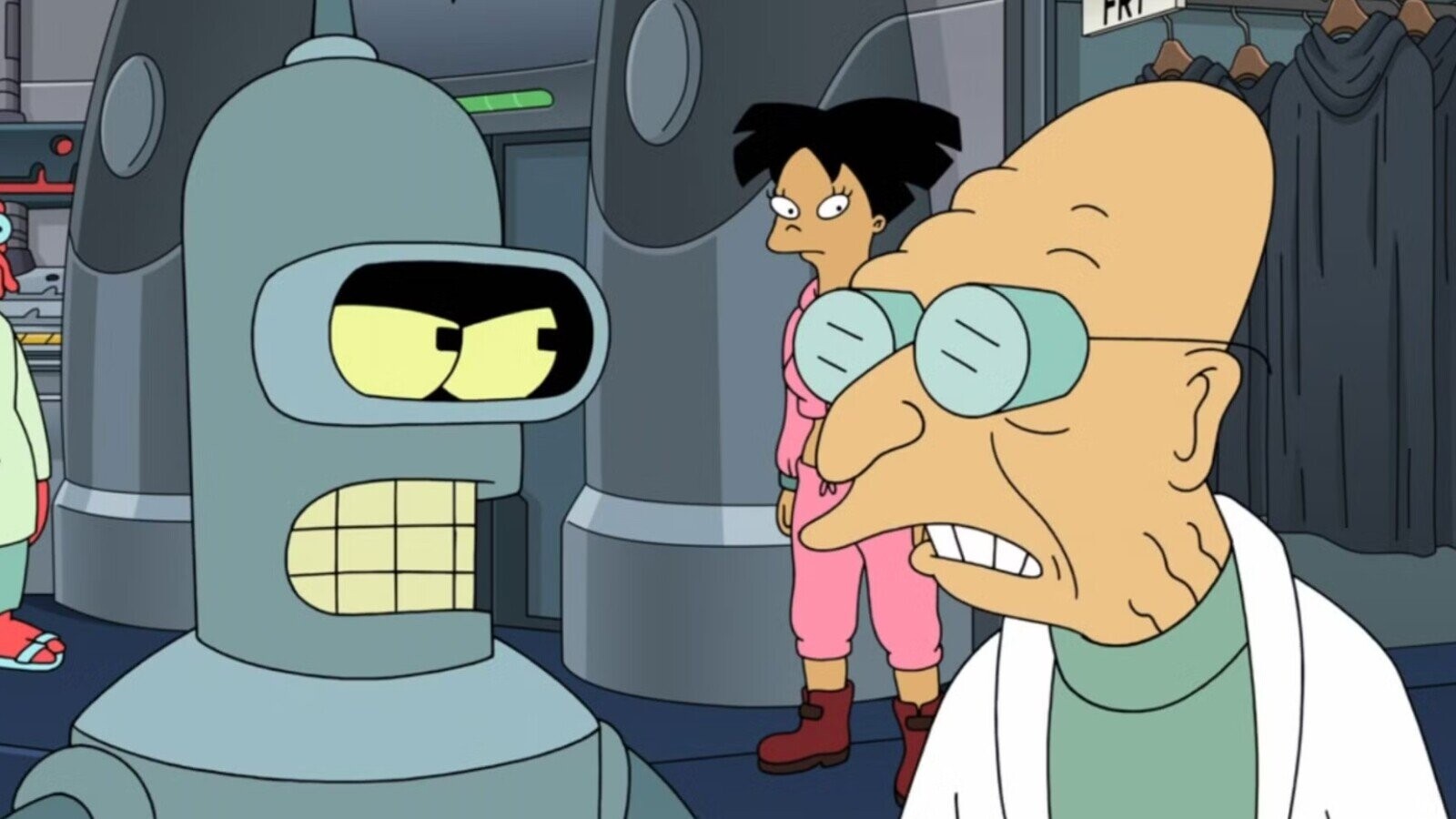
Good news, everyone: Futurama has once again looked at the modern world, squinted through a thousand years of sci-fi nonsense, and decided the most reasonable punchline is the collapse of the United States. In the new Futurama Season 13 trailer, Hulu’s beloved animated comedy tosses out a joke so casually dark that fans practically had to pause, rewind, and check whether Professor Farnsworth had just turned national decline into a branding opportunity.
The joke arrives in classic Futurama fashion: fast, weird, and more politically loaded than a Nixon head in a jar. Hermes Conrad sees an ancient electronics port and asks, “What’s USB?” Professor Farnsworth’s answer points toward a future where the United States has apparently fallen, only to be followed by something called “Bamerica.” It is a tiny gag, but like the best Futurama jokes, it opens a trapdoor under the audience. One second, you are laughing at outdated technology. The next, you are thinking, “Wait, did this cartoon just predict America 2.0?”
That is the magic trick. Futurama has always been funniest when it treats huge disasters like routine paperwork. The fall of civilization? Put it in a throwaway line. Global instability? Add a robot. Historical collapse? Make it sound like a software update. The new trailer proves that even after cancellations, revivals, streaming shifts, and enough timeline confusion to make Fry’s family tree file a formal complaint, the show still knows how to turn anxiety into absurd comedy.
Why the “Death of America” Joke Feels So Perfectly Futurama
The joke works because Futurama has never viewed the future as sleek, clean, or spiritually evolved. New New York is not utopia. It is the same old human mess with better rockets, worse bureaucracy, mutant sewer communities, and vending machines that may or may not have strong opinions about your skeleton.
So when Professor Farnsworth implies that the USA eventually collapses and gets replaced by “Bamerica,” the joke does not feel like a shocking departure. It feels like world-building. Of course the country would collapse. Of course someone would slap a silly name on the sequel. Of course future citizens would discuss it while standing near a forgotten USB port like archaeologists studying a sacred rectangle.
This is the show’s signature move: it makes catastrophe sound normal. The future is full of aliens, heads in jars, robot crime, corporate greed, and public policy written with the emotional intelligence of a malfunctioning toaster. Yet nobody stops to scream, “How did society get this bad?” They just clock in, deliver a package, and try not to get eaten.
Season 13 Looks Like Classic Chaos With a Streaming-Era Pulse
The official Season 13 trailer is not just a single America-collapse joke machine. It also teases a larger batch of adventures: Bender rampaging out of control, a volcano preparing to ruin everyone’s day, Fry facing a rival for Leela’s love, and Dr. Zoidberg apparently rising toward heaven. That last one alone deserves a full congressional hearing, preferably conducted by a lobster with tenure.
The season continues the Hulu revival era of Futurama, which began in 2023 and brought the Planet Express crew back into the modern streaming ecosystem. Season 13 premiered on September 15, 2025, with all 10 episodes available on Hulu at once, while FXX offered a more traditional weekly rollout. That release strategy is oddly appropriate for the show: a binge-drop for viewers who want the future immediately, and a cable schedule for those who prefer their robot disasters in measured portions.
The returning voice cast also keeps the show tied to its original identity. Billy West is back as Fry, Professor Farnsworth, and Zoidberg; John DiMaggio returns as Bender; Katey Sagal voices Leela; Lauren Tom returns as Amy; Phil LaMarr voices Hermes; Maurice LaMarche voices Kif; Tress MacNeille voices Mom; and David Herman returns as Scruffy and other wonderfully odd characters. That continuity matters because Futurama is not just a pile of sci-fi jokes. It is a rhythm, a sound, and a very specific kind of controlled nonsense.
The Trailer’s Best Trick Is Turning Political Anxiety Into a Silly Future Fact
The “collapse of the USA” gag lands because it does not lecture. It does not deliver a speech. It simply assumes history got weird and moved on. That is often how Futurama handles satire. The show rarely says, “Here is the moral of the episode, please underline it in your notebook.” Instead, it builds a future where today’s problems have mutated into punchlines.
That approach is why the show can joke about politics, capitalism, technology, climate, celebrity, and bureaucracy without becoming a stiff editorial cartoon. The satire hides inside absurd details. A giant robot may be destroying a city, but the joke might actually be about insecurity. A sci-fi invention may bend space-time, but the real target might be consumer culture. A silly nation called Bamerica may sound like a goofy word game, but it hints at how fragile national myths can look when seen from a thousand years away.
That distance is powerful. By setting the story in the 31st century, Futurama makes present-day fears look both enormous and ridiculous. It says, “Yes, everything might collapse, but future people will still have meetings, snack preferences, relationship drama, and at least one robot committing tax-adjacent crimes.” In other words: history is terrifying, but also deeply stupid.
Why Fans Are Responding to the Joke
Fans love Futurama jokes that do more than make noise. The best gags have layers. The USB moment starts as a technology joke, then becomes a history joke, then becomes a political joke, then becomes a classic Professor Farnsworth “I probably should not have said that so casually” moment. It rewards people who are paying attention without requiring a research degree in fictional geopolitics.
It also feels timely. American audiences in the mid-2020s have been living through a period of intense political division, institutional distrust, economic stress, and doom-scrolling so aggressive it should probably require protective eyewear. A joke about the “death of America” could easily feel heavy-handed. Futurama avoids that by making the punchline tiny, quick, and ridiculous. It is not a sermon. It is a sci-fi shrug.
That is why the joke feels less like “America is doomed” and more like “humanity will survive by making terrible names for things.” The phrase “Bamerica” is funny because it sounds both lazy and plausible. If history really did produce a successor nation, someone absolutely would name it like a startup that ran out of vowels during the branding meeting.
Futurama Has Always Been About Failed Futures
One reason this trailer joke fits so neatly is that Futurama has never been a clean fantasy of progress. The show begins with Fry being cryogenically frozen and waking up in the year 3000, only to discover that the future is not a shining paradise. It is full of work, debt, danger, laziness, romance, bureaucracy, and questionable food. Basically, the future has spaceships, but it still has Mondays.
This is central to the show’s appeal. Star Trek often imagines humanity improving itself. Futurama imagines humanity improving its gadgets while remaining emotionally identical. People still fall in love with the wrong person. Bosses still make bad decisions. Politicians are still weird. Corporations are still greedy. Delivery jobs are still stressful. The universe expands, but the human attention span remains roughly the size of a microwave burrito.
That worldview makes the death-of-America joke sharper. The show is not simply predicting doom. It is joking that even after huge historical transformations, society may keep recycling the same patterns. Maybe the USA falls. Maybe Bamerica rises. Maybe everyone still has to fill out forms in triplicate while a robot steals office supplies.
What the Trailer Suggests About Season 13’s Tone
Based on the trailer, Season 13 appears to lean into the familiar blend of absurd sci-fi spectacle, relationship comedy, topical commentary, and character-driven silliness. There are giant threats, emotional rivalries, bizarre transformations, and enough high-concept weirdness to remind fans that Futurama is at its best when the writers ask, “What if a stupid joke had a PhD in physics?”
The trailer’s political gag also suggests the show is still willing to take big swings. Not every Hulu-era episode has landed perfectly with every viewer, and longtime fans have debated whether the revival can match the emotional and comedic highs of the classic run. That debate is fair. When a show has episodes as beloved as “Jurassic Bark,” “The Luck of the Fryrish,” and “The Late Philip J. Fry,” new material has to compete with nostalgia wearing rocket boots.
Still, the new trailer offers a reassuring sign: the show remembers how to compress a whole dystopian timeline into one joke. That is not easy. Many comedies explain too much. Futurama trusts the audience to catch the absurdity flying by at Planet Express speed.
The Bamerica Joke Is Also a Great Example of Background World-Building
In lesser sci-fi, the collapse of a major country would require a five-minute exposition dump, a map, and someone named Commander Stone explaining “the old wars.” Futurama does it with a blink-and-you-miss-it line. That is smarter than it looks.
World-building does not always need a history textbook. Sometimes it works best as a joke that implies a larger story. “Bamerica” instantly raises questions. What happened to America? Was there an America 2? Did Bamerica have a flag? Did it still have Florida? Did Florida somehow become president? These questions are funny because the show does not answer them. The gap is where the comedy lives.
This technique has been part of Futurama from the beginning. The show constantly drops hints about wars, disasters, inventions, alien politics, and social changes without stopping the episode dead. It makes the universe feel lived-in, broken-in, and slightly sticky. The future is not built only from grand lore. It is built from throwaway jokes that suggest centuries of absurdity happened offscreen.
Why the Joke Works for SEO Readers and Pop Culture Fans
For viewers searching for “new Futurama trailer,” “Futurama Season 13 trailer,” or “Futurama death of America joke,” this moment is the perfect hook because it combines three things people love to click on: nostalgia, satire, and mild national dread. That is a spicy content burrito. Handle carefully.
The joke also gives casual viewers a reason to care beyond the usual “new season coming soon” announcement. Trailers often blur together: explosions, returning characters, dramatic music, one quick joke, logo, release date. This trailer stands out because the joke feels like something only Futurama would do. It is topical without being trapped in a single news cycle. It is political without naming a politician. It is dark without becoming joyless.
That balance is difficult. A joke about national collapse can easily become either too bleak or too vague. Futurama makes it work by filtering it through a professor who treats civilization-ending history like a footnote in a user manual.
How This Moment Reflects the Show’s Long, Weird Survival
There is also a meta layer here. Futurama itself is a show that refuses to stay dead. It premiered in 1999, ended, returned, ended again, returned through movies and Comedy Central, ended again, then came back on Hulu. At this point, the series has more lives than a cartoon cat with legal representation.
That history makes jokes about collapse and reboot feel especially appropriate. America may fall and get replaced by Bamerica; Futurama may get canceled and return as Hulurama; Bender may cause a disaster and somehow become more popular. The show understands the absurd cycle of endings and revivals because it has lived through several of them.
In that sense, the trailer is not just joking about America. It is joking about the modern entertainment industry, where nothing truly dies if a streaming platform believes the brand still has oxygen. Futurama has become its own best punchline: a show about the future that keeps getting revived by the present.
Experience: Watching the Trailer as a Longtime Futurama Fan
Watching the new Futurama trailer feels a little like opening a suspicious package from Planet Express. You are excited, but you also know there is a decent chance it contains a cursed artifact, a talking sandwich, or Bender with a business plan. That mix of anticipation and caution is part of the modern fan experience. The classic episodes set the bar extremely high, and every revival season arrives carrying both hope and emotional baggage.
The “death of America” joke is exactly the kind of gag that cuts through that baggage. It feels immediate. It feels familiar. It has the old Futurama rhythm: a normal question, a ridiculous answer, and a giant implication nobody in the scene treats as giant. That is the sweet spot. The joke does not beg for applause. It drops the idea of national collapse onto the floor like loose change and moves on.
As a viewer, that is the kind of moment that makes the revival feel worthwhile. Not because every joke must be political, and not because every line needs to become a headline, but because Futurama is best when it turns the background of its universe into comedy. You laugh first, then your brain catches up and says, “Hold on, that was actually bleak.” By then, the show has already moved to the next gag, and you are left smiling at your own discomfort.
There is also something oddly comforting about seeing the Planet Express crew still functioning in a world where nations rise, fall, rename themselves, and probably redesign their logos badly. Fry is still confused. Leela is still competent. Bender is still Bender, which is both a character description and a public warning. Professor Farnsworth is still dropping catastrophic information with the bedside manner of a broken weather app. The universe may be doomed, but the ensemble is intact.
That matters because nostalgia is not just about seeing familiar faces. It is about recovering a familiar comic logic. Futurama teaches viewers to expect nonsense that secretly makes sense. A joke about Bamerica sounds absurd, but it also feels like the kind of dumb historical outcome humanity might absolutely produce. The show’s future is exaggerated, but not entirely alien. It is our world after several centuries of poor decisions, better gadgets, and worse naming committees.
The trailer also reminds us why sci-fi comedy can be more flexible than straightforward satire. A live-action political joke can age in a week. A futuristic throwaway line about the successor state to America can stay funny because it is not tied to one headline. It is tied to a broader feeling: that institutions wobble, history is messy, and people will somehow keep arguing about cables long after civilization has rebranded itself.
For fans who have followed the show through its many endings and returns, the joke also carries a little extra warmth. Futurama understands collapse because it has collapsed before. It has been canceled, resurrected, reintroduced, re-numbered, and re-explained. The series’ own timeline is nearly as confusing as Fry’s genetics. So when the trailer jokes about America having a sequel, it feels like the show is winking at its own strange afterlife. Everything ends, and then some executive says, “Actually, what if we ordered 20 more?”
That is why the new trailer works. It does not promise to reinvent television. It promises another trip with characters who can make the end of a nation sound like a setup for a cable joke. In a media landscape full of reboots that treat nostalgia like bubble wrap, Futurama still has enough bite to remind viewers that the future is ridiculous, the present is unstable, and the best response may be to laugh before the next disaster gets a release date.
Conclusion: Futurama Turns Doom Into a Punchline Again
The new Futurama trailer proves that the series still knows how to weaponize absurdity. A simple gag about USB and the collapse of the USA becomes a compact example of everything the show does well: sci-fi world-building, political satire, historical nonsense, and perfectly timed stupidity. The joke is dark, but it is not empty. It captures the mood of modern anxiety while keeping the tone playful enough to avoid becoming a lecture.
Season 13 looks ready to deliver more of the chaos fans expect: Bender behaving badly, Fry and Leela navigating romantic weirdness, Zoidberg somehow making existence both tragic and hilarious, and Professor Farnsworth turning civilization-level disasters into casual conversation. Whether the Hulu revival can fully match the classic era is still a matter of fan debate, but this trailer offers a strong reminder that Futurama has not lost its central comic engine.
In the end, the “death of America” joke is funny because it is so small and so enormous at the same time. It takes the fall of a superpower and files it under “old tech trivia.” That is pure Futurama. The world may end, history may reboot, and America may become Bamerica, but somewhere in the 31st century, someone still has to ask what a USB port was. Honestly, that might be the most believable future of all.
Note: This article is written for web publication in standard American English, with no source links inserted in the body content.

