
Beauty Unlocked
Types of Earring Backs: A Guide to the Most Common Styles
Jun
Choosing earrings is usually the fun part. You admire the sparkle, test the size against your face, imagine wearing them to dinner, brunch, work, or that mysterious event where everyone suddenly looks effortlessly polished. Then you flip the earring over and discover the tiny but mighty detail that decides everything: the earring back.
Earring backs may not get red-carpet attention, but they do the heavy lifting. They affect comfort, security, ease of use, how long you can wear your earrings, and whether your favorite studs remain safely on your ears instead of vanishing into the carpet like tiny gold escape artists. The right earring backing can make a pair feel secure and comfortable all day. The wrong one can poke, pinch, loosen, or turn a simple outfit upgrade into a mini engineering problem.
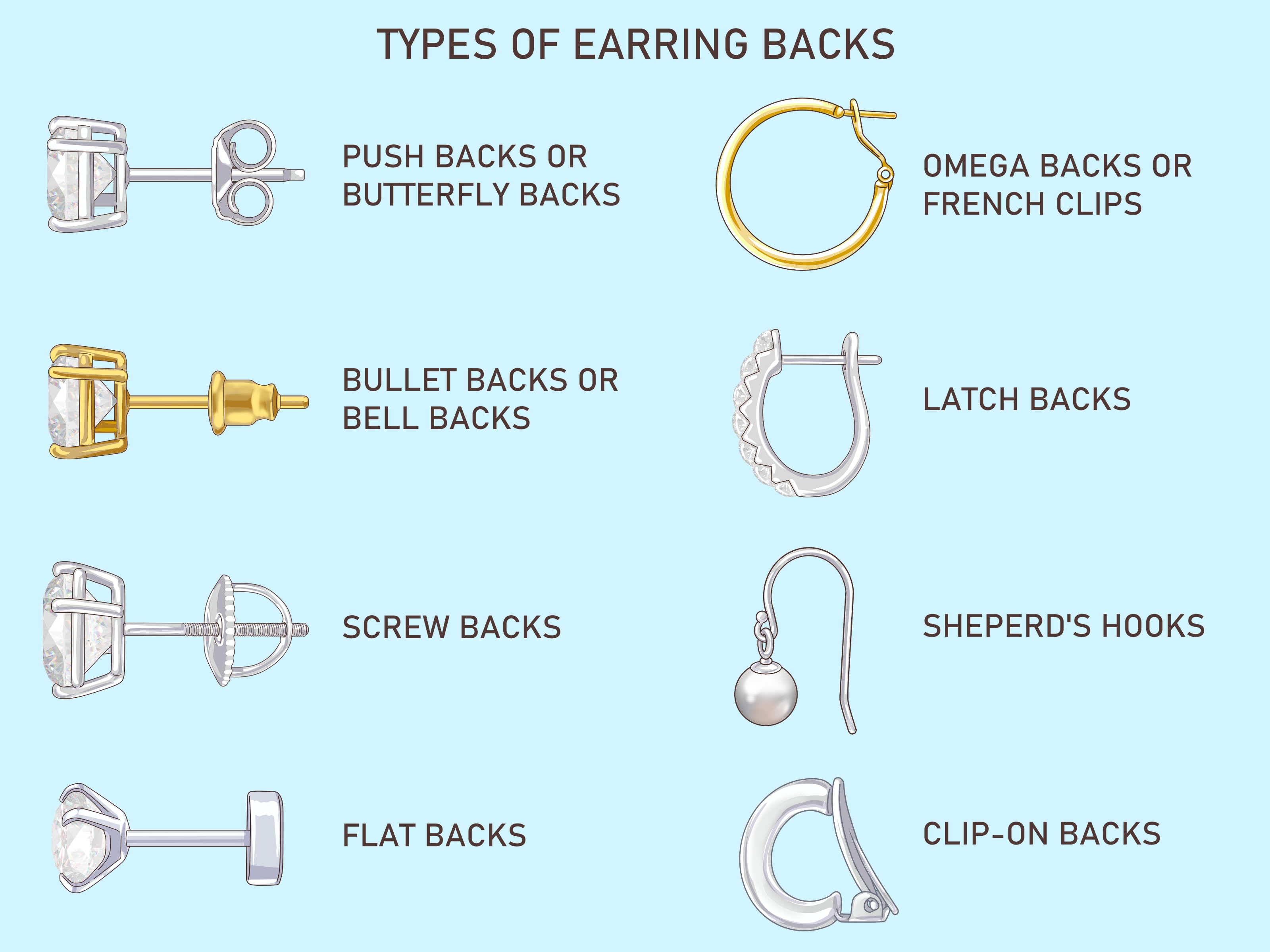
This guide explains the most common types of earring backs, including push backs, screw backs, guardian backs, lever backs, latch backs, hinged backs, flat backs, French wires, omega backs, clip-ons, and rubber backs. You will learn what each style is best for, where it can be annoying, and how to choose the best earring back for daily wear, fine jewelry, sensitive ears, sleeping, travel, and special occasions.
Why Earring Backs Matter More Than You Think
An earring back is the closure or support system that keeps an earring in place. It may be a separate piece that slides onto a post, a hinged mechanism built into a hoop, a screw-on closure, a flat disc attached to a labret-style post, or a clip that grips the earlobe without a piercing.
The best earring back depends on four things: the earring style, the value of the jewelry, the shape and sensitivity of your ears, and your lifestyle. A delicate everyday stud does not need the same closure as a heavy gemstone drop earring. A diamond stud deserves more security than a fashion earring you wear twice a year. And if you like to sleep in earrings, traditional posts can feel less like jewelry and more like tiny medieval furniture.
Good earring backs should do three jobs well: keep the earring secure, feel comfortable against the ear, and be easy enough to use without requiring tweezers, prayer, or the flexibility of a circus performer.
1. Push Backs or Butterfly Backs
Best for: everyday studs, lightweight earrings, simple fashion jewelry
Push backs are the most common type of earring back. They are also called friction backs, butterfly backs, or post backs. This style uses a straight earring post that passes through the piercing, then a small metal backing slides onto the post and grips it through tension.
The nickname “butterfly back” comes from the shape of the backing, which often has two small curled metal wings. These wings help you hold the piece while pushing it onto or pulling it off the post. They are simple, inexpensive, widely available, and easy to replace, which is why they appear on so many stud earrings.
The main advantage of push backs is convenience. They are quick to put on, quick to remove, and familiar to almost everyone with pierced ears. They work beautifully for small gold studs, pearl earrings, casual gemstone studs, and lightweight drop earrings.
The downside is that friction can weaken over time. A push back that once felt snug may loosen after repeated wear. If the backing slides too easily, the earring may fall out. Another issue is comfort: the post can poke the skin behind the ear, especially when talking on the phone, lying down, wearing headphones, or accidentally pressing your head against a couch cushion like a dramatic movie character.
Push backs are ideal for everyday convenience, but they are not always the best choice for expensive diamond studs, active wear, travel, or earrings you absolutely cannot risk losing.
2. Screw Backs
Best for: diamond studs, fine jewelry, children’s earrings, extra security
Screw backs are designed for better security. Instead of sliding onto a smooth post, the backing twists onto a threaded post. This means the earring back must be deliberately screwed on and unscrewed, making accidental loss less likely.
This style is popular for diamond studs, high-value gemstone earrings, and earrings worn by children. If you have ever felt the panic of touching your ear and realizing one earring is missing, screw backs make sense. They are the jewelry world’s version of locking the front door twice before vacation.
The biggest benefit of screw backs is peace of mind. They stay in place more securely than basic friction backs, especially during daily movement. They are also useful for people who prefer to keep earrings in for longer periods, though comfort depends on post length and ear shape.
However, screw backs require patience. They take longer to put on and remove. The threads can feel fiddly, especially for people with long nails, reduced dexterity, or tiny earrings. If cross-threaded or forced, the mechanism may wear down. Some people also find screw posts slightly thicker or less comfortable than smooth posts.
Choose screw backs when security matters more than speed. For heirloom studs, diamond earrings, or special gifts, they are often worth the extra few seconds.
3. Guardian Backs or La Pousette Backs
Best for: valuable earrings, luxury studs, secure daily wear
Guardian backs, often associated with La Pousette-style locking backs, are advanced secure earring backs. They typically feature a locking mechanism that grips a notched post. To remove the earring, you usually press or pinch small side tabs to release the back.
Think of guardian backs as the high-security apartment building of earring closures. The earring does not simply slide off; it must be unlocked. This makes them an excellent choice for fine jewelry, especially diamond studs and earrings with sentimental or financial value.
Guardian backs are often more comfortable than some screw backs because they can slide on smoothly before locking into place. They also avoid the repeated twisting motion of screw backs. For many people, they offer a strong balance of security and usability.
The drawback is cost and learning curve. Guardian backs are more expensive than simple push backs, and the release mechanism may take a few tries to master. People with limited hand strength may find the side tabs tricky at first. Still, for earrings you would be heartbroken to lose, guardian backs are one of the best earring backing styles available.
4. Lever Backs
Best for: drop earrings, dangle earrings, gemstone earrings
Lever backs are a popular closure for drop and dangle earrings. They use a curved wire that goes through the piercing and connects to a hinged lever behind the ear. Once closed, the lever forms a secure loop, helping the earring stay in place while allowing it to move naturally.
This style is elegant and practical. Lever backs are especially good for earrings that swing, sparkle, or include gemstones. They keep the earring attached without requiring a separate tiny backing that could disappear into the bathroom sink, which, as everyone knows, is where small jewelry pieces go to begin a new life.
Lever backs are generally more secure than simple French hooks because the wire closes behind the ear. They are also easier to handle than screw backs for many people. The closure is built into the earring, so there is no separate component to lose.
The main disadvantage is that lever backs can bend or loosen if handled roughly. Cheaper versions may not snap closed firmly. They can also feel bulky on very small ears. Still, for dressy earrings and everyday drops, lever backs are one of the most comfortable and secure choices.
5. Latch Backs
Best for: hoop earrings, heavier designs, statement earrings
Latch backs use a hinged post that passes through the ear and clicks or latches into a closure on the opposite side of the earring. They are common on hoops, huggies, and some statement earrings.
The appeal of latch backs is security. Once the post clicks into place, the earring forms a closed shape. This reduces the chance of slipping out compared with open wire designs. Latch backs also look clean because the closure is integrated into the earring.
They are excellent for medium hoops, diamond hoops, and structured earrings with a bit of weight. If the latch is well made, it gives a satisfying little click that says, “Yes, I am secure. Go live your life.”
The weakness is that latch backs depend on alignment. If the post or clasp becomes bent, the earring may not close properly. A weak latch can pop open. For that reason, it is smart to check the closure before wearing valuable hoops, especially if the earrings are older or frequently worn.
6. Hinged Backs for Hoops and Huggies
Best for: small hoops, huggie earrings, minimalist everyday styles
Hinged backs are built into many hoop and huggie earrings. One part of the hoop swings open on a hinge, the post goes through the ear, and the hinged section snaps shut into a groove or notch.
This backing style is loved because it is neat, low-profile, and comfortable. There is no separate back piece. The earring becomes a complete circle or near-circle, making it less likely to catch on clothing or hair. Huggie earrings with hinged backs are especially popular for everyday wear because they sit close to the ear and feel tidy.
Hinged backs are great for people who want a simple “click and done” closure. They can be easier than butterfly backs for small hoops because there is no tiny backing to grip.
The most important thing is hinge quality. A sturdy hinge and firm click are essential. If the hinge feels loose, the post does not align, or the hoop opens too easily, the earring may need repair. A good hinged hoop should close cleanly and stay closed without needing negotiation.
7. Flat Backs
Best for: sleeping, cartilage piercings, sensitive ears, 24/7 wear
Flat back earrings have become extremely popular, especially for curated ears, cartilage piercings, and people who want earrings that do not poke. Instead of a traditional post sticking out behind the ear, the back is a smooth, flat disc. The decorative front may attach with a threaded screw mechanism or a threadless push-pin system.
Flat backs are often used in piercing jewelry because they are comfortable and low-profile. They are excellent for helix, tragus, conch, and lobe piercings where a traditional butterfly back may catch, poke, or collect buildup. Many people also like flat backs for sleeping because the smooth disc sits more comfortably against the skin.
There are two common styles: threaded flat backs and threadless flat backs. Threaded flat backs screw together. Threadless flat backs use a tiny bendable pin that pushes into the post and stays in place through tension. Threadless versions can be easier for some wearers, while threaded versions may feel more secure to others.
The trade-off is that flat backs can be harder to insert without practice. Because the post often goes in from the back of the ear, changing them may require a steady hand or help from a piercer. For fresh or healing piercings, jewelry material and fit matter a lot, so professional advice is wise.
8. French Wire or Fishhook Backs
Best for: lightweight dangle earrings, casual drop earrings, artistic designs
French wire backs, also called fishhook backs, are curved wires that slide through the piercing and hang behind the earlobe. They are common on handmade earrings, beaded earrings, lightweight drops, and bohemian styles.
The biggest advantage is movement. French wires allow earrings to swing freely, which makes them perfect for designs that rely on motion. They are also easy to put on and remove because there is no separate back required.
The downside is security. A basic French wire can slip out, especially if the earring is light, the wire is short, or you are wearing a scarf, high collar, or very enthusiastic hair. To improve security, some people add small rubber stoppers to the wire. Others choose locking French wires, which include a small closure to keep the wire from sliding out.
French wires are wonderful for casual style, but for valuable gemstone drops, a lever back or locking wire is usually safer.
9. Omega Backs
Best for: heavier earrings, vintage jewelry, statement pieces
Omega backs are named after their shape, which resembles the Greek letter omega. They use a hinged clip that presses against the back of the earlobe. Some omega backs are used with pierced posts, while others function more like clip-on closures.
This style is especially helpful for heavier earrings because it distributes pressure across the lobe. Instead of all the weight pulling downward from a thin post, the omega clip supports the earring from behind. Many vintage earrings, pearl earrings, and statement pieces use omega backs for this reason.
The comfort level depends on tension. If the clip is too tight, it can pinch. If it is too loose, the earring may droop. A jeweler can often adjust omega backs for better fit, which is useful because ears are not factory-standard equipment.
Omega backs are a strong choice when you want support, structure, and a polished look, especially for larger earrings.
10. Clip-On Backs
Best for: non-pierced ears, vintage earrings, occasional wear
Clip-on earrings do not require pierced ears. They use pressure to hold the earring to the earlobe. The closure may be a paddle clip, screw-back clip, hinged clip, or omega-style clip.
Clip-ons are ideal for people without piercings or anyone who wants to wear vintage earrings. They also make sense for costume jewelry and bold statement designs that are worn for a few hours at a time.
The challenge is comfort. Clip-ons must be tight enough to stay on but gentle enough not to pinch. That balance can be tricky. Foam cushions or silicone pads can improve comfort and grip. Screw-back clip-ons are adjustable, making them useful for people who find standard clips too tight.
Clip-ons prove that pierced ears are optional. Style, thankfully, remains available to everyone.
11. Rubber, Silicone, and Plastic Backs
Best for: backup support, lightweight earrings, temporary fixes
Rubber or silicone backs are small, flexible backings that slide onto earring posts or wires. They are often used as replacement backs, extra stoppers for French hooks, or comfort helpers behind lightweight earrings.
They are inexpensive, easy to find, and useful to keep in a jewelry box. If a metal backing disappears, a silicone back can save the day. They can also help prevent fishhook earrings from slipping out.
However, silicone backs are not the best long-term solution for valuable earrings. They can stretch, discolor, trap residue, or lose grip over time. They are practical little helpers, not security guards. Use them for casual earrings, travel emergencies, or extra support, but choose stronger closures for fine jewelry.
12. Bullet Clutch and Jumbo Backs
Best for: larger studs, heavy pearl earrings, preventing droop
Bullet clutch backs are cylindrical or rounded metal backs that slide onto a post. Jumbo backs are oversized versions of standard friction backs, often used to support heavier studs or pearl earrings.
Their main purpose is stability. Large studs can tilt downward if the backing is too small. A jumbo back gives the earring more surface area behind the lobe, helping it sit upright. This is especially useful for pearl studs, cluster earrings, and larger gemstone studs.
Jumbo backs are not automatically more secure than locking backs, but they can be more comfortable and flattering because they improve the earring’s position. If your studs look like they are sadly staring at the floor, a larger back may help.
How to Choose the Best Earring Back for Your Lifestyle
For everyday studs
Push backs are simple and convenient. If your studs are larger or tend to droop, try jumbo backs. If the posts poke you, consider flat backs.
For diamond earrings or expensive jewelry
Screw backs, guardian backs, and locking backs offer better protection against loss. For high-value earrings, security should beat convenience.
For sleeping or nonstop wear
Flat backs are usually the most comfortable because they do not have a sharp post sticking out behind the ear. Proper fit matters, especially for cartilage piercings.
For dangle earrings
Lever backs are a strong choice because they close securely and allow movement. French wires are stylish and easy, but they may need silicone stoppers for extra security.
For hoops and huggies
Hinged backs and latch backs are convenient and clean-looking. Always check that the hinge or latch clicks firmly before wearing.
For sensitive ears
Material matters as much as backing style. Look for quality metals such as solid gold, implant-grade titanium, platinum, or nickel-free options. Nickel can trigger allergic reactions in sensitive wearers, so avoid mystery metals when your ears are already dramatic enough.
Cleaning and Care Tips for Earring Backs
Earring backs collect oils, skin cells, hair products, lotion, and the mysterious dust that appears everywhere despite no one inviting it. Regular cleaning keeps earrings more comfortable and helps reduce irritation.
For most everyday earrings, wipe posts and backs with a soft cloth after wearing. For deeper cleaning, use mild soap and warm water when appropriate for the metal and stones, then dry completely. Avoid harsh home remedies on fine jewelry, especially abrasive toothpaste or acidic mixtures that can damage finishes or gemstones.
Inspect backs regularly. If a push back slides too easily, replace it. If a screw back feels gritty or misaligned, do not force it. If a hinged hoop no longer clicks shut, have it repaired. Small closure problems are much easier to fix before an earring disappears somewhere between your car seat and destiny.
Common Mistakes to Avoid
One common mistake is using the same backing style for every earring. Lightweight fashion studs and heirloom diamonds have different needs. Another mistake is ignoring comfort. A secure back is not helpful if it pinches so much that you remove the earrings before lunch.
People also forget to match earring backs to ear anatomy. Thin lobes may need tighter or shorter posts. Thicker lobes may need longer posts or more comfortable closures. Heavy earrings may need supportive backs to prevent pulling. There is no universal perfect earring back because ears, like eyebrows, have their own personalities.
Finally, never ignore irritation, swelling, pain, or discharge around a piercing. Sometimes the issue is pressure, sometimes it is metal sensitivity, and sometimes it may be infection. When in doubt, remove questionable jewelry if safe to do so and seek guidance from a qualified piercer or healthcare professional.
Experience Notes: What Earring Backs Feel Like in Real Life
In real life, earring backs are less about technical names and more about tiny daily moments. A push back is the earring closure most people learn first. It is quick, familiar, and easy. You can put on simple studs before leaving the house without needing a mirror or a motivational speech. But push backs also have a way of loosening at the worst possible time. Anyone who has searched the floor for a missing backing knows the special panic of crawling around under a desk while pretending this is normal adult behavior.
Screw backs feel more intentional. They are the choice you make when the earrings matter. Putting them on takes longer, but the extra time creates confidence. They are especially comforting for diamond studs, sentimental gifts, or earrings worn to crowded events. The slight inconvenience is real, though. If you are rushing in the morning, screw backs can test your patience. One earring goes on perfectly; the other suddenly becomes a tiny puzzle box.
Flat backs are a game changer for comfort. People who dislike being poked by regular posts often love them. They are especially useful for second lobe piercings, cartilage piercings, and earrings worn while sleeping. The first time you lie on your side without feeling a sharp post jab behind your ear, you may wonder why all earrings were not designed this way from the beginning. The learning curve is changing them. Inserting a flat back from behind the ear can feel awkward until you get used to it, and many people prefer having a piercer help with jewelry changes.
Lever backs are the dependable friend of the earring world. They are easy to close, hard to lose, and perfect for earrings that dangle. They feel more secure than open hooks and more graceful than bulky closures. For weddings, dinners, holidays, and office outfits that need a little movement, lever backs are practical without looking practical. That is a rare and beautiful thing.
French wires are relaxed and artistic. They are perfect for handmade earrings, gemstone drops, and casual outfits. But they can slip out if you are taking off a sweater, adjusting a scarf, or doing anything involving dramatic hair movement. A small silicone stopper can make French wires much safer without changing the look of the earring.
Latch backs and hinged hoops are wonderful when they are well made. A crisp click feels satisfying and secure. But if the hinge weakens, the earring can become unreliable. This is why it is worth checking hoop closures before every wear. A two-second click test can prevent a very sad jewelry story.
Omega backs and jumbo backs are underrated for larger earrings. They help earrings sit better on the lobe instead of drooping forward. This matters more than people realize. A beautiful pearl or gemstone stud can look completely different when supported correctly. It is like giving the earring better posture.
The best personal strategy is to build a small “earring back wardrobe.” Keep standard push backs for casual studs, silicone stoppers for hooks, jumbo backs for larger earrings, and secure backs for valuable jewelry. When buying new earrings, do not judge only the front. Turn them over. Check the backing. Ask whether it suits how you will actually wear them. The prettiest earring in the world is less impressive if it pinches, pokes, or escapes before dessert.
Conclusion
Earring backs may be small, but they decide how your earrings feel, fit, and function. Push backs are easy and common. Screw backs and guardian backs offer added security for valuable jewelry. Lever backs and latch backs work beautifully for dangles and hoops. Flat backs bring comfort to everyday and cartilage piercings. French wires offer graceful movement, while omega backs and jumbo backs provide support for heavier styles.
The best earring backing is the one that matches your jewelry, your ears, and your routine. Before buying your next pair, look beyond the sparkle and inspect the closure. Your ears will thank you. Your jewelry box will feel more organized. And your vacuum cleaner will stop being the final resting place for missing earring backs.
SEO Tags

