
Beauty Unlocked
The U.S. Army’s 1,000-Mile Super Gun Is Officially Dead
May
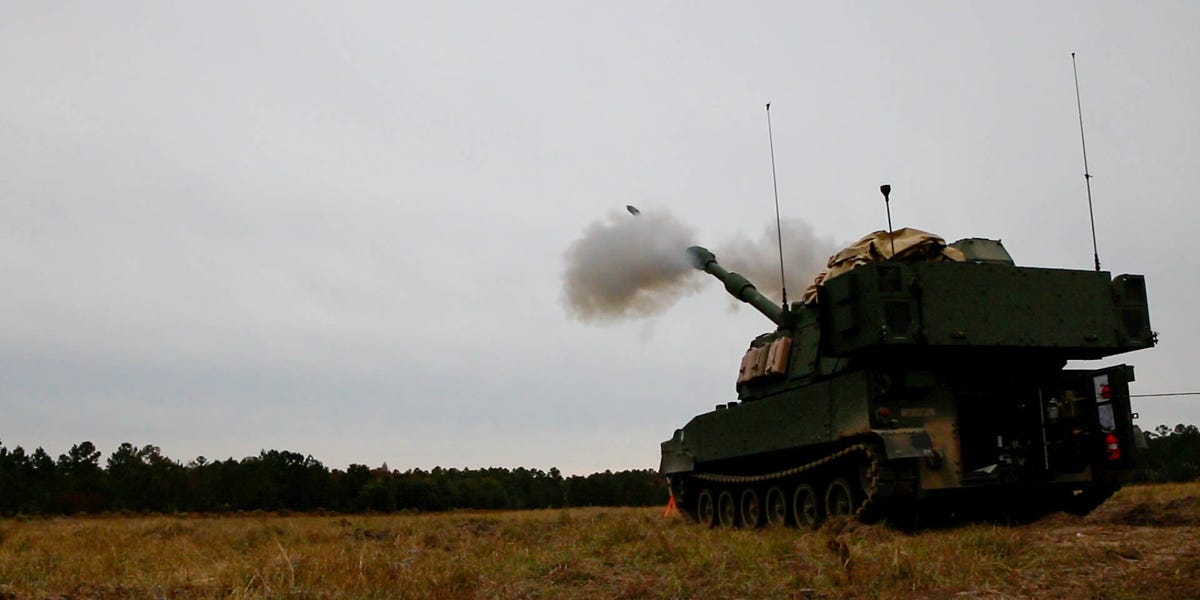
The U.S. Army’s 1,000-mile super gun sounded like something a defense engineer might sketch after three coffees and a very patriotic lightning storm: a cannon so powerful it could fire a hypersonic projectile across distances usually reserved for missiles, strategic bombers, and airline loyalty programs. Officially known as the Strategic Long Range Cannon, or SLRC, the weapon promised to give the Army a land-based way to hit targets roughly 1,000 nautical miles away.
But the super gun is dead. Not “resting.” Not “being reimagined.” Not “waiting for a sequel with better special effects.” The Army ended the science and technology effort after Congress stopped funding it, and the service shifted its attention toward other long-range precision fires programs, including missiles, hypersonic weapons, and more practical artillery improvements.
That does not mean the Army has lost interest in long-range strike. Far from it. If anything, the death of the 1,000-mile cannon reveals how serious the Army remains about reaching farther, faster, and with more precision in future conflicts. The super gun failed as a program, but the problem it tried to solve is still very much alive.
What Was the Army’s 1,000-Mile Super Gun?
The Strategic Long Range Cannon was a U.S. Army research effort designed to explore whether a cannon could launch a projectile at hypersonic speeds across extreme distances. The basic idea was simple enough to explain and extremely difficult to execute: use a giant gun system to fire a projectile far beyond traditional artillery range, potentially reaching around 1,000 nautical miles, or about 1,150 statute miles.
That range would have put the SLRC in a category far beyond conventional cannons. For comparison, modern 155 mm howitzers typically fire tens of miles, depending on the weapon and ammunition. Even the Army’s Extended Range Cannon Artillery effort aimed for roughly 70 kilometers, or about 43 miles. The SLRC wanted to leap from “farther than today’s artillery” to “please check your map twice.”
The weapon was not meant to replace every artillery system. It was intended as a strategic fires tool for multi-domain operations, where land forces support air, sea, space, cyber, and joint operations against sophisticated adversaries. In plain English: the Army wanted a way to hold important enemy targets at risk from land, even when aircraft, ships, or shorter-range missiles might face heavy defenses.
Why the Army Wanted a Super Gun in the First Place
The Army’s interest in the Strategic Long Range Cannon came from a larger modernization push called Long Range Precision Fires. This has been one of the Army’s top modernization priorities because future wars may unfold across enormous distances, especially in places like the Indo-Pacific or Eastern Europe.
Against competitors with advanced air defenses, anti-ship missiles, long-range rockets, drones, satellites, and electronic warfare systems, U.S. forces may not always be able to assume easy access. The enemy’s strategy is often described as anti-access/area denial, or A2/AD. That means making it dangerous for U.S. forces to enter, move through, or operate within key regions.
A land-based long-range weapon could create headaches for an adversary. Imagine a U.S. or allied unit positioned on an island, coastline, or forward base with the ability to threaten command centers, missile batteries, logistics hubs, radar sites, ships, or other high-value targets at great distance. That kind of capability could support naval operations, protect friendly forces, and complicate enemy planning.
The appeal of a cannon, at least in theory, was cost and volume. Missiles are powerful, but they can be expensive and limited in number. A cannon-based system might have offered repeated fires at a lower cost per shot, assuming the projectile, barrel, propellant, guidance, targeting, logistics, and maintenance all worked as hoped. That is a very big “assuming,” wearing combat boots.
Why the Strategic Long Range Cannon Was Canceled
The U.S. Army ended the SLRC science and technology effort after Congress directed the service to stop funding the weapon in the fiscal 2022 appropriations process. Army officials later explained that continuing the program could create redundancy with other long-range fires projects and potentially require billions of dollars if it moved beyond research into full development, procurement, and unit creation.
In other words, the super gun was not canceled because the Army suddenly stopped caring about long-range strike. It was canceled because the service had to decide whether this particular approach was worth the money, risk, and organizational disruption. The answer became no.
Cost Was a Major Concern
A weapon system is never just the weapon. A strategic cannon would have required the gun, prime mover, trailer, projectile, propellant, command-and-control equipment, sensors, transport, maintenance, training, facilities, and units designed to operate it. The cost per shot might have looked attractive in PowerPoint, but the cost per effect had to include the entire ecosystem.
That ecosystem matters. A cannon that can fire 1,000 miles is not useful if it cannot be moved, hidden, supplied, protected, targeted, maintained, or integrated into joint operations. The Army had to consider not only whether the technology could work, but whether it could work at scale in a real force structure.
Technical Risk Was Also Serious
The SLRC involved difficult engineering problems. Firing a guided projectile at hypersonic speeds over strategic distances creates extreme stress on materials, electronics, guidance systems, thermal protection, aerodynamics, and communications. A projectile traveling through the atmosphere at such speed must survive heat, vibration, pressure, and changing flight conditions while still arriving accurately enough to be useful.
The National Academies reviewed the feasibility of the concept and described the SLRC as an ambitious effort with potential value, but also highlighted the need for better integration, testing, uncertainty analysis, concept development, and cost-per-effect evaluation. That is a polite scientific way of saying, “This is fascinating, but please do not bring only enthusiasm to a physics fight.”
Redundancy Made the Super Gun Harder to Justify
The Army already had other long-range fires programs in motion. These included the Precision Strike Missile, the Long-Range Hypersonic Weapon, mid-range missile capabilities, and extended-range artillery initiatives. If those systems could cover many of the same target sets with less risk or clearer development paths, the SLRC became harder to defend.
Redundancy can be good in warfare, but it can be painful in budgets. Congress and the Army had to ask whether the super gun added enough unique value to justify its own development pipeline. The answer, ultimately, was no.
What the Super Gun’s Death Says About Modern Artillery
The death of the Army’s 1,000-mile super gun does not signal the death of artillery. It signals the end of one unusually bold attempt to stretch artillery into strategic-missile territory.
Traditional artillery remains essential because it provides responsive fire support, suppression, area effects, and battlefield shaping. The war in Ukraine has reminded defense planners that artillery still matters enormously. Modern battlefields consume shells quickly, punish slow-moving systems, and reward forces that can shoot, move, hide, reload, and shoot again.
But the SLRC was not a normal artillery upgrade. It was not simply a better howitzer or a longer barrel. It was an attempt to create a strategic weapon using cannon principles. That made it exciting, but also expensive and complicated.
Modern artillery development now appears to be moving in a more practical direction: better shells, smarter fuzes, longer-range rounds, improved mobility, automation, survivability, and integration with drones and sensors. Instead of building one gigantic cannon that changes everything, the Army may gain more by improving many systems that can be fielded, sustained, and adapted faster.
The Army Is Still Chasing Long-Range Precision Fires
Even though the Strategic Long Range Cannon is gone, the Army’s long-range precision fires mission continues. The service still wants weapons that can reach deep into contested territory and support joint operations.
Precision Strike Missile
The Precision Strike Missile, often called PrSM, is designed to replace the older Army Tactical Missile System. It gives launchers such as HIMARS and MLRS a modern missile with a range exceeding 400 kilometers, and future increments may expand capability further. PrSM is important because it can be fired from existing launch platforms, which makes it easier to integrate than an entirely new super cannon force.
Long-Range Hypersonic Weapon
The Army’s Long-Range Hypersonic Weapon, also known as Dark Eagle, is intended to provide a fast, conventional strike capability against high-value and time-sensitive targets in contested environments. Hypersonic systems are challenging and expensive, but they align more naturally with strategic-range strike than a cannon does.
Mid-Range Capability
The Army has also pursued mid-range missile systems that can fire weapons such as Tomahawk cruise missiles and SM-6 missiles from land. These systems give ground forces a role in maritime and theater-level fires, especially in the Indo-Pacific, where islands, sea lanes, and long distances shape military planning.
Next-Generation Artillery
The Army’s artillery modernization path has not been perfectly smooth. The Extended Range Cannon Artillery effort also ran into problems and was canceled as a prototype program. Still, the underlying need for longer-range, mobile, survivable artillery remains. The Army is now exploring other ways to improve self-propelled howitzers, ammunition, automation, and firing range without repeating the same development traps.
Was the 1,000-Mile Super Gun a Bad Idea?
Calling the SLRC a bad idea is too easy. Big military innovation often begins with ideas that sound unrealistic. Aircraft carriers, stealth aircraft, drones, precision-guided weapons, and hypersonics all spent time in the “that sounds ridiculous” category before becoming serious capabilities.
The better question is whether the SLRC was the best answer to the Army’s problem. The Army needed range, survivability, magazine depth, and cost-effective fires. The super gun offered an intriguing answer, but not necessarily the most practical one.
A giant strategic cannon would have raised difficult operational questions. Where would it be based? How easily could it move? How would it avoid detection? How many rounds could it fire before barrel wear became a problem? How would it be protected from missiles, drones, sabotage, and cyber disruption? How would commanders coordinate a 1,000-mile artillery shot with air and naval operations?
Those questions do not make the idea foolish. They make it real. The moment a futuristic weapon leaves the concept stage, it has to live in the messy world of fuel trucks, maintenance crews, budgets, training calendars, logistics officers, and congressional hearings. Reality is undefeated.
Historical Echoes: Super Guns Have Always Been Tempting
The fascination with super guns is not new. Military history has seen enormous artillery pieces designed to break stalemates, intimidate enemies, or strike targets from extreme distances. Germany’s World War I Paris Gun could shell Paris from long range, while World War II’s massive railway guns became symbols of engineering ambition and strategic impracticality.
These weapons often shared the same pattern: spectacular engineering, limited flexibility, huge logistical demands, and vulnerability to changing battlefield conditions. A super gun can look terrifying on paper, but modern war rarely rewards weapons that are hard to move, hard to hide, and hard to sustain.
The SLRC was not simply a repeat of those old weapons. It belonged to a modern world of precision guidance, hypersonic research, advanced modeling, and multi-domain operations. Still, it carried the same timeless warning: bigger is not always better if bigger is also slower, costlier, and more complicated.
Why Congress Pulled the Plug
Congress plays a central role in shaping military modernization because it controls funding. Lawmakers are often willing to support advanced defense technologies, but they also demand justification. When multiple long-range fires programs compete for money, Congress wants to know which systems solve real problems, which duplicate existing efforts, and which risk becoming expensive science projects with uncertain payoff.
The Strategic Long Range Cannon sat in a difficult position. It was not yet a program of record. It was still a science and technology effort. That means it had not crossed the line into a fully established acquisition program with long-term funding and production plans. When Congress zeroed out funding, the Army had little reason to keep the effort alive.
The cancellation was not a dramatic battlefield failure. It was a budget and acquisition decision. In defense modernization, that can be just as final as a failed test.
What Comes Next After the Super Gun?
The Army’s future long-range fires portfolio will likely emphasize systems that can be deployed sooner, integrated more easily, and justified more clearly. That means missiles, hypersonics, improved artillery shells, autonomous support systems, better sensors, and stronger command networks.
The key lesson is not that cannons are obsolete. The lesson is that range alone is not enough. A weapon must fit into a larger kill chain. It must find targets, receive data, survive enemy counterstrikes, fire effectively, move when needed, and be resupplied under pressure. The best weapon is not always the one with the longest range. It is the one that can deliver the right effect at the right time without collapsing under its own complexity.
The Army will continue to experiment because it has to. China and Russia have invested heavily in long-range missiles, air defenses, drones, electronic warfare, and space-enabled targeting. U.S. land forces cannot assume that old artillery ranges and old operating habits will be enough. The super gun is dead, but the race for reach is not.
Experience Notes: What the Super Gun Story Teaches Defense Watchers
The experience of following the U.S. Army’s 1,000-mile super gun offers a useful reminder for anyone who watches defense technology: a weapon can be strategically logical and still fail as a program. The SLRC addressed a real concern. The Army needed ways to influence fights across vast distances, especially in theaters where the Navy and Air Force might face heavy pressure. A land-based system with strategic reach would have given commanders another option, and in military planning, options are precious.
However, the experience also shows that bold concepts must pass through several gates before they become useful weapons. The first gate is physics. Can the projectile survive launch and flight? Can it remain accurate? Can the barrel endure repeated firings? Can the guidance package function after extreme stress? These are not small questions. A cannon that fires a projectile 1,000 miles is not merely a bigger version of a battlefield howitzer. It is a system operating at the edge of materials science, aerodynamics, propulsion, and precision guidance.
The second gate is operations. A weapon has to make sense for soldiers who must use it. If a system requires special units, rare equipment, complex transport, enormous security, and fragile logistics, it may become a museum piece before it becomes a war-winning tool. Modern forces need mobility and survivability. Drones, satellites, cyber tools, and long-range missiles make large fixed assets easier to detect and target. A super gun that cannot hide or move quickly may invite trouble faster than it delivers results.
The third gate is money. Defense budgets are large, but they are not magical treasure chests guarded by bald eagles. Every dollar spent on a super gun is a dollar not spent on missiles, air defense, drones, ammunition stockpiles, shipbuilding, training, maintenance, or soldier readiness. The Army had to compare the SLRC with other long-range fires systems. When a program is risky, expensive, and potentially redundant, cancellation becomes a rational outcome rather than a failure of imagination.
The fourth gate is timing. A futuristic weapon that arrives too late may be overtaken by cheaper or more flexible alternatives. The battlefield is changing quickly. Loitering munitions, autonomous systems, electronic warfare, commercial satellite imagery, and precision missiles are reshaping how armies fight. A massive cannon might have been revolutionary if it matured quickly and cheaply. But if it required years of uncertain investment, the Army had better options to pursue.
For readers, the practical takeaway is simple: do not judge military technology only by headline range. A 1,000-mile cannon sounds incredible, but the true measure is whether it can be fielded, protected, supplied, aimed, fired, and sustained under wartime conditions. The SLRC’s cancellation does not mean the Army stopped thinking big. It means the Army decided that this particular big idea was not the best path forward. Sometimes modernization means building the future. Sometimes it means knowing when to stop digging the very expensive hole.
Conclusion
The U.S. Army’s 1,000-mile super gun is officially dead, but its cancellation is not the end of long-range precision fires. It is the end of one ambitious and technically demanding path toward strategic land-based strike. The Strategic Long Range Cannon promised extraordinary reach, but the combination of cost, technical risk, redundancy, and uncertain operational value made it difficult to justify.
The Army is now putting more energy into missiles, hypersonic weapons, mid-range capabilities, improved artillery, smarter ammunition, and integrated fires networks. That direction may be less dramatic than a giant cannon hurling hypersonic rounds across the map, but it is likely more practical.
The super gun’s death tells us something important about modern warfare: range matters, but integration matters more. A future weapon must do more than impress people at a briefing. It must survive contact with budgets, logistics, enemy targeting, and the hard math of war. The SLRC could not clear that full obstacle course. The mission it represented, however, is still marching forward.
Note: This article is based on real, publicly available information from U.S. defense reporting, Army modernization material, Congressional Research Service background, Government Accountability Office analysis, National Academies review material, RAND research, and reputable military news coverage.
SEO Tags

