
Skincare
LEGO Strain Wave Gear Is Easy On The Eyes
May
Some LEGO builds are charming because they look like tiny cities, medieval castles, or suspiciously expensive coffee machines. Others earn attention because they turn a serious mechanical idea into something you can actually watch, understand, and admire without needing a Ph.D. in gear design. A LEGO strain wave gear sits beautifully in that second category.
The phrase “strain wave gear” may sound like something hiding in a robotics lab behind a badge scanner, but the concept is surprisingly elegant. It is a compact gear system that uses controlled flexing to create smooth, precise motion. In industrial settings, this type of mechanism is often associated with harmonic drives, robotic joints, aerospace systems, camera stabilization, medical equipment, and other applications where backlashthe tiny unwanted looseness between gear teethis not welcome at the party.
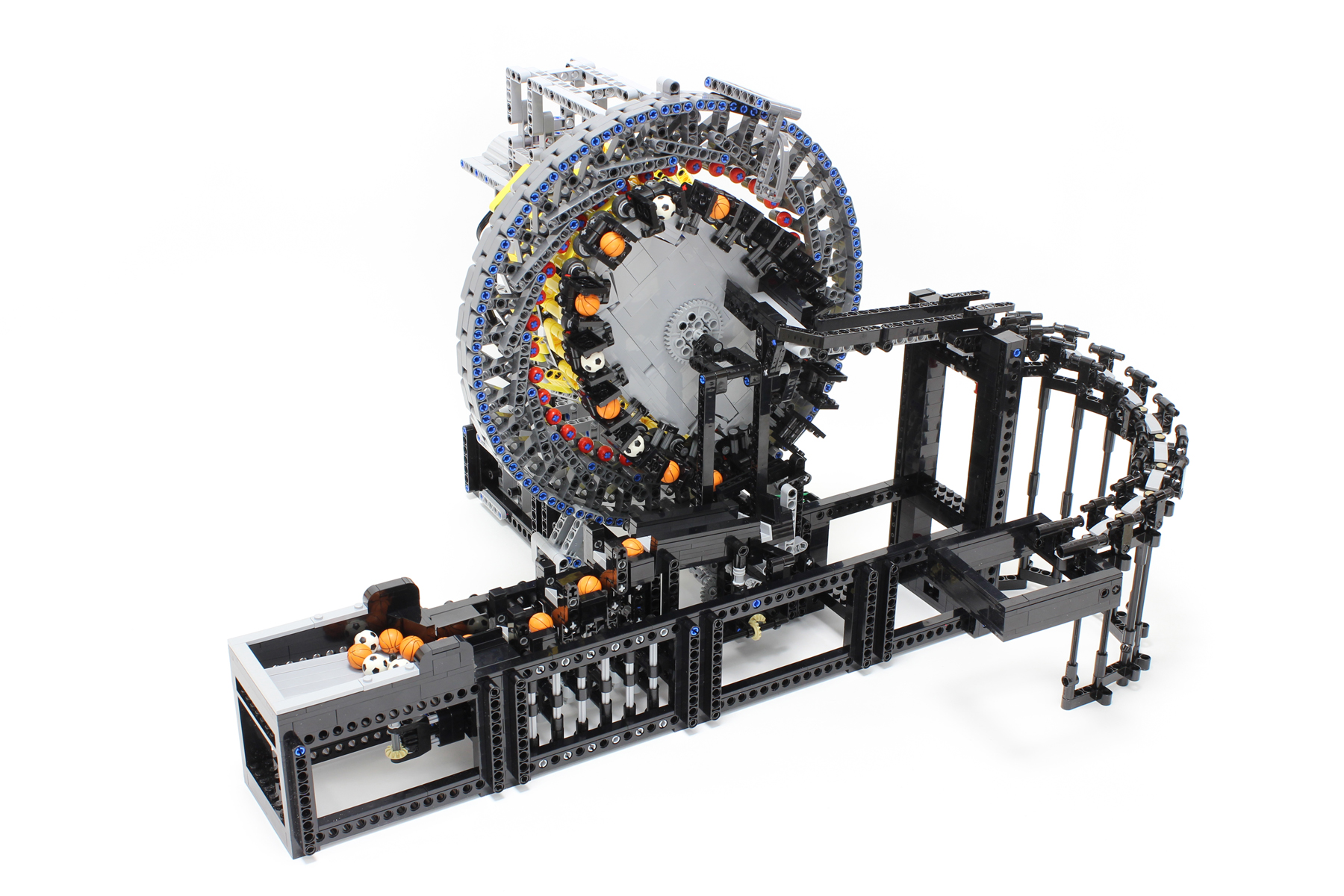
What makes the LEGO version so delightful is that it exposes the movement. Instead of hiding the mechanism inside a metal housing, a Great Ball Contraption-style LEGO build turns the flexing action into a visual performance. Small balls ride along the moving structure, making the invisible logic of precision gearing suddenly visible. It is engineering, but with choreography.
What Is a Strain Wave Gear?
A strain wave gear is a type of mechanical reduction system built around three core elements: a wave generator, a flex spline, and a circular spline. The wave generator is usually an elliptical part that rotates. The flex spline is the flexible gear element that changes shape as the wave generator turns. The circular spline is the rigid outer gear that helps guide the motion and create reduction.
In a traditional gear train, one gear tooth pushes another gear tooth, and the motion moves from gear to gear in a fairly obvious way. A strain wave gear feels almost sneaky by comparison. The wave generator forces the flex spline into an elliptical shape, causing it to engage with the circular spline at opposite sides. As the wave generator rotates, the points of engagement travel around the gear. Because the flex spline and circular spline have slightly different tooth counts, the output moves slowly and precisely compared with the input.
That difference in tooth count is the magic trick. A small mismatch can produce a large reduction ratio in a very compact space. Industrial strain wave gears are valued because they can offer high reduction ratios, compact packaging, coaxial input and output, strong repeatability, and very low or zero backlash. In plain English: they make controlled movement possible where ordinary gears would be too bulky, too sloppy, or too complicated.
Why the LEGO Version Is So Mesmerizing
The LEGO strain wave gear made famous by builder Akiyuki is not just a mechanical demonstration; it is a visual explanation. The build uses the language of LEGO Technic and Great Ball Contraptions to show how a strain wave system deforms and transfers motion. The elliptical center element acts like the wave generator. Around it, a flexible ring-like structure moves in a wave pattern. The balls being carried around the module make the movement easy to follow, almost like a mechanical diagram that decided to become a parade float.
That is why the build is “easy on the eyes.” Many mechanical demonstrations are technically impressive but visually confusing. They spin, click, and whir, but the viewer is left nodding politely while secretly wondering what just happened. This LEGO version avoids that problem. The wave motion is exaggerated, colorful, and rhythmic. The balls mark the path. The flexing is large enough to see. It takes a mechanism normally hidden inside precision equipment and gives it a stage.
The Three Main Parts, Explained Simply
1. The Wave Generator
The wave generator is the part that creates the deformation. In many industrial harmonic drives, this is an elliptical cam paired with a bearing. In the LEGO demonstration, it appears as an elliptical central component that pushes the surrounding structure into an oval shape as it rotates. Think of it as the conductor of the whole mechanical orchestra. It does not simply spin; it tells the flexible part where to bend.
2. The Flex Spline
The flex spline is the star of the show. In metal harmonic drives, it is commonly a thin-walled flexible cup or ring with external teeth. In the LEGO version, the flexing structure is more dramatic, because LEGO parts need visible movement to communicate the idea. The flex spline bends into an ellipse as the wave generator rotates, creating a traveling wave of engagement. In Akiyuki’s build, this wave-like motion is also used to move balls, making the mechanism both functional and educational.
3. The Circular Spline
The circular spline is the rigid outer element. It provides the reference structure that the flexible spline interacts with. In a working industrial unit, the circular spline usually has internal teeth and helps produce the reduction effect. In the LEGO model, the outer ring makes the motion readable and gives the flexing mechanism a clear boundary.
Why Strain Wave Gears Matter in Real Engineering
The reason engineers care about strain wave gears is not just that they look cool, although they absolutely do. Their real value comes from precision. In robotics, for example, a joint needs to move exactly where the control system tells it to move. If the gearbox has backlash, the robot may hesitate, overshoot, or feel loose. In delicate work, such as medical robotics or semiconductor handling, that is not ideal. Nobody wants a robot arm with the confidence of a shopping cart wheel.
Strain wave gears can solve this by providing compact, precise reduction. They are often used where space is limited and accurate positioning is critical. Industrial robots, humanoid robots, satellite mechanisms, Mars rover arms, gimbals, and compact automation systems all benefit from gearboxes that can provide controlled motion without a large stack of traditional gears.
Another advantage is the coaxial layout. The input and output can share the same axis, which simplifies mechanical design. For robot wrists, camera stabilizers, and compact actuators, that can be a major benefit. Instead of routing motion through multiple offset shafts, designers can keep things neat, centered, and efficient.
The Beauty of High Reduction in a Small Space
Gear reduction is one of those engineering ideas that sounds boring until you need it. A motor may spin very fast but with limited torque. A mechanism may need slower, stronger, more controlled motion. A gearbox solves that by reducing speed and increasing usable torque. The catch is that high reduction usually requires multiple gears, several stages, and more space.
Strain wave gearing handles reduction differently. By using a flexible spline with a slightly different tooth count from the circular spline, the system can generate a large reduction in a compact package. Akiyuki’s LEGO version reportedly demonstrates a 1/8 reduction ratio using visible tooth-count differences, which is intentionally modest and visually exaggerated compared with many industrial units. That exaggeration is part of the charm. It turns a precise mechanism into something understandable at a glance.
LEGO as a Mechanical Teaching Tool
LEGO Technic is unusually good at teaching mechanical ideas because it forces builders to think in modules. Beams, axles, gears, pins, liftarms, and connectors create a mechanical grammar. With enough patience, you can build linkages, gearboxes, steering systems, cranes, clocks, walking machines, and ball-handling devices. A strain wave gear is a perfect candidate because it depends on shape, rhythm, and constraintall things LEGO can show clearly.
The model is also a reminder that toys can explain serious technology. A transparent animation on a screen is useful, but a physical model has a different kind of impact. You can see the parts fighting, cooperating, and flexing. You can hear the rhythm. You can notice friction, load, alignment, and timing. In other words, you learn not only the ideal theory but also the mechanical personality of the system.
What the LEGO Model Gets Right
The build succeeds because it captures the essence of strain wave gearing: a rotating elliptical input creates a traveling deformation in a flexible member, and that deformation produces controlled output motion. It also makes the relationship between the wave generator and the flex spline easy to see. The balls riding along the flexing structure add a brilliant visual cue. They act almost like highlighters on a textbook diagram, except far more entertaining.
It also communicates why strain wave gears are fascinating. The mechanism appears to breathe. Unlike ordinary spur gears, which look like wheels biting each other, this design has organic motion. It bends, rolls, and advances in a way that feels closer to a wave than a machine. That is exactly why the LEGO demonstration is so memorable. It translates technical motion into visual rhythm.
What the LEGO Model Exaggerates
No LEGO demonstration should be mistaken for a direct industrial equivalent. Real strain wave gears are usually built from carefully engineered metals, high-precision bearings, specialized tooth geometry, and tight tolerances. The flex spline in a commercial unit does not visibly wobble like a cartoon belt doing morning stretches. The deformation is controlled and much smaller.
The LEGO build exaggerates the flexing so viewers can see it. That is not a flaw; it is the point. A model designed for teaching often magnifies motion so the principle becomes obvious. The tradeoff is durability. LEGO parts are not designed to serve as long-life flex splines under heavy load. A real harmonic drive is engineered for performance; a LEGO strain wave gear is engineered for insight, delight, and the occasional “wait, rewind that video” moment.
Advantages of Strain Wave Gears
The biggest advantage is precision. Low backlash allows the output to respond accurately when the input changes direction. That matters in robots, positioning systems, and automated equipment where repeatable motion is essential.
The second advantage is compactness. Strain wave gears can achieve high reduction ratios without requiring a large multi-stage gearbox. This makes them attractive for small robotic joints, compact actuators, aerospace mechanisms, and other designs where every millimeter counts.
The third advantage is smoothness. Because the tooth engagement is distributed across multiple teeth and moves continuously, the system can produce controlled motion with excellent repeatability. For applications like gimbals, inspection robots, and medical systems, that smoothness can be just as important as raw torque.
Limitations and Tradeoffs
Strain wave gears are impressive, but they are not magic. They can be more expensive than simpler gear systems. The flex spline is a demanding part to manufacture because it must be flexible, strong, precise, and durable all at once. That is a tough job description for a piece of metal.
Efficiency can also be a consideration. Depending on the design, ratio, load, lubrication, and operating conditions, planetary and cycloidal drives may offer better efficiency in some scenarios. Strain wave gears can also have torsional compliance, sometimes described as “wind-up,” because the flexible element behaves a little like a spring under load.
That does not make the design bad. It simply means engineers must choose the right gearbox for the job. A harmonic drive may be perfect for a compact robot wrist, while a cycloidal reducer may be better for a heavy-duty industrial axis. Engineering is rarely about finding the one perfect part. It is about choosing the least annoying compromise.
Why Makers Love This Mechanism
For makers, the strain wave gear is irresistible because it combines precision, weirdness, and elegance. It is not as easy to build as a simple spur gear train, but that is part of the appeal. Whether made from LEGO, 3D-printed parts, timing belts, or machined components, a DIY strain wave gear feels like a mechanical badge of honor.
It also creates a bridge between hobby building and advanced engineering. A student can watch a LEGO model and understand the basics. A maker can 3D print a prototype and experiment with ratios. An engineer can study tooth profiles, materials, stiffness, efficiency, and fatigue life. The same core idea works at multiple levels of seriousness, from desk toy to Mars rover hardware.
Experience Notes: What It Feels Like to Study a LEGO Strain Wave Gear
The first experience most people have with a LEGO strain wave gear is visual confusion followed by sudden understanding. At first, the mechanism looks like a polite mechanical octopus. The center turns, the surrounding structure bends, and the balls move around in a pattern that seems almost too smooth for a pile of plastic pieces. Then the pattern clicks. The center is not merely rotating; it is creating a wave. The outer system is not randomly wobbling; it is responding to a controlled deformation.
That “click” is the best part. Good educational machines do not just display motion; they create moments of recognition. A LEGO strain wave gear does exactly that. It lets the viewer discover the principle instead of being lectured into submission. You can watch the balls advance, notice the oval shape, and connect the motion to the reduction effect. Suddenly, a complicated gearbox becomes less mysterious.
Building or studying a model like this also teaches respect for alignment. LEGO is forgiving, but mechanisms with flexing parts are picky. If the wave generator is too aggressive, friction increases. If the outer ring is poorly supported, the motion becomes uneven. If the ball carriers are not timed well, the elegant wave turns into a tiny traffic jam. The lesson is simple: precision mechanisms reward patience. They also punish “close enough” with squeaks, jams, and embarrassing little plastic explosions.
Another experience is the surprise of how organic the movement feels. Most gears look mechanical in the obvious sense: circles turning circles. The strain wave gear looks alive. It pulses. It breathes. It creates motion through controlled distortion, which feels strange the first time you see it. That is why it works so well as a LEGO display piece. The eye naturally follows the wave, and the balls make the path readable. It is almost hypnotic, like watching a mechanical tide roll around a plastic shoreline.
For educators, this kind of model is gold. It can introduce gear reduction, elasticity, torque, backlash, mechanical constraint, and precision design without burying students in formulas. For hobbyists, it offers a satisfying challenge that goes beyond stacking gears. For engineers, it is a reminder that clarity matters. A mechanism can be technically brilliant, but when someone can see how it works, the idea becomes more powerful.
The best takeaway is that LEGO does not make the strain wave gear less serious. It makes the concept more accessible. The model does not replace an industrial harmonic drive, and it certainly should not be installed in a surgical robot unless the robot’s job is sorting candy. But as a teaching device, it succeeds beautifully. It transforms a high-precision gearbox into a moving sculpture, and that is a rare combination: useful, clever, and genuinely fun to watch.
Conclusion
“LEGO Strain Wave Gear Is Easy On The Eyes” is more than a clever title. It describes exactly why this kind of build stands out. Akiyuki’s LEGO interpretation takes a sophisticated mechanical principle and makes it visible, rhythmic, and approachable. It shows the wave generator, flex spline, and circular spline relationship in a way that feels less like a lecture and more like a performance.
In real-world engineering, strain wave gears matter because they deliver compact, precise, low-backlash motion for robotics, aerospace, automation, medical systems, and other demanding applications. In LEGO form, the same idea becomes a beautiful teaching machine. It reminds us that great engineering is not always hidden behind metal covers and technical manuals. Sometimes it is rolling around in little plastic balls, bending in bright colors, and making everyone watching it quietly think, “Okay, that is ridiculously cool.”
SEO Tags

