
Makeup
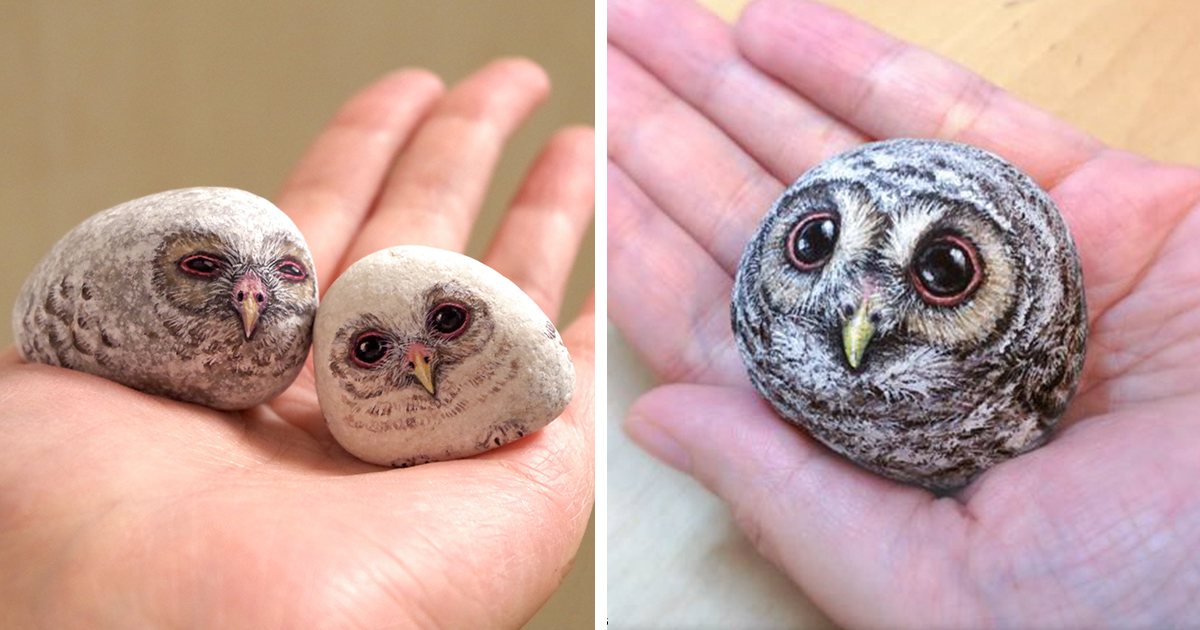
I Turn Stones Into Animals That Fit In The Palm Of Your Hand And I Hope They Make You Smile
Jul
Some people see a rock and think, “Yep. That is definitely a rock.”
I see a round little pebble with a suspiciously penguin-shaped belly, a sleepy seal hiding in a river stone, or a tiny turtle that looks like it has been waiting 400 million years for someone to notice it. Then I bring it home, clean it up, study every bump and stripe, and slowly turn it into an animal small enough to sit in your hand.
These palm-sized stone animals are not meant to be perfect museum sculptures. They are meant to be tiny companions: little creatures with crooked smiles, serious eyebrows, round bellies, and enough personality to make you forget they began life as something you nearly stepped on.
My goal is simple. I want someone to pick up one of my stone animals, turn it over in their palm, and smile for no practical reason at all. In a world full of notifications, deadlines, password resets, and mysterious emails marked “urgent,” a tiny stone otter can be a surprisingly good reminder to pause.
How A Plain Stone Becomes A Tiny Animal
Every animal starts with the stone itself. I do not force a shape onto every pebble like a bossy art director with a clipboard. I look for what is already there.
A smooth oval stone might become a seal. A broad, flat rock might be a turtle. A narrow one with a pointed end may become a fox, a mouse, or a very judgmental little bird. Some stones have natural color changes that look like ears, wings, spots, or a tiny animal belly already built into the surface.
That is the fun part: nature gets the first vote.
Rock formations develop different colors, textures, layers, and patterns depending on the minerals and processes involved in their creation. Even simple stones can have veins, speckles, rough edges, smooth faces, or naturally weathered curves that make them feel oddly alive.
I usually spend more time looking at a stone than changing it. Turning it in the light is part of the process. Sometimes the animal appears immediately. Sometimes I stare at the pebble for twenty minutes and see absolutely nothing except, well, a pebble with an attitude.
Why Palm-Sized Stone Animals Feel So Special
There is something deeply satisfying about holding a tiny object that has weight, texture, and a story. A stone has already traveled through weather, water, pressure, heat, or time before it ever reaches my worktable. Then it becomes a small animal that can sit on a desk, a bookshelf, a windowsill, or in the hand of someone who needs a tiny dose of joy.
Large sculpture can be dramatic. It can tower over a room and make you feel like you should stand farther back and speak in a quiet museum voice. Small sculpture does something different. It invites you closer.
You can hold it. You can inspect its little nose. You can notice that its tail curves around one side or that its tiny feet are not exactly even because, frankly, neither are mine before coffee.
Artists have worked directly with stone for centuries, often allowing the material itself to influence the final form. The Smithsonian American Art Museum describes direct carving as a process in which artists work straight into stone or wood rather than relying entirely on a finished model or cast.
That idea matters to me. I may have a plan, but the stone always gets a vote.
My Favorite Tiny Stone Animal Personalities
The Sleepy Seal
The sleepy seal is usually made from a smooth, flattened gray stone. It has a rounded body, tiny flippers, and a face that suggests it has just been asked to attend a meeting at 8:00 a.m. Its expression says, “I support your dreams, but I would also like a nap.”
The Round Little Owl
Owls are perfect for stones because they are basically birds shaped like potatoes with opinions. A wide, rounded pebble can become an owl with oversized eyes, a tiny beak, and feather details that follow the natural marks in the rock.
I love making owls because people instantly give them personalities. One person sees wisdom. Another sees concern. Someone else sees a tiny accountant reviewing expenses.
The Pocket Turtle
Turtles are one of the friendliest shapes to create from stones. A domed rock already has the shell. A few careful lines can suggest legs, a head, and a pattern across the back. The result is often small enough to fit in a pocket, although I cannot guarantee it will help you move faster through life.
The Pebble Penguin
Penguins are naturally funny. They stand like they have places to be but no particular plan for getting there. A black-and-white stone can make the process easier, but any rounded stone can become a penguin once it has a small beak, a white belly, and the proper level of tiny bird confidence.
The Tiny Fox
Foxes require a slightly more dramatic stone. I look for a pointed end that can become a nose and a natural slope that suggests a curled tail. The best stone foxes seem to be caught halfway through a secret mission involving snacks, moonlight, and absolutely no consequences.
The Slow, Patient Process Behind Each Little Creature
Making miniature stone animals is not fast work. It is not the kind of craft where you press a button, hear a cheerful beep, and suddenly own a herd of tiny giraffes.
First, I clean the stone and let it dry completely. Then I study it from every angle. I often sketch directly on the surface with a washable pencil or marker. The drawing is simple: where the eyes might go, where the body curves, where the tail should rest.
After that, I begin shaping or adding small details. Depending on the stone and the style I want, I may gently sand an edge, smooth a rough spot, carve shallow lines, or add painted details. The goal is never to erase the stone’s history. I want its natural texture to remain visible, because that is what makes every animal different.
A perfectly smooth rock may become a sleek seal. A speckled stone may turn into a spotted cat. A rough stone with a little crack may become an old tortoise with the face of someone who has seen things.
Small animal sculpture has a long history across cultures. Museums around the world hold examples of carved stone animals and zoomorphic figures, showing that artists have long used animal forms to explore personality, symbolism, storytelling, and the relationship between people and nature.
Why Imperfect Stone Animals Are Often The Best Ones
I used to think every tiny animal needed symmetrical eyes, smooth edges, and a perfectly centered face. Then I made a stone rabbit with one ear slightly higher than the other.
I almost fixed it.
Then I realized the uneven ear made the rabbit look curious. It looked like it had just heard the refrigerator open from another room. Suddenly, it had character.
That little rabbit taught me something important: perfection is often less memorable than personality.
A tiny stone dog with a crooked tail may feel more alive than one with perfectly measured legs. A bird with oversized eyes might look like it is carrying a secret. A snail with a slightly lopsided shell can become the favorite piece on someone’s shelf because it seems to have survived a very dramatic afternoon.
Nature is not perfectly symmetrical. Animals are not perfectly symmetrical. People are definitely not perfectly symmetrical, especially after sleeping on the couch. So I have learned to let each piece keep a few quirks.
Finding Stones Responsibly
Part of making stone animals is respecting where the material comes from. I avoid taking rocks from protected landscapes, historic sites, national parks, or places where removing natural materials is prohibited.
National Park Service guidance is clear that natural resources, including rocks, should be left where they are in national parks. The Bureau of Land Management notes that some public-land collecting may be allowed for personal, noncommercial use, but rules vary by location and certain areas are closed or restricted.
For that reason, I prefer using stones from legal sources such as craft suppliers, landscaping suppliers, private property with permission, or places where collecting is clearly allowed. It is possible to make charming stone animals without treating every beautiful trail, beach, or park as a free art store.
Leave wild places wild. The animals can wait.
A Small Note About Stone-Carving Safety
Stone may look peaceful, but sanding, grinding, drilling, or cutting it can create fine dust. Some stone dust can contain crystalline silica, which is a serious health hazard when particles become airborne and are inhaled.
For that reason, I use appropriate protective gear, work with ventilation, clean up dust carefully, and avoid treating stone carving like a chaotic indoor snowstorm. Wet-sanding methods, eye protection, and a properly rated respirator can make a huge difference when working with stone dust.
Small art should bring happiness, not a cloud of regret floating around the garage.
How Tiny Stone Animals Can Make A Room Feel Warmer
One of the nicest surprises about making palm-sized stone animals is seeing where they end up. Some people place them beside houseplants. Others keep them on work desks, bedside tables, bookshelves, or windowsills. A few people give them as gifts to friends who need encouragement.
A stone animal does not demand attention. It does not flash, buzz, or insist that you subscribe to anything. It just sits there quietly, being a tiny bear, bird, turtle, fox, or seal.
That quiet presence can be powerful.
Creative activities and hands-on art-making are often associated with relaxation, emotional expression, and well-being. Research on arts participation suggests that creative engagement can support mood, confidence, and a sense of connection, although it is not a replacement for professional care when someone needs medical or mental-health support.
For me, making these little creatures is a form of slowing down. I focus on one stone, one shape, one tiny face. The rest of the world gets quieter for a while.
What I Hope You Feel When You Hold One
I hope you see more than a painted rock or a miniature sculpture.
I hope you notice the stone’s natural grain. I hope you see the tiny ears, the little paws, the wobbly expression, or the unusual shape that made the animal possible. I hope it reminds you that ordinary things can become delightful when you look at them with patience.
Most of all, I hope it makes you smile.
Not a giant, theatrical, award-show smile. Just a small one. The kind that appears when you notice something unexpectedly sweet on a difficult day.
Because sometimes joy does not arrive with fireworks. Sometimes it arrives as a tiny stone penguin sitting beside your keyboard, looking like it knows exactly what you did with that unfinished spreadsheet.
More Personal Experiences From Making Palm-Sized Stone Animals
The first stone animal I ever made was not impressive. It was supposed to be a hedgehog. At least, that was the plan. By the time I finished, it looked more like a potato that had experienced emotional growth.
I kept it anyway.
That tiny almost-hedgehog sat on my desk for months. Every time I looked at it, I remembered that creative work does not need to begin with mastery. Sometimes it begins with a strange little object that makes you laugh and refuses to be thrown away.
Over time, I started noticing animals everywhere in stones. A striped pebble looked like a resting cat. A smooth brown rock looked like a bear’s nose. A round gray stone had the exact expression of a seal who had just been told the fish buffet was closed.
Once you start looking for these shapes, it becomes difficult to stop. You find yourself walking along a path thinking, “That one is definitely a duck.” Then, five minutes later, you are carrying seven rocks in your pockets and wondering why your jacket suddenly weighs as much as a small appliance.
My favorite part is when someone else sees an animal differently than I do. I may think a stone is clearly a fox, but another person sees a squirrel. Someone else sees a dragon. A child may announce that it is a “moon puppy,” which is obviously the correct answer because children are better at naming magical animals than adults.
That is why I love making these small stone creatures. They invite imagination. They do not arrive with instructions, labels, or a five-step explanation of their meaning. They simply exist.
A little stone owl can be wise, worried, sleepy, or sarcastic depending on the day. A tiny turtle can represent patience, persistence, calmness, or a very ambitious paperweight. A pebble penguin may remind someone of a favorite trip, a funny friend, or the strange comfort of wearing socks indoors during a rainy afternoon.
There is also something wonderful about working with a material that has already survived so much. A stone has been shaped by pressure, weather, water, movement, and time. It has been bumped, buried, exposed, smoothed, chipped, and carried somewhere new. Then it lands in my hand and becomes a tiny animal.
I like to think that every stone animal carries a little bit of that journey with it.
Maybe that is why people connect with them. They are small, but they are not empty. They hold texture, weight, history, and imagination all at once. They are reminders that beauty does not always need to be loud, expensive, polished, or perfect.
Sometimes beauty is a three-inch rock that looks vaguely like a sleepy otter.
And sometimes that is enough.
Conclusion
Turning stones into palm-sized animals has taught me to look more closely at the ordinary world. A plain pebble can become a fox. A weathered rock can become a turtle. A tiny rough stone can become a bird with the expression of someone who has just discovered there are no snacks left.
Each small sculpture is a collaboration between nature and imagination. The stone provides the shape, the texture, the colors, and the history. I add a few details, a little personality, and hopefully enough charm to make someone smile.
That is all I really want from these tiny stone animals: to make a shelf feel warmer, a desk feel friendlier, or a difficult day feel a little lighter.

