
Beauty Tools & Accessories
German Beer Hall Table & Benches
Jun
A German beer hall table and benches set does something ordinary dining furniture rarely manages: it turns sitting down into a group activity. Long wooden surfaces, sturdy folding legs, and backless benches create the unmistakable atmosphere of a Bavarian beer gardeneven when the nearest alpine meadow is several thousand miles away and the “festival grounds” are actually your suburban patio.
Also known as an Oktoberfest table set, Bavarian beer table, or German beer garden furniture, this practical three-piece arrangement is designed for communal dining. It can serve sausages and pretzels during a themed party, accommodate a crowd at a family cookout, or provide flexible seating for a brewery, restaurant, event venue, or backyard.
Its charm comes from simplicity. There are no fussy upholstery fabrics, complicated extensions, or mysterious decorative drawers. You get one long table, two matching benches, and a clear invitation to pull up a seat.
What Is a German Beer Hall Table and Bench Set?
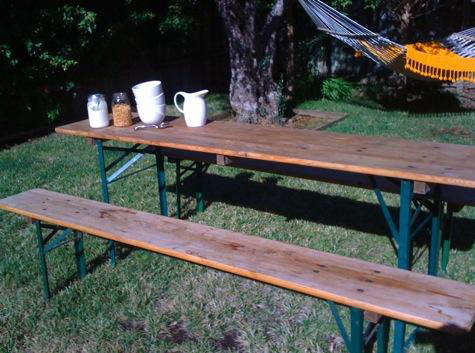
A traditional German beer hall furniture set consists of a narrow rectangular table paired with two long, backless benches. Many commercial versions use solid or laminated wood tops mounted on folding steel frames. The legs collapse beneath each piece, making the entire set easier to transport and store between events.
The classic design is closely associated with Bavarian beer gardens and Oktoberfest celebrations. Long rows of tables encourage guests to sit together rather than separating everyone into small private groups. That arrangement is efficient, but it also changes the mood. Strangers talk. Plates get passed. Someone inevitably starts a toast before everyone has located a beverage.
Typical Dimensions
Exact measurements vary, but a full-size German beer hall table commonly measures approximately 70 to 87 inches long, 20 to 28 inches wide, and about 29 to 30 inches high. Each matching bench is usually about the same length as the table, roughly 10 to 12 inches wide, and 17 to 18 inches high.
A six-foot set generally seats six adults comfortably, while longer versions may accommodate eight, depending on shoulder room and whether anyone is wearing an enthusiastic amount of lederhosen. For relaxed dining, plan on about 22 to 24 inches of bench length per adult.
How It Differs From a Picnic Table
A picnic table normally has benches permanently connected to the table frame. A German beer table uses separate benches. This distinction matters because separate seating is much more flexible. Benches can be moved closer, pulled away, used independently, or placed against a wall when extra seating is needed.
The narrow tabletop is another defining feature. It saves floor space and allows multiple sets to be arranged in rows inside a hall, under a tent, or across a patio. The trade-off is less room for oversized centerpieces. Fortunately, beer halls have survived for generations without six-foot floral arrangements blocking the pretzels.
Why the Design Works So Well
The enduring popularity of the German beer hall table and benches is not based on nostalgia alone. The design solves several practical problems at once.
Communal Seating Without Chair Clutter
Two benches can seat more guests than the same area filled with individual chairs. There are fewer legs to trip over, fewer pieces to carry, and no need to create a perfectly symmetrical chair arrangement before guests arrive.
Backless benches also allow people to enter from either end or briefly straddle the seat while making room. This is useful at busy parties where guests arrive in waves rather than appearing at the table with military precision.
Efficient Storage
Folding models collapse nearly flat. The benches can often be stacked on the inverted tabletop or stored beside it. That makes the design suitable for seasonal celebrations, mobile catering operations, community halls, churches, breweries, schools, and homeowners who do not want permanent banquet furniture occupying the garage.
Strong, Simple Construction
Traditional and modern versions rely on sturdy cross supports, wide leg assemblies, and long structural rails. Fixed wooden sets may use a trestle base with a central stretcher connecting two leg assemblies. A well-designed stretcher helps prevent side-to-side racking, while broad feet improve stability.
Portable sets typically use locking steel legs. The hardware should open fully and remain rigid under normal use. If the table performs an impression of a newborn deer when someone places a platter on it, the frame needs adjustment or replacement.
Choosing the Right Materials
Spruce and Fir
Spruce and fir are common in traditional-style folding beer garden sets because they are relatively light, affordable, and easy to finish. Their pale color accepts stain well, allowing manufacturers to create the familiar golden, honey, or amber appearance associated with festival furniture.
These softwoods can serve well outdoors when properly sealed and protected, but they should not be treated as indestructible. Repeated saturation, standing water, and harsh sunlight will eventually cause checking, discoloration, or finish failure.
Cedar, Redwood, and Cypress
For a permanent outdoor German beer table, naturally decay-resistant species such as cedar, redwood, and cypress are attractive choices. They are commonly used for exterior furniture because they handle moisture better than many untreated woods.
Cedar is especially appealing for DIY projects because it is manageable with standard tools and develops a soft gray patina when left unfinished. However, it dents more easily than dense hardwoods, so expect signs of use. In communal furniture, a few honest marks often improve the rustic character.
Acacia, Eucalyptus, and Teak
Acacia offers a useful balance of strength, appearance, and price. Its prominent grain can make a simple beer hall set look more refined, although it still benefits from regular care when exposed to weather.
Eucalyptus is another durable outdoor option, while teak provides exceptional moisture resistance and long service life. Teak is also considerably more expensive. It makes sense for premium residential or commercial installations, but it may be extravagant for a table that spends eleven months folded behind inflatable holiday decorations.
Steel Frames and Hardware
Steel folding legs provide strength without requiring a bulky wooden base. Look for powder-coated frames, solid welds, dependable locking mechanisms, and substantial hinges. Powder coating helps protect steel from scratches and corrosion, although damaged areas should be touched up before rust spreads.
Outdoor fasteners deserve particular attention. Stainless-steel hardware is a strong choice for exposed furniture. Ordinary interior screws can corrode, stain the surrounding wood, and weaken over time. A beautiful tabletop attached with bargain-bin drywall screws is an unnecessarily dramatic experiment.
Indoor, Outdoor, or Both?
Before buying a German beer hall table and benches, decide where the set will spend most of its life. Indoor-only furniture does not need the same weather resistance as a set used on an uncovered patio.
For indoor beer halls, restaurants, and finished basements, prioritize a smooth surface, stable frame, stain-resistant finish, and feet that will not scratch flooring. Rubber or plastic floor protectors are especially useful on concrete, tile, and hardwood.
For covered porches and event tents, moderately weather-resistant wood with a quality exterior finish may be sufficient. Fully exposed furniture requires more care. Rainwater must not collect on the top, and the feet should not remain in wet soil or grass. Moisture entering exposed end grain can shorten the life of the legs even when the upper surfaces look perfectly sealed.
A folding set offers the best versatility. Bring it outside for gatherings, wipe it clean, allow it to dry, and store it in a ventilated location. Furniture covers can help, but trapping damp wood beneath a tight plastic cover creates a small private spa for mildew.
What to Look for When Buying a Beer Hall Set
1. A Stable Frame
Open the table and press gently on each corner. A small amount of movement may be normal on uneven ground, but the structure should not rack or twist easily. Check that braces are fully engaged and that the legs contact the ground evenly.
2. Adequate Bench Capacity
Review the manufacturer’s stated weight rating. Commercial events place heavier demands on furniture than occasional family use. Guests may sit down suddenly, shift together, or lean sideways during animated conversations. A bench needs more than attractive wood grain; it needs trustworthy support.
3. Smooth Edges
Run a hand along the tabletop and bench edges. They should feel smooth and slightly eased rather than sharp. Splinters and festive dining are poor companions, especially when guests are wearing shorts.
4. Reliable Folding Hardware
Hinges should move without binding, and locking mechanisms should be easy to confirm visually. Avoid frames with thin braces, loose rivets, or exposed pinch points. Commercial buyers should choose hardware designed for repeated setup and breakdown.
5. A Repairable Finish
Outdoor furniture eventually needs attention. Penetrating exterior stains are often easier to refresh than thick, glossy coatings. Film finishes can provide excellent protection, but once they crack or peel, refinishing may involve more sanding and preparation.
6. Manageable Weight
Heavier furniture is often more stable, but portability matters. Consider who will move the pieces and where they will be stored. Carrying an eight-foot solid-wood tabletop through a narrow basement stairway can turn cheerful festival planning into an unexpected team-building exercise.
Styling a German Beer Hall Table and Benches
The set already has a strong visual identity, so decorating it does not require theatrical scenery. Blue-and-white Bavarian patterns, simple linen runners, stoneware serving bowls, wooden boards, and glass mugs create an Oktoberfest look without making the space resemble a souvenir shop.
For a modern brewery aesthetic, pair honey-toned wood with matte black steel, industrial pendant lights, and minimal table decorations. A residential dining room can soften the benches with removable seat pads or narrow cushions. Use ties or nonslip backing so the cushions do not migrate toward the floor whenever someone stands up.
Outside, string lights and planters add warmth. Leave enough clearance behind each bench for guests to stand. About 36 inches is a useful starting point, though high-traffic areas may need more. At the ends of the table, preserve a clear path for serving food and carrying trays.
Care and Maintenance
Clean the wood with a soft cloth or brush and a mild solution of soap and water. Avoid aggressive pressure washing, which can raise the grain and drive moisture into joints. Dry the surfaces promptly, especially before folding or stacking the pieces.
Inspect the set at the beginning and end of each season. Tighten loose bolts, check welds, replace missing foot caps, and sand any emerging splinters. Rust on steel hardware should be treated before it expands beneath the coating.
Exterior wood may need periodic refinishing. The schedule depends on sun exposure, rainfall, finish type, and storage conditions. When the surface begins to look dry, faded, or unevenly absorbent, clean it and apply a compatible exterior product according to the manufacturer’s directions.
Store folding furniture only after it is completely dry. Keep it off damp floors and allow air circulation around the stacked pieces. A garage, shed, or protected storage room is preferable to leaving the set exposed all winter.
Building a DIY German Beer Hall Table
A DIY version can use either folding steel leg kits or a wooden trestle base. Folding legs provide portability, while a trestle offers a more substantial furniture-like appearance.
For a fixed table, two broad trestles joined by a long stretcher create an efficient structure. Traditional through-tenons and wedges allow a knockdown base, but bolts and concealed connectors can produce a simpler build for less experienced woodworkers.
Allow solid wood to move across its grain. Do not rigidly fasten a wide tabletop at every point. Figure-eight fasteners, elongated screw holes, or tabletop clips can secure the surface while permitting seasonal expansion and contraction.
Use exterior-rated adhesive and corrosion-resistant fasteners for outdoor construction. Round exposed corners, ease the edges, and sand seating surfaces carefully. Test the finished furniture gradually with controlled weight before inviting a full row of guests to conduct the official structural review.
What Using German Beer Hall Tables and Benches Is Really Like
The first noticeable difference is how quickly the furniture changes a space. Set up three ordinary patio tables and guests tend to divide into familiar groups. Set up several German beer hall tables in long rows and the gathering feels like an event before the first plate arrives.
A practical hosting experience usually begins with placement. The tables look narrow when folded, but benches need room for people to sit, stand, and walk behind them. The most successful layout leaves a central service aisle and avoids placing bench ends against walls. Guests appreciate not having to negotiate a human obstacle course while carrying a full mug and a plate of mustard-covered food.
Once people sit down, the communal design starts doing its work. Conversations travel along the table instead of remaining trapped between two neighboring chairs. Serving platters move naturally from one person to another. Guests who arrived knowing only the host often begin talking to people across from them because the narrow top keeps everyone within comfortable conversational distance.
The benches are less luxurious than upholstered dining chairs, but that is part of the experience. They encourage casual movement and make it easy to squeeze in one additional guest. For a meal lasting an hour or two, most adults are comfortable on a smooth, properly sized bench. For an all-day gathering, removable pads provide welcome relief without changing the traditional appearance.
Cleanup is pleasantly direct. There are no chair backs full of crumbs and no fabric seats absorbing spilled drinks. Plates come off, debris gets brushed away, and the surfaces can be wiped with mild soap and water. The important step is allowing everything to dry before folding. Stacking damp wooden benches may save ten minutes after the party and create several hours of mildew removal later.
Portable sets also reveal a few lessons. First, they are easier to move with two people, even when one person technically can manage the weight. Second, fingers should stay clear of folding braces. Third, every locking mechanism deserves a visual check before guests sit down. “It looked open” is not a reassuring sentence when six adults are already holding dinner.
During an Oktoberfest-style party, the furniture contributes more atmosphere than many decorations. Blue-and-white banners help, and music certainly helps, but long shared tables create the essential social rhythm. Guests face one another, lift glasses together, and make room for newcomers. The table becomes part of the entertainment rather than merely a surface beneath it.
The same qualities work beyond themed celebrations. Families use these sets for graduation parties, seafood boils, game nights, craft sessions, and holiday overflow seating. Breweries value them because groups can expand and contract without rearranging a collection of individual chairs. Community organizations appreciate their efficient storage. Homeowners appreciate getting a table and seating for several people without dedicating permanent patio space to a bulky dining set.
There will be small inconveniences. A narrow top fills quickly when every guest brings a large plate. Backless seating is not ideal for everyone, particularly people who need lumbar support. Long benches also transmit motion, so one energetic guest can make several neighbors aware that the polka has started.
Even so, the overall experience is unusually sociable. German beer hall tables and benches are not designed to isolate diners in personal bubbles. They are designed to make room, share food, and keep the group connected. That is why a form built around simple boards and strong frames continues to feel lively. The furniture does not demand attention, but it quietly encourages everyone at the table to pay attention to one another.
Conclusion
A German beer hall table and benches set combines efficient seating, practical storage, and unmistakable communal character. Folding models are excellent for seasonal parties and mobile events, while fixed trestle versions can become permanent features in dining rooms, breweries, patios, and covered outdoor kitchens.
Choose the set according to its environment. Prioritize solid construction, smooth seating surfaces, dependable braces, weather-appropriate wood, and corrosion-resistant hardware. With reasonable cleaning and protection, a quality set can support years of meals, celebrations, conversations, and cheerful arguments about who took the last pretzel.
The greatest strength of this furniture is not merely how many people it seats. It is how naturally it brings those people together.
SEO Tags

