
Beauty Tools & Accessories
10 Bizarre Ways The Moon Affects Life On Earth
Jun
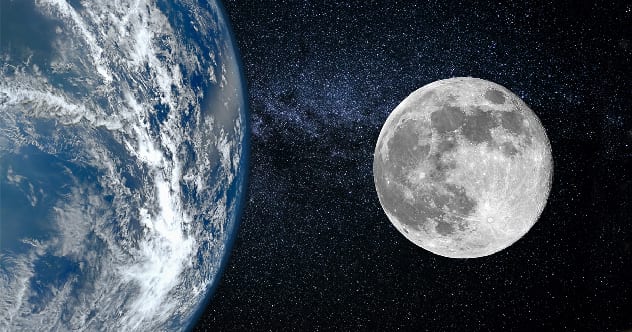
The Moon looks peaceful enough. It hangs in the sky, reflects sunlight, inspires love songs, and occasionally convinces a neighbor to purchase a telescope he will use exactly three times. Yet Earth’s natural satellite is not merely decorative. Its gravity, reflected light, and dependable monthly cycle quietly influence oceans, rocks, animals, ecosystems, and perhaps even the way some people sleep.
Some lunar effects are enormous and undeniable. The Moon helps drive the tides and gradually slows Earth’s rotation. Others are wonderfully strange: groundwater can pulse inside wells, fish can wriggle onto California beaches to reproduce, and entire coral colonies can release their eggs and sperm within the same narrow window.
There is also plenty of folklore. Full moons are blamed for crime, hospital chaos, unusual births, bad driving, barking dogs, and that one coworker who replies to every email with “per my previous message.” Scientific evidence does not support most of those dramatic claims. The Moon’s genuine effects, however, are weird enough without inventing any.
How Can the Moon Affect Life From So Far Away?
The average distance between Earth and the Moon is roughly 238,855 miles, but distance does not eliminate influence. The Moon affects Earth mainly through gravity and light. Its gravitational pull produces tides in the oceans and smaller deformations in the solid planet. Meanwhile, changing lunar phases alter how much natural light reaches nighttime environments.
Many organisms have evolved around these repeating signals. Scientists call biological cycles synchronized with the lunar month circalunar rhythms. Other creatures respond indirectly to tides, currents, nighttime visibility, or predators whose behavior changes with moonlight.
1. The Moon Moves Entire Oceans
The most familiar example of how the Moon affects life on Earth is the tide. Lunar gravity does not simply pull one heap of water toward the Moon. Because gravitational strength differs across Earth, two broad tidal bulges form: one on the side facing the Moon and another on the opposite side.
As Earth rotates through these bulges, coastlines experience rising and falling water. Local geography, seafloor shape, wind, weather, and the Sun’s gravity complicate the schedule, so high tide does not necessarily occur when the Moon is directly overhead.
Spring Tides Have Nothing to Do With Spring
During new and full moons, the Sun, Earth, and Moon are approximately aligned. Their tidal effects reinforce one another, producing higher high tides and lower low tides called spring tides. During quarter moons, the forces partly counteract one another, creating weaker neap tides.
These cycles determine when mudflats flood, tide pools refill, salt marshes exchange nutrients, and coastal organisms can feed or reproduce. For countless species, the lunar tide is less like background scenery and more like a giant dinner bell.
2. The Moon Makes Solid Ground “Breathe”
Ocean water is not the only part of Earth that responds to lunar gravity. The solid crust also flexes in a phenomenon known as an Earth tide. The movement is too small and gradual for people to feel, but precision instruments can measure the ground rising, falling, stretching, and compressing.
This means the supposedly solid floor beneath your feet is performing an extremely slow-motion dance. Fortunately, it is less noticeable than a washing machine with an unbalanced load.
Some Wells Rise and Fall With the Moon
When Earth tides squeeze and relax underground rock formations, they can slightly alter aquifer pressure and porosity. Water levels in certain wells consequently fluctuate in step with lunar and solar tidal forces.
Hydrologists can analyze these tiny movements to learn about an aquifer’s storage properties, fractures, and connection to nearby water. The Moon is therefore capable of moving water without touching the oceanor even appearing above the local horizon.
3. The Moon Is Making Earth’s Days Longer
Earth rotates faster than the Moon travels around it. Because the tidal bulges do not remain perfectly aligned with the Moon, their gravitational interaction transfers rotational energy from Earth to the Moon’s orbit. Tidal friction gradually slows Earth’s spin.
The change is tiny on a human schedule, amounting to only milliseconds per century. Across geological time, however, it adds up. Ancient Earth had shorter days, and future Earth will rotate slightly more slowly.
The Moon Is Escaping at Fingernail Speed
The same exchange of energy pushes the Moon into a wider orbit. Laser measurements made using reflectors placed on the lunar surface show that it is moving away from Earth by roughly 1.5 inches, or about 3.8 centimeters, each year.
No emergency farewells are required. The Moon is not packing a suitcase and leaving before breakfast. Its recession matters over millions and billions of years, not next Tuesday. Still, every birthday finds it a little farther away.
4. The Moon Helps Keep Earth’s Climate From Going Wild
Earth rotates with its axis tilted by about 23.5 degrees, giving the planet its seasons. Gravitational interactions can make a planet’s axial tilt vary over time, potentially producing dramatic long-term climate changes.
Earth’s unusually large Moon helps limit that wobble. It does not freeze the planet’s tilt in one position, but it contributes to keeping the variation within a comparatively narrow range. That stability has supported relatively consistent seasonal patterns over long periods.
A Moon-free Earth would not instantly become an uninhabitable pinball. Computer models of a moonless planet produce different outcomes depending on their assumptions. Nevertheless, the real Moon provides an important stabilizing influence, making our climate history less chaotic than it might otherwise have been.
5. Corals Use the Lunar Cycle to Schedule Mass Spawning
Coral reefs may look like colorful rock gardens, but corals are animalsand many species reproduce with astonishing coordination. On particular nights associated with seasonal conditions, sunset, temperature, and the lunar cycle, colonies release huge quantities of eggs and sperm into the water.
Some spawning events occur within windows lasting only minutes. Neighboring colonies participate almost simultaneously, turning the sea into a drifting blizzard of tiny reproductive bundles.
Why Such Precise Timing Matters
Corals cannot stroll across the reef looking for a date. Synchronization increases the probability that eggs and sperm from different colonies will meet before currents, predators, or dilution ruin the opportunity.
The Moon is not the only cue, and different species respond on different schedules. However, lunar light and monthly biological rhythms are important parts of the system. It is synchronized reproduction on a metropolitan scale, except everyone arrives on time.
6. The Moon Coaxes Fish Onto California Beaches
California grunion perform one of the strangest lunar-related reproductive acts on Earth. During high tides following full and new moons, these small silver fish swim onto sandy beaches. Females twist into the wet sand and deposit eggs while males fertilize them.
The adults then return to the ocean, leaving the eggs buried above the ordinary waterline. There, the embryos develop in moist sand with access to oxygen.
The Next High Tide Becomes an Alarm Clock
Roughly two weeks later, another series of strong tides reaches the eggs. The movement and agitation of seawater help trigger hatching, and the larvae are swept into the ocean.
The schedule is exquisitely linked to tidal cycles. Spawn too low and the eggs could drown or be washed away too soon. Spawn too high and the hatchlings might miss their ride. Grunion have effectively turned the beach into an incubator with lunar-controlled pickup service.
7. Jellyfish and Marine Worms Keep Monthly Calendars
Many marine animals possess internal rhythms that track more than the 24-hour day. Certain worms, mollusks, crustaceans, fish, and jellyfish coordinate reproduction or migration with phases of the Moon.
In Hawaii, box jellyfish are known for appearing near shore on a predictable schedule associated with the lunar cycle. Researchers have investigated how changes in moonrise timing and nighttime light may interact with reproductive development and migration toward shallow reef areas.
Some marine worms also undergo coordinated reproductive transformations and emerge at particular lunar phases. Their nervous systems, hormones, light-sensitive proteins, and genes appear to participate in biological clocks capable of measuring monthly rhythms.
These organisms are not checking a tiny underwater calendar. Evolution has built the calendar into them.
8. Moonlight Changes Who Huntsand Who Hides
A full moon can make nighttime landscapes dramatically brighter. That extra visibility changes the risks and rewards for nocturnal animals.
Small mammals may reduce activity in exposed areas when bright moonlight makes them easier for owls, foxes, or other predators to detect. Some predators benefit from improved visibility and hunt more actively. Others become less successful because their prey can see them coming from farther away.
There Is No Single “Full-Moon Behavior”
Responses differ among habitats and species. A bat hunting insects in open air faces different conditions from a rodent crossing a desert clearing or a large cat moving through dense vegetation. Cloud cover, vegetation, artificial lighting, and the Moon’s position above the horizon also matter.
The lunar phase can therefore reshuffle an ecosystem’s nighttime schedule. Some creatures clock in, others call in sick, and a few apparently wait for darker working conditions.
9. Moonlight Pushes Deep-Sea Animals Farther Down
Every evening, enormous numbers of small fish, shrimp, squid, and zooplankton rise from deep water toward the surface to feed. Before daylight, they descend again. This daily vertical migration is often described as the largest animal migration on the planet by total biomass.
Moonlight can modify it. During bright nights, some organisms remain deeper or reduce their upward movement because illuminated surface waters expose them to visual predators. Research on marine animals has found lunar-related changes hundreds of feet below the waves.
That is a bizarre demonstration of how far reflected sunlight can reach into an ecosystem. The Moon does not need to illuminate an animal directly. A faint change in underwater brightness can ripple through feeding relationships, movement patterns, and the transport of carbon into deeper water.
10. The Moon May Nudge Human Sleepbut It Does Not Cause “Lunacy”
Human beings love blaming the full moon for unusual behavior. The words lunatic and lunacy even reflect an old belief that the Moon could produce mental disturbance.
Modern studies have not found reliable evidence that full moons cause broad increases in crime, psychiatric emergencies, accidents, or childbirth. Confirmation bias offers a simpler explanation: people remember a chaotic full-moon shift and forget equally chaotic nights during other phases.
Sleep Research Is More Complicated
Some studies have reported that people fall asleep later, sleep less, or experience changes in sleep physiology near the full moon or during the nights leading up to it. Such effects have sometimes appeared even in urban communities surrounded by artificial light.
Other large studies have found little or no meaningful association. Differences in methods, populations, electric lighting, seasonal conditions, and statistical analysis make the topic difficult to settle.
The most responsible conclusion is modest: human sleep may show subtle lunar associations under certain conditions, but the evidence is mixed. The Moon is not remotely controlling your brain. Your late-night phone screen remains a far more suspicious character.
What the Moon Does Not Do
The Moon’s genuine influence should not be confused with claims that it controls individual human decisions, causes major earthquakes on a predictable schedule, determines when hair should be cut, or makes vegetables grow faster simply because seeds were planted under a particular phase.
Lunar and solar tides do create small, measurable stresses within Earth’s crust. However, large earthquake catalogs generally do not show a simple full-moon pattern, and the forces responsible for earthquakes are vastly greater than ordinary tidal stresses. Some specialized seismic or volcanic systems may display weak tidal relationships when already close to a threshold, but this is not a practical prediction method.
Separating these limitations from established lunar effects makes the real science more impressive, not less.
Experiencing the Moon’s Effects for Yourself
The Moon’s influence can sound abstract when reduced to gravity diagrams and biological terminology. Fortunately, several lunar effects can be observed directly without a research vessel, laboratory, or heroic willingness to be stung by a box jellyfish.
Compare a Coastline During Different Tides
Begin with a local tide table from an official coastal service. Visit the same safe shoreline near low tide and again near high tide. A beach that seemed enormous may nearly disappear. Previously submerged rocks can reveal mussels, barnacles, anemones, crabs, and pools crowded with small fish.
The experience makes an important point: a tide is not merely water moving up and down a ruler. It repeatedly expands and contracts an entire habitat. Observe without removing animals, and never turn your back on waves. The Moon is educational, but it does not provide lifeguard services.
Attend a Responsible Grunion Observation
Along parts of the Southern California coast, public programs help visitors observe predicted grunion runs. Seeing hundreds of fish emerge from the surf is far more memorable than reading that they “spawn intertidally.” The beach suddenly appears alive and metallic.
Regulations and closed observation periods protect the fish, so visitors should check current rules and avoid handling animals or disturbing nests. A successful run is never guaranteed; waves, temperature, sand conditions, and fish behavior can ignore the neat boxes printed on a schedule.
Walk the Same Trail Under a Full Moon and a New Moon
Choose a familiar, legally accessible location with safe footing. Under a bright Moon, shapes, paths, and open spaces may remain visible without artificial light. Near a new moon, the same landscape can feel completely different.
Listen for changes in insects, frogs, birds, or mammals, but avoid interpreting a single walk as a scientific experiment. Weather and season can overwhelm lunar effects. The goal is to experience why moonlight could alter an animal’s decision to hunt, hide, travel, or remain near cover.
Keep a Sleep Diary for Several Lunar Cycles
Record bedtime, estimated sleep onset, awakenings, wake time, caffeine, alcohol, exercise, screen exposure, stress, and bedroom conditions. Add the lunar phase afterward rather than checking it every evening. That reduces the chance that expectation will shape the report.
Most people will discover that work schedules, children, temperature, anxiety, pets, and glowing electronics explain more variation than the Moon. That result is still useful. Personal observation becomes more meaningful when competing explanations are recorded instead of politely escorted out of the room.
Watch a Spring Tide From a Safe Viewpoint
Compare predicted tidal ranges around a quarter moon with those near a new or full moon. Local topography and weather may complicate what you see, but the difference can be striking in bays, estuaries, and salt marshes.
These excursions turn the lunar cycle into something tangible. The Moon stops being a flat white circle and becomes part of an active Earth-Moon systemone that shifts coastlines, organizes feeding opportunities, influences reproduction, and quietly changes the planet over immense spans of time.
Conclusion: Earth’s Quiet Partner Is Surprisingly Busy
The Moon does far more than brighten the night. Its gravity moves oceans, flexes rock, alters groundwater, slows Earth’s rotation, and helps stabilize the planet’s axial tilt. Its light and monthly cycle influence animal movement, predator-prey relationships, coral reproduction, fish spawning, and deep-sea migration.
Not every famous lunar claim survives scientific investigation. The full moon does not reliably produce madness or make hospital waiting rooms explode with supernatural chaos. Yet the established ways the Moon affects life on Earth are stranger, richer, and more consequential than folklore.
Our satellite may look silent, but it has been conducting part of Earth’s biological and geological orchestra for billions of years. Apparently, it simply prefers to work nights.

