
Body Care
Did the FBI Steal $500 Million from Treasure Hunters?
Jul
A buried Civil War fortune, an FBI excavation in the Pennsylvania wilderness, reports of late-night machinery, and an armored truck that appeared to be carrying something extremely heavy: the Dents Run mystery has nearly everything a conspiracy thriller needs. The only missing ingredient is proof.
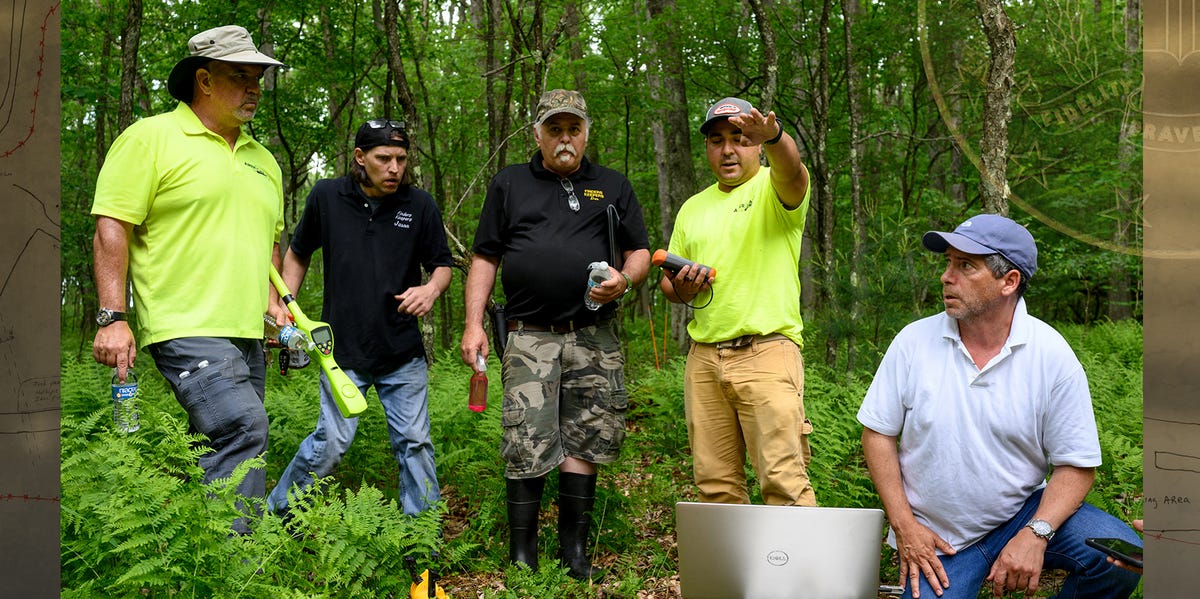
Treasure hunters Dennis and Kem Parada believe they led federal agents to several tons of gold in 2018, only to be excluded from the excavation and told that nothing had been found. The FBI has consistently denied recovering gold or anything else of value. Years of Freedom of Information Act litigation revealed thousands of pages, photographs, videos, maps, and operational records, yet no document has conclusively answered the question at the center of the story.
So, did the FBI steal $500 million from treasure hunters? Based on the public evidence, that accusation has not been proven. However, unusual government conduct, incomplete records, disputed timelines, and eyewitness accounts have given the allegation enough oxygen to keep it alive.
The Quick Answer: There Is No Proof the FBI Stole Gold
No court, congressional investigation, inspector general report, or authenticated government record has established that the FBI recovered a massive gold cache at Dents Run. There is also no verified inventory, refinery receipt, transportation record, photograph, assay result, or chain-of-custody document showing that nine tons of gold entered federal possession.
The FBI’s official position is straightforward: agents conducted a court-authorized excavation in March 2018 and found no gold or other evidence. Finders Keepers, the treasure-hunting organization associated with the Parada family, argues that agents secretly recovered the treasure after removing the hunters from the site.
Those are two dramatically different accounts. The available evidence raises legitimate questions about transparency, but questions are not interchangeable with proof. Suspicion may launch a documentary series; it does not automatically establish a half-billion-dollar theft.
What Is the Dents Run Civil War Gold Legend?
Dents Run is a remote community in Elk County, Pennsylvania, surrounded by steep hills, forests, old mining areas, and enough foggy scenery to make a metal detector start humming from sheer excitement.
Local legend says that a Union Army detachment transported gold through Pennsylvania during the Civil War in 1863. Depending on the version, the shipment contained either 26 or 52 bars, commonly described as weighing about 50 pounds each. The gold was allegedly being taken from what is now West Virginia toward the U.S. Mint in Philadelphia when the soldiers encountered trouble.
Some versions say the party was ambushed. Others say the men became lost, separated, or forced to bury the cargo. The escort allegedly disappeared, died, or returned without the treasure. Like many durable legends, the story has acquired new decorations during each retelling.
The Historical Problem with the Legend
Researchers have found little solid historical documentation proving that such a military shipment vanished near Dents Run. No widely accepted Army manifest, Mint record, casualty report, or contemporary investigation has confirmed the complete story.
That does not prove the treasure never existed. Civil War records can be incomplete, and covert shipments were not necessarily announced with a brass band. Still, the lack of a reliable paper trail is a major weakness. Before asking who took the gold, investigators must first establish that the gold was there.
How Finders Keepers Became Involved
Dennis Parada and his son, Kem, spent years investigating the Dents Run site. Their group, Finders Keepers, used metal-detection equipment, drilling, subsurface surveys, field observations, and repeated visits to identify what they believed was a large buried metallic object.
The Paradas reported collecting numerous readings in approximately the same location. During exploratory drilling, they said a drill bit struck something metallic beneath the surface. They also described yellow-colored material appearing on the bit, although no laboratory test confirmed that the substance was gold.
Because the suspected site was on Pennsylvania state land, the treasure hunters could not simply arrive with a backhoe and begin rearranging the mountain. They needed government permission. Eventually, the information reached federal authorities, and the FBI began investigating.
The Government’s Own Survey Raised Expectations
The FBI hired a geophysical contractor to examine the target area. According to records later disclosed in litigation, the survey detected an underground metallic anomaly estimated at roughly seven to nine tons. The reported density was considered suggestive of gold.
That result was significant enough for the FBI to seek a federal search-and-seizure warrant. The government described the location as a possible cultural heritage site containing valuable property that might belong to the United States.
However, a geophysical anomaly is not a certified stack of bullion. Survey equipment can indicate differences in density, conductivity, magnetism, or subsurface structure without identifying the material with certainty. It can tell investigators, “Something interesting may be down there.” It cannot reliably add, “And here is its serial number.”
What Happened During the 2018 FBI Excavation?
The FBI excavated the Dents Run hillside from March 13 to March 14, 2018. Federal agents, technical personnel, heavy equipment, security teams, and other resources were present. The Paradas expected to observe the operation and believed they might receive a finder’s fee if the gold was recovered.
Instead, they said they were largely kept away from the active excavation. After the operation ended, agents showed them an empty trench and said nothing had been found.
That outcome immediately struck the treasure hunters as implausible. Their instruments had produced repeated readings, and the government’s contractor had identified a massive anomaly. Even if the object was not gold, they expected the excavation to uncover rock, scrap metal, mining debris, buried equipment, or something capable of explaining the signal.
According to the FBI, the dig simply failed to locate gold or other evidence. According to the Paradas, the empty excavation was not evidence of an empty hillside; it was evidence that the hillside had already been emptied.
Why Do the Treasure Hunters Suspect a Secret Recovery?
Reports of Overnight Excavation
Several people living or working near Dents Run later described lights, machinery, banging, or excavation-like noise during hours when the FBI was supposedly finished working. One nearby resident said activity continued late into the night. Hunters in the area reported hearing heavy equipment early the next morning.
The FBI has denied conducting an unauthorized overnight recovery. The witnesses could not see every action at the dig site, so their accounts do not prove that gold was removed. Nevertheless, their descriptions conflict with the clean daytime timeline presented by the government.
Armored-Truck Sightings
Witnesses also reported seeing armored vehicles and black government-style SUVs traveling around the area. One hunter said an armored truck appeared to ride noticeably lower after leaving Dents Run, as though it carried a substantial load.
Later-released planning documents showed that transportation to the Philadelphia Mint had been contemplated in case treasure was discovered. That explains why armored transportation could have been considered or placed on standby. It does not prove that the trucks carried gold.
A low-riding vehicle is visually intriguing, especially in a gold story. It is not a metallurgical analysis. The truck could have carried personnel, equipment, soil, protective materials, or nothing connected to the excavation. It could also have carried recovered metal. The public evidence does not settle the matter.
Gaps and Confusion in FBI Records
Finders Keepers submitted Freedom of Information Act requests seeking records from the operation. The FBI initially reported difficulty locating responsive materials, but it eventually identified a large collection of documents.
The released material included photographs, videos, maps, reports, and operational information. The treasure hunters complained that significant portions were missing, heavily redacted, low quality, or inconsistent. Questions arose about video-file counts, photo timestamps, missing expenditure records, search terms, document preservation, and whether all locations likely to contain responsive records had been examined.
Federal judges agreed that portions of the FBI’s explanation of its searches were inadequate and required additional work. That matters because public agencies must conduct reasonable searches when responding to FOIA requests.
But the rulings were about record-search procedures. The court did not find that the FBI recovered gold, destroyed evidence of a recovery, or stole property from Finders Keepers.
The Strongest Arguments Supporting the Cover-Up Theory
- The geophysical anomaly was substantial: A seven-to-nine-ton target with properties considered consistent with gold is difficult to dismiss as a random bottle cap.
- The treasure hunters were restricted: Keeping the people who identified the target away from the excavation created distrust and prevented independent observation.
- Witness timelines conflict with the official account: Reports of nighttime machinery and early-morning activity suggest more work may have occurred than the FBI publicly acknowledged.
- Armored transportation was anticipated: Operational records contemplated moving recovered treasure to the Mint, while witnesses claimed to see armored vehicles nearby.
- The records process was messy: Missing or difficult-to-locate files, inconsistent video descriptions, and questions about the scope of FBI searches made the agency appear less transparent than the situation demanded.
Together, these points form a credible reason to request more documentation. They do not form a complete evidentiary chain proving that hundreds of millions of dollars in gold were removed.
The Strongest Arguments Against the Theft Claim
- The original Civil War story is poorly documented: If the legendary shipment never existed, the modern dispute may be built around an impressive but misidentified geological feature.
- Geophysical surveys can produce false or ambiguous targets: Density estimates are not the same as physical recovery and laboratory confirmation.
- No authenticated image shows the gold: Despite cameras, witnesses, litigation, and years of attention, no verified photograph or video depicts bars being removed.
- No financial or logistical trail has emerged: Moving, securing, testing, transporting, storing, and accounting for several tons of bullion would likely involve numerous people and records.
- The FBI has repeatedly denied finding anything: That denial is not automatically true simply because it came from the government, but it remains the only definitive official account.
- The FOIA case found procedural problems, not theft: Incomplete searches can result from poor records management, bureaucracy, or narrow interpretations of a request. They do not necessarily demonstrate a criminal cover-up.
Could the FBI Legally Take the Gold?
The word “steal” makes the headline sparkle, but ownership is more complicated. Finders Keepers never publicly established legal title to the alleged gold. The group identified a suspected cache on state-controlled land and hoped to receive compensation for assisting with its recovery.
If the gold were proven to be property stolen from or lost by the United States government, federal authorities could claim it on behalf of the government. The FBI’s warrant was based partly on that theory. Removing government property pursuant to a valid warrant would not necessarily constitute theft, even if the discoverers felt excluded or unfairly treated.
A separate dispute could arise over a promised finder’s fee, compensation agreement, contract, or equitable interest. That would require evidence showing what the government promised, what was recovered, who owned it, and whether the treasure hunters fulfilled the applicable conditions.
In other words, even proof that the FBI recovered gold would not automatically prove that agents stole it “from” the treasure hunters. It could, however, support claims involving nondisclosure, compensation, records handling, or improper government conduct.
What Did the Freedom of Information Lawsuit Accomplish?
Finders Keepers sued the Department of Justice in 2022 after years of attempting to obtain FBI records. The litigation forced the government to describe its search methods, release additional material, defend redactions, and address questions about missing videos and other records.
In March 2025, a federal judge accepted some FBI explanations but found other aspects of the search inadequate. Among the concerns was whether the FBI had searched all locations where relevant emails, expense information, or temporary operational records might have been stored.
The case ended in a settlement announced in July 2026. The government agreed to pay approximately $26,000 toward Finders Keepers’ litigation costs, and the organization agreed not to pursue additional FBI records through that lawsuit.
The settlement was a meaningful transparency victory for a small treasure-hunting organization challenging a major federal agency. It was not a judgment that the FBI found gold. The government did not pay a finder’s fee, compensate the Paradas for bullion, or admit to a secret recovery.
Why the $500 Million Figure Is Not Certain
The frequently repeated $500 million estimate is based on the claimed weight of the anomaly and the market value of gold during particular periods. Estimates have ranged widely because reports differ on whether the suspected mass weighed seven tons, nine tons, or another amount.
The value also changes with the gold price and with the meaning of “ton.” Calculations differ depending on whether a writer uses short tons, metric tons, gross weight, or estimated pure-gold content.
Most importantly, a valuation assumes the buried material was actually gold. Multiplying the price of gold by the estimated weight of an unidentified anomaly produces an attention-grabbing number, not an appraisal.
Practical Experiences and Lessons from the Dents Run Mystery
The Dents Run dispute offers useful lessons for treasure hunters, historians, journalists, landowners, and anyone who expects a government agency to help recover a valuable object. These are not tales of instant riches. They are experiences in documentation, negotiation, patience, and occasionally discovering that bureaucracy can bury paperwork almost as effectively as a Pennsylvania hillside.
1. Establish Ownership Before Revealing the Location
A discovery and ownership are not the same thing. The landowner, state government, federal government, original owner, archaeological authorities, and finder may all assert competing rights. Before revealing an exact location, a finder should consult a qualified attorney and determine which laws govern abandoned property, lost property, cultural artifacts, mineral rights, public land, and government property.
A written agreement should address access, recovery costs, confidentiality, observation rights, evidence handling, compensation, and dispute procedures. A friendly conversation and a handshake can feel reassuring until excavators, federal agents, and several tons of hypothetical gold arrive.
2. Preserve Independent Evidence from the Beginning
Treasure hunters should maintain dated field notes, original instrument files, GPS data, photographs, videos, equipment specifications, calibration records, witness statements, and laboratory results. Originals should be backed up in several secure locations, with clear records showing when each file was created and whether it was modified.
The Paradas accumulated years of readings, but the decisive excavation occurred under government control. Independent cameras, mutually approved observers, documented access rules, and a written evidence protocol might have reduced later disagreement. When every participant controls a different piece of the record, even an empty hole can generate ten competing stories.
3. Treat Scientific Readings as Leads, Not Conclusions
Subsurface technology is enormously useful, but users must understand its limitations. Ground-penetrating radar, magnetometers, resistivity surveys, electromagnetic instruments, and density calculations detect physical properties. They do not always identify a material conclusively.
A responsible investigation uses multiple methods, independent experts, control tests, and alternative explanations. Old mines, concentrated minerals, buried machinery, conductive rock, voids, water, and human debris can produce unusual signals. The best question is not merely, “Could this be gold?” It is also, “What else could create the same reading?”
4. File Records Requests Early and Precisely
The Dents Run experience shows how difficult it can be to reconstruct a government operation after the fact. A records request should identify likely offices, personnel, dates, operation names, contractors, equipment, transportation, emails, photographs, videos, expense reports, evidence logs, and communications with other agencies.
Requesters should preserve every response and track apparent contradictions. Agencies may use different record systems, retention policies, search terms, and legal exemptions. A response stating that no records were found does not always mean no records exist; it may mean the request was interpreted narrowly or the wrong database was searched.
5. Separate Suspicion from What Can Be Proved
Eyewitness accounts, unexplained vehicles, missing files, and inconsistent timelines can justify further investigation. They should not be presented as conclusive proof without corroborating physical or documentary evidence.
This distinction protects credibility. A treasure hunter who carefully labels a claim as an inference is more persuasive than one who treats every bureaucratic error as confirmation of a master plan. Governments sometimes conceal information, but they also misfile records, communicate poorly, and create confusion through ordinary institutional clumsiness. The challenge is determining which explanation fits the complete evidence.
6. Prepare for the Human Cost of a Long Treasure Dispute
Major treasure claims can consume years, money, family attention, professional reputation, and emotional energy. The Dents Run controversy lasted far beyond the two-day excavation. It moved through media interviews, public accusations, expert reviews, records requests, and federal litigation.
Anyone entering a similar dispute should define realistic goals. Is the objective financial compensation, public recognition, historical truth, access to records, or permission for another excavation? Clear goals help prevent the search from becoming an endless contest in which every unanswered question requires another decade of digging.
Final Verdict: Mystery, Mismanagement, or Massive Theft?
The claim that the FBI stole $500 million from treasure hunters remains unproven. Finders Keepers presented evidence that justified investigation: repeated instrument readings, a government-confirmed anomaly, reports of nighttime activity, armored-vehicle sightings, and significant gaps in the public record.
Yet the missing pieces are enormous. There is no authenticated image of recovered bars, no assay, no verified transport manifest, no storage record, no financial trail, and no judicial finding that gold was removed. There is not even strong historical proof that the legendary Civil War shipment reached Dents Run.
The most defensible conclusion is that the FBI handled the excavation and its records with insufficient transparency, creating an environment in which suspicion flourished. That may reflect bureaucratic failure, protected law-enforcement procedures, missing documentation, or a deliberate concealment. The public evidence cannot determine which.
For now, the alleged treasure occupies an unusual location: somewhere between Pennsylvania bedrock, federal filing cabinets, and America’s enduring love of a mystery involving gold.

