
Skincare
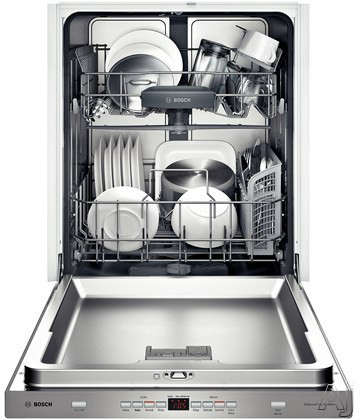
Bosch 300 Series Fully Integrated Dishwasher
Jul
A dishwasher should do two things exceptionally well: clean dishes and stay out of the way. The Bosch 300 Series Fully Integrated Dishwasher takes that assignment seriously. It hides behind a cabinet-matching panel, keeps its controls tucked along the top edge of the door, and operates quietly enough that you may check the floor light just to confirm it has not taken the evening off.
For this review, the Bosch 300 Series SHV53CM3N serves as the primary reference model because it represents the current 24-inch, fully integrated, custom-panel-ready design sold in the United States. Exact cycles, certification details, pricing, and rack configurations can vary among Bosch 300 Series models, so buyers should always verify the complete model number before ordering.
The SHV53CM3N combines a stainless-steel tub, three-rack loading system, PrecisionWash cleaning technology, PureDry condensation drying, Wi-Fi connectivity, RackMatic adjustability, and a 46-dBA sound rating. Its overall dimensions are approximately 33 7/8 inches high, 23 9/16 inches wide, and 23 1/16 inches deep.
What Does “Fully Integrated” Mean?
“Fully integrated” is not marketing poetry for “looks rather nice.” It describes a dishwasher designed to disappear into the kitchen.
The controls are positioned on the top edge of the door, where they remain hidden when the dishwasher is closed. More importantly, the SHV53CM3N is panel-ready. Instead of arriving with a visible stainless-steel or painted front, it accepts a custom cabinet panel and compatible handle supplied separately.
Once properly installed, the dishwasher can resemble another cabinet door. This approach works especially well in open-concept kitchens, minimalist interiors, luxury remodels, and smaller rooms where too many appliance finishes can make the space look visually busy.
The cabinet panel is not included with the appliance. Its size, weight, mounting position, and handle placement must meet Bosch’s installation requirements. Professional installation is often the sensible choice because a crooked panel can turn a sophisticated integrated kitchen into something that looks as though a cabinet door lost an argument with gravity.
Key Specifications at a Glance
- Model used for reference: Bosch 300 Series SHV53CM3N
- Installation type: 24-inch built-in, fully integrated, panel-ready
- Sound level: 46 dBA
- Interior: Stainless-steel tub
- Capacity: Up to 16 place settings
- Rack system: Three racks with an adjustable middle rack
- Cleaning system: PrecisionWash
- Drying system: PureDry condensation drying
- Connectivity: Wi-Fi with the Home Connect app
- Leak protection: 24/7 AquaStop
- Cycle indicator: InfoLight floor projection
Retail specifications list five standard wash cycles, with three additional cycles accessible through Home Connect. They also identify three standard options plus two additional app-based options. Because Bosch occasionally updates software functions and model configurations, the retailer listing and appliance documentation should be checked before purchase.
Cleaning Performance: The Main Reason to Buy It
PrecisionWash Sensors and Spray Arms
The Bosch 300 Series uses PrecisionWash, a system that combines sensors with targeted spray action. During a cycle, sensors assess soil conditions and allow the machine to adjust washing behavior rather than treating a lightly used coffee mug and a casserole dish with dried cheese as identical problems.
This does not mean the dishwasher can erase every culinary disaster without preparation. Large food scraps, bones, fruit pits, toothpicks, and other debris should be scraped into the trash. However, aggressive pre-rinsing is generally unnecessary and can prevent an automatic cycle from correctly detecting how dirty the load is.
In practical terms, the Bosch 300 Series is designed for ordinary family loads: plates with sauce residue, cloudy glasses, breakfast bowls, silverware, cooking utensils, and moderately dirty cookware. Independent testing and retailer feedback commonly praise Bosch 300 Series models for consistent cleaning, quiet operation, and strong performance with full loads.
Five-Level Wash Coverage
The dishwasher’s multi-level washing system directs water throughout the tub so that all three racks receive cleaning action. Proper loading remains important. A large cutting board placed directly in front of a spray path can still block water, and a tall spoon dangling through the rack can interfere with a spray arm. No dishwasher technology has yet defeated the ancient household enemy known as “someone loaded it strangely.”
Three Racks and Flexible Loading
The Standard Third Rack
The third rack is one of the most useful upgrades over a basic two-rack dishwasher. It provides a dedicated area for flatware, serving spoons, spatulas, measuring tools, shallow lids, and other slim items that otherwise consume valuable space below.
Moving silverware and utensils to the third rack can free the lower basket for plates, cookware, or additional bowls. It also helps prevent utensils from nesting together, which can leave spoons looking suspiciously untouched after a cycle.
Popular Mechanics has highlighted the value of third racks for increasing usable capacity, and current Bosch 300 Series listings describe capacity for as many as 16 place settings, depending on the exact model and loading arrangement.
RackMatic Adjustable Middle Rack
Bosch’s RackMatic system allows the middle rack to move among three height levels, creating up to nine possible positions because each side can be adjusted. Lowering the rack helps accommodate tall glasses or mugs, while raising it creates additional room for large plates, skillets, or pots in the bottom rack.
The system is particularly useful when a load contains awkward combinations. A tall wineglass does not care that your dinner plates also need somewhere to live. RackMatic gives both a reasonable chance of fitting without requiring a small engineering conference at the kitchen sink.
How Quiet Is 46 dBA?
At 46 dBA, the Bosch 300 Series is very quiet by everyday household standards. It is not the quietest dishwasher Bosch makesthe 500, 800, and Benchmark lines include models with lower sound ratingsbut 46 dBA is suitable for most kitchens, including many open-plan layouts.
You may hear soft water movement or a faint mechanical sound while standing near the machine, but it should not dominate normal conversation or force the television to begin shouting. Because the appliance is so discreet, Bosch includes InfoLight, which projects a red light onto the floor while a cycle is running.
Independent reviewers repeatedly identify quiet operation as a major Bosch strength. Consumer Reports has also ranked Bosch highly for dishwasher performance, predicted reliability, and owner satisfaction across its tested lineup.
PureDry: Efficient, Gentle, but Not Perfect
The Bosch 300 Series uses PureDry, a closed condensation-drying system. Instead of relying on an exposed heating element at the bottom of the tub, it uses heat from the final rinse and the stainless-steel interior to encourage moisture to condense away from the dishes.
The absence of an exposed heating element means dishwasher-safe plastics can generally be placed on the lower rack without the same risk of melting or warping associated with some traditional heated-dry designs. It also makes the drying process relatively energy-conscious.
The trade-off is that PureDry may leave some plastic containers, silicone items, and deeply curved surfaces damp. Plastic holds less heat than glass, ceramic, and metal, while rims and recessed areas trap droplets. This is a normal drying challenge, not proof that the dishwasher has developed a personal grudge against food-storage containers.
Using rinse aid, selecting Extra Dry when available, loading containers at an angle, and opening the door after the cycle can improve results. Buyers who demand exceptionally strong plastic drying may prefer a higher Bosch series with AutoAir or CrystalDry, although those upgrades generally cost more. Yale Appliance’s comparisons identify enhanced drying as one of the primary differences between Bosch’s midrange and premium lines.
Home Connect and Smart Features
The SHV53CM3N supports Bosch’s Home Connect platform. After pairing the dishwasher with a compatible Wi-Fi network, users can monitor cycle status, receive notifications, access additional programs, adjust certain settings, and use tools that recommend an appropriate cycle.
The app can be genuinely helpful when the dishwasher is hidden behind cabinetry. A phone notification can tell you that a cycle has finished, while remote monitoring answers the important modern question: “Did I start the dishwasher, or did I merely think about starting it?”
Home Connect also supports functions such as program assistance, delayed scheduling, care notifications, and integration with certain compatible smart-home platforms. Some cycles and options are app-exclusive, so connecting the dishwasher unlocks more functionality than the physical control panel alone.
Still, Wi-Fi is a convenience rather than a requirement. Core washing functions remain available at the appliance, making the dishwasher usable even by people who believe a kitchen appliance should not require an account, a password, and an emotional relationship with the router.
AquaStop Leak Protection
The Bosch 300 Series SHV53CM3N includes a 24/7 AquaStop leak-protection system. It is designed to detect abnormal water conditions, stop incoming water, and help drain the appliance if a leak is detected.
Leak protection is particularly valuable in a fully integrated installation because water escaping behind a cabinet panel may not be immediately visible. AquaStop cannot replace correct plumbing, a sound drain connection, or professional installation, but it provides an additional layer of protection.
Design and Build Quality
The stainless-steel tub gives the Bosch 300 Series a more substantial interior than entry-level dishwashers that rely heavily on plastic tubs. Stainless steel resists staining, helps support condensation drying, and contributes to quieter operation.
The racks move smoothly, although the exact rack components and folding-tine arrangements vary by model. The hidden controls preserve the integrated appearance, while the floor-projected InfoLight solves the problem created by that same design: without visible front controls, owners need another way to know the machine is operating.
Fully integrated installation also requires careful planning. Buyers should confirm cabinet-opening dimensions, electrical connections, water-supply placement, drain routing, toe-kick clearance, panel dimensions, and handle compatibility before delivery. The dishwasher itself may fit a standard 24-inch opening, but the decorative panel introduces additional variables.
Potential Drawbacks
The Custom Panel Costs Extra
The appliance does not include the decorative cabinet panel or matching handle. Those pieces must be ordered through a cabinetmaker, kitchen supplier, or remodeling contractor. Installation labor may also cost more than it would for a conventional stainless-steel dishwasher.
Plastic Items May Remain Damp
PureDry performs well with plates, glasses, and metal utensils, but lightweight plastics may retain moisture. Rinse aid and Extra Dry can help, although the 300 Series does not provide the same drying performance as Bosch models equipped with CrystalDry or an automatically opening door.
Cycles Can Be Long
Modern dishwashers often use longer cycles to reduce water and energy consumption while maintaining cleaning performance. The Bosch 300 Series is no exception. A sensor-based cycle may take considerably longer than an old-fashioned machine that treated water and electricity as though they were unlimited promotional samples.
Some Features Depend on the App
Home Connect adds useful cycles and options, but buyers who prefer physical controls may dislike having certain functions placed behind an app. The dishwasher remains fully functional without Wi-Fi, though not every available feature may be accessible.
It Is Not Bosch’s Quietest or Most Advanced Model
The 300 Series occupies the middle of Bosch’s lineup. Higher series can offer quieter operation, more flexible third racks, zone-control washing, automatic door opening, or enhanced mineral-based drying. The 300 Series is best viewed as the practical integrated option rather than the maximum-technology option.
Bosch 300 Series Versus Other Bosch Dishwashers
Compared With the Bosch 100 Series
The 300 Series generally adds a more premium interior and loading experience, including a stainless-steel tub and useful rack flexibility on many configurations. The 100 Series can cost less, but buyers choosing a custom-panel kitchen may find the 300 Series to be the more balanced long-term option.
Compared With the Bosch 500 Series
The 500 Series commonly improves sound levels and drying through features such as AutoAir on applicable models. It can be a worthwhile upgrade for households that wash many plastic containers or run the dishwasher next to a living area.
Compared With the Bosch 800 Series
The 800 Series is aimed at buyers seeking premium quietness, advanced rack designs, PowerControl washing on newer models, and CrystalDry on applicable configurations. It generally delivers stronger drying, especially for plastics, but at a higher price.
The 300 Series therefore occupies an appealing position: it delivers Bosch’s core cleaning system, quiet operation, a stainless-steel tub, three racks, smart connectivity, and custom-panel integration without charging for every premium feature in the catalog.
Who Should Buy the Bosch 300 Series Fully Integrated Dishwasher?
This dishwasher is a strong match for homeowners who:
- Want a dishwasher hidden behind custom cabinetry
- Value quiet operation but do not need the lowest possible decibel rating
- Need flexible loading for family dishes and cooking utensils
- Prefer a stainless-steel tub
- Want reliable cleaning without paying for Bosch’s most expensive drying technology
- Appreciate app notifications and remote cycle monitoring
- Are willing to use rinse aid for better drying performance
It may be less suitable for renters, budget-focused shoppers, people unwilling to purchase a custom panel, or households that expect every plastic container to emerge completely dry without adjusting settings.
Real-World Ownership Experience: What Daily Use Feels Like
The most noticeable part of living with a Bosch 300 Series fully integrated dishwasher is how little attention it demands once the installation and loading habits are sorted out. The custom panel makes the appliance visually disappear, so the kitchen appears calmer and more consistent. Guests may open the wrong cabinet while looking for it, which is either proof of excellent integration or an inexpensive form of entertainment.
During an average week, the third rack tends to become indispensable. Flatware can be arranged individually rather than dropped into a crowded basket, while spatulas, serving spoons, and small lids no longer compete with dinner plates for space. The benefit is not simply increased capacity. Moving utensils upward makes the lower racks easier to organize and reduces the number of items that block one another.
There is a brief learning period. Bosch racks may feel different from those in a traditional American dishwasher, particularly when loading deep bowls, thick stoneware, or unusually shaped cookware. The solution is experimentation rather than force. Adjusting RackMatic, folding available tines, changing plate direction, and placing large utensils on the third rack can transform a frustrating load into an efficient one.
Cleaning results are typically strongest when owners stop pre-rinsing everything. Scrape off heavy debris, load the dishes with dirty surfaces facing the spray, confirm that the arms rotate freely, add detergent, and let the sensors work. A plate with a thin layer of sauce is useful information for the automatic cycle. A plate polished under the faucet for three minutes is merely a wet plate taking a luxury ride.
Noise is unlikely to be a daily concern. In an open kitchen, the sound may register as gentle water movement rather than an appliance announcing every stage of its employment. InfoLight quickly becomes useful because the hidden controls provide no obvious front-facing status display. Seeing the red dot on the floor prevents someone from opening the door midway through a cycle and receiving an unexpected facial treatment.
Drying requires more realistic expectations. Ceramic plates, stainless-steel utensils, and most glassware generally finish in good condition, especially with rinse aid. Plastic storage containers may hold droplets around rims or recessed bottoms. Loading them at an angle and selecting Extra Dry can reduce the problem. Owners who frequently wash children’s cups, meal-prep containers, and silicone accessories may still need to shake off water or leave the door open briefly.
The Home Connect app is useful without becoming essential. Finish notifications are convenient when the dishwasher runs overnight or while household members are elsewhere in the home. Additional cycle choices may appeal to people who enjoy customization, but ordinary users can choose a standard automatic or normal program and move on with their lives.
Maintenance is straightforward but should not be ignored. The filter needs periodic inspection and cleaning, spray arms should remain unobstructed, and hard-water households may require more attention to detergent dosage and mineral buildup. Rinse aid is particularly important for condensation-drying dishwashers. Five minutes of routine care can prevent the familiar complaint that a previously excellent machine has mysteriously become “bad at dishes.”
Overall, the ownership experience is defined by dependable cleaning, restrained noise, flexible racks, and attractive integration. Its limitationsaverage plastic drying, longer efficient cycles, app-dependent extras, and the added expense of a custom panelare predictable rather than disastrous. For many households, that balance is exactly what makes the Bosch 300 Series appealing.
Final Verdict
The Bosch 300 Series Fully Integrated Dishwasher is a well-balanced choice for a panel-ready kitchen. It offers the features that matter moststrong cleaning, quiet performance, flexible racks, a stainless-steel tub, leak protection, and a discreet appearancewithout forcing buyers into Bosch’s highest price tier.
PureDry is gentle and efficient, though not unbeatable with plastic. The smart features are convenient, though not essential. Installation requires more planning than a standard dishwasher, but the finished result can look remarkably polished.
For homeowners who want a dishwasher that cleans confidently and then visually disappears, the Bosch 300 Series SHV53CM3N deserves serious consideration. It may not perform magic, but it handles the dishes so you can return to more important activitiessuch as wondering why every household owns seventeen food-storage lids and only four matching containers.
Note: Product specifications, available app functions, certifications, promotional prices, and included installation parts may change. Confirm the exact Bosch model number and current manufacturer documentation before purchasing or designing a custom cabinet panel.

