
Makeup
Architect Visit: Scrafano Architects in Los Angeles
Jun
Los Angeles is a city where architecture has to do a little bit of everything. It must frame a view, survive a slope, invite sunshine, block too much sunshine, charm the neighbors, flatter a cactus, and still make room for a dishwasher that does not sound like a small airplane. That is why an architect visit with Scrafano Architects in Los Angeles feels less like a formal studio tour and more like a practical lesson in how beautiful spaces actually get made.
Led by Elissa Scrafano, AIA, Scrafano Architects has built a reputation around thoughtful residential, commercial, retail, restaurant, renovation, and restoration work. The firm operates with a Los Angeles and Chicago presence, but its Southern California projects show a particularly sharp understanding of hillside living, midcentury bones, indoor-outdoor flow, sustainable materials, and the delicate art of making a home feel both designed and deeply personal.
This article takes the spirit of an architect visit and turns it into a guided walk through the firm’s design language: light, collaboration, adaptive reuse, environmental sensitivity, and a healthy respect for clients who have opinions about kitchen storage. Spoiler alert: good architecture is not just about dramatic glass walls. Sometimes it is about where the recycling bins go.
Who Are Scrafano Architects?
Scrafano Architects is an architecture and design studio known for creating spaces that are “innovative and authentic,” with a collaborative process that responds to each client’s needs, taste, and budget. That client-first language matters. In a city full of houses that look like they were designed for a magazine spread and not actual breakfast, Scrafano’s work often feels refreshingly livable.
The firm’s portfolio includes residential remodeling, custom homes, restaurant design, retail environments, commercial interiors, restoration, space planning, sustainable design, and project management. In other words, this is not a one-trick modernist pony wearing expensive glasses. The office has completed more than 400 projects across multiple scales, a number that suggests not only design experience but also the ability to survive the real world of permits, budgets, contractors, timelines, and the occasional client who changes their mind about tile after three meetings.
Elissa Scrafano’s background helps explain the studio’s blend of rigor and warmth. She studied architecture at the University of Michigan and earned a master’s degree from the Southern California Institute of Architecture, better known as SCI-Arc. Before founding Scrafano Architects, she worked in influential Los Angeles offices, including Frank O. Gehry and Associates and Eric Owen Moss Architects. That résumé brings experimentation, but the completed work shows restraint: the firm is interested in solving the problem, not tap dancing on top of it.
The Los Angeles Design Context: Light, Hills, and Drama
To understand Scrafano Architects in Los Angeles, you have to understand the city’s architectural personality. Los Angeles has a long modernist tradition tied to open plans, rectilinear structures, expansive glass, and indoor-outdoor living. The city’s famous Case Study House legacy did not simply create attractive houses; it shaped an entire way of thinking about domestic life: casual, flexible, sunlit, and connected to landscape.
But Los Angeles also has practical demands. Hillside lots can be gorgeous and stubborn. Views are priceless, but so are structural engineers. A good Los Angeles architect must know how to open a house to canyon air without turning it into a greenhouse, how to capture natural light without baking the sofa, and how to make a renovation feel effortless when the existing building has other plans.
This is where Scrafano’s approach becomes interesting. The firm’s work does not treat sustainability as a sticker slapped onto the brochure. Instead, sustainable design appears through smarter layouts, daylighting, durable materials, energy efficiency, restored structures, and connections to gardens and outdoor rooms. The best green architecture is often quiet. It does not shout, “Behold my eco-friendly magnificence!” It simply makes the house cooler, brighter, calmer, and cheaper to operate.
Inside the Echo Park Remodel: A Light-Filled Oasis
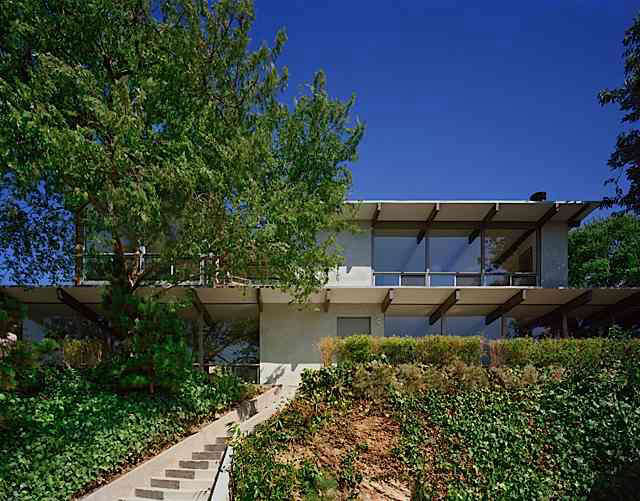
One of the most discussed Scrafano Architects Los Angeles projects is an Echo Park remodel featured by Remodelista. The project involved an existing midcentury post-and-beam house on a hilltop site with sweeping city views. The clients, described as environmental activists, wanted a home that felt open, sustainable, efficient, and connected to the outdoors.
Rather than erase the house’s original character, Scrafano opened the interior spaces to bring in more natural light and emphasized sustainable materials and energy efficiency. The result was a home that honored the spirit of Southern California modernism without feeling like a museum where you are afraid to put down a coffee mug.
Post-and-Beam Honesty
The visible post-and-beam structure gives the Echo Park home a sense of clarity. You can read how the house stands, which is oddly comforting. There is no architectural magic trick hiding behind decorative clutter. Beams, columns, glazing, deck, and view all work together like a small jazz band that rehearsed.
In Los Angeles, midcentury houses are often at their best when renovated with respect rather than nostalgia. The goal is not to freeze a home in 1958, complete with heroic amounts of orange laminate. The goal is to preserve what still works: openness, proportion, structural rhythm, and indoor-outdoor living.
Natural Light as a Design Tool
One of the smartest moves in the Echo Park project was the use of larger openings and strategic windows to reduce the need for artificial lighting. This is not just about aesthetics. Daylighting changes how a home feels across the day. Morning light makes breakfast less tragic. Afternoon light turns a plain wall into a feature. Evening views remind you why people tolerate Los Angeles traffic.
Passive design principles support this kind of work. Orientation, window placement, shading, thermal mass, and landscaping can all help regulate comfort and reduce energy use. In warm climates, controlling solar gain is just as important as bringing in brightness. The trick is to invite the sun over for coffee, not let it move in and take over the lease.
The Deck as an Outdoor Room
The Echo Park remodel also used a sustainably harvested wood deck as an extension of the living room. This detail captures a major Los Angeles residential design lesson: outdoor space should not feel like an afterthought. A well-designed deck, terrace, or garden can function like another room, especially in a climate where dinner outside is not a rare event but a lifestyle choice.
The clients also acquired adjoining unbuildable lots to create vegetable, fruit, and herb gardens. That move is wonderfully Los Angeles: half pragmatic land use, half utopian hillside dream, with a strong chance someone is growing rosemary like it has political ambitions.
The Scrafano Method: Collaboration Without Chaos
Scrafano Architects describes its work as collaborative from design conception through construction. That is a simple sentence hiding a complex reality. Architecture requires translation. Clients speak in feelings: “warm but not beige,” “modern but not cold,” “open but still cozy.” Contractors speak in measurements, lead times, and costs. City departments speak in forms. Architects must somehow make all those languages sit at the same table and behave.
The firm’s strength appears to be this translation process. Reviews and profiles emphasize communication, creativity, practical budgeting, and the ability to work across different styles. That flexibility is important because high-quality residential architecture is not about forcing every client into a signature look. A home should not scream the architect’s name louder than the person living there.
Budget as a Design Partner
Good architects do not treat budget as the villain. They treat it as a design partner with a stern haircut. Scrafano’s public descriptions repeatedly mention responding to client budgets, which is essential in renovation work. Existing houses bring surprises: outdated systems, structural quirks, mysterious previous remodels, and walls that have apparently been waiting decades to cause trouble.
A thoughtful architecture firm helps clients decide where to spend and where to simplify. Maybe the custom built-in matters more than imported stone. Maybe an enlarged window changes the whole room more than a dramatic finish. Maybe the best design move is removing three unnecessary partitions and letting the house breathe.
Project Lessons Beyond Echo Park
Scrafano Architects’ broader portfolio reinforces several consistent themes. In the Outpost Estates renovation, the firm collaborated on a two-story residence in the Mulholland area, focusing on interior reconfiguration, skylights, expansive windows, canyon views, kitchen and bath updates, and custom built-ins for art and collectibles. The project shows how architecture can support the personality of the owners rather than flatten it into generic luxury.
Another notable example is the green remodel associated with Eric Garcetti and Amy Wakeland, covered by Dwell. The home used solar power, recycled materials, garden terraces, and panoramic views to transform a midcentury hillside property into a more sustainable residence. The lesson is not that every home needs solar panels and a city-view terrace, although nobody is complaining. The lesson is that sustainable remodeling works best when performance and daily life are designed together.
Scrafano Architects also collaborated with Linc Thelen Design on a church-to-residence conversion in Chicago, demonstrating the firm’s adaptive reuse abilities. That 5,500-square-foot project transformed a former church into a single-family home while preserving historic elements such as stained glass, exposed brick, and a bell tower. Adaptive reuse is architecture with manners: it asks what the old building still wants to say before giving it a new job.
Why This Firm Matters for Los Angeles Homeowners
Los Angeles homeowners often face a complicated mix of dreams and constraints. A property may have a spectacular view, awkward circulation, aging systems, hillside limitations, wildfire concerns, heritage details, or a kitchen designed when people apparently owned one saucepan and no opinions. Hiring an architect is not just about drawing a prettier version of the house. It is about uncovering what the site, structure, budget, and owner can realistically become.
Scrafano Architects’ work suggests several useful principles for anyone considering a remodel in Los Angeles:
- Respect the existing structure. The best renovation often begins by identifying what is already valuable.
- Prioritize natural light. Better daylight can transform mood, function, and energy performance.
- Connect indoors and outdoors. Decks, gardens, terraces, and courtyards should feel integrated, not tacked on.
- Design for real life. Storage, circulation, maintenance, and comfort matter as much as dramatic photographs.
- Use sustainability intelligently. Energy efficiency, passive design, durable materials, and adaptive reuse are practical tools, not decorative buzzwords.
What an Architect Visit Reveals
An architect visit is different from scrolling through project photos. Photos show the finished mood. A visit reveals the decisions. You notice where the light lands, how the deck aligns with the living room, why a window is placed slightly off-center, and how a simple material can make a room feel calm instead of empty.
With Scrafano Architects, the visit also reveals a studio philosophy that values conversation. This matters because homes are intimate. A restaurant can impress strangers. A retail shop can guide customers. But a home has to support ordinary Tuesday mornings, sick days, birthdays, remote work, laundry, and the emotional crisis of choosing cabinet hardware. Architecture succeeds when it handles both the poetic and the mildly annoying.
Final Thoughts: Better Spaces to Live, Work, and Play
“Architect Visit: Scrafano Architects in Los Angeles” is more than a tour title. It is an invitation to look closely at how design improves daily life. Scrafano Architects brings together modernist awareness, sustainable thinking, adaptive reuse, collaborative project management, and a warm respect for client individuality.
The firm’s Los Angeles work feels especially relevant because the city itself demands architecture that can negotiate light, land, climate, history, and lifestyle. Whether opening a midcentury Echo Park home to the view, modernizing a Mulholland residence, or transforming an older structure for contemporary living, Scrafano Architects demonstrates that good design does not need to shout. It can simply make the room brighter, the plan smarter, the garden closer, and the house more itself.
And honestly, if a home can make you feel calm while also finding a dignified place for the recycling, the dog leash, the laptop charger, and the emergency snacks, that is not just architecture. That is civilization.
Extended Experience Notes: Visiting Scrafano Architects in Los Angeles
Imagine arriving for an architect visit in Los Angeles on one of those clear days when the sky looks freshly laundered and the hills appear to be showing off. The first thing you notice is that architecture here is never just about the building. It is about approach, slope, shadow, weather, street noise, trees, views, and that magical moment when a room suddenly opens toward the city like a curtain being pulled back.
A visit connected to Scrafano Architects would likely begin with conversation rather than spectacle. That is the first lesson. Good residential architecture starts with listening. Before anyone talks about materials or floor plans, there are questions: How does the family live? Where does the morning begin? Does the kitchen need to support quiet coffee, loud dinner parties, or both? Is the deck a private retreat, a social stage, or a place where basil goes to become pesto?
Walking through a Scrafano-style Los Angeles remodel, the strongest impression is how carefully the home responds to its site. In a hillside house, the view is not treated like wallpaper. It is edited. Some windows frame the skyline, others pull in garden texture, and others simply bring in enough daylight to make a hallway stop feeling like a tunnel. The design does not throw glass everywhere and hope for applause. It makes choices.
Materials become part of the experience as well. Plywood, bamboo flooring, wood decking, exposed beams, built-ins, tile, and painted surfaces are not just decorative decisions. They shape acoustics, durability, maintenance, warmth, and mood. The best materials do not beg for attention. They hold the space together while letting people live normally inside it. This is helpful because nobody wants a house that looks offended every time someone drops keys on the counter.
The outdoor areas may be the most memorable part of the visit. In Los Angeles, a deck or garden can change the entire rhythm of a home. Step outside, and the living room suddenly feels larger. A small herb garden makes dinner feel more connected to the place. A terrace catches the evening breeze. A view reminds the homeowner that the city is chaotic, beautiful, and somehow worth the parking situation.
Another experience that stands out is the way renovated homes balance past and present. Midcentury houses, in particular, can be tricky. Preserve too much and the home becomes a time capsule. Replace too much and it loses its soul. Scrafano Architects’ approach suggests a middle path: keep the structure, proportions, and spirit that matter, then update the plan, systems, lighting, storage, and energy performance for contemporary life.
By the end of the visit, the biggest takeaway is not a single dramatic detail. It is the sense that architecture is a long chain of small, intelligent decisions. A better window. A calmer kitchen. A deck that aligns with daily habits. A garden that turns leftover land into joy. A wall removed at exactly the right place. That is the quiet power of Scrafano Architects in Los Angeles: design that looks good in photographs but works even better on a regular day.

