
Beauty Tools & Accessories
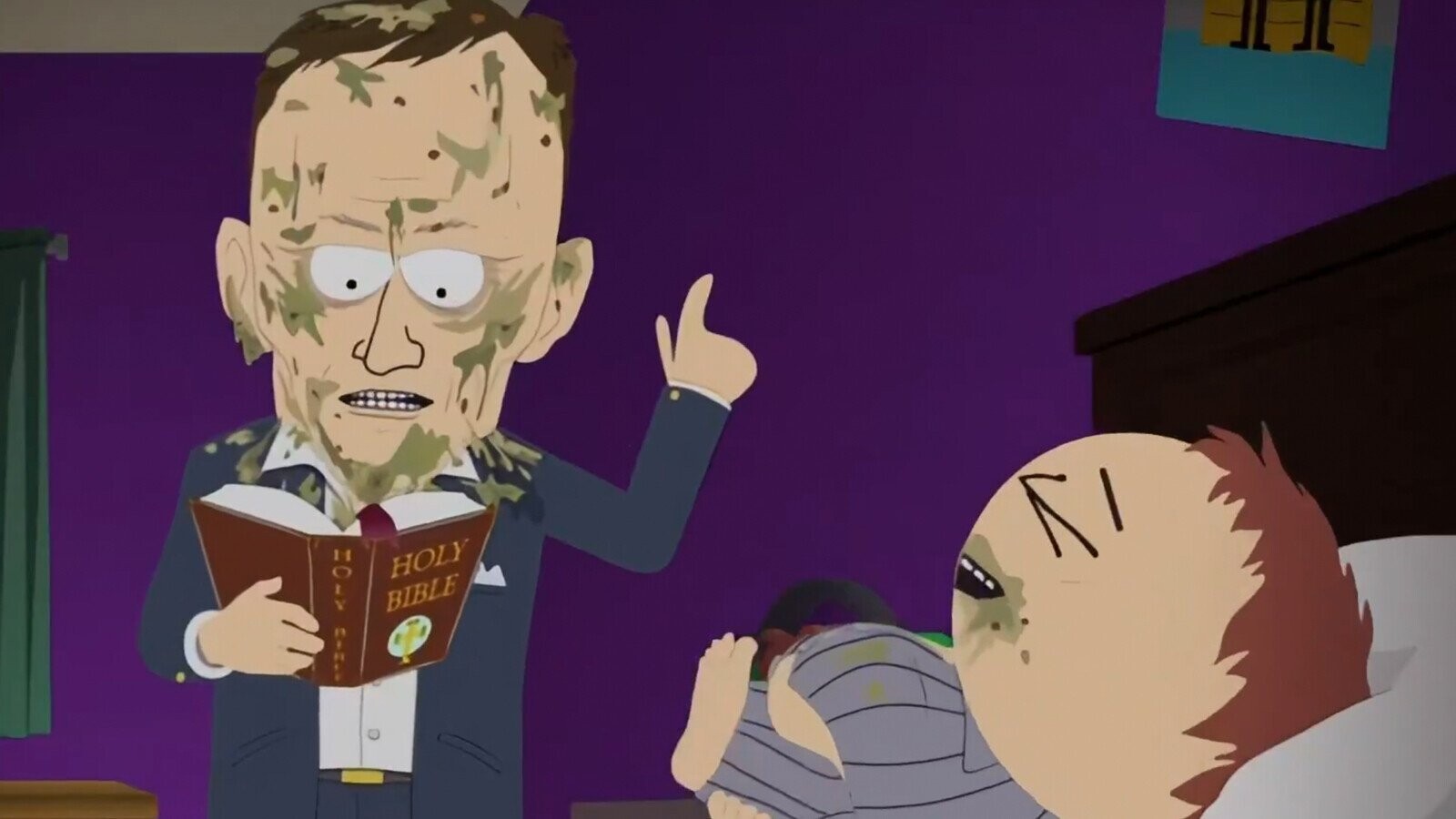
Why Peter Thiel Became the Exorcist in Tonight’s ‘South Park’
Jun
Note: This article is an original editorial analysis based on publicly reported episode details, official episode descriptions, and real background on Peter Thiel, South Park, the “6-7” meme, and recent Antichrist-related commentary.
Introduction: When Silicon Valley Meets Satanic Numerology
Only South Park could look at a billionaire tech investor, a viral classroom meme, Christian end-times anxiety, surveillance culture, political theater, and Eric Cartman’s digestive system, then decide: “Yes, this is one episode.” In the Season 28 premiere, “Twisted Christian,” Peter Thiel becomes something close to an exorcist, not because the show suddenly turned into a prestige horror drama, but because the real world handed Trey Parker and Matt Stone a gift basket labeled “too strange not to parody.”
The episode’s basic joke is simple: children at South Park Elementary cannot stop repeating the “6-7” meme, adults panic because adults are very good at panicking, and the school turns to Thiel as an expert on the Antichrist. From there, the plot spirals into a parody of religious fear, tech surveillance, political ambition, and the way America now treats every weird trend like either a national emergency or a brand opportunity.
So why Peter Thiel? Why make the PayPal co-founder, Palantir chairman, and Silicon Valley power broker the person trying to “solve” Cartman’s supposed possession? The answer sits at the intersection of real-life headlines and classic South Park logic: when a public figure becomes strongly associated with apocalyptic ideas, elite technology, and political influence, the show turns him into a character who tries to debug the Antichrist like a failed software rollout.
The Real Reason Peter Thiel Fits the Joke
Peter Thiel is not a random cameo. He is one of the most recognizable names in American technology and politics. He helped build PayPal, was an early Facebook investor, co-founded Palantir, and became a major figure in venture capital through Founders Fund. That background gives South Park plenty to work with: money, power, data, ideology, and the kind of public mystique that practically begs to be animated with a giant forehead.
The episode draws heavily from recent reporting about Thiel’s lectures on the Antichrist and Armageddon. Instead of treating those ideas as a quiet intellectual curiosity, South Park turns them into a literal mission. The fictional Thiel arrives at South Park Elementary convinced that a nonsense meme may be connected to satanic numerology. That is the show’s signature move: take a real cultural detail, push it one inch past sanity, and then keep pushing until the furniture catches fire.
What Happens in “Twisted Christian”?
“Twisted Christian” begins with the “6-7” craze sweeping through the school. The phrase, popularized through online meme culture and connected to Skrilla’s “Doot Doot (6 7),” has no stable meaning, which is exactly why it drives adults crazy. Kids love it because it functions like a secret handshake. Adults hate it because it sounds like a password to a club where everyone is laughing at them.
In the episode, PC Principal reads the trend as a sign of something darker. Rather than responding like a normal school administratorsay, by banning the phrase for twelve minutes before giving uphe brings in Peter Thiel. Thiel interprets Cartman’s reaction to “6-7” as possible possession and begins treating the situation as a spiritual emergency.
That setup lets the writers merge two unrelated stories into one absurd machine: Gen Alpha slang and billionaire apocalyptic anxiety. Cartman becomes the perfect target because he is already South Park’s most reliable vessel for chaos. If anyone in town could accidentally become the key to the Antichrist because he finds a meme too funny, it would be Cartman.
Why the “Exorcist” Role Works So Well
Peter Thiel as an exorcist is funny because the role clashes with his public image while also exaggerating parts of it. In popular culture, Thiel is often framed as a contrarian thinker, a tech investor obsessed with the future, and a political donor interested in reshaping institutions. South Park takes that reputation and asks: what if the same mindset used to fund startups and analyze society were applied to demonic possession?
The result is not a priest with holy water. It is a data-driven exorcist. The fictional Thiel does not merely pray over Cartman; he looks for patterns, gathers information, and treats the school like a surveillance puzzle. That is where Palantir becomes part of the joke. Palantir is known for data analysis, government contracts, and intelligence-related work, so the show turns spiritual warfare into a data-mining exercise. In other words, the devil may be in the details, but Thiel wants access to the details first.
The “6-7” Meme: Nonsense as Social Power
The brilliance of using “6-7” is that it means almost nothing, yet it produces very real reactions. That makes it perfect for South Park. The show has always loved meaningless cultural noise that becomes meaningful because people fight over it. The “6-7” meme is not powerful because it contains deep wisdom. It is powerful because it separates insiders from outsiders.
For kids, repeating “6-7” is a way to belong. For teachers and parents, it is a tiny daily haunting. The phrase becomes a social test: either you understand the rhythm and timing, or you are hopelessly old. By turning that into “satanic numerology,” the episode mocks how adult institutions overreact to youth culture. Every generation thinks the next generation’s slang is proof that civilization has misplaced its pants.
Why South Park Loves Meaningless Trends
South Park has always been at its sharpest when exposing how quickly society inflates nonsense into crisis. A weird phrase becomes a moral panic. A meme becomes a movement. A school fad becomes evidence of cultural collapse. The joke is not only that children are annoying. The deeper joke is that adults often need children’s nonsense to mean something terrifying, because panic feels more important than confusion.
Religious Satire Without a Sermon
“Twisted Christian” also works as a satire of performative faith. The episode does not simply mock Christianity; it mocks the way religious language can be turned into branding, politics, and control. The title itself suggests a warped version of belief, one where spiritual concern becomes mixed with status, fear, and institutional power.
By placing Jesus inside the South Park school system and Thiel in the role of Antichrist expert, the episode flips expectations. The sacred becomes bureaucratic. The billionaire becomes theological. The meme becomes demonic evidence. Nobody gets to stand on clean ground, which is exactly how South Park likes it.
Importantly, the show is not trying to produce a serious theology lecture. It is using religious imagery to satirize modern America’s habit of turning everything into a culture-war symbol. A number shouted by kids is not just a number. It becomes a test of faith, loyalty, authority, and whether anyone in the room knows how TikTok works.
Political Satire: The Antichrist as a Campaign Problem
The episode also continues South Park’s broader political storyline involving Donald Trump, Satan, and JD Vance. The details are deliberately outrageous, but the structure is familiar: powerful people respond to a crisis not with morality, but with strategy. The Antichrist is treated less like a cosmic threat and more like a public relations disaster with polling implications.
That is where Thiel’s character fits neatly. He becomes the bridge between Silicon Valley influence and political power. In the episode’s world, he is not merely a rich observer. He is a man with access, connections, and the confidence to believe he understands the hidden pattern beneath the chaos. In South Park, confidence like that is usually punished by vomit, humiliation, or both.
Surveillance Culture Gets Dragged Into the Church Basement
One of the episode’s smartest layers is its treatment of surveillance. The fictional Thiel uses data and monitoring tools to investigate the children. This is funny because it is wildly inappropriate, but it also points to a real anxiety: modern institutions increasingly treat data collection as the first answer to every problem.
School disruption? Collect data. Political threat? Collect data. Spiritual panic? Apparently, collect even more data. The joke lands because the logic sounds absurd and familiar at the same time. In today’s America, every annoyance seems one dashboard away from becoming a security issue.
From Holy Water to Facial Recognition
The classic exorcist enters with ritual, prayer, and ancient authority. South Park’s Thiel enters with surveillance feeds, elite connections, and a theory. That swap is the whole joke. The episode imagines a world where the modern priestly class is not made of clergy, but of billionaires, data analysts, and political consultants who believe they can see the future because they have better software.
Why Cartman Is the Perfect Possessed Child
Cartman has always been a parody of appetite, ego, manipulation, and childish cruelty. Making him the supposed key to stopping the Antichrist is funny because it almost sounds plausible inside the show’s universe. He has been many things over the decades: villain, victim, salesman, dictator, influencer, and professional problem. “Demonic meme reactor” is not even his strangest job title.
Cartman’s role also keeps the episode from becoming too abstract. Without him, the story could become a lecture about Silicon Valley, religion, and politics. With him, it becomes physical comedy, school chaos, and a reminder that South Park is still a cartoon where the biggest ideas often arrive through the dumbest possible doorway.
Why Peter Thiel Became the Exorcist: The Bigger Meaning
Peter Thiel became the exorcist in tonight’s South Park because he symbolizes a uniquely modern kind of power: technological, financial, ideological, and quasi-prophetic. The show exaggerates him into a man who believes he can identify the Antichrist, interpret a meme, surveil a school, and rescue civilization from a possessed fourth grader. That exaggeration is ridiculous, but it is built from recognizable pieces.
The episode is really asking a bigger question: what happens when powerful people see themselves not just as investors or political actors, but as guardians against civilizational doom? South Park answers with a shrug, a gag, and a warning: when elites start treating the world like an end-times chessboard, ordinary people may end up as pieces on the board.
What Makes the Episode SEO-Worthy and Culturally Sticky
From a media perspective, this episode was built to travel. It combines several high-interest search topics: Peter Thiel, South Park, the Antichrist, the “6-7” meme, Trump satire, Gen Alpha slang, and Silicon Valley surveillance. Each topic has its own audience, but together they form the kind of cultural traffic jam that entertainment writers dream about and school principals fear.
The phrase “Peter Thiel South Park exorcist” works because it sounds impossible until you learn it is real. That is the modern internet’s favorite flavor: a headline that appears generated by a fever dream, then turns out to be an accurate summary of television. South Park understands that better than almost anyone. The show has spent decades turning public confusion into comedy before the rest of culture finishes refreshing the page.
Experience Section: Watching the Episode Like a Confused Adult With Wi-Fi
The experience of watching “Twisted Christian” is a lot like walking into a school cafeteria, a venture capital conference, a church basement, and a political war room at the same time. You do not fully understand why everyone is shouting, but you immediately understand that nobody is in control. That is the pleasure of the episode. It captures the specific exhaustion of living in a culture where every trend arrives already over-explained, over-monetized, and somehow blamed on the end of civilization.
For viewers who already know the “6-7” meme, the episode feels like a victory lap for internet nonsense. The joke is not that the meme is clever. The joke is that its emptiness is exactly what makes it unstoppable. You can explain Shakespeare, tax policy, or the rules of baseball more easily than you can explain why a room full of children suddenly thinks two numbers are comedy gold. Parents and teachers watching the episode may feel personally attacked, but in a loving way, like being roasted by a cartoon that has been hiding in the back of the classroom taking notes.
For viewers who follow Silicon Valley politics, the Peter Thiel parody has a sharper edge. The episode turns abstract concerns about technology, power, and ideology into a simple visual gag: a billionaire trying to perform spiritual crisis management on Cartman. That image says a lot. It suggests that America increasingly expects ultra-rich technologists to have answers not only for business and software, but for democracy, morality, education, war, and now apparently the Antichrist. That is a lot to put on one LinkedIn profile.
The funniest part of the viewing experience is how quickly the episode makes the absurd feel logical. At first, Peter Thiel as an exorcist sounds like a random dart thrown at a celebrity wall. Ten minutes later, it feels inevitable. Of course South Park would connect Antichrist lectures to a school meme. Of course Cartman would become the center of the prophecy. Of course the solution would involve surveillance. The show’s world is ridiculous, but its internal logic is brutally efficient.
The episode also reminds long-time fans why South Park still matters. Its best satire is not always polite, balanced, or tidy. Sometimes it is messy because the culture it is mocking is messy. “Twisted Christian” does not ask viewers to pick a single villain. Instead, it throws everyone into the blender: kids addicted to nonsense, adults addicted to panic, politicians addicted to power, and billionaires addicted to grand theories. The result is comedy with teeth, even when those teeth are covered in cartoon slime.
In the end, watching Peter Thiel become the exorcist is less about Peter Thiel alone and more about the strange moment America is living through. Memes feel religious. Politics feels supernatural. Technology feels like magic with a terms-of-service agreement. And when nobody knows what anything means anymore, South Park steps in to say the quiet part loudly, rudely, and with excellent timing.
Conclusion: The Demon Was the Discourse All Along
Peter Thiel became the exorcist in tonight’s South Park because the show found the perfect comic equation: a real billionaire associated with technology and apocalyptic thought, a meaningless viral meme that adults cannot decode, and a political-religious storyline already operating at maximum absurdity. The episode does not merely ask, “What if Peter Thiel fought the Antichrist?” It asks why modern America keeps turning billionaires into prophets, memes into omens, and school disruptions into signs of civilizational collapse.
That is why the parody works. It is outrageous, but not empty. It is silly, but not random. Beneath the jokes, “Twisted Christian” is about fear: fear of youth culture, fear of technology, fear of political chaos, fear of religious decline, and fear that the people claiming to understand the future may be just as confused as everyone else. In classic South Park fashion, the episode does not offer comfort. It offers a punchlineand in this case, the punchline wears a billionaire’s face and carries an exorcism kit full of data.

