
Beauty Unlocked
Why Is My House So Humid?
Aug
Your home should feel comfortable, not like it is auditioning to become a tropical greenhouse. If the air feels sticky, your windows are fogging up, or your towels seem permanently damp, excess indoor humidity is probably the culprit.
A humid house usually has one or more of three problems: too much moisture is entering the building, everyday activities are producing more moisture than expected, or the home cannot remove humid air effectively. Weather, ventilation, plumbing leaks, damp foundations, and poorly configured HVAC equipment can all contribute.
Fortunately, high humidity is measurable and usually fixable. The key is to identify the moisture source before buying equipment. A dehumidifier can help, but asking one appliance to compensate for a foundation leak is like handing it a bucket during a thunderstorm and wishing it luck.
What Is Considered High Humidity in a House?
Relative humidity, or RH, describes how much water vapor the air contains compared with the maximum amount it could hold at the same temperature. Because warm air can hold more moisture than cold air, relative humidity changes when the temperature changeseven if the actual quantity of water vapor stays the same.
For most homes, an indoor relative humidity level of approximately 30% to 50% provides a practical balance between comfort and moisture control. The U.S. Environmental Protection Agency recommends keeping indoor humidity below 60% and ideally within that 30% to 50% range.
During cold winters, some houses may need to remain closer to 30% to 40% to prevent condensation on windows and other cold surfaces. In warm, humid weather, keeping the level near or below 50% helps discourage mold and dust mites.
One brief reading of 55% after a shower is not necessarily alarming. Persistent readings above 60%, especially when accompanied by condensation, odors, or visible damage, deserve attention.
Why Is My House So Humid? The Most Common Causes
1. Humid Outdoor Air Is Getting Inside
Outdoor air enters through open doors, windows, exhaust-air replacement paths, and gaps around the building envelope. In places such as Florida, Louisiana, and other warm-humid regions, that incoming air may carry a substantial moisture load.
A leaky house can pull humid air through cracks around windows, attic penetrations, rim joists, recessed lights, and poorly sealed ductwork. However, an extremely airtight home can also develop high humidity if it lacks properly designed mechanical ventilation. The issue is not simply whether a house is “tight” or “drafty”; it is whether air and moisture are being managed intentionally.
2. Everyday Activities Produce a Surprising Amount of Moisture
People add water vapor to indoor air by breathing, cooking, showering, cleaning, and drying clothes. Long showers, uncovered pots, frequent dishwasher use, and wet towels can create a considerable moisture load in a busy household.
Indoor clothes drying is an especially enthusiastic humidity generator. Other contributors include large aquariums, numerous houseplants, unvented combustion appliances, and firewood stored indoors. None of these automatically causes a problem, but several operating together can overwhelm weak ventilation.
3. Bathroom and Kitchen Ventilation Is Inadequate
Bathroom and kitchen exhaust fans should move moist air outdoors. A fan that vents into an attic, crawl space, or wall cavity merely relocates the problem to a darker place where it can become more expensive.
Fans may also be undersized, dirty, noisy enough that nobody uses them, or blocked by long and restrictive ducts. A bathroom fan should run during bathing and generally remain on for about 20 minutes afterward. A timer or humidity-sensing switch makes this easier.
4. The Air Conditioner Is Too Large
An air conditioner removes moisture as warm air passes over its cold evaporator coil. To do that effectively, the system needs sufficient operating time.
An oversized unit may cool the house so quickly that it shuts off before removing enough water vapor. This short cycling can leave a home cool but clammythe indoor equivalent of a refrigerated sponge. Proper equipment sizing should be based on a professional load calculation, not the theory that bigger machinery must always be better.
5. The HVAC System Is Not Operating Correctly
Humidity control may suffer when an air conditioner has a dirty coil, restricted airflow, a clogged condensate drain, incorrect blower settings, damaged ductwork, or another mechanical problem. Leaky return ducts in an attic or crawl space may also pull humid air into the system.
Setting the HVAC fan to “On” instead of “Auto” can worsen humidity in some homes. After the compressor stops, continuous airflow may evaporate water remaining on the cooling coil and return some of it to the rooms.
6. Water Is Entering Through the Roof, Plumbing, or Foundation
A small roof leak, dripping supply line, damaged shower enclosure, or slow drain leak can release moisture long before a puddle becomes obvious. Look for stains, swollen trim, soft drywall, peeling paint, and flooring that has begun to cup or buckle.
Basements and crawl spaces are frequent sources of whole-house humidity. Water may seep through foundation walls, evaporate from exposed soil, or collect because gutters overflow and the ground slopes toward the house. Through air movement and the natural stack effect, moisture from lower levels can migrate into living areas.
7. Cold Surfaces Are Creating Condensation
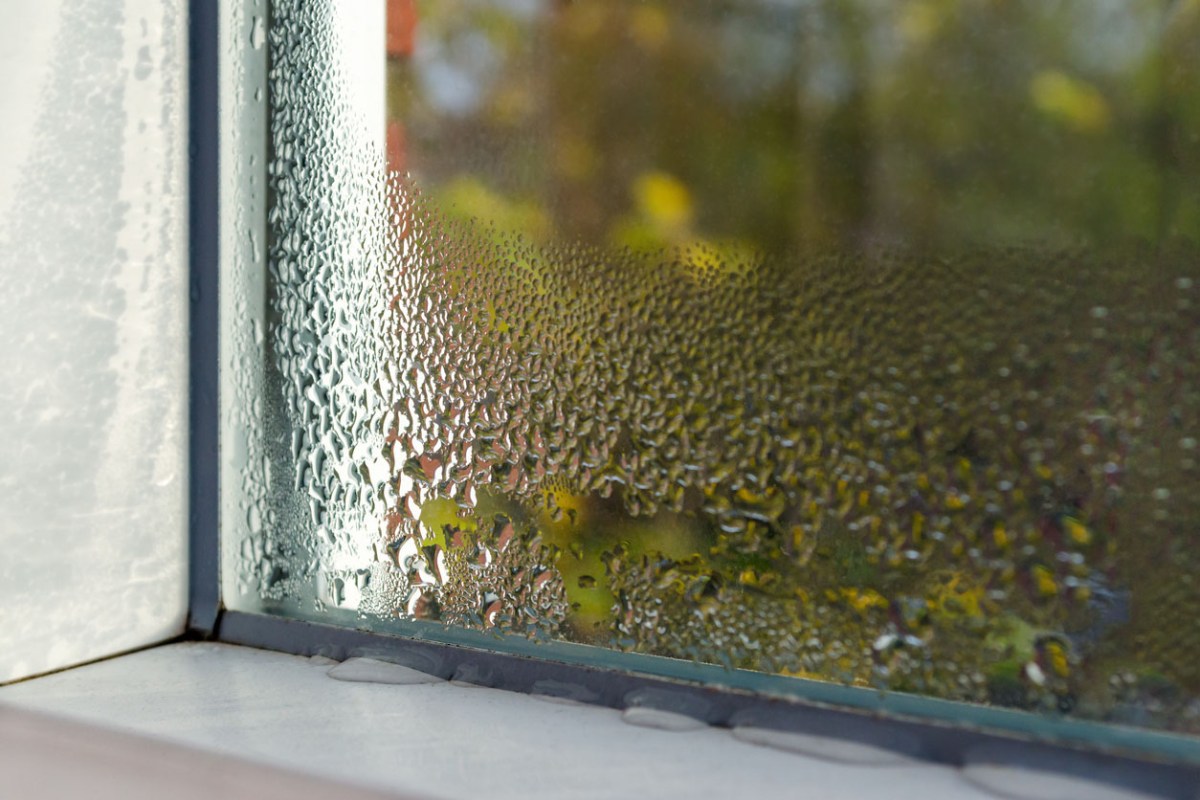
When humid air touches a surface colder than its dew point, water vapor condenses into liquid. That is why mirrors fog after a shower and cold-water pipes sometimes “sweat.”
Poorly insulated walls, single-pane windows, thermal bridges, and cold ducts can all develop condensation. In this situation, the room’s average humidity may appear only moderately high while hidden surfaces remain wet enough to support deterioration or mold.
8. New Construction Materials Are Still Drying
Concrete, lumber, drywall compound, paint, and other materials can release moisture for weeks or months after construction or remodeling. A newly built home may therefore feel humid even without an active leak. Controlled ventilation and dehumidification can help during this drying period, but persistent or extreme moisture still warrants investigation.
Signs That Your Home Has Too Much Humidity
A digital hygrometer is the simplest way to confirm high indoor humidity. Place instruments in several locations because a dry upstairs hallway can conceal a damp basement or bathroom.
Common warning signs include:
- Condensation on windows, mirrors, walls, pipes, or air vents
- A musty or earthy odor
- Visible mold or mildew
- Sticky floors or surfaces that feel damp
- Peeling paint, bubbling wallpaper, or crumbling drywall
- Warped doors, swollen cabinets, or cupped wood flooring
- Bedding and towels that take unusually long to dry
- Frequent allergy or asthma symptoms in sensitive occupants
- An air conditioner that starts and stops repeatedly
Mold may cause nasal irritation, coughing, wheezing, itchy eyes, or skin irritation in some people. Individuals with asthma, mold allergies, chronic lung disease, or weakened immune systems may face greater risks. Humidity is not the only cause of these symptoms, so medical concerns should be discussed with a healthcare professional.
How to Find the Source of High Indoor Humidity
Track Humidity by Room and Time
Use two or more hygrometers and record readings in the morning, afternoon, and evening for several days. Note outdoor conditions and household activities. If humidity jumps after showers but quickly falls, the ventilation may be adequate. If the level remains high all day, investigate broader moisture or HVAC issues.
Inspect the Obvious Moisture Sources
Check under sinks, behind toilets, around tubs, beneath appliances, and near the water heater. Examine ceilings below bathrooms and roof valleys. Inspect the basement after rain and look for damp foundation walls, efflorescence, standing water, or a sump pump that is not operating.
Outside, clean the gutters, extend downspouts away from the foundation, and confirm that the soil slopes away from the house. Make sure dryer, kitchen, and bathroom ducts actually terminate outdoors.
Observe the HVAC System
Check whether the thermostat fan is set to “Auto.” Replace or clean filters according to the manufacturer’s instructions, keep supply and return vents open, and verify that condensate is draining normally. Frequent short cycles, frozen components, unusual noises, or water near the equipment call for professional service.
Compare Indoor and Outdoor Moisture
Opening windows helps only when outdoor air is drier. Relative humidity alone can be misleading because temperature affects the percentage. Outdoor dew point is often a better guide: when it is lower than the indoor dew point, ventilation can provide drying. When outdoor air is hot and muggy, open windows may make a basement considerably wetter.
How to Lower Humidity in Your House
Stop Liquid Water First
Repair roof, plumbing, and appliance leaks promptly. Improve drainage around the foundation, clean gutters, and correct crawl-space or basement water intrusion. Wet materials should be dried quickly; mold can begin developing within roughly 24 to 48 hours under favorable conditions.
Use Exhaust Fans Consistently
Run bathroom ventilation during showers and afterward. Use a range hood that exhausts outdoors when boiling or simmering food. Confirm that the clothes dryer is vented outside through a clean, intact duct. Use lids on pots, shorten very long showers, and dry laundry outdoors or in a properly ventilated space when practical.
Optimize Air Conditioning
Use the “Auto” fan setting and avoid repeatedly turning the cooling system off during muggy periods. Have a qualified HVAC contractor inspect equipment that cannot maintain comfortable humidity. The contractor can assess airflow, drainage, refrigerant performance, duct leakage, controls, and whether the unit is correctly sized.
Run the Right Dehumidifier
A portable dehumidifier can work well in a basement or isolated damp room. A whole-house model may be appropriate when humidity affects multiple rooms or persists during mild weather when the air conditioner does not run much.
Select capacity according to the area and severity of dampness, not solely by the appliance’s physical size. Arrange continuous drainage when possible, keep the filter clean, and allow space around the unit for airflow. Set the humidistat around 45% to 50% and monitor the result rather than choosing the driest setting and declaring war on every water molecule.
Address Basements and Crawl Spaces
Do not assume that opening basement or crawl-space vents will solve a summer moisture problem. Warm, humid outdoor air can condense on cooler surfaces below the house. Depending on the climate and construction, effective measures may include foundation drainage, air sealing, insulation, a ground vapor barrier, crawl-space encapsulation, conditioning, or dedicated dehumidification.
Improve Insulation and Air Sealing Carefully
Insulating cold pipes and correcting thermal bridges can reduce surface condensation. Air sealing may prevent humid outdoor air from entering through random gaps, but major weatherization should be coordinated with appropriate ventilation. A durable home controls both uncontrolled leakage and intentional fresh-air exchange.
When Should You Call a Professional?
Professional help is sensible when humidity stays above 60% despite normal ventilation and dehumidification, when water repeatedly enters the basement, or when you suspect a hidden plumbing or roof leak. An HVAC contractor can evaluate system performance, while a plumber, roofer, drainage specialist, or building-science professional can investigate other sources.
Consider professional mold remediation when contamination is extensive, keeps returning, involves sewage or contaminated water, or is located inside HVAC equipment. Cleaning visible mold without correcting the moisture source provides only a temporary victory.
Experiences From Humid Homes: What the Clues Often Reveal
Note: The following are representative, composite homeowner experiences based on common residential moisture patterns. They illustrate diagnostic lessons rather than describing one specific household.
The Cool but Clammy New House
A family moved into a recently constructed home in a humid Southern climate. The thermostat displayed a comfortable 72 degrees, yet the floors felt slightly sticky and the bedrooms smelled stale each morning. A hygrometer showed indoor humidity between 63% and 68%.
The owners initially lowered the thermostat, assuming colder air would solve the problem. The house became chilly enough for sweaters, but the humidity barely improved. Their air conditioner ran for only a few minutes at a time because it had more cooling capacity than the home required. Fresh construction materials were also releasing moisture.
An HVAC assessment identified short cycling and excessive blower speed. After the controls and airflow were corrected, the equipment ran longer, steadier cycles and removed more moisture. A whole-house dehumidifier handled the remaining load during mild, rainy weather. The lesson was memorable: temperature and humidity are related, but a cold house is not automatically a dry house.
The Basement That Became Wetter When the Windows Opened
Another homeowner noticed a musty basement every summer. Believing that “fresh air” was always dry air, he opened the basement windows on warm afternoons. The odor became stronger, boxes softened, and condensation appeared on cold water pipes.
The problem was straightforward building science. Hot outdoor air carried substantial water vapor into a basement with cooler walls and floors. As the air cooled, its relative humidity rose and moisture condensed on the coldest surfaces.
The successful approach was to close the windows during muggy weather, run a properly sized dehumidifier with continuous drainage, insulate cold pipes, and extend downspouts farther from the foundation. A small foundation crack and an area of poorly graded soil were also repaired. Within several weeks, humidity settled near 48%, and the basement stopped smelling like an antique suitcase.
The Mystery Humidity That Appeared After Every Shower
In a third home, humidity spiked whenever anyone used the upstairs bathroom. The exhaust fan made plenty of noise, so the residents assumed it was working. A tissue held against the grille barely moved, however, and an attic inspection revealed that the duct had separated. Moist air was being discharged into the attic instead of outdoors.
The disconnected duct was repaired, its route was shortened, and the clogged exterior termination was cleaned. A timer switch kept the fan operating for 20 minutes after each shower. The household also began using the range hood during cooking and stopped drying wet laundry in a closed spare room.
These small changes reduced the daily moisture load enough that the central air conditioner could manage the rest. More importantly, correcting the exhaust duct prevented damp attic insulation and roof sheathing from becoming a larger repair.
The Most Useful Lesson From All Three Experiences
High humidity is rarely solved by guessing. The fastest route to an answer is to measure conditions, observe when they change, and follow the moisture backward to its source. A reading that rises only after bathing points toward local ventilation. Humidity concentrated in a basement suggests foundation, drainage, or summer condensation problems. Whole-house humidity combined with short HVAC cycles points toward equipment or control issues.
Homeowners also learn that a dehumidifier is most effective after leaks, drainage failures, and ventilation defects are corrected. Used strategically, it is an excellent moisture-control tool. Used as camouflage for water entering through a wall, it becomes a noisy subscription to a problem that never quite leaves.
Conclusion
If you are wondering, “Why is my house so humid?” begin with a hygrometer and a careful inspection. Aim for roughly 30% to 50% relative humidity, while adjusting winter levels when necessary to prevent condensation. Repair water intrusion, exhaust moisture outdoors, maintain the HVAC system, and use dehumidification where the climate or building design requires it.
A comfortable, dry home is not created by one gadget. It comes from controlling rainwater, groundwater, air movement, indoor moisture production, surface temperatures, and mechanical systems as one connected system.
General note: This article provides educational home-maintenance information. Persistent moisture, extensive mold, electrical hazards, contaminated water, or structural damage should be evaluated by appropriately qualified professionals.

