
Hair Care
This ‘Dictionary’ Has Already Amassed 2.4M Followers Because Of Its Honest Word Definitions
Jun
Some dictionaries tell you what a word means. Others tell you what your group chat has been emotionally screaming for years. HipDict, the wildly popular “Definition By You” account, belongs proudly in the second category. It is not the place you visit when you need to use “antidisestablishmentarianism” correctly in a sentence. It is the place you visit when you want someone to define “Monday” with the emotional accuracy of a person staring into a cold cup of coffee at 8:04 a.m.
The account became famous for its funny, painfully relatable, user-submitted word definitions. Its viral rise was widely covered when it had already gathered around 2.4 million followers, and today its public Instagram presence has grown even larger. That growth says something bigger than “people like jokes.” It shows that the internet has a giant appetite for language that feels honest, social, and slightly unhinged in the most human way possible.
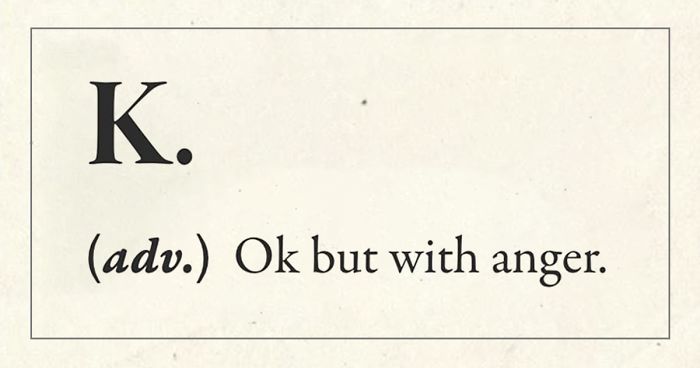
HipDict works because it takes everyday words and quietly removes their polite little jackets. Instead of defining “tradition” in the formal sense, it might turn it into a punchline about doing things simply because people did them before. Instead of treating “K” like a harmless letter, it captures the nuclear winter that sometimes arrives after someone sends it in a text. It is part dictionary, part meme page, part therapy session where the therapist is your funniest friend.
What Is HipDict, Exactly?
HipDict is a crowdsourced online dictionary-style social media project best known for posting humorous definitions of familiar words, phrases, habits, and modern life situations. Its Instagram bio has described it as a crowdsourced dictionary connected with 9GAG, the long-running humor and meme platform. The format is simple: a word appears in a clean dictionary-like layout, followed by a definition that is not academically perfect but emotionally suspiciously accurate.
That simplicity is the secret sauce. Each post looks like it belongs in a reference book, but the definition sounds like it escaped from someone’s private thoughts. The contrast is delightful. A serious-looking dictionary entry suddenly defines a social habit, a dating disaster, or a workplace mood with the bluntness of a person who has had enough of pretending everything is fine.
Unlike a traditional dictionary, HipDict does not try to be neutral, comprehensive, or linguistically official. Its mission is not to preserve the formal meaning of words. Its appeal is in revealing the hidden meaning behind how people actually use them. In other words, Merriam-Webster explains the language. HipDict explains the vibe.
Why Honest Word Definitions Go Viral
Funny definitions travel fast online because they are tiny emotional mirrors. A good HipDict-style post does not need a long setup. It gives you a word you already know, then flips it into a truth you have probably felt but never bothered to write down. That “Wait, that’s actually true” reaction is the engine behind its shareability.
Social media rewards content that can be understood in seconds. HipDict’s entries are short, visual, and instantly readable. They fit perfectly into Instagram’s scrolling rhythm, where users decide in a blink whether a post deserves a like, a share, or the sacred honor of being sent to a friend with “this is you.”
The format also invites participation. Because the definitions are user-submitted, the audience is not just watching the joke happen. They can become part of the joke factory. That turns passive followers into contributors, and contributors into loyal fans. Everyone secretly wants to coin the definition that makes thousands of strangers laugh and say, “Unfortunately, yes.”
The Power of Crowdsourced Humor
Crowdsourcing is not new. Urban Dictionary built an entire internet institution around user-generated slang definitions. Wikipedia showed how large groups could contribute to shared knowledge. Meme culture itself runs on remixing, reinterpreting, and reposting ideas until they become part of everyday language. HipDict sits somewhere between these worlds: less chaotic than Urban Dictionary, less formal than Wikipedia, and cleaner than a meme page that posts twelve blurry reaction images before lunch.
What makes HipDict especially accessible is that its entries are polished into a consistent visual style. The account feels curated, not random. That matters because user-generated humor can easily become messy, repetitive, or offensive when left completely unfiltered. HipDict’s strength is in packaging the best submissions into a format that feels simple, recognizable, and safe to share with your aunt, your coworker, or that one friend who still says “adulting” with confidence.
The crowd supplies the raw honesty. The page supplies the editorial frame. Together, they create jokes that feel both personal and universal.
Why These Definitions Feel So Accurate
The best honest definitions work because they describe emotional truth, not dictionary truth. A traditional dictionary might define “procrastination” as delaying something that needs to be done. A HipDict-style definition would probably define it as cleaning your entire apartment to avoid answering one email. Both are correct. Only one makes you feel personally attacked by a rectangle on your phone.
This kind of humor depends on shared experience. People recognize themselves in the exaggeration. They know what it feels like to open Instagram repeatedly when bored, to say “I’m fine” while absolutely not being fine, or to call a quick meeting that somehow grows legs, buys property, and ruins the afternoon.
That relatability is why the content does well across age groups. Students, office workers, parents, introverts, overthinkers, and chronically tired humans all find something familiar in these bite-sized jokes. HipDict does not need elaborate characters or storylines. The “character” is modern life, and modern life has excellent comedic timing when it is not busy stealing your charger.
HipDict and the Evolution of Internet Language
Language has always changed, but the internet put that change on a treadmill and pressed the “sprint” button. Slang, memes, abbreviations, and ironic phrases now move from niche communities to mainstream conversations faster than ever. A word can start as a joke, become a hashtag, appear in brand captions, and eventually end up in a real dictionary if it gains enough widespread use.
Major dictionaries now regularly add modern terms from digital culture, social media, food trends, gaming, and youth slang. That does not mean every joke becomes official English. It means lexicographers pay attention to how people actually use words over time. HipDict does something different but related: it captures not the official meaning of a word, but the social feeling attached to it.
That distinction is important. Formal dictionaries document usage. HipDict dramatizes usage. It tells us that words carry emotional baggage. A simple “sure” can mean agreement, irritation, defeat, or “I will remember this during our next argument.” The literal meaning is only the beginning. The context is where the comedy lives.
Why the Dictionary Aesthetic Makes the Jokes Funnier
HipDict’s design borrows the authority of a dictionary page, then uses that authority to deliver ridiculous honesty. This creates a classic comedy contrast: serious form, unserious content. The cleaner the layout, the funnier the definition becomes. It is the visual equivalent of a professor calmly explaining why “brunch” is breakfast with better marketing and worse parking.
The dictionary format also gives each joke a sense of finality. When something appears as a definition, it feels official, even when it is clearly nonsense. That mock authority is part of the charm. The audience knows it is not “real,” but the joke works because it feels real enough.
It is the same reason fake motivational posters, parody manuals, and mock scientific charts often go viral. People love when formal formats are used to express informal truths. The structure makes the chaos more delicious.
Specific Examples of the HipDict Style
Many popular HipDict entries take small modern behaviors and turn them into definitions. A short text like “K” becomes less of an abbreviation and more of a warning siren. “Instagram” can be framed as the digital equivalent of checking the refrigerator repeatedly when bored. “FaceTime” gets turned into a confession about spending too much time looking at your own face in the tiny preview window. These examples work because they take ordinary behavior and expose the awkward little truth underneath.
Another recurring theme is social exhaustion. Words connected to work, relationships, mornings, messages, and expectations are perfect targets because everyone has strong feelings about them. A post about “Monday” does not need to explain why people dread it. The audience arrives pre-loaded with evidence.
That is the genius of the format: it starts halfway through the joke because the reader already knows the setup from living a life.
What Brands and Content Creators Can Learn From HipDict
HipDict’s success is not just a cute internet story. It is a useful lesson in content strategy. The account shows that repeatable formats can build massive audiences when they are flexible enough to stay fresh. Every post follows a familiar pattern, but the subject changes. That gives followers the comfort of recognition and the surprise of a new punchline.
1. Make the Format Easy to Recognize
Strong social content often has a signature. HipDict’s signature is instantly clear: word, definition, clean layout, emotional punch. Audiences do not have to relearn the format every time. They know what kind of entertainment they are getting.
2. Let the Audience Participate
User submissions create a sense of ownership. Followers are more likely to engage when they feel the page reflects their own jokes, frustrations, and observations. This is why crowdsourced content can be powerful when properly curated.
3. Keep It Short, But Not Empty
HipDict posts are brief, but they are not shallow. The best ones contain a complete little insight. For creators, that is the goal: say something fast, but make it land.
4. Build Around Relatable Truth
Relatable content does not mean copying tired jokes. It means noticing a familiar behavior and expressing it in a way people wish they had said first. That is harder than it looks, which is why the good posts feel so satisfying.
The Fine Line Between Funny and Mean
Any platform built on user-generated definitions has to deal with a challenge: the internet is funny, but it is also very capable of being a raccoon in a comments section. Crowdsourced humor can become lazy or cruel if there is no editorial judgment. A page like HipDict works best when the definitions are sharp without being needlessly harmful.
The strongest entries usually punch at habits, feelings, social rituals, and everyday absurdities. They do not need to attack vulnerable groups or rely on cheap stereotypes. In fact, the cleanest jokes often have the widest reach because more people can share them without feeling like they need to apologize to three departments and a family group chat.
That balance matters for long-term success. Viral attention can arrive from controversy, but loyal communities are built on trust, consistency, and the sense that the joke is laughing with people, not simply at them.
Why People Love Being “Called Out” Online
A strange thing happens when a joke describes us too accurately: we enjoy the attack. We tag friends. We comment “me.” We save the post for later, perhaps to revisit the scene of the crime. HipDict thrives on this friendly kind of exposure.
Being “called out” by a funny definition feels safe because it is shared. The joke says, “You are ridiculous,” but it also says, “Do not worry, everyone else is ridiculous too.” That communal embarrassment is comforting. It turns private habits into public comedy.
This is especially powerful in a culture where people often use humor to talk about stress, awkwardness, burnout, and emotional overload. A brutally honest definition can say what a sincere paragraph might make too heavy. It lets people laugh first and admit the truth second.
How HipDict Fits Into Meme Culture
HipDict is not a meme in the classic image-template sense, but it belongs to meme culture because it is built on repeatable structure, shared references, and easy redistribution. The format is flexible enough to absorb nearly any topic. Work meetings, relationships, food cravings, social media addiction, introversion, family drama, and everyday laziness can all become entries.
Like the best memes, HipDict posts are participatory. People do not just consume them; they mentally remix them. A reader sees one definition and immediately thinks of five more. That is a powerful sign of format strength. The content continues in the audience’s head after the post ends.
In SEO terms, this is also why topics like “funny word definitions,” “honest dictionary definitions,” “relatable Instagram accounts,” and “crowdsourced dictionary” continue to attract search interest. People are not only looking for information. They are looking for clever ways to describe what they already feel.
Is HipDict a Real Dictionary?
Technically, no. Emotionally, sometimes too much. HipDict is not a scholarly reference source, and nobody should cite it in a research paper unless the assignment is “Please explain why the internet cannot be left alone with nouns.” It does not replace Merriam-Webster, Cambridge Dictionary, Oxford Languages, or any other formal reference.
But it does perform a different cultural function. It documents how people joke about meaning. It captures slang-like interpretations, social assumptions, and everyday frustrations in a format that feels familiar. In that sense, it is a playful record of digital-era communication.
Traditional dictionaries tell us what words are accepted to mean. HipDict tells us what people are secretly using them to mean when they are tired, sarcastic, over-caffeinated, or three messages deep into an argument.
Experiences Related to Honest Word Definitions
The reason HipDict feels so addictive is that most of us have spent years building our own private dictionaries without realizing it. Every workplace has one. In one office, “quick question” means a two-minute request. In another, it means you are about to lose the next forty-five minutes of your life to a spreadsheet named “final_FINAL_revised_use_this_one_v7.” The official language stays innocent. The lived definition tells the truth.
Friend groups have private dictionaries too. “I’m on my way” may mean the person is physically moving toward the destination, or it may mean they have just discovered one shoe and are negotiating with the other. “Let’s do something low-key” can mean a quiet dinner, or it can mean someone will eventually suggest karaoke with the confidence of a person who has never heard themselves sing. These phrases become funny because everyone understands the gap between what is said and what is meant.
Family life offers even richer material. A parent saying “We’ll see” often means “no, but I am choosing peace for the next six minutes.” A child saying “I cleaned my room” may mean the visible floor has been restored while every forbidden object has been relocated under the bed like evidence in a tiny domestic crime drama. A sibling saying “I didn’t touch it” usually deserves a full investigation, possibly with snacks.
Modern dating has also created an entire invisible dictionary. “Just seeing where things go” can mean openness, confusion, avoidance, or a person keeping emotional options in a shopping cart. “Sorry, I just saw this” may be true, but it also belongs in the museum of suspiciously convenient sentences. “No worries” can mean no worries, several worries, or one very organized worry wearing a blazer.
Even our relationship with technology needs honest definitions. “Software update” means your device has selected the worst possible time to become philosophical. “Password reset” means you are about to learn how many versions of your childhood dog’s name you have created. “Terms and conditions” means a long document everyone agrees to with the confidence of someone signing a treaty in a language they do not speak.
This is why honest definitions are more than cheap jokes. They help people name the absurdity of normal life. When a post captures the hidden meaning of a word, it gives readers a small burst of recognition. It says, “Yes, that thing you noticed is real. Other people noticed it too.” That is comforting, especially in a world where so many daily interactions require translation between politeness and truth.
The best personal version of HipDict might be a notebook of phrases we hear every day and what they actually mean in context. “Circle back” could mean return to a topic, avoid a topic, or bury a topic so deeply it becomes archaeological. “No offense” could be defined as a warning label that offense is already boarding the plane. “Living the dream” might mean “I am awake, employed, and technically functioning.”
Ultimately, HipDict became popular because it turns these private translations into public entertainment. It gives people permission to laugh at the weird double life of language. Words are never just words. They are tiny containers for mood, culture, anxiety, sarcasm, love, boredom, and occasionally the desperate need for coffee. HipDict simply opens the container and lets everyone point at what spills out.
Conclusion
HipDict’s rise proves that the internet still loves a simple idea when it is executed with wit, consistency, and emotional precision. A crowdsourced dictionary of honest word definitions may sound like a small concept, but it taps into something universal: people want language that reflects how life actually feels. Not polished. Not formal. Not dressed up for a job interview. Just true enough to make you laugh and slightly question your habits.
That is why millions of followers have connected with the account. HipDict does not replace real dictionaries, and it does not need to. Its job is different. It translates the unofficial meanings behind everyday words and turns them into shareable comedy. In doing so, it reminds us that humor is often just accuracy wearing a fake mustache.

