
Beauty Unlocked
Remodelista Local Market in Portland
Jun
Note: This article explores the historical Remodelista Local Market events held in Portland, Oregon, and the design ideas they continue to represent. It is not a listing for a currently scheduled event.
Some markets are built for speed. You grab a tote bag, dodge a stroller, buy a candle that smells like “mysterious forest cabin,” and disappear before your parking meter starts judging you. The Remodelista Local Market in Portland was not that kind of market.
It was designed as a slow-shopping experience: a place where people could meet makers, examine handmade objects up close, talk about materials, and leave with something more meaningful than another beige item ordered at 1:14 a.m. while watching renovation videos.
Portland was a natural home for the Remodelista market concept. The city has long been associated with independent design, useful craftsmanship, creative small businesses, food culture, and a stubborn belief that a well-made object should not need a motivational speech to prove its worth. From handmade ceramics and botanical goods to stationery, lighting, furniture, and baked treats, Portland has built a reputation for turning practical everyday items into small works of art.
The Remodelista Local Market in Portland captured that spirit. It brought together thoughtful design, regional makers, food vendors, home goods, and the kind of community energy that makes people suddenly become very passionate about linen napkins.
What Was the Remodelista Local Market in Portland?
The Remodelista Local Market was a curated gathering centered on the idea of the considered home. Rather than functioning like a giant department-store sale, the market highlighted independent makers, designers, artists, and small businesses whose work reflected craftsmanship, simplicity, durability, and personality.
An early Portland edition took place at Schoolhouse Factory, hosted by Schoolhouse Electric in Northwest Portland. The one-day market featured an assortment of housewares and handcrafted goods from regional brands and makers, with food and coffee adding to the neighborhood atmosphere. The event was free to attend, which is always a charming phrase to hear before discovering a handmade ceramic bowl that quietly convinces you it belongs in your kitchen forever.
Later Portland holiday market editions expanded the concept. A 2016 Remodelista market at Rejuvenation brought together nearly 40 artisans offering homewares, clothing, jewelry, botanicals, gourmet foods, and gifts. The event represented more than a seasonal shopping stop. It showed how a well-curated marketplace can connect a design audience with the people who actually make the things they buy.
A Market Built Around Real Makers
The key word was curated. Remodelista did not try to create a market where every booth looked identical, every product followed the same trendy color palette, or every table included a sign that said “Good Vibes Only.” Instead, the market brought together makers with different specialties but compatible values.
Visitors could encounter ceramics, handmade soaps, books, textiles, food products, gifts, accessories, and home goods in one setting. That mix made the market feel closer to a living design magazine than a traditional craft fair. Each product had a story, whether it began in a pottery studio, a small kitchen, a woodworking shop, a print studio, or a garden-inspired workshop.
Why Portland Was the Perfect City for a Remodelista Market
Portland has always had a strong relationship with independent makers. The city is known for creative studios, small-batch production, neighborhood shops, vintage stores, furniture designers, printmakers, coffee roasters, florists, food carts, and craftspeople who can probably explain three different finishes for a wooden spoon.
That creative ecosystem makes Portland especially friendly to markets centered on design and local production. People in the city are often interested not only in what an object looks like, but also in where it came from, how it was made, whether it will last, and whether the maker had to wrestle a giant machine, kiln, saw, or espresso maker to produce it.
Portland’s retail culture also supports discovery. Shopping is often part of the city’s cultural experience, not merely an errand between lunch and laundry. Independent stores, local markets, makerspaces, galleries, and specialty shops give residents and visitors a chance to buy objects with a visible human connection.
That is exactly why the Remodelista Local Market felt at home in Portland. It did not need to teach the city how to appreciate craft. It simply gave that appreciation a beautifully organized place to gather.
Schoolhouse Factory: A Fitting First Host
Schoolhouse Electric was an especially appropriate setting for the Portland market. The Portland-based company became known for lighting, hardware, furniture, and home goods inspired by classic American utility design. Its approach has long focused on useful objects, durable materials, and designs that can live comfortably in a home for years instead of becoming embarrassing after one trend cycle.
Hosting a maker-focused market at Schoolhouse Factory made sense because the building itself represented the idea of design as work, not just decoration. It was a place connected to manufacturing, product development, photography, retail, and the daily business of making things people actually use.
The setting reinforced the market’s larger message: good design is not only about a stylish room reveal. It is also about the objects that quietly support everyday life, from lighting and soap dishes to coffee mugs and notebooks.
Rejuvenation and the Holiday Market Mood
Rejuvenation was another natural Portland host. Founded in Portland as a source for lighting, hardware, house parts, and home goods, the brand has built its identity around practical, historically informed design. It understands that a door knob, wall sconce, or drawer pull can carry more personality than a giant neon sign announcing “THIS ROOM HAS A THEME.”
The Remodelista holiday market at Rejuvenation brought together a larger range of makers and products. Homewares, clothing, jewelry, organic botanicals, gourmet foodstuffs, and giftable objects created a holiday market that felt polished without becoming precious.
That is an important distinction. A successful design market should feel inspiring, but not intimidating. You should leave thinking, “I could improve my home one thoughtful piece at a time,” not, “Apparently my kitchen needs a European redesign consultant and a private stone quarry.”
What Shoppers Could Find at the Market
The Portland Remodelista markets celebrated objects that were useful, tactile, and memorable. The product selection reflected a broader idea of home: not just furniture and paint colors, but food, scent, books, lighting, textiles, plants, and small rituals.
Handmade Home Goods
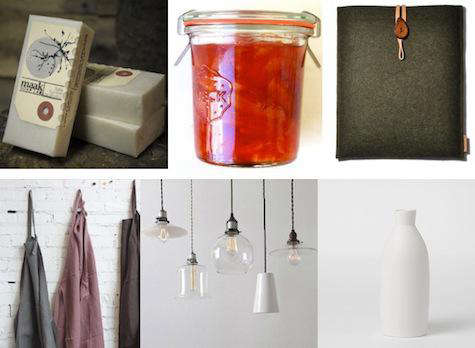
Ceramics, serving pieces, baskets, textiles, trays, kitchen tools, candles, and small furnishings were central to the market experience. These were the kinds of items that could make an everyday routine feel more intentional. A mug becomes your favorite morning mug. A handmade bowl becomes the thing guests compliment. A woven basket becomes the only storage solution that makes laundry look emotionally stable.
Many of the best market purchases were not necessarily large or expensive. They were often small, well-made items that added warmth and personality to a room: a ceramic spoon rest, a linen towel, a handmade candleholder, a printed tea towel, or a useful object with a story behind it.
Food, Coffee, and Everyday Pleasures
Food was part of the market’s appeal because Portland design culture has never treated food as separate from home life. The same person who cares about a hand-thrown plate may also care deeply about bread, coffee, seasonal ingredients, and whether a cookie has the correct ratio of crunch to softness.
Early market programming included local food vendors, coffee, and treats, helping the event feel less like a shopping mission and more like a neighborhood gathering. Food slowed people down. It invited conversation, gave visitors a reason to linger, and reminded everyone that a good market should nourish more than the urge to buy a new throw pillow.
Books, Paper Goods, and Creative Objects
Paper goods and books also fit naturally into the Remodelista market world. A thoughtful home is shaped not only by furniture and finishes, but also by the things people read, write, collect, and leave on the coffee table when guests come over.
Independent booksellers, printmakers, stationery brands, and small publishers help make a home feel personal. A well-designed notebook can encourage better ideas. A beautiful book can become a decorative object. A letterpress card can make you look far more organized than you actually are.
What the Remodelista Market Taught About Good Design
The real influence of the Remodelista Local Market in Portland was not limited to the products sold. The event offered a useful design philosophy that still applies to homes, small businesses, and shopping habits today.
Buy Less, Choose Better
One of the strongest lessons from the market was that thoughtful shopping does not require buying more. It requires choosing more carefully. A handmade piece may cost more than a mass-produced alternative, but it can often offer better materials, a longer lifespan, repair potential, and a stronger personal connection.
This does not mean every home must be filled with heirloom objects and hand-carved utensils. It means mixing practical purchases with a few meaningful pieces that improve daily life. A house becomes more interesting when it reflects real choices instead of a single late-night cart full of identical products.
Function Can Be Beautiful
The Remodelista approach has always favored useful beauty. A kitchen tool should work well. A lamp should provide good light. A basket should hold things without acting like it is too artistically important for socks. A chair should be comfortable enough that nobody has to pretend they enjoy sitting in it.
Portland makers often excel in this space between beauty and function. Their work can feel refined, but it is usually rooted in daily life. The result is design that is easy to live with rather than design that requires its own insurance policy.
Local Shopping Builds Better Stories
Buying from a local maker changes the experience of ownership. You may know where the item was made, who designed it, what materials were used, and why the maker chose a certain technique. That story becomes part of the object.
A handmade ceramic plate is not simply a plate. It may remind you of a market afternoon, a conversation with a potter, a trip to Portland, or the first dinner you served after moving into a new home. Those connections give ordinary objects emotional value.
How to Bring the Remodelista Portland Style Into Your Home
You do not need to live in Portland or attend a design market to borrow the Remodelista mindset. The goal is not to recreate someone else’s house. It is to make your own home more useful, personal, and lasting.
Start with One Useful Upgrade
Choose one object you use every day and improve it. Replace a flimsy lamp with a well-made fixture. Upgrade your bath towel. Buy a durable cutting board. Find a ceramic bowl you genuinely enjoy using. Small upgrades can have an outsized effect because they are repeated daily.
Mix Handmade and Ordinary Pieces
A home does not need to be entirely handcrafted to feel thoughtful. Pair everyday basics with a few meaningful pieces. A simple table can look more personal with handmade ceramics. A standard sofa can feel warmer with a woven blanket or a locally made pillow. A plain bathroom can gain character from a good mirror, quality hardware, and a small shelf that does not wobble like it has unresolved issues.
Choose Materials That Age Well
Wood, metal, linen, cotton, wool, leather, stone, ceramic, and glass often become more appealing with use. They show wear, but they can also develop character. A material that gains personality over time is usually more satisfying than one that looks tired after three months.
Leave Room for Imperfection
Handmade goods are not supposed to look factory-perfect. Slight variations in glaze, texture, grain, stitching, or color are part of the appeal. A room with a little variation feels lived in. A room with no variation can feel like it is waiting for a real estate photographer to arrive.
Why the Remodelista Local Market Still Matters
Even though the Portland Remodelista market editions were tied to specific dates and venues, the idea behind them remains relevant. People still want to know where their things come from. They still value useful design. They still enjoy meeting makers. And they still want their homes to feel personal rather than copied from a showroom display with suspiciously perfect lemons.
The market also demonstrated that retail can create community. When shoppers meet makers, ask questions, try products, eat local food, and discover new businesses, buying becomes more than a transaction. It becomes participation in a local creative economy.
That lesson is particularly valuable now. In a world where nearly anything can be delivered instantly, there is something refreshing about slowing down and choosing an object with intention. The best purchases are often not the fastest ones. They are the ones that make you smile every time you reach for them.
Frequently Asked Questions About the Remodelista Local Market in Portland
Was the Remodelista Local Market in Portland a real event?
Yes. Remodelista hosted historical market events in Portland, including a one-day local market at Schoolhouse Factory and later holiday market editions at Rejuvenation.
What kinds of products were sold?
The markets featured a mix of handmade home goods, ceramics, accessories, clothing, jewelry, botanicals, food products, books, paper goods, gifts, and other small-batch items from regional makers.
Is the Remodelista Portland market still held every year?
The historic market editions should not be assumed to be annual or currently scheduled. Anyone looking for a future event should check official Remodelista, Schoolhouse, Rejuvenation, and Portland maker-market announcements.
What made the market different from a typical craft fair?
The Remodelista market focused on design curation. It combined makers from different categories around a shared appreciation for useful, durable, aesthetically thoughtful objects for the home and everyday life.
Experience: An Afternoon in the Portland Maker-Market Mindset
Picture a Portland afternoon with the kind of weather that cannot decide whether it wants to be sunny, misty, or emotionally complicated. You arrive at a market inside a converted factory or a beautifully restored home-goods space. There is coffee nearby, because this is Portland and the city would probably revoke its own citizenship if there were no coffee nearby.
The first thing you notice is that the market does not feel rushed. There are tables covered with handmade bowls, linen napkins, small-batch soaps, clever paper goods, candles, botanical arrangements, wooden utensils, and objects you did not realize you wanted until five minutes ago. Suddenly, you are considering whether your life would improve dramatically with a hand-thrown salt cellar. The answer is probably not dramatically, but it would improve a little, and sometimes a little is plenty.
You talk to a maker about how a ceramic glaze changes in the kiln. You learn that a natural soap is made in small batches. You pick up a notebook that feels too nice for grocery lists, then decide that perhaps your grocery lists deserve a more literary future. At another booth, someone is selling beautifully printed textiles. You imagine them in your kitchen, your bedroom, or folded neatly on a chair that currently holds six sweaters and a backpack.
That is the magic of a well-curated Portland market. It creates a bridge between inspiration and ordinary life. You do not have to renovate your entire home. You do not need to replace every cabinet, repaint every wall, or move to a Scandinavian cabin with a wood-burning stove and exactly one beautiful chair.
Instead, you can take one good idea home. Maybe it is a handmade mug that makes your morning coffee feel more intentional. Maybe it is a small woven basket that finally gives your entryway somewhere to put keys. Maybe it is a local food product that becomes part of your weekend ritual. Maybe it is simply the reminder that homes are built slowly, through useful choices and objects that tell stories.
The Remodelista Local Market in Portland was memorable because it made design feel human. It was not about chasing perfection or collecting expensive objects for the sake of appearance. It was about meeting people who made things carefully and discovering products that could become part of a real home.
That is also why the Portland maker-market experience remains appealing. The best markets do not just sell items. They offer a moment of connection: between maker and shopper, object and memory, utility and beauty. You leave with a bag in your hand, a few new ideas in your head, and a strong suspicion that your houseplants deserve better containers.
Conclusion
The Remodelista Local Market in Portland was more than a gathering of stylish goods. It was a celebration of Portland’s maker culture, practical design, local food, handcrafted homewares, and the pleasure of choosing objects with care.
Its lasting lesson is simple: a good home is not built all at once. It grows through thoughtful purchases, useful materials, personal stories, and small details that make everyday routines feel better. Whether you are buying a handmade bowl, updating a light fixture, visiting a local market, or simply rethinking the objects already in your home, the Remodelista approach offers a calm reminder to buy less, choose well, and enjoy the things you live with every day.

