
Makeup
How to Speak Like Shakespeare: 12 Steps
Jun
Note: This guide is written for playful, practical learning. It is not a strict reconstruction of every Early Modern English pronunciation detail, but it will help you sound more Shakespearean without turning every sentence into a fog machine.
Introduction: Good Morrow, Word Adventurer
Learning how to speak like Shakespeare is less about sprinkling “thee” everywhere and more about understanding the rhythm, wit, grammar, and dramatic flavor of Early Modern English. Shakespeare’s language can feel intimidating at first, as though every sentence arrives wearing a velvet cape and carrying a skull. But once you learn the basic patterns, it becomes surprisingly fun.
Shakespeare wrote in a lively version of English used around the late 1500s and early 1600s. It is not Old English, which is much older and nearly unreadable to modern eyes. It is Early Modern English, a flexible, energetic form of the language that still feels familiar. The trick is learning the pronouns, verb endings, word order, poetic rhythm, and rhetorical habits that make Shakespearean speech sparkle.
This guide breaks the process into 12 easy steps. You will learn how to use “thou,” “thee,” “thy,” and “thine,” build Shakespeare-style sentences, add dramatic imagery, borrow famous phrases, insult with elegance, and practice aloud until your words sound less like a confused tourist at the Globe and more like a confident player onstage.
How to Speak Like Shakespeare in 12 Steps
1. Understand What “Shakespearean English” Really Means
Before you begin, clear away one common mistake: Shakespeare did not write in “Old English.” Old English is the language of Beowulf, and unless you can casually say “Hwæt!” at breakfast, you are probably not speaking it. Shakespeare used Early Modern English, the ancestor of the English we speak today.
This period was wonderfully experimental. Spelling was not fully standardized, grammar was more flexible, and writers had more freedom to invent, adapt, and reshape words. That is why Shakespeare’s lines often feel both familiar and strange. He might say, “I know thee well,” where we would say, “I know you well.” He might place the verb before the subject, or use a phrase that sounds poetic but still makes perfect sense once you slow down.
To speak like Shakespeare, think of modern English as your base and Shakespearean style as your costume. You are not replacing the whole language. You are adding older pronouns, richer imagery, dramatic rhythm, and a dash of theatrical confidence.
2. Learn the Big Four: Thou, Thee, Thy, and Thine
The quickest way to sound Shakespearean is to master the classic pronouns. Use them correctly, and you will sound charming. Use them randomly, and you may sound like a malfunctioning Renaissance toaster.
Thou means “you” when “you” is the subject of the sentence. Example: “Thou art kind” means “You are kind.”
Thee means “you” when “you” is the object. Example: “I thank thee” means “I thank you.”
Thy means “your” before a consonant sound. Example: “thy book,” “thy sword,” or “thy excellent snacks.”
Thine means “your” before a vowel sound or can mean “yours.” Example: “thine eyes” or “This victory is thine.”
A simple memory trick: if you would say “he,” use “thou.” If you would say “him,” use “thee.” If you would say “his,” use “thy” or “thine.” For example, “He sees him with his dog” becomes “Thou seest thee with thy dog” only if you are doing grammatical gymnastics. A better practice sentence is: “Thou seest my dog, and I thank thee for thy kindness.”
3. Add Shakespearean Verb Endings
Once you use “thou,” your verbs need a little costume jewelry. Many verbs paired with “thou” take endings like -st or -est. For example, “you speak” becomes “thou speakest.” “You know” becomes “thou knowest.” “You love” becomes “thou lovest.”
Some common forms are especially useful:
“You are” becomes thou art. “You have” becomes thou hast. “You do” becomes thou dost. “You will” becomes thou wilt. “You can” becomes thou canst. “You should” becomes thou shouldst.
Try transforming modern sentences. “You are late” becomes “Thou art late.” “You have my thanks” becomes “Thou hast my thanks.” “You speak too loudly” becomes “Thou speakest too loudly.” Congratulations: you are now one ruffled collar away from dramatic greatness.
4. Use “Hath,” “Doth,” and “Art” Like a Pro
Shakespearean speech often uses older third-person verb forms. Instead of “has,” use hath. Instead of “does,” use doth. Instead of “is,” you may still use “is,” but “art” appears with “thou.”
Modern: “She has a sharp wit.” Shakespearean: “She hath a sharp wit.”
Modern: “He does protest too much.” Shakespearean: “He doth protest too much.”
Modern: “You are my friend.” Shakespearean: “Thou art my friend.”
These words instantly create period flavor. Do not overuse them in every line, though. Shakespeare mixed high poetry, casual conversation, jokes, wordplay, and plain speech. If every sentence is “thou hast doth hath,” your audience may flee to a safer century.
5. Change the Word Order for Dramatic Effect
Shakespeare often uses inverted word order, especially in poetry. Instead of always writing subject-verb-object, he may move words around to create rhythm, emphasis, or suspense.
Modern: “He goes there.” Shakespearean style: “There goes he.”
Modern: “I do not know this man.” Shakespearean style: “This man know I not.”
Modern: “She speaks sweetly.” Shakespearean style: “Sweetly speaks she.”
Use inversion carefully. The goal is not to make the sentence impossible to understand. The goal is to add a little music. Try moving adverbs, objects, or verbs to the front of a sentence when you want emphasis. “I love this night” becomes “This night I love.” “You have broken my heart” becomes “My heart hast thou broken.” Dramatic? Yes. Useful at a grocery checkout? Perhaps not, unless the avocados disappoint you deeply.
6. Speak in Images, Not Just Information
Shakespeare rarely says only the plain thing when a vivid image can do the job better. Love becomes a fever, jealousy becomes a monster, time becomes a thief, and ambition becomes a horse that throws its rider. To speak like Shakespeare, train yourself to turn everyday emotions into pictures.
Instead of saying, “I am tired,” say, “My bones do mutiny against the day.” Instead of “I am hungry,” say, “My stomach plays the rebel trumpet.” Instead of “I miss you,” say, “The room grows winter when thou art away.”
Metaphor is the engine of Shakespearean style. Compare one thing to another boldly. Do not merely say someone is angry; say their temper is “a storm that rattles every window.” Do not say a plan is risky; say it is “a ladder built of smoke.” The more concrete the image, the stronger the line.
7. Use Antithesis: Balance One Idea Against Another
Antithesis is one of the great secrets of Shakespeare’s sound. It means placing opposite ideas side by side: love and hate, light and dark, life and death, truth and lies. The most famous example is “to be or not to be.” The structure is simple, but the effect is powerful.
Try building sentences with “not this, but that.” For example: “I seek not gold, but honor.” “Thou art rich in words, yet poor in deeds.” “The day is bright, but my heart is clouded.”
This technique gives your speech drama and clarity. It also makes you sound thoughtful, even when you are just deciding whether to order pizza. “I crave not salad, but destiny with extra cheese” may not be authentic Shakespeare, but it has the right spirit.
8. Borrow Shakespearean Vocabulary Without Overdoing It
You do not need to memorize thousands of unusual words to speak like Shakespeare. Start with a small working vocabulary and use it naturally.
Useful words include wherefore meaning “why,” hence meaning “from here” or “away,” hither meaning “to here,” thither meaning “to there,” ere meaning “before,” oft meaning “often,” nay meaning “no,” aye meaning “yes,” alas meaning “unfortunately,” and anon meaning “soon.”
Examples: “Come hither” means “Come here.” “Go hence” means “Go away.” “I shall return anon” means “I will return soon.” “Wherefore art thou worried?” means “Why are you worried?” It does not mean “Where are you?” That one misunderstanding has caused generations of balcony confusion.
9. Add Rhetorical Questions and Exclamations
Shakespearean speech loves questions that do not always need answers. A rhetorical question turns a thought into a performance. Instead of saying, “This is unfair,” try “Is justice asleep?” Instead of “You forgot my birthday,” try “Hath time so eaten thy memory?”
Exclamations also help. Words like “O,” “alas,” “fie,” and “marry” add emotional color. “O, what a day!” feels more theatrical than “Today was a lot.” “Fie upon this traffic!” may not move the cars, but it will make your commute feel historically significant.
The key is emotional size. Shakespeare’s characters often speak as if their feelings deserve a spotlight. Let the emotion lead the sentence. If you are happy, be gloriously happy. If you are annoyed, be elegantly annoyed. If your coffee is cold, mourn it as a fallen prince.
10. Practice Iambic Pentameter
Many of Shakespeare’s most memorable lines are written in iambic pentameter, a rhythm of five beats that often sounds like a heartbeat: da-DUM da-DUM da-DUM da-DUM da-DUM. A basic example is: “I walk / beneath / the moon / and bless / the night.”
You do not need perfect meter to sound Shakespearean, but practicing the rhythm helps your speech flow. Try writing ten-syllable lines with alternating unstressed and stressed beats. For example: “The morning breaks and bids my sorrow fly.” Read it aloud and feel the pulse.
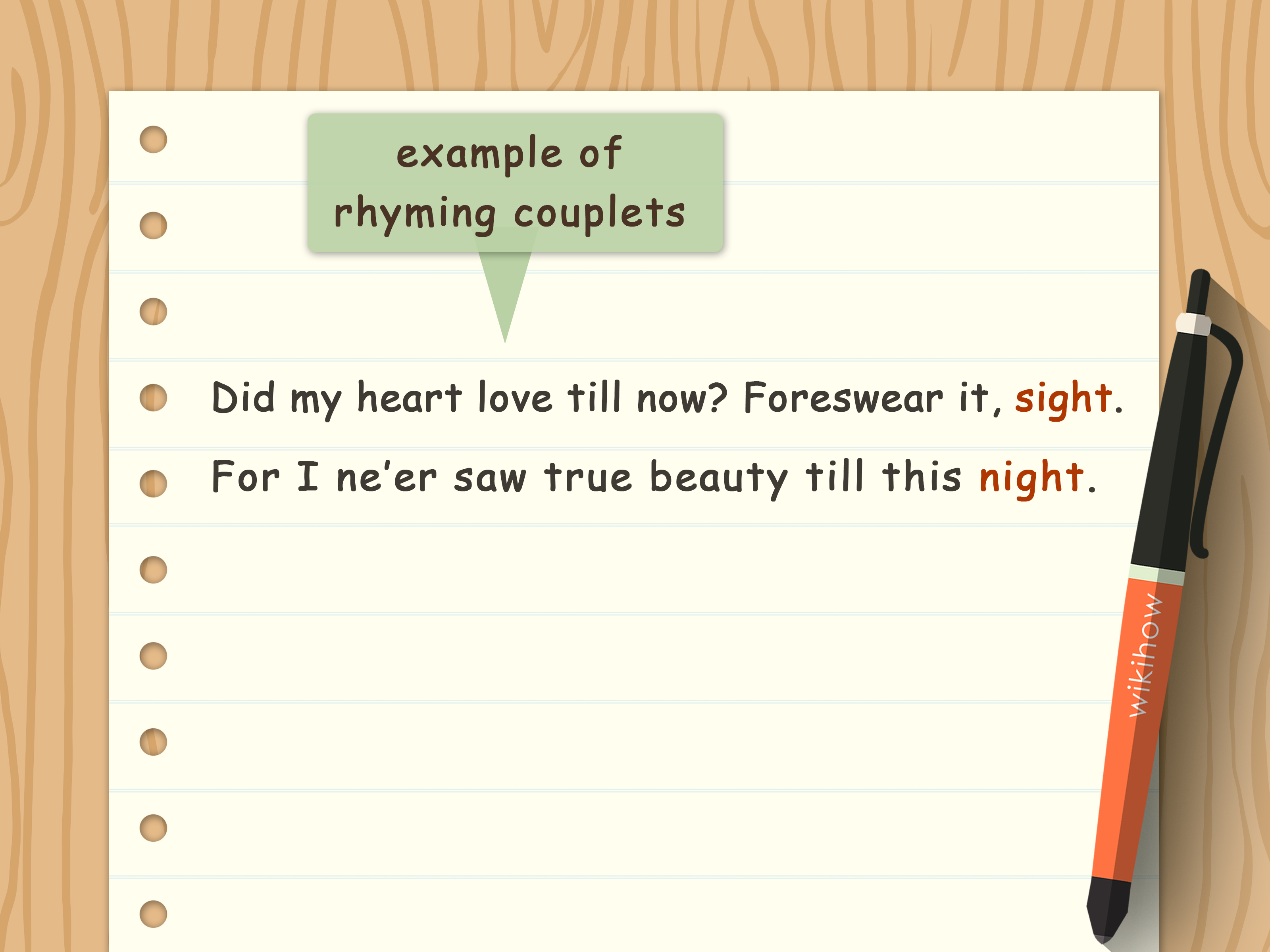
Blank verse is unrhymed iambic pentameter. That means it has rhythm but no required rhyme. This is useful because you can sound poetic without ending every line with “moon,” “June,” and “spoon.” Shakespeare used rhyme too, especially in songs, couplets, and magical moments, but blank verse gives you flexible dramatic speech.
11. Learn the Art of the Shakespearean Insult
Shakespearean insults are famous because they are creative, specific, and strangely musical. They do not merely say “you are annoying.” They say, in effect, “Thou art a weather-beaten inventory of bad decisions.” That is not a direct Shakespeare quote, but it has the proper decorative sting.
To build your own harmless Shakespeare-style insult, combine an old-fashioned adjective with a vivid noun. Try words like “saucy,” “prating,” “mewling,” “fusty,” “dull,” “wayward,” “craven,” or “boastful.” Then add a noun like “knave,” “varlet,” “coxcomb,” “rascal,” “toad,” “turnip,” or “mushroom.”
Examples: “Thou saucy coxcomb,” “Thou mewling mushroom,” or “Thou art a prating bundle of yesterday’s laundry.” Keep it playful. The best Shakespearean insult sounds grand enough for a duel but silly enough to avoid one.
12. Read Aloud and Perform the Words
Shakespeare was written for performance. His language comes alive when spoken. If you only read silently, you miss the breath, rhythm, jokes, tension, and music. So choose a short speech or sonnet and read it aloud several times.
Start slowly. Look for the main thought of each sentence. Mark unfamiliar words. Notice where the punctuation asks you to pause. Then read again with more energy. Do not whisper politely as if apologizing to the wallpaper. Let the words move through your body.
Try recording yourself. You may feel ridiculous at first. Excellent. Shakespeare contains kings, fools, lovers, ghosts, witches, soldiers, clowns, and people making terrible decisions in beautiful language. A little ridiculousness is part of the feast.
Quick Shakespearean Phrase Converter
Use these examples to practice turning plain modern English into Shakespearean-style speech:
Modern: Hello, my friend.
Shakespearean: Good morrow, my good friend.
Modern: Why are you sad?
Shakespearean: Wherefore art thou sad?
Modern: You are very kind.
Shakespearean: Thou art most kind.
Modern: I will see you soon.
Shakespearean: I shall see thee anon.
Modern: Go away.
Shakespearean: Get thee hence.
Modern: I love your eyes.
Shakespearean: I love thine eyes.
Modern: This food is excellent.
Shakespearean: This feast doth bless the tongue.
Common Mistakes to Avoid
Do Not Use “Thou” for Everything
“Thou” is a subject pronoun. “Thee” is an object pronoun. “Thy” and “thine” show possession. If you say, “I love thou,” the grammar is off. Say, “I love thee.”
Do Not Confuse “Wherefore” with “Where”
“Wherefore” means “why.” Juliet is not asking where Romeo is standing. She is asking why he must be Romeo, a member of the rival family. This is a small word with a large amount of balcony drama attached.
Do Not Make Every Sentence Complicated
Shakespeare could be direct. Some of his greatest lines are short and clean. Use poetic language when it adds power, not when it buries the meaning under fourteen decorative pillows.
Practice Exercise: Build Your Own Shakespearean Sentence
Use this simple formula:
O + pronoun + old verb + vivid image + emotional ending.
Example: “O, thou hast turned my quiet morning into thunder.”
Now try your own. Start with a modern sentence like “You ruined my plans.” Convert it into: “O, thou hast made a shipwreck of my hopes.” That is more dramatic, more visual, and much more satisfying than sending a plain angry text.
Experience Section: What It Feels Like to Learn Shakespearean Speech
The first experience most people have with Shakespearean speech is confusion. The words look familiar, but they seem to be standing in the wrong order, wearing antique hats. You read a line once and understand three words. You read it again and understand six. By the third reading, something opens. The sentence that looked like a locked door suddenly becomes a window.
A helpful way to practice is to treat Shakespearean speech like music. When musicians learn a song, they do not simply stare at the sheet music and hope talent falls from the ceiling. They play slowly, repeat difficult parts, listen for rhythm, and build confidence measure by measure. Speaking like Shakespeare works the same way. Choose one short passage, speak it slowly, and let your mouth get used to the shape of the language.
One of the best practice experiences is reading a modern sentence and “Shakespeareanizing” it. For example, “I am too tired to answer emails” becomes “I am so spent that even ink doth mock me.” Suddenly, a boring complaint has personality. “My phone battery is dead” becomes “My device hath breathed its last and left me in darkness.” Is it practical? Not always. Is it delightful? Absolutely.
Another useful experience is practicing with friends. Give everyone a simple scene: ordering coffee, arriving late, asking for directions, or complaining about the weather. Then require each person to use at least three Shakespearean features: one old pronoun, one vivid metaphor, and one dramatic question. A simple coffee order may become, “Good sir, I prithee, grant me a cup black as midnight, for mine eyes do quarrel with the dawn.” The barista may not applaud, but your friends probably will.
Reading aloud also teaches you that Shakespeare’s language is physical. The rhythm affects breathing. The verbs push the thought forward. The images ask for gesture. When you say, “Get thee hence,” your arm almost wants to point toward the door. When you say, “Thou art more lovely than the morning,” your voice naturally softens. This is why performance matters. Shakespearean English is not just vocabulary; it is movement, timing, and intention.
At first, you may worry about sounding silly. That is normal. But silliness is not the enemy; stiffness is. The more you play with the language, the more natural it becomes. After a while, “thou art” stops feeling like a museum label and starts feeling like a useful little tool. You learn when to be grand, when to be funny, when to be sharp, and when to let a simple phrase do the work.
The real reward is not just sounding like Shakespeare. It is learning to speak with more imagination. You begin noticing that ordinary language can be stretched, colored, sharpened, and set dancing. You do not need a stage, a crown, or a tragic ending. You only need curiosity, practice, and the courage to say, “Good morrow,” when everyone else is mumbling “hey.”
Conclusion: Speak Boldly, Thou Bright Beginner
Learning how to speak like Shakespeare is a joyful mix of grammar, rhythm, vocabulary, and performance. Start with the pronouns: thou, thee, thy, and thine. Add verb endings like “-st” and classic forms like “hath,” “doth,” and “art.” Practice inverted word order, vivid metaphors, antithesis, rhetorical questions, and the heartbeat rhythm of iambic pentameter.
Most importantly, read aloud. Shakespeare’s language was made for the voice. The more you speak it, the less strange it feels. Begin with small changes, then build your confidence. Soon you will be able to greet friends, praise dinner, mourn bad Wi-Fi, and insult a stubborn printer with theatrical elegance.
So go forth. Speak not timidly, but with music. Let thy words wear boots, bells, and a feathered hat. And should anyone ask why thou speakest so, answer proudly: “Because plain speech is well enough, but a little Shakespeare makes the day more noble.”

