
Hair Care
How to Place a Rug under a Bed: Size and Layout Tips
Aug
A bedroom rug has two important jobs: making the room look beautifully finished and protecting your feet from t a rug under a bed is not as simple as sliding some fabric beneath the frame and hoping the interior-design universe approves.
The rug must be large enough to anchor the bed, positioned so that useful portions remain visible, and balanced with nearby nightstands, benches, dressers, doors, and walls. A rug that is too small can make even an expensive bedroom look oddly unfinished. One that is too large may crowd the room or interfere with doors and floor vents.
This guide explains how to place a rug under a bed, which rug size works with each standard mattress, and how to choose the best layout for small, medium, and large bedrooms.
The Basic Rule for Placing a Rug under a Bed
As a practical starting point, the rug should extend approximately 18 to 24 inches beyond both sides of the bed and beyond the foot of the bed. In a spacious primary bedroom, an extension of 24 to 36 inches can create an even more luxurious look.
This visible border serves several purposes:
- It creates a soft landing area when you get out of bed.
- It makes the bed and rug appear proportional.
- It visually anchors the sleeping area.
- It prevents most of the rug’s design from disappearing beneath the mattress.
Measure the complete bed frame rather than relying only on the mattress dimensions. Upholstered frames, platform beds, sleigh beds, and decorative footboards may be several inches wider or longer than the mattress itself.
You should also leave visible flooring between the rug and the walls. A border of approximately 8 to 18 inches usually helps an area rug look intentional instead of resembling wall-to-wall carpeting that stopped a little early.
Best Rug Sizes for Every Bed Size
The following recommendations use standard American mattress dimensions. The ideal choice may change based on the room size, bed-frame dimensions, and whether the nightstands will sit on the rug.
| Bed Size | Standard Mattress Dimensions | Recommended Rug Size | Best Use |
|---|---|---|---|
| Twin | 38 x 75 inches | 5 x 7 feet or 6 x 9 feet | Child’s room, guest room, or compact bedroom |
| Twin XL | 38 x 80 inches | 5 x 8 feet or 6 x 9 feet | Dorm room or narrow bedroom |
| Full | 54 x 75 inches | 6 x 9 feet or 8 x 10 feet | Guest room or medium bedroom |
| Queen | 60 x 80 inches | 8 x 10 feet or 9 x 12 feet | Most standard primary bedrooms |
| King | 76 x 80 inches | 9 x 12 feet or 10 x 14 feet | Large primary bedroom |
| California King | 72 x 84 inches | 9 x 12 feet or 10 x 14 feet | Long or spacious primary bedroom |
Rug Size for a Twin Bed
A 5-by-7-foot rug generally provides adequate coverage beneath a twin bed. Position the rug horizontally under the lower two-thirds of the bed to expose material along both sides and at the foot.
In a larger child’s room, a 6-by-9-foot rug can hold the bed, a nightstand, and possibly a small bench or storage chest. For two twin beds, consider one large rug centered beneath both beds or place a runner between them. The runner layout is particularly useful when the beds sit close together.
Rug Size for a Full Bed
A 6-by-9-foot rug usually works beneath a full-size bed when the rug begins in front of the nightstands. This placement leaves the top portion of the bed off the rug while providing comfortable coverage along the sides and foot.
An 8-by-10-foot rug is better when you want a more generous border, have a wide bed frame, or want the nightstands included. It can also make a medium-size bedroom feel more cohesive by visually connecting the main furniture pieces.
Rug Size for a Queen Bed
An 8-by-10-foot rug is the most versatile option for a queen bed. With the 10-foot dimension running across the width of the bed, it provides approximately 30 inches of rug beyond each side of a standard 60-inch mattress before accounting for the bed frame.
A 9-by-12-foot rug creates a fuller, more luxurious layout. It is especially suitable when the room is large enough to place the bed, nightstands, and a bench entirely on the rug. Avoid forcing a 9-by-12 rug into a narrow room, however. A large rug still needs exposed flooring around its perimeter to breathe.
Rug Size for a King Bed
A 9-by-12-foot rug is a dependable choice for a king bed. Position the 12-foot side across the width of the bed. This layout normally provides enough visible rug along both sides while extending comfortably beyond the foot.
For a large primary suite, a 10-by-14-foot rug can accommodate the bed, nightstands, and a bench as one unified furniture group. It creates the polished, hotel-like effect many homeowners wantwithout requiring anyone to fold a tiny towel into a swan.
Rug Size for a California King Bed
Because a California king is longer and slightly narrower than a standard king, rug orientation matters. A 9-by-12-foot rug works when positioned beneath the lower two-thirds or three-quarters of the bed. A 10-by-14-foot rug offers more complete coverage in a large room and leaves enough material beyond the extended foot of the mattress.
Five Effective Rug Layouts for Bedrooms
1. Place the Entire Bed and Nightstands on the Rug
This is the most formal and visually complete arrangement. The headboard, bed frame, nightstands, and optional bench all sit on the rug.
The layout works best in a large bedroom with a 9-by-12-foot or 10-by-14-foot rug. Make sure each nightstand rests completely on the rug. A nightstand with two legs on and two legs off may wobble, tilt, or develop the personality of a tiny amusement-park ride.
This arrangement creates a strong furniture zone but requires careful measuring. Confirm that the rug will not touch the walls, block a floor vent, or interfere with a closet or bathroom door.
2. Start the Rug in Front of the Nightstands
For many bedrooms, this is the best combination of appearance, function, and cost. The rug begins several inches in front of the nightstands and extends beneath approximately two-thirds of the bed.
Because the head of the bed remains off the rug, more of the rug is visible at the foot. You can also use a smaller and less expensive size without sacrificing the soft landing area beside the bed.
Center the rug precisely on the bed rather than on the room. The bed is the visual anchor, so the exposed rug should appear balanced on its left and right sides.
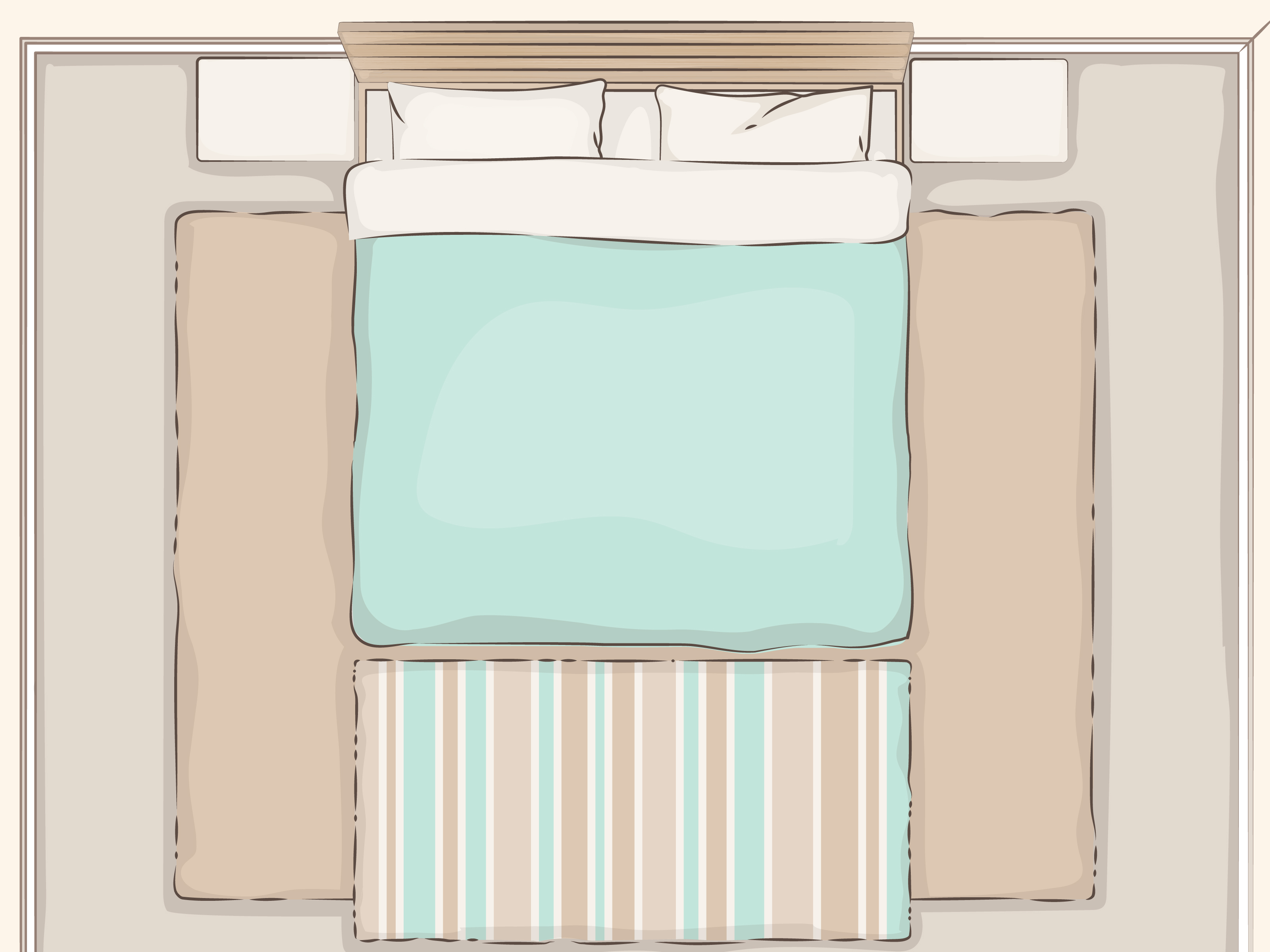
3. Place the Rug under the Lower Third of the Bed
A decorative rug can sit beneath the lower third of the bed, almost like an oversized textile frame for the footboard. This approach works well with vintage rugs, unusual patterns, or smaller pieces that deserve to remain visible.
The rug should still extend beyond both sides of the bed. Avoid positioning a narrow rug only beneath the footboard, where it may look more like a lost bath mat than a deliberate design choice.
4. Use Bedside Runners
Runners are ideal when the room is narrow, the bed is extremely heavy, or a large area rug is outside the budget. Place one runner along each accessible side of the bed. The runners should begin near the nightstands and continue past the area where your feet touch the floor.
Choose matching runners for symmetry or coordinate two rugs with similar colors and textures. Use proper rug pads so the runners do not slide across hardwood or tile.
5. Place One Rug at the Foot of the Bed
A small rectangular, round, or irregularly shaped rug may be placed in front of the bed rather than underneath it. This layout can define a bench, storage trunk, or small seating area.
Leave a few inches between the bed and rug unless a bench visually connects them. The rug should be wider than the bench and substantial enough to appear purposeful.
How to Measure Before Buying a Bedroom Rug
Measure the Actual Bed Frame
Record the width and length of the frame at its widest points. Include protruding side rails, a large headboard base, and the footboard. Never assume a queen frame measures exactly 60 by 80 inches simply because the mattress does.
Decide Which Furniture Will Sit on the Rug
Determine whether the nightstands and bench will be completely on the rug, completely off it, or positioned beyond its edge. Furniture should not accidentally straddle the rug border.
Calculate the Visible Extension
Add at least 36 to 48 inches to the bed-frame width to provide approximately 18 to 24 inches on each side. Add another 18 to 36 inches beyond the foot, depending on the desired layout.
For example, suppose a queen bed frame is 66 inches wide. Adding 24 inches on each side produces a target rug width of 114 inches, or 9.5 feet. A 9-by-12 rug would provide close to the desired coverage, while an 8-by-10 rug would create a more compact layout.
Check Doors, Vents, and Walkways
Open every bedroom, closet, and bathroom door. Confirm that the rug and rug pad will not catch beneath the door. Keep floor vents uncovered whenever possible so heating and cooling systems can circulate air properly.
Create a Painter’s-Tape Outline
Use removable painter’s tape to mark the proposed rug dimensions on the floor. Walk around the bed, open the doors, and view the outline from the hallway. Live with the taped shape for a day before ordering.
This simple test is remarkably effective. Rugs tend to look enormous on product pages, moderately sized in a showroom, and suspiciously similar to a postage stamp after being placed beneath a king bed.
How to Install a Rug under a Heavy Bed
- Remove bedding, under-bed storage, lamps, and fragile objects.
- Mark the rug’s intended position with painter’s tape.
- Move the nightstands and bench out of the working area.
- Vacuum or mop the exposed floor thoroughly.
- Place the rug pad inside the taped outline.
- Roll the rug over the pad and flatten its edges.
- With another adult, lift or carefully shift one end of the bed.
- Slide the rug into position without dragging the bed across it.
- Center the rug by measuring the exposed material on both sides.
- Return the nightstands, bench, bedding, and accessories.
Do not attempt to lift a heavy king bed or motorized adjustable base alone. Separate the frame into manageable components when possible, or ask a furniture mover for help. A perfect bedroom layout is not worth introducing your lower back to a brand-new medical vocabulary.
Choosing Rug Material, Pile, and Padding
Low-Pile Rugs
Low-pile rugs are easy to vacuum, less likely to trap dust, and generally simpler to slide beneath furniture. They work well for platform beds, homes with pets, and bedrooms where people use under-bed storage.
Medium-Pile Rugs
A medium pile offers a useful balance of comfort and maintenance. Wool and quality synthetic rugs in this category can feel soft underfoot without making furniture unstable.
High-Pile and Shag Rugs
High-pile rugs provide extra softness but collect more dust and may complicate vacuuming beneath the bed. Bed legs can sink into thick fibers, so use appropriate furniture cups when necessary.
Natural and Synthetic Fibers
Wool is durable, soft, and naturally resilient, although it may shed and typically costs more. Cotton rugs are lighter and often easier to move. Synthetic fibers such as polyester or polypropylene can offer stain resistance and a lower price. Washable systems may be practical in children’s bedrooms, pet-friendly homes, and allergy-conscious spaces.
Use the Right Rug Pad
A rug pad helps prevent movement, protects the flooring, adds cushioning, and keeps the edges flatter. Choose a pad designed for the specific floor beneath it. Natural-rubber or felt-and-rubber pads are commonly used over hard flooring, while pads intended for carpet help reduce rippling when layering a rug over wall-to-wall carpet.
The pad should be slightly smaller than the rug so that it remains hidden and does not lift the edges.
Common Bedroom Rug Placement Mistakes
Buying a Rug That Is Too Small
The most frequent mistake is choosing a rug based on the visible floor area rather than the total bed width. A tiny rug beneath a large bed visually breaks the room into unrelated pieces. When deciding between two suitable sizes, the larger option usually creates a more convincing anchorprovided it fits without crowding the walls.
Turning the Rug in the Wrong Direction
Rectangular rugs are normally positioned perpendicular to the bed, with the longest dimension running from one side of the room to the other. Turning an 8-by-10 rug so the 8-foot side spans a queen or king bed may leave inadequate side coverage.
Pushing the Rug against the Wall
An area rug should usually display a border of flooring. When the rug touches one wall but stops far from another, the entire arrangement can look off-center even when the bed is perfectly aligned.
Ignoring the Pattern
Before installation, unroll the rug and examine its pattern. Center medallions, stripes, borders, and directional designs relative to the bed. Otherwise, a beautiful motif may disappear almost entirely beneath the mattress.
Forgetting the Rug Pad
A bed’s weight may hold the center of a rug in place, but the exposed sides can still shift, curl, or ripple. A properly sized pad improves safety and helps the rug wear more evenly.
Layout Tips for Small and Unusual Bedrooms
In a small bedroom, do not automatically assume that the smallest rug is best. One appropriately scaled rug can create a continuous visual foundation and make the room feel calmer. Several tiny rugs may chop the floor into separate sections.
When a queen bed nearly fills the room, start an 8-by-10 rug in front of the nightstands and place most of its length toward the foot. If that blocks a doorway, use matching runners instead.
For a bed pushed into a corner, use one runner along the accessible side or position a rug beneath at least two-thirds of the bed. Center the visible portion on the usable walking area rather than forcing symmetry that the room does not possess.
Round rugs can soften a square bedroom, but they need enough diameter to remain visible. Center a large round rug beneath the lower half of the bed so the footboard does not hide its entire shape. An 8- or 9-foot round rug can work with some queen-bed layouts, while a king bed usually requires a diameter of approximately 10 feet or more.
Experience-Based Lessons from Real Bedroom Rug Layouts
One of the most useful lessons from arranging bedroom rugs is that measurements on paper do not always communicate visual scale. An 8-by-10-foot rug sounds enormous when you are carrying it upstairs. Under a queen bed, however, it suddenly becomes a polite supporting character rather than the star of the room. That is not necessarily bad; it simply illustrates why the painter’s-tape test matters.
In a typical medium-size bedroom, an 8-by-10 rug beneath a queen bed works best when it starts several inches in front of the nightstands. Moving it too close to the headboard wastes valuable material beneath furniture where nobody sees or steps on it. Pulling it toward the foot exposes more texture and creates a generous landing zone. Even a shift of six inches can noticeably improve the balance.
Another recurring issue involves bed frames rather than mattresses. A thick upholstered queen frame can be substantially wider than the nominal 60-inch mattress. A rug selected from mattress measurements alone may provide only a narrow strip along each side. Measuring the frame avoids the unfortunate moment when the new rug is installed and everyone quietly agrees not to discuss its proportions.
Pattern placement also deserves attention before the bed returns to the room. With a bordered rug, equal amounts of the left and right borders should remain visible. With a central medallion, decide whether the motif should appear near the foot or remain centered beneath the bed. There is no universal answer, but making the choice deliberately produces a much more polished result.
Rug pads have proved worthwhile even when a heavy bed covers most of the rug. Without a pad, the exposed corners may creep outward as people walk across them, especially on smooth wood or laminate. A slightly undersized pad keeps the rug stable while allowing the edges to taper naturally toward the floor.
Installation is easiest when the bed can be partly disassembled. Removing the mattress and box spring reduces weight and gives access to the frame. Rolling the rug from the foot toward the headboard is usually more manageable than trying to drag a fully opened rug beneath the bed. For a king frame or adjustable base, additional help is not merely convenient; it is the sensible option.
Finally, a technically correct layout should still support daily life. A large rug that catches under the closet door every morning will quickly become less charming. A plush white shag rug may look wonderful but become exhausting in a room shared with a shedding dog. The best bedroom rug is therefore not simply the largest or most fashionable choice. It is the rug that fits the bed, respects the room’s traffic patterns, feels comfortable underfoot, and can be maintained without turning Saturday morning into a textile-management seminar.
Begin with the 18-to-24-inch extension rule, adapt it to the dimensions of your furniture and room, and test the layout before purchasing. When those steps are followed, the rug will anchor the bed, improve comfort, and make the entire bedroom feel intentionally designed.
Note: Rug dimensions and bed-frame measurements vary by manufacturer. Measure the actual room and furniture before ordering. The sizing principles in this guide synthesize guidance from established U.S. design, home-improvement, and rug resources. lass=”language-json”>

