
Makeup
20 Times Musicians Were Not Afraid To Stop The Music When They Saw Something Wasn’t Right In The Crowd
Aug
A great concert can feel like organized chaos: lights flashing, bass shaking your rib cage, thousands of people singing the same chorus like they all studied for one very loud exam. But the best performers know something important: no guitar solo, dance break, or dramatic fog-machine moment is worth more than a person’s safety.
Over the years, many musicians have stopped shows when they noticed fans fainting, getting crushed, being harassed, or needing medical help. These moments often last only a few minutes, but they reveal a lot about the relationship between artists and audiences. A performer may be the star of the night, but the crowd is not background decoration. It is made of real people, and sometimes real people need help fast.
Below are 20 real, reported moments when musicians paused the music, called for security, demanded medical attention, or told the crowd to back up because something was not right. Some handled it with calm authority. Some used humor. Some looked ready to personally jump into the pit like a superhero in leather pants. All of them proved that live music is better when everyone gets home safely.
Why Artists Stopping Concerts Matters
Concert safety is not only the job of security guards and venue staff. Artists have a unique view from the stage. They can see raised hands, crowd waves, panic clusters, and people being pushed against barricades. When an artist stops the music, the entire room listens. That sudden silence can create space for medics, reduce panic, and remind fans to act like a community instead of a stampede with merch.
After major crowd-safety tragedies in live music history, fans have become more aware of how quickly a fun night can become dangerous. Heat, dehydration, panic attacks, crowd compression, fights, and harassment can turn a concert from “best night ever” into “please let me out of here” in seconds. That is why these examples matter. They are not just cute celebrity clips. They are lessons in responsibility.
20 Times Musicians Stopped the Music for Crowd Safety
1. Billie Eilish helped a fan who needed an inhaler
During her Happier Than Ever tour stop in Atlanta, Billie Eilish noticed a fan struggling to breathe. Instead of powering through the set, she paused the show and asked whether the fan needed an inhaler. Her team helped, the crowd calmed down, and Billie reminded everyone not to crowd the person in distress. It was a simple, human moment: pop star sees problem, pop star becomes responsible adult in the room.
2. Adele stopped “Rolling in the Deep” for a fan emergency
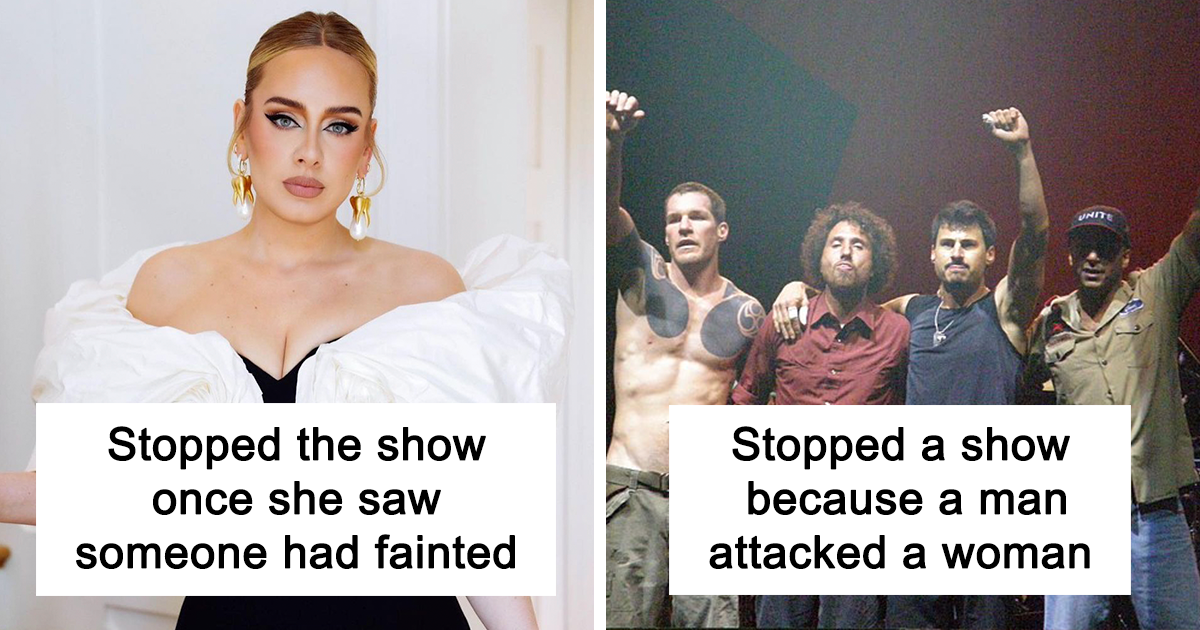
Adele has never been shy about speaking her mind, and that includes speaking up when someone in the audience needs help. At concerts in London and Sydney, she has stopped mid-performance after spotting fans in distress. In one widely shared moment, she asked people to let paramedics through and waited until the fan was being helped. When Adele says “stop,” even the backing track knows better than to argue.
3. Harry Styles paused his show for a fan having a panic attack
At a London concert, Harry Styles noticed a fan in the crowd having a panic attack. He stopped the song, asked the audience to give space, and made sure security could reach the person safely. Then, like a professional with excellent emotional intelligence and suspiciously perfect hair, he restarted the song once the situation was handled.
4. Taylor Swift defended a fan from security
During an Eras Tour performance in Philadelphia, Taylor Swift interrupted herself while singing “Bad Blood” after noticing a security issue near the stage. She called out toward the floor area, telling security to stop and insisting the fan was not doing anything wrong. Swift barely missed a beat, which is impressive because most of us lose focus when someone opens a bag of chips too loudly.
5. Linkin Park stopped “Papercut” when fans went down
At a 2001 London concert, Linkin Park stopped performing after seeing people fall in the pit. Mike Shinoda and Chester Bennington told the crowd to pick people up and stressed that safety came first. Their message was direct: nobody gets hurt. For a band known for intensity, it was a powerful reminder that heavy music and basic decency can absolutely share the same stage.
6. Dave Grohl kicked out a fighting fan
At the 2011 iTunes Festival in London, Foo Fighters frontman Dave Grohl stopped the show after spotting a fight in the crowd. He called out the person responsible and had them removed. Grohl made it clear that people came to dance, sing, and enjoy the nightnot to be shoved around by someone auditioning for “Worst Guy in the Pit.”
7. Kurt Cobain confronted a man assaulting a woman
During a Nirvana concert in the early 1990s, Kurt Cobain stopped performing after noticing a man sexually assaulting a woman in the crowd. Cobain called attention to the behavior and publicly shamed the offender. It was angry, uncomfortable, and necessary. Sometimes stopping the music is not just about medical safety; it is about making it clear that harassment has no place at a show.
8. Rage Against the Machine called out sexual harassment
At a 1997 concert in Mesa, Arizona, Rage Against the Machine frontman Zack de la Rocha paused the show after witnessing disturbing behavior toward women in the crowd. He used the moment to condemn sexual harassment and warn that the band would stop again if it continued. For a group built on protest, the message fit perfectly: the revolution does not include groping strangers.
9. Lady Gaga stopped for a bleeding fan
During a Joanne World Tour stop in Connecticut, Lady Gaga noticed a fan who had been hit in the face and was bleeding. She stopped the concert, checked whether the fan needed a paramedic, and waited until help was arranged. Gaga has built a career on spectacle, but in that moment, the biggest statement was compassion.
10. Drake paused after a fan fell from a balcony
At the Apollo Theater in New York, Drake paused his concert after a fan fell from a mezzanine into the audience below. The show stopped, house lights came on, and staff responded. After medical checks and a delay, the concert continued. It was a frightening reminder that crowd safety includes more than the pit; balconies, aisles, stairs, and packed floor sections all matter.
11. Post Malone stopped to help a fan in distress
Post Malone has paused performances more than once to check on fans who appeared to need help. At Stagecoach, he stopped his set and asked the crowd to make room so assistance could get through. At another show, he reportedly cut the music so a distressed fan could move toward safety and get water. Posty may look like he wandered out of a tattoo parlor and into a country-rock dream, but his crowd awareness is serious.
12. Olivia Rodrigo stopped during “Traitor”
During her Sour Tour, Olivia Rodrigo stopped while performing “Traitor” after seeing fans waving lights and signaling for help. She asked whether everyone was okay and requested assistance for someone in the crowd. It was a smart response from a young artist learning one of the most important rules of touring: the show can wait; the fan cannot.
13. Panic! At The Disco paused for a fan having a seizure
At a 2014 House of Blues show in Boston, Panic! At The Disco stopped when a fan reportedly had a seizure. Brendon Urie asked the audience to make space so medics could reach the person. His instruction for the crowd to part made the moment both urgent and oddly theatrical, which is very on-brand for Panic! At The Disco.
14. Green Day called out aggressive crowd behavior
Billie Joe Armstrong has paused Green Day shows when he noticed fans getting too rough. In one moment, he stopped the music and told aggressive people to back off because others were simply trying to have a good time. Punk rock may welcome chaos, but it does not require turning the audience into a human pinball machine.
15. A$AP Rocky stopped at Rolling Loud
At Rolling Loud in 2019, A$AP Rocky noticed fans on the ground and stopped the music. He asked people to back up and make space so someone could be helped. Festival crowds can be especially intense because everyone wants to be close to the stage, but sometimes the safest move is the least glamorous one: everybody take a step back.
16. Fall Out Boy waited until a fan was safe
Fall Out Boy paused a concert after noticing a fan in trouble. The band waited while the person was helped, and Patrick Stump turned the interruption into a message about community: when someone goes down, others help them up. That is basically the concert version of “be a decent human,” but with better lighting.
17. Niall Horan told the crowd to step back
During a concert in Argentina, Niall Horan stopped because he could see the audience was packed too tightly near the front. He asked fans to move back and reminded them that their safety was his responsibility. It was a preventative pause, which is often the best kind. Waiting until someone collapses is not a strategy; it is a failure with confetti.
18. Logic stopped for multiple fainting fans
At a Houston concert, Logic stopped after seeing a fan faint and told the crowd to make room. He also reminded people to drink water and take care of themselves, especially after waiting outside for hours. When another person appeared to need help, he stopped again. Hydration may not sound rock-and-roll, but neither does waking up in a hospital after skipping water all day.
19. Slipknot’s Corey Taylor stopped a crowd crush before it got worse
During a 2019 show at Glen Helen Amphitheater in California, Slipknot’s Corey Taylor noticed fans getting crushed near the front. He told the crowd to back up and made it clear the band would not continue until people listened. Coming from Slipknot, a band famous for controlled mayhem, that message carried weight: intensity is fine; danger is not.
20. The All-American Rejects stopped mid-song for a fan who passed out
At KROQ’s Almost Acoustic Christmas in Los Angeles, All-American Rejects frontman Tyson Ritter stopped mid-song after a fan passed out in the pit. He called for EMTs, brought water, and tried to keep the mood calm while the fan was helped. It was part emergency response, part holiday chaos, and part reminder that sometimes the most rock-star thing you can do is stop rocking.
What These Concert Moments Teach Us
The common thread in these stories is not genre. Pop, rock, rap, punk, metal, and alternative artists all appear on this list. The common thread is awareness. These musicians noticed something strange, trusted their instincts, and used their microphone for more than lyrics.
That matters because crowds behave differently when the music is blasting. People may not hear someone calling for help. Security may not immediately see a person on the ground. Fans near the back may not understand why the front is surging. When the artist stops the show, the entire venue gets one clear signal: pay attention.
There is also a cultural lesson here. For decades, some concert scenes treated rough behavior as part of the experience. “If you can’t handle it, don’t stand up front” was a common attitude. But these incidents show a better standard. A mosh pit can be energetic without being cruel. A barricade crowd can be excited without crushing people. A fan can dance, scream, cry, and live their best glitter-covered life without being harassed.
Artists cannot control everything. They are not paramedics, structural engineers, or venue managers. But they can influence the room. A simple “back up,” “make space,” or “get security over there” can change the outcome. It can also teach fans what is expected of them. In the best crowds, people pick each other up, pass water, signal for help, and treat strangers like temporary teammates.
Experiences Related to Concert Safety and Stopping the Music
Anyone who has been to a packed concert knows the strange mix of joy and vulnerability that comes with being in a crowd. One minute, you are singing the chorus with thousands of people who suddenly feel like your closest friends. The next minute, someone pushes from behind, the air gets thin, and you realize you cannot easily move your arms. That shift can happen quickly, especially near barricades, festival stages, and general-admission floors.
One common concert experience is the slow crowd squeeze. It does not always feel dangerous at first. People inch forward between songs. Then the headliner appears, the first beat drops, and everyone surges. Suddenly, the fans at the front are absorbing the pressure of hundreds or thousands behind them. This is why artists asking the crowd to step back can be so important. A few inches of space can make breathing easier. A calm instruction from the stage can stop the invisible wave before it becomes a medical emergency.
Another experience is dehydration. Fans often line up for hours, avoid drinking water because they do not want to lose their spot, and then spend the show jumping under hot lights. That is basically a recipe for fainting, served with a side of stubbornness. When musicians like Logic or Billie Eilish remind fans to drink water, it may sound simple, but it addresses one of the most common problems at live events. Water is not a luxury at concerts; it is part of the safety system.
Harassment is another issue that can hide inside the noise. In a dense crowd, a person being touched, grabbed, or cornered may struggle to get away. When artists like Kurt Cobain or Zack de la Rocha stopped performances to confront harassment, they sent a message beyond that single moment. They told the crowd that music spaces should not protect predators. A concert ticket is not permission to violate someone’s body or ruin their night.
There is also the emotional side. Panic attacks, sensory overload, and anxiety can hit hard in packed venues. Loud sound, flashing lights, heat, and limited exits can overwhelm even experienced fans. Harry Styles pausing for a fan having a panic attack showed that distress does not need to be visible like a broken arm to be real. Sometimes the most helpful thing a crowd can do is make room, lower the pressure, and let trained staff reach the person.
For fans, the lesson is practical: watch out for each other. If someone falls, help them up. If someone signals distress, pass the message forward. If people are being crushed, move back instead of pretending one more selfie angle is worth someone’s ribs. For venues, the lesson is planning: visible staff, accessible water, clear exits, trained medics, and communication systems matter. For artists, the lesson is courage: stopping the show may feel awkward, but ignoring danger is far worse.
The best concerts feel unforgettable because people share something intense together. But intensity should never mean abandonment. When musicians stop the music for safety, they do not ruin the show. They protect the reason the show exists in the first place: the fans.
Conclusion
These 20 moments prove that a concert pause can be more powerful than the loudest encore. Whether it is Billie Eilish finding an inhaler, Taylor Swift defending a fan, Drake pausing after a balcony fall, or Linkin Park demanding that people pick each other up, the message is the same: music matters, but people matter more.
Great performers understand that crowd control is not about killing the vibe. It is about protecting the vibe from becoming a disaster. A safe crowd sings louder, dances longer, and leaves with a story worth telling for the right reasons. The artists who stop the music when something is wrong are not interrupting the magic. They are making sure the magic survives.
Note: This article is fully rewritten in original wording for web publication and is based on publicly reported concert-safety incidents involving musicians, venue staff, and fans.

