
Skincare
How to Dispose of a Flat Screen TV: 9 Safe & Easy Options
Aug
A flat screen TV can spend years entertaining your household, then become surprisingly difficult to evict. It is too large for the recycling bin, too electronic for ordinary trash, and too awkward to carry downstairs without testing the strength of both your back and your friendships.
Fortunately, learning how to dispose of a flat screen TV is not complicated. The best choice depends on whether the television still works, whether the screen is damaged, what programs operate in your area, and whether you can transport it yourself.
In the United States, televisions generally require specialized recycling rather than standard curbside collection. Electronics contain recoverable metals, plastics, glass, and circuit boards, while some older LCD televisions may also contain mercury-based backlights and other materials that need controlled handling. The U.S. Environmental Protection Agency recommends donating reusable electronics or taking unwanted devices to an appropriate electronics recycling program.
Before you leave a 55-inch TV beside the garbage cans and hope it begins a new life on its own, consider these nine safe, legal, and practical options.
Why You Should Not Put a Flat Screen TV in the Trash
A television is not simply a large piece of plastic with a dramatic appetite for streaming subscriptions. Inside are circuit boards, wiring, metals, display components, and other materials that should be recovered or managed by trained processors.
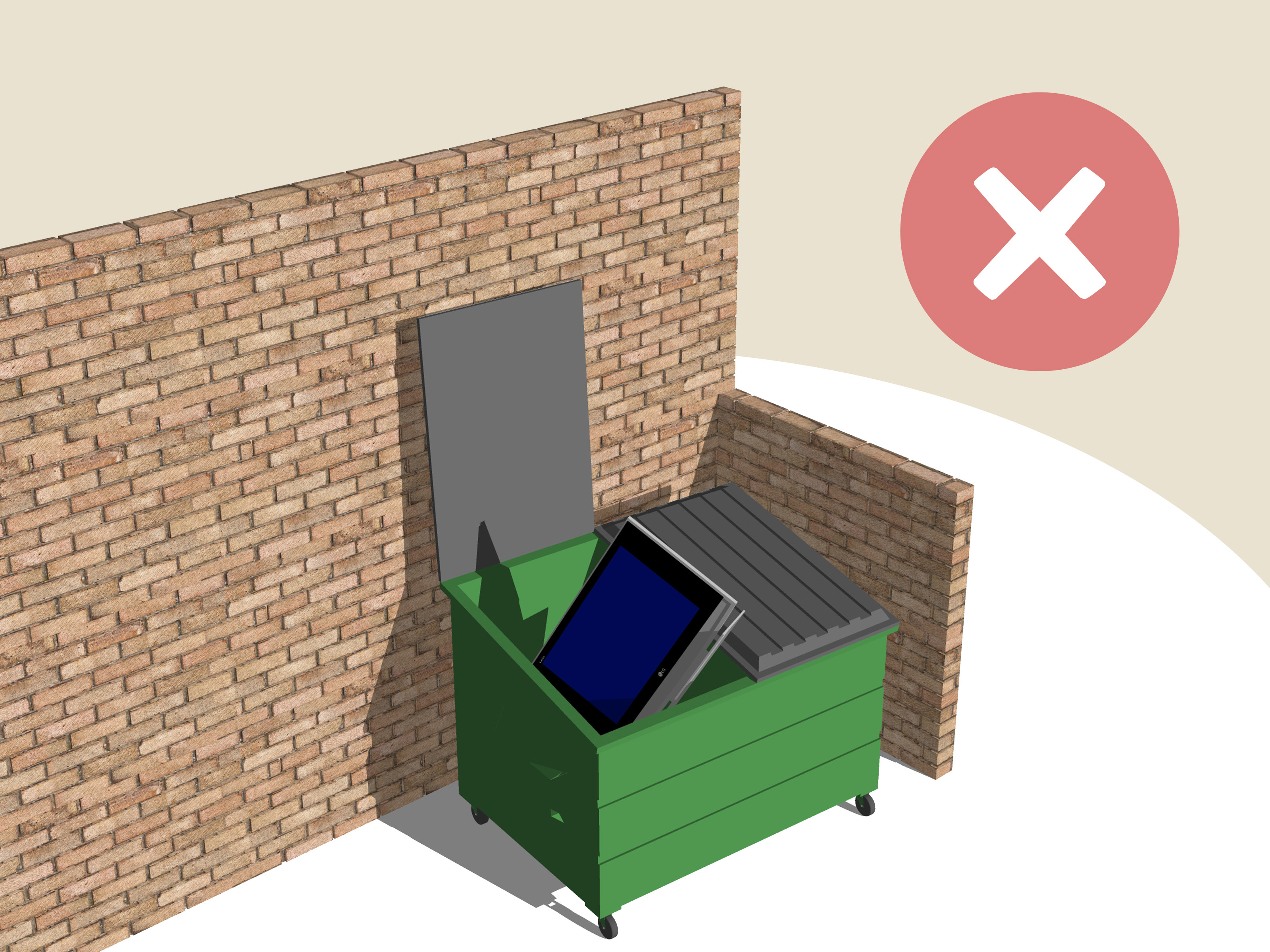
Televisions are also banned from regular trash disposal in a number of states and communities. New York, for example, prohibits covered electronic equipment from being placed in household trash or left at the curb for garbage pickup. California directs residents to approved electronic-waste collectors, while Oregon tells consumers not to put televisions in trash carts, recycling bins, or ordinary curbside collections.
Even where household disposal is not prohibited statewide, your waste hauler may refuse televisions. Never assume that a flat screen TV belongs in a dumpster, apartment trash room, or curbside recycling cart. Check your city, county, or solid-waste district rules first.
What to Do Before Disposing of Your TV
A few minutes of preparation can protect your privacy, prevent damage, and make the television easier for someone else to reuse or recycle.
Factory-reset a smart TV
Smart televisions may retain streaming logins, app profiles, network settings, viewing preferences, and account information. Sign out of installed services and perform a full factory reset. Also remove the television from any manufacturer, voice-assistant, or smart-home account linked to it.
Remove accessories and connected devices
Disconnect streaming sticks, external hard drives, memory cards, gaming systems, antennas, and HDMI cables. Remove batteries from the remote and recycle them separately when required. Do not accidentally donate your favorite streaming device along with the television unless generosity has suddenly become your full-time hobby.
Record the model and condition
Photograph the front, back, model label, power cord, remote, and any visible damage. These details help buyers, charities, manufacturers, and recyclers determine whether they can accept the set.
Transport it safely
Keep the television upright whenever possible. Support it from the bottom rather than lifting it by the bezel or screen. Use the original box if available; otherwise, cover the display with a soft blanket and a rigid sheet of cardboard. Secure the TV so it cannot slide or fall inside the vehicle.
Large televisions should normally be moved by two adults. A TV may look light because it is thin, but “thin” and “easy to carry down a narrow staircase” are not the same scientific measurement.
How to Dispose of a Flat Screen TV: 9 Options
1. Repair and Continue Using the TV
The most environmentally responsible disposal option may be not disposing of the television at all. If the screen is intact, a repair could extend its useful life for several more years.
Common repairable problems include failed power boards, damaged HDMI ports, malfunctioning backlights, loose internal connections, and software issues. Ask a reputable electronics repair shop for a diagnosis and written estimate. Compare the repair cost with the price, age, energy use, and expected lifespan of a replacement.
Repair makes the most sense when the television is relatively recent, the panel itself is undamaged, and parts remain available. A cracked display panel, however, is frequently too expensive to replace because the panel represents much of the television’s value.
2. Sell a Working Flat Screen TV
If the TV functions correctly but no longer fits your needs, selling it keeps the unit in circulation and may put a little cash toward a replacement.
Local marketplaces are often better than shipping because televisions are large, fragile, and expensive to pack. Include the brand, model number, screen size, resolution, smart-platform details, approximate age, included accessories, and honest information about flaws.
Show the television powered on in at least one photograph. A picture of a dark screen proves only that you own a black rectangle.
For safer transactions, meet in a suitable public location when practical, use secure payment methods, and avoid inviting unknown buyers into private areas of your home. For a very large wall-mounted television, consider arranging pickup with another adult present.
3. Donate the Television
A working TV may be useful to a family, school, community center, nonprofit organization, shelter, senior facility, or local charity. Goodwill lists televisions among the types of electronics that may be donated, but individual locations establish their own acceptance policies. Always call before arriving.
Donation standards can be stricter than people expect. An organization may reject televisions that are too old, missing a remote, excessively large, damaged, or incompatible with current services. Some charities lack the equipment or staff needed to test electronics.
Clean the television, factory-reset it, bundle the remote and power cord, and provide the stand or mounting hardware when available. Do not donate a television with a cracked panel, exposed wiring, intermittent power problem, or other safety defect. Donation is not a polite synonym for transferring disposal costs to a nonprofit.
4. Use a Manufacturer Take-Back or Trade-In Program
Check the television manufacturer’s website before paying a recycler. Some brands sponsor drop-off locations, mail-back services, collection events, or trade-in promotions.
Samsung, for example, maintains consumer recycling information and directs customers to electronics collection options, while LG operates a recycling program for unwanted, obsolete, or damaged LG consumer electronics. Availability, accepted brands, packaging requirements, and fees can vary by state and program.
When purchasing a new television directly from a manufacturer, look for a trade-in or haul-away offer during checkout. Read the conditions carefully. Some promotions require the old set to be a particular type, accessible at the delivery location, disconnected from the wall, or ready for removal when the new TV arrives.
5. Take It to a Retailer Recycling Program
Electronics retailers sometimes accept old televisions at participating stores or provide haul-away service when delivering a replacement. This can be one of the easiest choices because the retailer already handles large electronic products.
However, television recycling policies are not universal. Stores may impose screen-size limits, daily quantity limits, brand restrictions, state-specific exclusions, or recycling charges. Best Buy currently provides in-store and home haul-away options for certain televisions, but applicable fees and limits depend on the service and location.
Call the store or verify its current online acceptance list before loading the TV. Confirm these four details:
- Whether flat screen televisions are accepted at that specific location
- The maximum permitted screen size
- Whether a recycling or pickup fee applies
- Whether proof of purchase or a replacement purchase is required
6. Use a Municipal E-Waste Drop-Off Site
Many city and county governments operate permanent electronic-waste facilities, household hazardous-waste centers, transfer stations, or scheduled collection days. Start with your local public works, sanitation, recycling, or solid-waste department.
Government-sponsored programs may be free for residents, although some charge according to the television’s size, weight, or display type. You may need identification or a utility bill to prove residency.
State programs demonstrate how much local rules can differ. Washington’s E-Cycle program accepts qualifying televisions through designated collection locations, and Oregon offers free recycling for limited quantities of covered electronics at participating sites. California maintains a directory of approved collectors and advises residents to contact a location in advance regarding hours and possible fees.
Never assume that a household hazardous-waste facility accepts TVs simply because it accepts paint, chemicals, or batteries. Electronics may be handled through a separate entrance, schedule, or contractor.
7. Choose a Certified Electronics Recycler
A dedicated e-waste recycler is often the best destination for a dead, obsolete, or damaged television. Choose a facility with a recognized third-party certification rather than handing the TV to an unknown collector who promises to “take care of it.” That phrase has sent many questionable objects on mysterious journeys.
Two widely recognized certification systems are R2 and e-Stewards. Both provide searchable directories of certified electronics processors. Certification helps demonstrate that a facility follows established practices for environmental management, worker safety, material handling, downstream accountability, and, where applicable, data security.
Before visiting, ask whether the recycler accepts consumer televisions, broken screens, plasma displays, or oversized units. Confirm the price and whether staff will unload the television. Some recyclers focus mainly on business computers and may not accept residential TVs.
8. Attend a Community Electronics Collection Event
Schools, municipalities, environmental groups, businesses, and nonprofit organizations occasionally host one-day electronics recycling events. These events can be ideal when permanent drop-off sites are inconvenient or charge higher fees.
Read the event notice carefully. Organizers may limit participation to local residents, cap the number of televisions per vehicle, exclude commercial loads, or charge for large screens. Registration may be required even when recycling is free.
Arrive with the TV secured and easy to unload. Follow traffic instructions and remain in the vehicle if volunteers request it. Do not leave electronics outside the event site before or after operating hours. That is illegal dumping wearing a flimsy disguise.
9. Pay for Professional Haul-Away
Professional pickup is useful when the television is too large to move safely, is mounted high on a wall, or must be removed from an upper floor. Retail delivery teams, electronics recyclers, moving services, and licensed junk-removal companies may offer this service.
Ask what happens after collection. A responsible provider should be able to explain whether the television will be reused, donated, or delivered to a certified recycling partner. Avoid companies that cannot identify their downstream processor.
Request a complete quote that covers labor, stairs, wall-mount removal, transportation, and recycling charges. If you are buying a replacement TV, arranging haul-away during delivery is often less expensive than scheduling a separate trip.
How to Handle a Broken Flat Screen TV
A cracked or shattered display requires extra care. Do not plug it in, press on the damaged panel, remove the back cover, or attempt to dismantle it for scrap. Older LCD models may contain small mercury-bearing fluorescent backlights, while televisions can also contain lead, cadmium, and other materials requiring appropriate management.
Wear sturdy gloves and closed-toe shoes when handling a damaged set. Keep children and pets away. Place cardboard over the front and secure it around the television without pushing tape directly into broken glass. Wrap the set with a moving blanket or stretch film to contain loose pieces.
Tell the collection site about the damage before arriving. Some programs accept broken televisions only when packaged in a particular way, while others route them to a separate facility.
How Much Does Flat Screen TV Disposal Cost?
Disposal may cost nothing or more than $100, depending on the television, your location, and the amount of labor involved. Common possibilities include:
- Free: State recycling programs, municipal events, manufacturer programs, donations, or promotional retailer services
- Low per-item fee: Store drop-off or local recycling facilities
- Higher service fee: In-home pickup, stair carries, wall-mount removal, or standalone haul-away
Never choose a provider based only on the lowest price. A suspiciously cheap, cash-only collector may recover a few valuable parts and dump the rest. Verified processing is worth a reasonable fee.
Experience-Based Lessons That Make TV Disposal Easier
The most common disposal mistake happens before anyone leaves the house: people load the television first and research the destination second. After wrestling a giant screen into the back seat, they discover that the nearest store accepts only smaller models, the county site operates on alternate Saturdays, or the charity stopped accepting TVs three years ago. A two-minute phone call can prevent an afternoon of driving around with a nervous passenger made of glass.
Another practical lesson is to describe the television accurately. “Old TV” does not give a recycler much useful information. Provide the screen size, display type, brand, model number, condition, and whether the stand is attached. A 32-inch working LED set is a very different pickup from a damaged 75-inch plasma television. Clear details produce accurate answers and fewer surprise fees.
People also underestimate the importance of the stand. A TV balanced loosely in a vehicle is much more likely to tip, and a missing stand makes a working set harder to donate or sell. Keep the base, screws, remote, power cable, and manual together in a labeled bag. Tape the bag to the cardboard protecting the screennot directly to the display.
Wall-mounted TVs create their own comedy routine. Owners often schedule a pickup and then realize the collection crew does not remove mounting brackets or disconnect wiring. Before the appointment, ask whether wall removal is included. When it is not, arrange for a qualified installer or capable helper to take the television down safely.
Timing matters as well. Electronics collection events can fill quickly, particularly after holidays and during spring-cleaning season. Arriving early is usually better than appearing five minutes before closing with three televisions and the hopeful expression of someone presenting surprise luggage at an airport counter.
For a working TV, test every major function before advertising or donating it. Check the screen, speakers, remote, Wi-Fi, HDMI inputs, and power button. Record a short video showing the television operating. This reassures buyers and helps charities avoid spending staff time evaluating unusable equipment.
For a dead TV, resist the urge to diagnose it with a screwdriver unless you have appropriate repair training. Large capacitors and delicate components can present hazards even after the unit is unplugged. Professional recyclers have procedures for dismantling displays and separating circuit boards, metals, plastics, lamps, and glass.
Finally, keep a receipt or recycling certificate when one is available. The document can be useful for business records, donation documentation, property management, or proof that a disposal company handled the television properly. It also provides peace of mind that your former entertainment center did not become an illegal roadside attraction.
Final Thoughts
The safest way to dispose of a flat screen TV is to match its condition with the right destination. Repair, sell, or donate a working television. Use a manufacturer, retailer, municipal program, collection event, or certified e-waste recycler when the set has reached the end of its life. Choose professional haul-away when moving the television would put people or property at risk.
Whatever option you select, factory-reset smart features, remove accessories, verify acceptance requirements, and transport the set upright and protected. A little planning keeps useful electronics in circulation, recovers valuable materials, and prevents hazardous components from ending up where they do not belong.
Note: Television acceptance rules, recycling fees, size limits, and disposal laws vary by state, county, retailer, and facility. Contact the selected program before transporting your TV and follow its current packaging and drop-off instructions.

