
Makeup
Everyone Hated Ginger on ‘Gilligan’s Island’
Aug
Editor’s note: The phrase “everyone hated Ginger” is a catchy piece of classic-TV gossip, not a literal fact. Ginger Grant was controversial, occasionally misunderstood, and often compared with Mary Annbut she was also a crucial part of what made Gilligan’s Island unforgettable.
For a sitcom about seven people stranded after a “three-hour tour,” Gilligan’s Island has inspired an impressive amount of emotional luggage. Fans remember the Skipper’s booming voice, Gilligan’s accidental disasters, the Professor’s miracle inventions, and the strange fact that nobody seemed too worried about sunburn.
But few topics have lasted as long as the eternal question: Ginger or Mary Ann?
Some viewers adored Ginger Grant, the glamorous movie star played by Tina Louise. Others found her vain, impractical, dramatic, and suspiciously well-dressed for someone living on an island with no dry cleaner, no salon, and no visible luggage allowance. Over time, that preference debate grew into a bigger rumor: that everyone hated Ginger.
That story is more complicatedand far more interestingthan the gossip suggests.
Did Everyone Really Hate Ginger on Gilligan’s Island?
No. Not remotely.
Ginger was not universally hated by viewers, the cast, or the people who made Gilligan’s Island. What she did become was the show’s most polarizing character. Ginger represented Hollywood glamour, ambition, romance, vanity, and performance. Mary Ann represented simplicity, warmth, home cooking, and the emotional security of someone who would probably help you repair a canoe without asking whether the canoe matched her shoes.
That contrast was intentional. The show was built around broad archetypes: the bumbling first mate, the authority figure, the wealthy couple, the professor, the wholesome farm girl, and the movie star. Ginger was not designed to be a practical wilderness expert. She was designed to be fabulous in a place where fabulousness had absolutely no survival value.
That was the joke.
Still, audiences often judge fictional women more harshly than fictional men. Gilligan could ruin every rescue plan within a ten-mile radius and remain lovable. Mr. Howell could hoard wealth on an island where money had the purchasing power of wet leaves and remain amusing. But Ginger wanting attention, expressing frustration, or behaving like a movie star could make her seem selfish.
In other words, Ginger was allowed to be glamorousbut some viewers did not always allow her to be human.
Ginger Grant Was Never Supposed to Be Ordinary
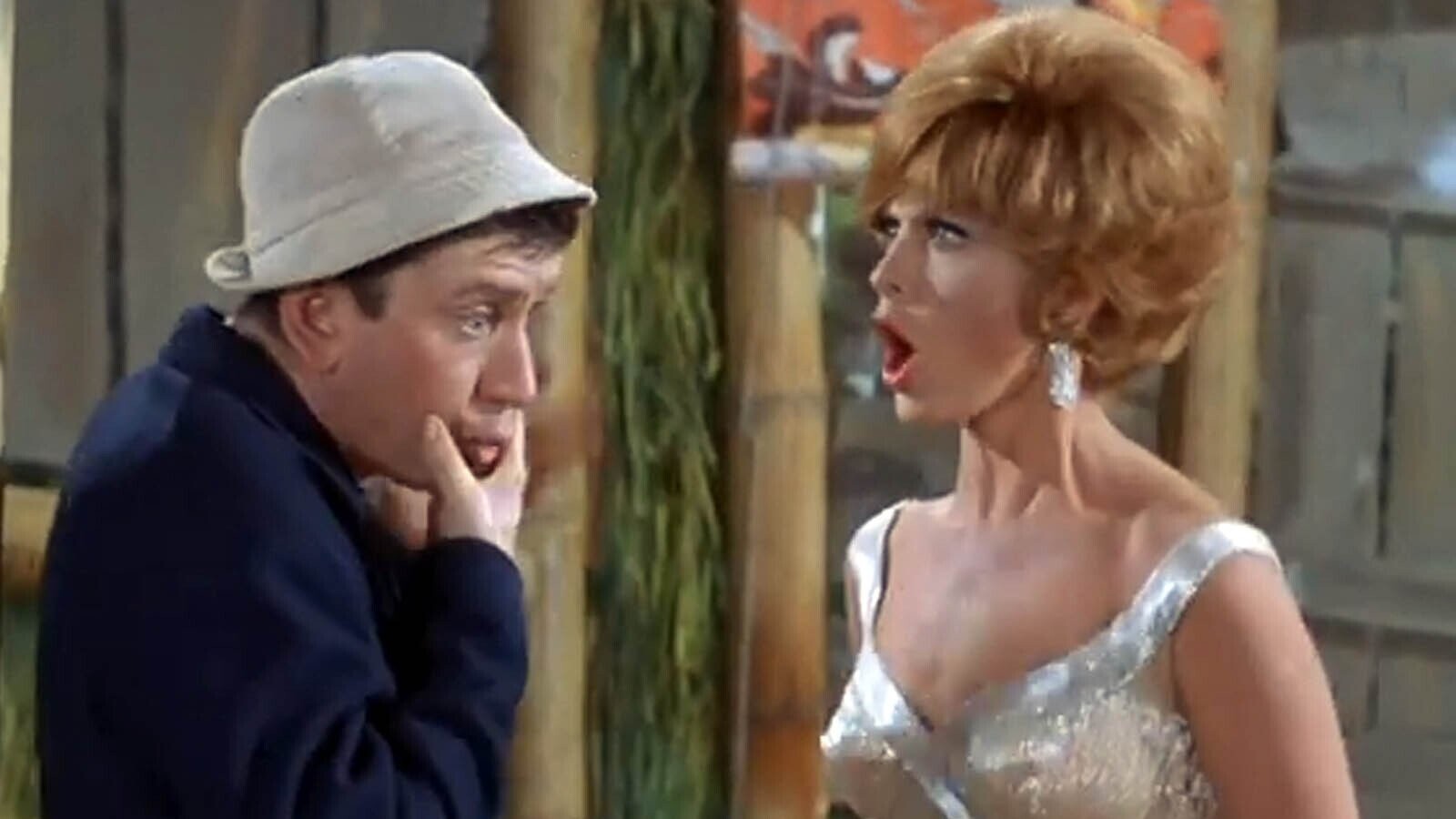
Ginger Grant was the resident Hollywood star of Gilligan’s Island, a woman whose personality seemed assembled from movie premieres, satin gowns, breathy one-liners, and a very confident belief that the island should somehow recognize her celebrity status.
Her character borrowed from the classic Hollywood bombshell tradition. Ginger had the theatrical glamour associated with stars such as Marilyn Monroe, Jean Harlow, and Jayne Mansfield, but she was also a parody of the entertainment industry itself. She spoke like someone who expected a spotlight to follow her through the jungle. Occasionally, it practically did.
That made Ginger funny because she was wildly out of place. Everyone else had a role that at least vaguely fit survival: the Professor could build equipment, Mary Ann could cook, the Skipper could captain a boat, and the Howells could complain professionally. Ginger’s main practical skill was being Ginger.
Yet that was more valuable than it sounds. Ginger often boosted morale, participated in island performances, helped create distractions, and brought a sense of fantasy to a show that was never trying to become a realistic survival drama. No one watched Gilligan’s Island expecting a wilderness documentary. They watched it because a professor could build a radio from coconuts but somehow could not repair a boat.
Ginger fit perfectly into that ridiculous universe.
Why Tina Louise Had a Complicated Relationship With Ginger
The biggest reason the “everyone hated Ginger” rumor endured was Tina Louise’s own complicated history with the role.
Before joining Gilligan’s Island, Louise had built a serious acting résumé in theater, television, and film. She had worked in dramatic roles and was not necessarily looking to become permanently associated with a broad sitcom character in sequined dresses.
Early in the series, Louise reportedly objected when Ginger was pushed toward a sharper, more sarcastic personality. She preferred a softer, more glamorous version of the character, closer to a classic Hollywood comic heroine than a mean-spirited diva. That creative concern mattered because it showed she did not simply dislike Ginger. She cared about how Ginger was being written.
That distinction is important.
Louise was not rejecting the idea of Ginger Grant as much as she was resisting a version of Ginger that felt shallow, cruel, or limiting. She wanted the character to have charm, femininity, and comic sparklenot just a permanent sneer and a closet full of tropical gowns that somehow never got mildew.
Over the years, however, Louise did distance herself from Gilligan’s Island. She did not participate in the later reunion films, which made fans assume she disliked the cast, hated the show, or wanted to be rescued from the island more urgently than any character ever did.
The truth appears less dramatic. Like many actors associated with one famous role, Louise worried about typecasting. Ginger Grant was beloved by millions, but being beloved for one character can also make it harder for audiences to see the performer as anything else.
For an actor with serious dramatic ambitions, that can feel less like a compliment and more like being trapped in a very stylish cage.
The Ginger vs. Mary Ann Debate Changed Everything
No discussion of Ginger Grant is complete without Mary Ann Summers.
Mary Ann, played by Dawn Wells, was Ginger’s opposite in nearly every visible way. Ginger wore glamorous dresses. Mary Ann wore gingham. Ginger talked about Hollywood. Mary Ann talked like the person who would bring you soup when you had the flu. Ginger was a movie star. Mary Ann was the girl next door.
Television audiences loved the contrast, and the “Ginger or Mary Ann?” question became one of the most enduring pop-culture debates of the 1960s and beyond.
But a debate is not the same as hatred.
Many viewers preferred Mary Ann because she seemed approachable. She represented comfort, kindness, and small-town sincerity. Ginger represented glamour and fantasy. People could imagine marrying Mary Ann, borrowing a cup of sugar from Mary Ann, or asking Mary Ann to help hide a body in a wholesome, non-threatening way.
Ginger, on the other hand, felt more distant. She was dazzling, theatrical, and slightly intimidating. She was the woman you imagined meeting at a Hollywood party, then spending the next five years telling people about because you never quite recovered from the experience.
The public did not necessarily hate Ginger. They simply tended to interpret Mary Ann as emotionally safer.
That is not a character flaw. It is a branding difference.
Why Ginger Could Seem Selfish to Some Viewers
Ginger’s character was built on the idea that she had spent years in Hollywood, where appearance, charm, celebrity, and attention were forms of currency. Then she was dropped onto an island where the local economy consisted of bamboo, coconuts, and Gilligan’s latest accident.
Of course she seemed disoriented.
Ginger sometimes behaved vainly because vanity was part of the comedy. The audience was supposed to laugh at the contrast between a glamorous starlet and the realities of island life. Her elaborate outfits, beauty routines, and dramatic reactions were not evidence that she was evil. They were evidence that the writers understood the comic value of putting a movie star in the least movie-star-friendly setting imaginable.
Still, the character could seem less sympathetic than Mary Ann because Mary Ann’s kindness was visible and practical. Mary Ann cooked, cared for people, and approached problems with optimism. Ginger’s strengths were more emotional and performative. She encouraged fantasy, confidence, romance, entertainment, and escapism.
Those things are easy to underestimate until life gets difficult. Then suddenly the person who can make people laugh, feel beautiful, or forget their problems for an hour becomes very useful indeed.
Ginger Was More Than a Punchline in a Red Dress
It is easy to reduce Ginger Grant to her gowns, her red hair, and her movie-star mannerisms. But doing so misses the character’s real importance to Gilligan’s Island.
Ginger brought a specific kind of fantasy to the series. She represented the dream of Hollywood arriving in the middle of nowhere. She could turn a simple island situation into a melodrama, a romance, a stage production, or a celebrity scandal. Even when she was being ridiculous, she made the island more entertaining.
She also gave the ensemble a different social energy. Without Ginger, the show would have had plenty of comedy, but less sparkle. Mary Ann gave the island heart. Ginger gave it glitter.
And yes, glitter is difficult to maintain on a deserted island. That is why it is funny.
Her character also reflects a specific era of American television. In the 1960s, women on sitcoms were often placed into neat categories: the homemaker, the sweetheart, the glamorous blonde, the eccentric rich woman, the flirt, or the innocent young woman. Ginger and Mary Ann were not simply rivals. They were two competing versions of femininity presented to a mass audience.
Modern viewers can recognize the limitations of that setup while still appreciating the performances. Ginger was never meant to be a realistic woman. Neither was Mr. Howell, who apparently packed more resort wear than food for a three-hour boat ride.
Did the Cast Actually Hate Tina Louise?
There is no solid reason to believe that the entire cast of Gilligan’s Island hated Tina Louise.
Like many long-running television productions, the show had creative disagreements, professional frustrations, competing personalities, and plenty of gossip. That does not automatically equal a cast-wide feud. Rumors become especially tempting when one actor does not participate in reunions while others return enthusiastically.
Louise’s absence from the sequel films made the divide look larger than it may have been. Fans saw the other cast members return to their familiar roles, while Ginger was played by other actresses. That created a powerful visual message: Ginger had been replaced.
But replacement is not the same as rejection.
Louise pursued other work, including film and television roles outside the Gilligan’s Island universe. Her choice to move forward may have disappointed fans, but actors are not required to live forever inside the characters that made them famous.
It is possible to be grateful for a role, frustrated by a role, proud of a role, and exhausted by a roleall at the same time. Ask anyone who has ever had to explain a viral joke from 2014 at a family reunion.
Why the “Everyone Hated Ginger” Myth Still Survives
The rumor survives because it combines several irresistible ingredients: a famous sitcom, a glamorous actress, a beloved wholesome rival, old Hollywood typecasting, missing reunion appearances, and decades of fan speculation.
It also fits a simple story. People love a neat narrative: Mary Ann was sweet, Ginger was difficult, and everybody picked a side. But real life is rarely that tidy, especially in television production.
Ginger was not hated because she was poorly written or unnecessary. She was debated because she was memorable. She represented a kind of glamour that could be admired, mocked, envied, and misunderstood all at once.
That is why people are still talking about her.
If a character truly disappears from public memory, nobody argues about them. Ginger Grant never had that problem.
The Real Legacy of Ginger Grant
Ginger Grant remains one of the most recognizable characters in classic television because she was so unapologetically larger than life. She did not blend into the island. She did not adapt quietly. She brought Hollywood glamour to a bamboo hut and acted as though the jungle should feel lucky to have her.
That confidence is part of her charm.
Ginger may not have been every viewer’s favorite castaway, but she was essential to the chemistry of Gilligan’s Island. She gave the show glamour, theatricality, romance, and a little harmless chaos. She was the high heels in a world of bare feet.
And without her, the island would have been much less fun.
The Ginger Experience: What Rewatching Her Character Feels Like Today
Rewatching Ginger Grant today is a surprisingly different experience from merely remembering her. Memory tends to flatten her into a stereotype: red hair, evening gowns, breathy voice, movie-star vanity. But when you watch the episodes again, Ginger feels more like a performance inside a performance. Tina Louise was playing an actress who was always aware of being watched, even when the only available audience was a professor, a millionaire, a farm girl, and a man named Gilligan who had probably wandered into the scene carrying something breakable.
That makes Ginger feel oddly modern. She understands image before social media, branding before personal brands, and the exhausting pressure of being treated like a symbol instead of a person. She is constantly performing glamour because glamour is the one identity the world recognizes in her. On the island, where nobody needs a celebrity, she still behaves like Ginger Grant because it is the language she knows.
The experience of watching her is also a lesson in how audiences judge women differently. A male character can be foolish, loud, vain, wealthy, cowardly, or completely impractical and still be considered charming. Ginger displays confidence, beauty, and ambition, and suddenly viewers may call her difficult. The character exposes how quickly femininity becomes a test of likability.
At the same time, Ginger is not always easy. She can be dramatic. She can be self-centered. She can react to an island inconvenience as though it were a failed opening night on Broadway. But that is exactly what gives her comic energy. She is not supposed to be the sensible one. She is supposed to make sensibility look boring for twenty-two minutes.
There is also something comforting about Ginger’s refusal to surrender completely to the island. The castaways lose most of the conveniences of ordinary life, but Ginger protects a sense of style, performance, and self-worth. She may not be able to build a raft, but she can remind everyone that survival is not only about food, shelter, and avoiding quicksand. Sometimes survival also means keeping a little drama, beauty, and humor alive when circumstances become ridiculous.
That is why Ginger deserves more credit than the old “everyone hated her” story allows. She was not simply the glamorous distraction. She was a reminder that people do not stop being themselves just because life gets inconvenient. Some people become more practical during a crisis. Some become more generous. Some invent a radio from a coconut. And some put on a fabulous dress, look directly at the chaos, and decide that the chaos needs better lighting.
Conclusion
Ginger Grant was never universally hated on Gilligan’s Island. She was simply the character most likely to provoke opinions. Her clash with Mary Ann created one of television’s longest-running debates, while Tina Louise’s complicated feelings about typecasting added fuel to decades of rumors.
But Ginger’s legacy is bigger than gossip. She helped define the show’s visual identity, comic tone, and cultural staying power. She was glamorous, dramatic, occasionally impractical, and completely unforgettable.
On an island filled with coconuts, bamboo, and failed escape plans, Ginger Grant brought the one thing nobody else could: Hollywood.

