
Body Care
DIY Wood Bench with Box Frame and Chevron Top
Jun
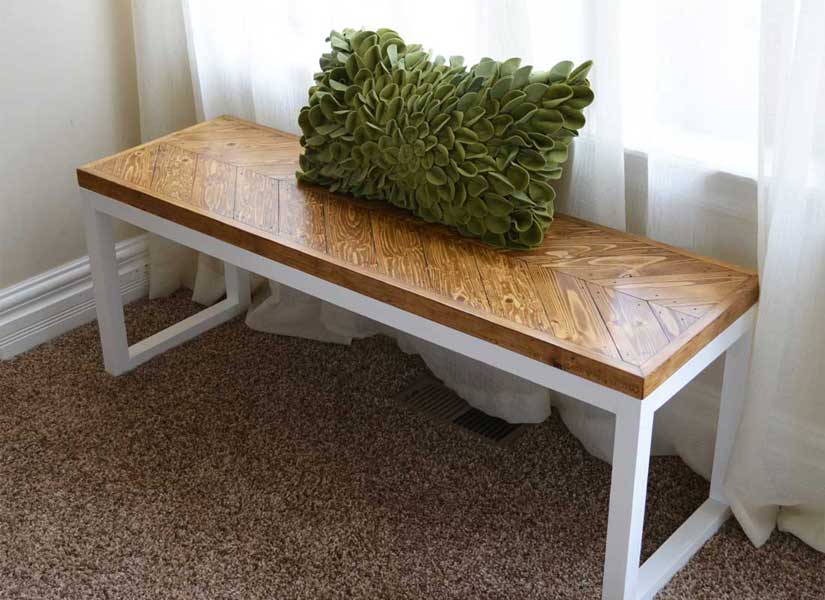
A DIY wood bench with box frame and chevron top is the kind of project that makes people say, “Wait, you built that?” and then look suspiciously at your garage like it might secretly be a furniture factory. The beauty of this bench is that it looks custom and high-end, but the build itself is approachable for a careful beginner or weekend woodworker with basic tools, patience, and a healthy respect for measuring twice.
The box frame gives the bench a clean, modern base. The chevron top adds movement, texture, and that “designer furniture without designer invoice” feeling. It works beautifully in an entryway, at the foot of a bed, on a covered porch, beside a dining table, or in a mudroom where shoes gather like they are holding a small conference.
This guide breaks down the planning, materials, tools, construction process, finishing options, and practical lessons behind building a sturdy wood bench with a box-style frame and decorative chevron seat. The goal is not just to build a bench, but to build one that sits level, looks intentional, and does not wobble like a nervous folding chair at Thanksgiving.
Why Build a Chevron Wood Bench?
A simple bench is useful. A chevron wood bench is useful and stylish. The angled top pieces create a strong visual pattern that makes inexpensive lumber look more refined. Instead of one plain slab or a row of straight boards, the chevron layout draws the eye toward the center line, giving the bench a handcrafted focal point.
The box frame design is another win. It is basically a rectangular base made from legs, rails, and supports, which makes it easier to keep square than fancier curved or carved bench bases. The design is clean enough for modern spaces, rustic enough for farmhouse rooms, and flexible enough to paint, stain, distress, or leave natural.
Recommended Bench Size and Design
A comfortable general size for this project is about 48 inches wide, 15 inches deep, and 18 inches high. That height works well for most entryway benches, dining benches, and bedroom benches. A 4-foot width seats two adults comfortably or one adult plus a dramatic pile of coats that “someone” promised to hang up later.
You can adjust the size to fit your space. For a narrow hallway, reduce the depth slightly. For the foot of a queen or king bed, extend the width. If you build a much longer bench, add a center support or third leg assembly so the top does not sag over time. Wood has feelings too, mostly about gravity.
Best Places to Use This Bench
This bench is especially useful in places where seating and style need to work together. In an entryway, it gives guests a spot to remove shoes. In a mudroom, it adds order to the daily backpack-and-boot tornado. At the dining table, it creates flexible seating. On a covered porch, it adds charm without taking up as much space as a full outdoor sofa.
Materials You Will Need
Your exact shopping list depends on your dimensions, but a typical 48-inch chevron bench uses common dimensional lumber, wood glue, screws, filler, sandpaper, and finish. Pine is affordable and easy to work with, while cedar, redwood, Douglas fir, or pressure-treated lumber are better choices if the bench will live outdoors or in a damp area.
- 2×2 or 2×4 boards for the box frame and legs
- 1×3, 1×4, or ripped boards for the chevron top
- Wood glue suitable for interior or exterior use
- Pocket-hole screws or wood screws
- Brad nails or finish nails for decorative top pieces
- Wood filler or stainable filler
- Sandpaper in 80, 120, 180, and 220 grit
- Primer and paint for the base, if desired
- Wood stain, polyurethane, spar urethane, or exterior stain/sealer
If the bench will be outdoors, choose exterior-rated fasteners. Stainless steel, coated deck screws, or exterior pocket-hole screws are worth the extra cost because cheap screws can corrode, stain the wood, and shorten the life of the project. That is not “rustic charm.” That is hardware betrayal.
Tools for the Project
You do not need a professional cabinet shop to build this bench, but accurate cutting and drilling matter. A miter saw makes the angled chevron cuts easier. A drill/driver is essential. A pocket-hole jig is very helpful for hiding screws and creating clean frame joints. A brad nailer saves time when attaching the chevron pieces, though a hammer and finish nails can work if you are patient and not easily offended by tiny nails.
- Miter saw or circular saw with guide
- Drill/driver
- Pocket-hole jig
- Orbital sander
- Clamps
- Speed square or rafter square
- Tape measure and pencil
- Countersink bit
- Brad nailer, optional but convenient
- Safety glasses, hearing protection, and dust mask
Choosing the Right Wood
For an indoor bench, pine or poplar can be budget-friendly and easy to finish. Pine is soft, so it dents more easily, but it is also forgiving and widely available. Poplar paints beautifully but can look blotchy under some stains unless you use a pre-stain conditioner. Oak, maple, and ash are stronger hardwood options if you want a more premium bench top.
For outdoor use, cedar, redwood, pressure-treated lumber, or weather-resistant hardwoods are better choices. Cedar and redwood naturally resist decay and look handsome with a clear or semi-transparent stain. Pressure-treated lumber is durable, but it should be dry before staining or painting. If the board feels wet, heavy, or freshly treated, let it dry before finishing.
How to Pick Straight Boards
Stand at the end of each board and sight down its length. Avoid boards that twist, cup, bow, or curve like they are auditioning to become a rocking chair. Chevron patterns depend on clean alignment, so straighter boards make the whole build easier. Also check for large knots near your cut lines, deep cracks, and rough edges.
Step-by-Step: Building the Box Frame
1. Cut the Legs and Rails
Start by cutting four legs to your chosen height, allowing for the thickness of the bench top. If your finished height is 18 inches and your top is about 1 inch thick, your legs should be around 17 inches. Cut front, back, and side rails to form a rectangular box. Dry-fit everything on a flat surface before drilling.
2. Drill Pocket Holes
Use a pocket-hole jig to drill holes in the rails where they meet the legs. Pocket holes keep the screws hidden on the inside of the frame and give the bench a cleaner look. Add wood glue at the joints before driving screws. Glue is not a substitute for good joinery, but it is a helpful teammate.
3. Assemble the End Frames
Build the two short end frames first. Clamp the rails between the legs, check for square, and drive the screws. A speed square is your friend here. If the end frames are crooked, the rest of the bench will inherit the problem like a family recipe nobody asked for.
4. Connect the Long Rails
Attach the front and back rails between the two end frames. Keep the frame upside down on a flat work surface if that makes alignment easier. Measure diagonally from corner to corner; if the measurements match, your frame is square. If not, gently shift the frame before the glue sets.
5. Add Center Support
For a 48-inch bench, at least one center support under the chevron top is a smart idea. It helps prevent flexing and gives you more surface area for attaching the top. For longer benches, add two supports or a third leg assembly.
How to Build the Chevron Top
The chevron top is the star of this DIY wood bench. It looks complex, but the secret is repetition. Most chevron patterns are made with equal-length boards cut at matching 45-degree angles. The pieces meet along a center line and point outward in a V pattern.
1. Prepare a Top Panel or Frame
You can attach the chevron boards directly to support strips or build them over a thin plywood panel cut to the final seat size. A plywood backer makes layout easier because you can draw a center line and edge boundaries. It also helps support shorter decorative pieces.
2. Mark the Center Line
Draw a straight line down the middle of the bench top from front to back. This is where the points of the chevron pieces will meet. Accuracy matters here because a crooked center line makes the entire pattern look slightly dizzy.
3. Cut the Chevron Pieces
Set your miter saw to 45 degrees and cut matching pieces for both sides of the pattern. Use a stop block if possible so repeated pieces stay the same length. The more consistent the pieces, the tighter the layout will look.
4. Dry-Fit Before Gluing
Lay out the entire chevron pattern before attaching anything. Adjust pieces, trim edges, and check the overhang. This is the moment to discover problems, not after half the boards are glued down and your bench top has become a wooden puzzle with commitment issues.
5. Attach the Pieces
Apply wood glue to the underside of each piece and secure it with brad nails or finish nails. Work from the center line outward. Keep the joints tight, but do not panic over tiny gaps. Wood filler, stain definition, and finishing can make small imperfections look intentional.
6. Trim the Edges
Once the top is dry, trim the outer edges flush with a circular saw, table saw, or flush-trim router bit. If you planned a slight overhang, trim carefully so the top is even on all sides.
Attaching the Top to the Box Frame
Dry-fit the top on the base before fastening. Center it carefully, then trace the frame location underneath if needed. Drill countersunk pilot holes before driving screws through the frame into the underside of the top. Pilot holes reduce splitting and help screws drive straight.
If the chevron top is stained and the base is painted, it is often easier to finish the two parts separately before final assembly. That way you do not have to tape around every angled board like you are defusing a very stylish bomb.
Sanding the Bench Smooth
Start sanding with 80 or 100 grit if the wood is rough, then move through 120, 180, and 220 grit. Do not skip too many grits. Jumping from rough sanding straight to fine sanding sounds efficient, but it often leaves scratches that appear only after stain, which is woodworking’s favorite little prank.
Round over sharp edges lightly by hand. A bench should feel comfortable to sit on, not like a medieval punishment device. Remove all dust with a vacuum, tack cloth, or slightly damp rag before applying finish.
Finishing Ideas for a Chevron Bench
One of the most popular looks is a stained chevron top with a painted box frame. A warm oak, walnut, or weathered brown top paired with a white, black, charcoal, or navy base gives strong contrast and lets the pattern stand out.
Indoor Finish
For indoor use, apply wood stain to the top, let it dry, and seal it with polyurethane. Satin or semi-gloss polyurethane gives a durable surface that handles daily use. Painted bases should be primed first, especially if you are using pine or raw softwood.
Outdoor Finish
For outdoor or covered porch use, choose an exterior-rated stain, exterior paint, spar urethane, or outdoor furniture sealer. Make sure the wood is dry and clean before finishing. Stain should be brushed with the grain, and all sides of the bench should be protected, including the underside.
Common Mistakes to Avoid
The first mistake is using warped boards. A chevron pattern magnifies crooked lumber. The second is skipping the dry fit. The third is forgetting pilot holes, especially near board ends. Splitting a top piece at the final step is a special kind of DIY heartbreak.
Another mistake is using interior screws outdoors. Moisture will eventually expose that shortcut. Finally, do not rush drying time between stain and topcoat. If the stain is still tacky, the clear coat may not cure properly.
Design Variations
You can make this bench rustic, modern, farmhouse, coastal, or industrial with small changes. Use black paint on the box frame for a metal-inspired look. Choose gray stain for a weathered farmhouse style. Use cedar and a clear exterior finish for a warm porch bench. Add small felt pads underneath for indoor floors, or adjustable feet if the bench will sit on uneven tile or stone.
For extra personality, vary the stain color of alternating chevron rows. Keep the tones subtle so the top looks crafted rather than chaotic. Three stain colors can work beautifully, but seven colors may make the bench look like it lost a fight with a sample rack.
Maintenance Tips
Indoor benches need occasional dusting and gentle cleaning. Avoid soaking the surface. For outdoor benches, clean the wood seasonally, inspect the finish, tighten fasteners if needed, and reapply exterior sealer when water stops beading on the surface. If the bench sits in direct sun or rain, expect to refresh the finish more often.
Builder’s Experience: Practical Lessons from Making a DIY Wood Bench with Box Frame and Chevron Top
A realistic experience with this project usually begins with optimism, a fresh stack of boards, and the belief that every piece of lumber from the store is straight. Five minutes later, reality enters carrying a banana-shaped 1×4. The first lesson is simple: spend more time choosing boards than you think you need. Straight, dry lumber saves time at every stage, especially when you are building a geometric top where small errors line up in public.
The box frame is the confidence-building part of the project. Once the legs and rails are cut, the base goes together quickly. Clamps make a major difference. Without clamps, the boards tend to shift just as the screw bites, which is how a square frame becomes a parallelogram with attitude. Checking diagonals feels fussy at first, but it is one of those habits that separates a bench that looks handmade from one that looks homemade in the “bless your heart” sense.
The chevron top is where patience earns its snacks. Cutting one perfect 45-degree piece is easy. Cutting twenty that match is the real test. A stop block helps tremendously because it removes the tiny measuring differences that add up across the pattern. Dry-fitting the entire layout is also non-negotiable. The top may look perfect in your head, but wood prefers to express itself through gaps, grain direction, and occasional rebellion.
One useful trick is to start at the center line and work outward in pairs. Attach one piece on the left, then its matching partner on the right. This keeps the V pattern balanced. If you work one whole side first, the pattern can drift, and by the time you notice, the center seam looks like it took a scenic route.
Finishing teaches another lesson: test stain on scrap wood from the same boards. Stain colors on the can are more like polite suggestions than promises. Pine can absorb stain unevenly, so a wood conditioner may help. Darker stain can make the chevron seams pop, while lighter stain gives the bench a softer, Scandinavian-style look. If you paint the base, primer makes the final color smoother and more durable.
Finally, expect a few imperfections. A tiny gap, a slightly darker board, or a nail hole that needed extra filler does not ruin the project. Those details often disappear once the bench is sanded, finished, and placed in a real room with shoes, pillows, baskets, or plants around it. The finished bench feels satisfying because it is both practical and decorative. It gives you a place to sit, a place to toss a bag, and a quiet little reminder that yes, you can turn basic boards into furniture that looks like it came from a boutique catalogminus the boutique catalog price and the shipping fee that makes everyone blink twice.
Conclusion
A DIY wood bench with box frame and chevron top is a rewarding project because it combines simple construction with standout design. The box frame keeps the build sturdy and approachable, while the chevron top adds custom style. With straight boards, careful cuts, pilot holes, solid fasteners, patient sanding, and the right finish, you can create a bench that looks polished enough for an entryway and strong enough for everyday use.
This is the kind of woodworking project that teaches useful skills without requiring a full professional shop. You practice measuring, cutting, drilling, squaring, sanding, staining, and finishingall in one compact build. Better yet, you end up with furniture you can actually use. That is a pretty good trade for a weekend, a few boards, and maybe one dramatic conversation with your miter saw.
Note: This article is written for web publication and synthesizes practical DIY woodworking knowledge from reputable U.S. home improvement, woodworking, and finishing resources. Always follow tool manuals, wear safety gear, and adjust materials and fasteners based on whether your bench will be used indoors, outdoors, or in a covered area.

