
Hair Care
Apollo’s PLSS And The Science Of Keeping Humans Alive In Space
May
Note: This article is written from a synthesis of public Apollo life-support documentation, museum records, and NASA spacesuit history resources. It is educational content designed for web publishing.
On Earth, staying alive is wonderfully lazy. You inhale, exhale, sweat a little, complain about the thermostat, and assume gravity will keep your sandwich on the plate. On the Moon, none of that generosity is included. No air. No shade unless you bring it. No friendly breeze. No quick walk back to the office fridge. For Apollo astronauts, survival outside the Lunar Module depended on one of the most impressive backpacks ever built: the Apollo Portable Life Support System, better known by its practical, slightly refrigerator-like acronym, PLSS.
The Apollo PLSS was not a backpack in the school-supplies sense. It was a compact spacecraft strapped to a human being. It supplied oxygen, removed carbon dioxide, regulated temperature, managed humidity, circulated air and water, supported communications, and helped turn a pressurized suit from a stiff balloon into a workable human survival machine. Without it, Neil Armstrong’s “one small step” would have been a very short step indeed.
To understand Apollo’s PLSS is to understand the core science of keeping humans alive in space: atmosphere, pressure, heat, water, waste gases, mobility, redundancy, and time. It is also a reminder that space exploration is not only about rockets roaring upward. Sometimes the real miracle is a quiet fan, a cooling loop, a chemical scrubber, and a box of engineering stubbornness that refuses to let an astronaut overheat while picking up Moon rocks.
What Was Apollo’s PLSS?
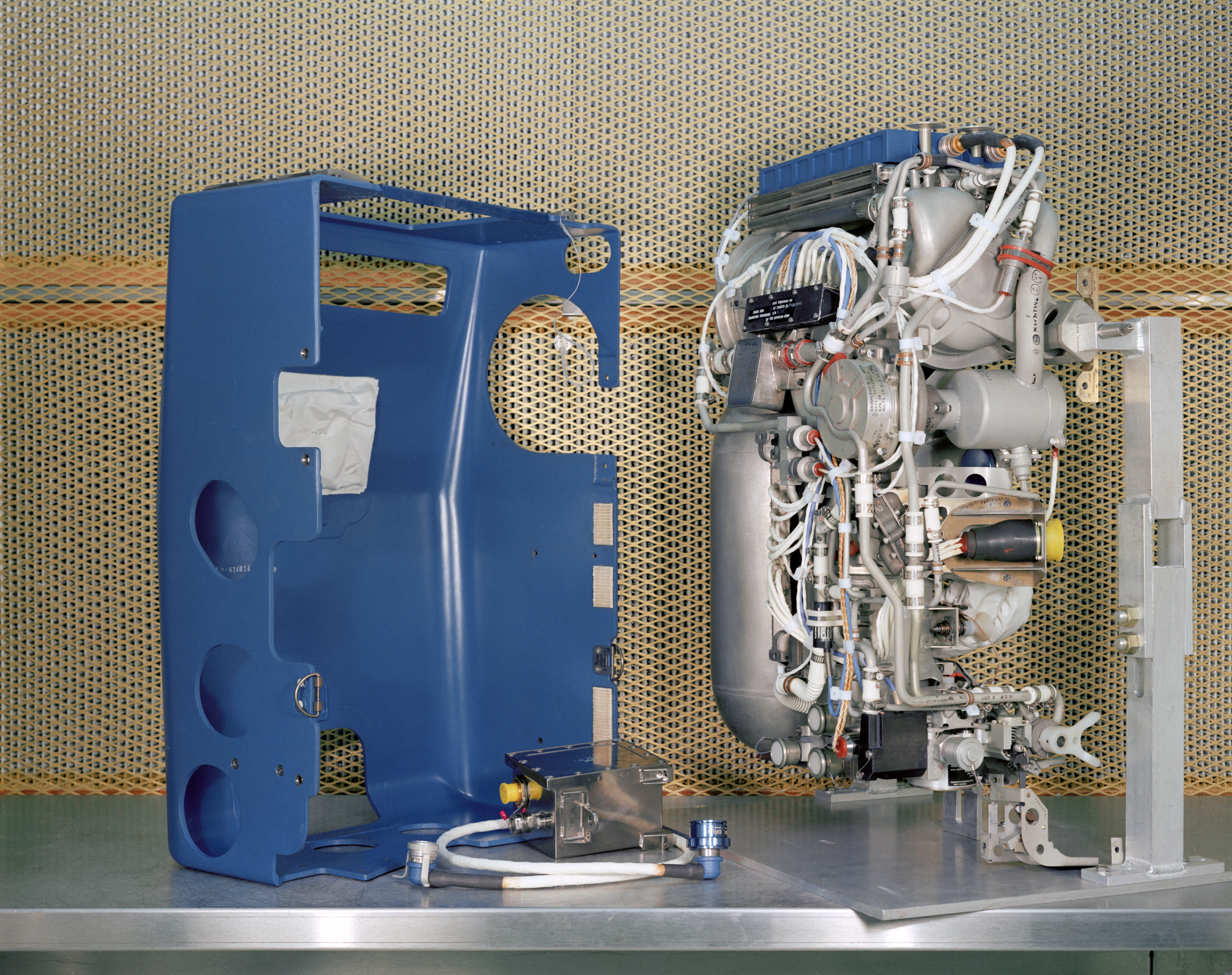
The Apollo Portable Life Support System was the rectangular life-support backpack worn by astronauts during lunar extravehicular activity, or EVA. It was part of the broader Apollo Extravehicular Mobility Unit, which included the pressure suit, helmet, gloves, boots, oxygen purge backup system, communications equipment, and other pieces that made lunar walking possible.
NASA described the PLSS as the environmental-control system of “the smallest manned space vehicle,” and that phrase is wonderfully accurate. The astronaut was not merely wearing clothing. He was inside a one-person spacecraft shaped like a suit, powered by a backpack, and expected to bend, kneel, collect samples, deploy experiments, climb ladders, and occasionally fall over with dignity while millions watched from Earth.
The PLSS flight unit weighed about 68 pounds on Earth, though the Moon’s one-sixth gravity made it feel far lighter. But mass still mattered. Every ounce had to earn its ride on the Saturn V. Engineers had to pack life support into a unit small enough to wear, rugged enough for lunar dust, simple enough to operate with gloves, and reliable enough that “turn it off and back on again” was not a satisfying emergency plan.
The Main Jobs Of The Apollo Portable Life Support System
Apollo’s PLSS had several major responsibilities. First, it supplied breathable oxygen. Second, it removed carbon dioxide from the astronaut’s exhaled breath. Third, it controlled temperature and humidity. Fourth, it circulated oxygen through the suit so the astronaut did not end up breathing a stale little cloud inside the helmet. Fifth, it powered and supported communications and monitoring functions. In plain English: it helped astronauts breathe, cool down, talk, and not become a tragic science demonstration.
1. Supplying Oxygen In A Place With None
The Moon has no breathable atmosphere. The Apollo suit therefore needed its own internal atmosphere, and the PLSS supplied oxygen to maintain pressure and keep the astronaut alive. The suit operated at a low pressure compared with Earth’s sea-level atmosphere, using pure oxygen rather than an Earthlike mix of nitrogen and oxygen. This helped reduce suit stiffness while still giving the astronaut enough oxygen for work.
That choice involved trade-offs. Lower pressure made mobility easier, but the suit still behaved like a pressurized structure. Anyone who has tried to bend a fully inflated beach ball can appreciate the problem. Now imagine the beach ball has arms, costs a fortune, and contains a national hero.
2. Removing Carbon Dioxide Before It Became A Silent Problem
Breathing is a two-part deal: oxygen in, carbon dioxide out. In open air, exhaled carbon dioxide drifts away. Inside a spacesuit, it must be actively removed. Apollo used lithium hydroxide canisters in the life-support system to chemically capture carbon dioxide from the circulating oxygen stream.
This was not glamorous technology, but it was absolutely essential. Carbon dioxide buildup can impair thinking and physical performance long before a person realizes how serious the problem is. On the lunar surface, where every movement was planned and every minute mattered, keeping the breathing loop clean was mission-critical.
3. Cooling The Astronaut: The Moon Is Not A Cozy Patio
The Moon creates a thermal nightmare. Sunlit surfaces can become extremely hot, while shadowed areas can be bitterly cold. Add the astronaut’s own body heat from physical work, and the suit becomes less like clothing and more like a tiny climate-control lawsuit waiting to happen.
Apollo solved much of this with the Liquid Cooling Garment, worn under the spacesuit. This garment looked something like long underwear threaded with small tubes. Water circulated through those tubes, picked up body heat, and carried it back to the PLSS. From there, the system rejected heat using a sublimator, a device that used water’s behavior in vacuum to remove heat efficiently.
It is easy to underestimate this part. We tend to picture astronauts mainly fighting cold, because space looks cold in movies. In reality, overheating during work was a major concern. Digging, hammering, carrying tools, and hopping around in a pressurized suit generated heat quickly. The PLSS had to keep the astronaut comfortable enough to think clearly and move effectively.
4. Managing Humidity, Odors, And Air Circulation
Human beings are humid little machines. We exhale moisture, sweat under stress, and bring along the usual biological messiness that no heroic mission patch can erase. The PLSS circulated oxygen through the suit and helped control humidity so the helmet did not become a foggy fishbowl.
Air circulation also moved oxygen to the astronaut’s helmet and through the suit. Without active circulation, pockets of stale air could form. The ventilation system was therefore not a luxury. It was the invisible housekeeping crew of lunar exploration, sweeping carbon dioxide and moisture away while the astronaut focused on geology, tools, and not stepping backward into a crater.
The PLSS As A Miniature Spacecraft
Calling the Apollo PLSS a “backpack” is technically correct, but emotionally unfair. A normal backpack carries books, snacks, and maybe one banana that should have been removed two weeks ago. Apollo’s PLSS carried the difference between life and vacuum.
Its design had to integrate oxygen storage, fans, water tanks, pumps, batteries, valves, regulators, warning systems, and connectors into a compact unit. It had to survive vibration during launch, work after lunar landing, operate in one-sixth gravity, tolerate abrasive dust, and interface with a suit made by experts in flexible pressure garments. That last part is important: the PLSS did not work alone. It was one half of a partnership between hard engineering and soft-goods craftsmanship.
The Apollo suit itself was famous for its layered design. ILC Dover, descended from International Latex Corporation, played a central role in creating the flexible suits worn on the Moon. Hamilton Standard was heavily involved with the life-support backpack. The result was a strange but brilliant marriage: fabric, rubber, metal, oxygen, water, electronics, chemistry, and human factors all stitched and bolted into one system.
Backup Matters: The Oxygen Purge System
No serious life-support design trusts a single path to survival. Apollo astronauts also carried an Oxygen Purge System, or OPS, mounted above the PLSS. If the PLSS failed, the OPS could provide emergency oxygen flow for a limited time. It was not meant to make the astronaut comfortable for a scenic moonwalk. It was meant to buy time to return to the Lunar Module.
The OPS represented one of Apollo’s central safety philosophies: redundancy, but not fantasy. Engineers could not carry infinite backup systems. They had to choose what emergency capability was realistic, lightweight, and useful. The OPS gave crews a last-resort breathing supply and some protection against carbon dioxide buildup while they headed back to safety.
This is one reason Apollo surface traverses were planned carefully. Astronauts could explore only as far as their life support, mobility, and emergency return options allowed. The later missions with the Lunar Roving Vehicle traveled farther, but the logic remained strict: adventure is wonderful, but oxygen math is the boss.
Specific Apollo Examples: From First Steps To Longer EVAs
Apollo 11 proved the concept under historic pressure. Neil Armstrong and Buzz Aldrin spent about two and a half hours outside the Lunar Module, using their PLSS units while collecting samples, deploying experiments, photographing the site, and giving humanity one of its most replayed moments.
As Apollo missions grew more ambitious, lunar EVAs became longer and more productive. Apollo 15, Apollo 16, and Apollo 17 expanded surface exploration with the Lunar Roving Vehicle, more complex geology tasks, and longer stays. Apollo 17, the final crewed Moon landing of the program, included three EVAs totaling more than 22 hours on the lunar surface. Eugene Cernan and Harrison Schmitt used their suits and PLSS units not as symbolic equipment but as working field systems for serious exploration.
Schmitt, a trained geologist, turned the Moon into a field site. That meant the life-support system had to support more than flag planting and photo opportunities. It had to enable bending, sampling, observation, navigation, tool handling, and communication with Mission Control. The PLSS was not simply keeping someone alive in space; it was keeping a scientist alive long enough to do science.
The Human Factors Problem: Space Gear Must Work With Humans, Not Just Near Them
Engineering life support is not only about chemistry and pressure. It is also about human behavior. Astronauts needed controls they could understand, warnings they could notice, connectors they could manage with gloves, and checklists that worked under stress. A perfect machine that confuses its user is not perfect. It is a very expensive prank.
Apollo engineers paid close attention to how astronauts interacted with the suit system. The Remote Control Unit on the chest allowed astronauts to monitor and adjust key suit functions. Controls had to be reachable and readable. Displays had to be useful in bright sunlight and deep shadow. Connectors had to be secure without requiring delicate finger movements, because Apollo gloves were protective, pressurized, and not exactly built for threading a needle.
This human-centered design remains one of Apollo’s most important lessons. Space life support must be robust, but it must also be usable. The astronaut is part of the system, not cargo inside it.
Why The PLSS Still Matters Today
Modern spacesuits are more advanced than Apollo’s, but the basic problems have not retired. Astronauts still need oxygen, carbon dioxide removal, cooling, pressure, mobility, communications, and emergency backup. The International Space Station’s Extravehicular Mobility Unit follows the same broad principle: a suit is a personal spacecraft, and the life-support backpack is its engine room.
For Artemis and future lunar missions, the challenge becomes even bigger. Crews may work near the lunar south pole, where lighting conditions, dust behavior, terrain, and mission duration create demanding requirements. Future PLSS designs must be maintainable, rechargeable, efficient, and suitable for repeated use. Apollo’s PLSS was built for short, heroic missions. Future systems must support sustained exploration.
That means better carbon dioxide removal technologies, improved thermal control, more efficient batteries, smarter sensors, and easier servicing. It also means learning from Apollo’s greatest success: design for the human doing the work. A moonwalker is not a robot with a pulse. They are a person trying to think, move, communicate, and solve problems in an environment that offers zero forgiveness and no customer service desk.
The Science Behind Staying Alive In A Suit
The science of space life support begins with pressure. The human body needs external pressure to keep fluids stable and lungs functioning. A spacesuit provides that pressure mechanically. But pressure creates stiffness, and stiffness fights movement. Apollo’s suit designers had to balance survival and mobility, creating joints and layers that allowed astronauts to walk, bend, and handle tools.
Next comes gas exchange. Oxygen must be delivered at the right rate, while carbon dioxide must be removed continuously. Then comes thermal control. In vacuum, heat does not leave by convection the way it does in air. You cannot count on a breeze. Heat must be managed by conduction within the suit, radiation from outer layers, and systems like water cooling and sublimation.
Water is another quiet hero. It cooled the astronaut through the Liquid Cooling Garment and helped the PLSS reject heat. But water was limited, so every EVA had a timeline. Battery power was limited too. Consumables shaped exploration. On the Moon, the clock was not just a clock. It was oxygen, water, cooling capacity, carbon dioxide scrubbing, battery energy, and human endurance all ticking together.
Experience Section: What Apollo’s PLSS Teaches Anyone Who Builds, Tests, Or Relies On Critical Systems
There is a practical lesson in Apollo’s PLSS that reaches far beyond spaceflight: the best safety systems are built by people who respect boring details. The Moon landing looks dramatic from the outside, but the survival story is hidden in check valves, seals, scrubbers, hoses, fittings, and procedures. That is true in aviation, medicine, software, manufacturing, and even everyday planning. Big outcomes usually depend on small parts doing their jobs quietly.
One experience-related way to think about the PLSS is to compare it to preparing for a demanding expedition. Imagine hiking in a remote desert. You would not simply bring “some water” and hope the vibes were favorable. You would calculate distance, heat, physical effort, emergency options, communication, navigation, and return time. Apollo did that at an extreme level. The PLSS was the astronaut’s personal supply chain, climate system, and safety buffer in one package.
Another lesson is that comfort is not softness; comfort is performance. The Liquid Cooling Garment was not included so astronauts could feel pampered like they were visiting a lunar spa with terrible parking. It existed because heat stress reduces judgment and stamina. When people work in extreme environments, keeping them cool, hydrated, and mentally clear is part of mission success. Whether the environment is a spacesuit, a hospital operating room, a factory floor, or a data center during an outage, human performance depends on environmental control.
The PLSS also shows the value of testing under realistic conditions. Apollo hardware went through vacuum chamber tests, fit checks, integrated suit tests, simulations, and mission rehearsals. Engineers did not merely ask, “Does this component work?” They asked, “Does this component work with everything else, under pressure, with a human inside, when time matters?” That systems-thinking mindset is still essential. Many failures happen not because one part is bad, but because two good parts meet in a situation nobody practiced.
There is also a teamwork lesson. The Apollo suit and PLSS came from different specialties: aerospace engineering, textile fabrication, chemistry, physiology, electronics, materials science, and human factors. No single genius could have solved the whole thing alone. The PLSS is a monument to interdisciplinary work. The oxygen system needed chemistry. Cooling needed thermodynamics. Controls needed ergonomics. The suit layers needed sewing skill so precise that ordinary garment-making rules were not enough. If that does not make you respect both engineers and seamstresses, your sense of wonder may need a reboot.
Finally, Apollo’s PLSS teaches humility. Human beings are fragile in space. We survive there only by building temporary bubbles of Earth around ourselves. Every lunar footprint was made possible by a system that carried air, water, cooling, pressure, and backup capability into a place that had none of those things. The backpack was not an accessory. It was Earth, miniaturized.
That may be the most inspiring part of the story. Apollo did not make humans less dependent on nature. It proved that with enough knowledge, discipline, and imagination, we could carry the necessary parts of our home world into another one. The PLSS was a box of machines, yes. But it was also a promise: give people the right support, and they can work where no one was ever meant to stand.
Conclusion: A Backpack Full Of Earth
Apollo’s PLSS remains one of the most elegant survival systems in spaceflight history. It turned the Apollo spacesuit into a personal spacecraft and gave astronauts the freedom to leave the Lunar Module, explore the Moon, collect samples, deploy experiments, and return safely. Its science was practical, unforgiving, and deeply human: provide oxygen, remove carbon dioxide, control heat, manage humidity, power communications, and prepare for emergencies.
The PLSS was not flashy compared with the Saturn V or the Lunar Module, but it was just as essential. Rockets got astronauts to the Moon. The PLSS let them work there. And in the history of human exploration, that difference matters. Reaching a new world is impressive. Staying alive long enough to understand it is the real masterpiece.

