
Beauty Tools & Accessories
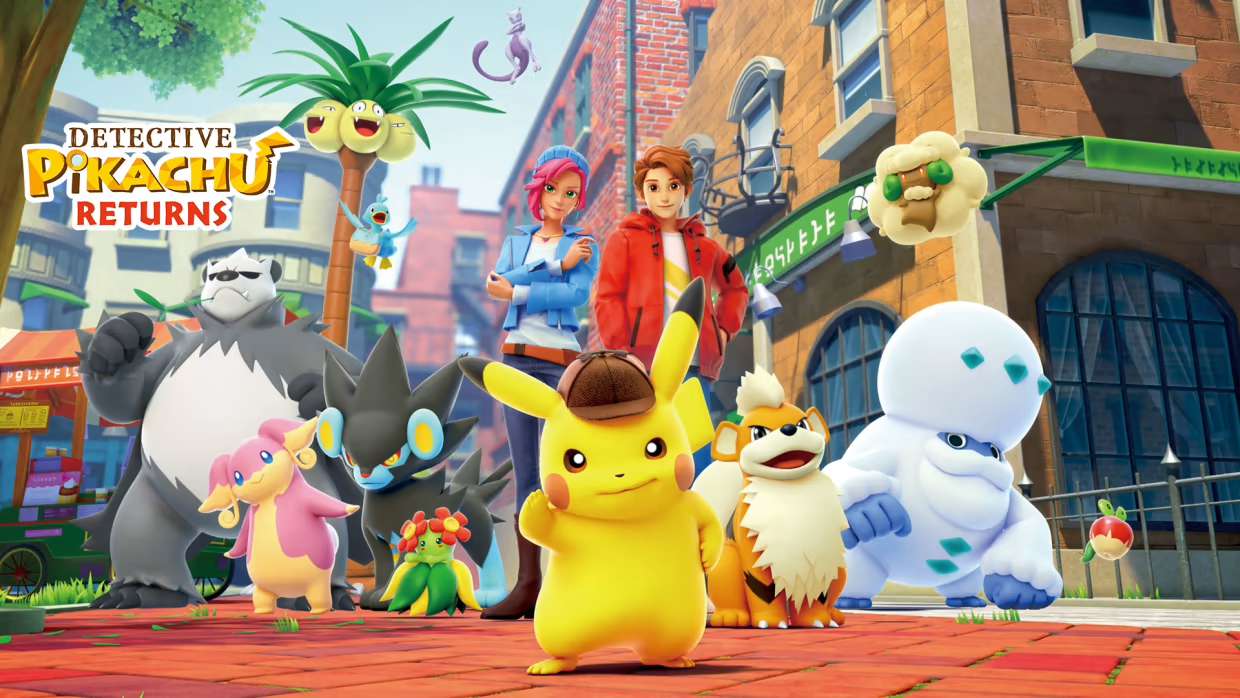
Detective Pikachu Returns to Switch to Help Catch a Jewel Thief
Aug
Some games open with a dragon attack. Some open with a war. Detective Pikachu Returns opens with something far more terrifying:
a priceless jewel goes missing in a city where humans and Pokémon coexist… and everyone suddenly has a suspicious amount of pockets for someone
who doesn’t wear pants.
If you’ve ever wanted a Pokémon story that’s less “save the world with legendary creatures” and more “interview a snooty witness while your
partner drinks coffee like it’s oxygen,” congratulationsyour niche has a full retail release on Nintendo Switch. And the jewel thief case isn’t
just a quirky one-off. It’s the spark that pushes Tim Goodman and his wisecracking, hardboiled Detective Pikachu back into the wider mystery
that’s been hanging over Ryme City: Where is Tim’s father, Harry Goodman, and why are Pokémon-related incidents piling up around town?
What Detective Pikachu Returns Actually Is (And What It Isn’t)
Detective Pikachu Returns is a narrative-driven adventure mystery in the Pokémon universe, built around investigation rather than battling.
You’re not grinding levels, optimizing IVs, or building a competitive team. You’re collecting statements, chasing leads, poking around crime
scenes, and making deductionsoften while Pikachu delivers the kind of grumpy commentary you’d expect from a detective who’s one bad day away
from dramatically staring out a rainy window.
The game takes place in Ryme City, a setting designed around humans and Pokémon living side-by-side. That matters because the city itself is the
secret star: it’s not just a backdrop, it’s a community with routines, relationships, and (crucially) secrets. The result feels like a Pokémon
story that’s less “sports anime with creatures” and more “Saturday-morning detective cartoon with genuinely cozy world-building.”
And yesTim Goodman is back as the human half of the duo. Detective Pikachu is back as the caffeine-powered chaos gremlin half. Tim can talk to
people. Pikachu can talk to Pokémon. Together, they do what every great detective partnership does: question everyone, trust almost no one, and
somehow still stop to eat a comforting plate of mac and cheese like there isn’t a criminal on the loose.
The Jewel Thief Hook: Why This Case Works So Well
Starting with a jewel theft is classic mystery math: high value + unclear motive + lots of potential suspects = immediate tension. But it’s also
a clever narrative choice for Detective Pikachu Returns. A stolen jewel is easy to understand (even if you’re new to mystery games),
visually memorable (sparkly things are basically video game catnip), and socially disruptive (because suddenly everyone is either a suspect or
a gossip fountain).
In Ryme City, that disruption spreads fast. A theft doesn’t stay “just a theft” when Pokémon are involved, when city leadership is invested in
public harmony, and when the detective duo is still chasing an older, bigger question about Harry Goodman’s disappearance. The jewel thief case
becomes the kind of “simple” incident that reveals messy connections: who was where, who knows whom, and who has reasons to liepolitely,
of course, because this is Pokémon and nobody wants to be rude unless they’re a villain with dramatic hair.
Most importantly, the jewel case teaches you the game’s core rhythm: investigate, interview, confirm, deduce. It’s the tutorial case that
doesn’t feel like a tutorialbecause the stakes are personal and the suspects are memorable, not just a lineup of cardboard cutouts labeled
“Suspicious Guy #1” and “Suspicious Guy Who Is Definitely Not Suspicious (But Is).”
A Mystery That’s Friendly… Without Being Empty
Reviews have broadly agreed on one thing: the game is approachable. That doesn’t mean it’s brainless; it means it’s designed to welcome players
who’ve never touched a mystery adventure before. The jewel thief story plays like a gateway caseinviting enough for younger players, and still
entertaining for older ones who enjoy the charm of the setting and the duo’s banter.
If you’re hoping for a brutal logic gauntlet where one wrong deduction forces you to reload a save and rethink your life choices… you’re in the
wrong neighborhood. Ryme City is more “walk and talk” than “sweat and suffer.” The fun comes from being in the world, meeting Pokémon in their
everyday lives, and watching the mystery unfold like an interactive cartoon.
How the Investigations Work on Switch
The investigative loop is built around two perspectives and one obsession: details. Tim handles human conversations and scene analysis. Pikachu
handles Pokémon conversations and Pokémon-specific clue gathering. Together, they stitch what they learn into a case notebook that helps you
track leads and make deductions.
1) Interviewing Humans: Tim’s Side of the Street
Tim is your “straight man” (comedy-wise and detective-wise). He asks the questions that keep the case grounded: where were you, what did you see,
why are you sweating, and do you always carry that many gemstones in your house? His interviews are less interrogation-room intimidation and more
“polite persistence,” which fits the tone of the game.
A good tip: treat every conversation like it might matter later. Mystery games love to hide useful information inside throwaway chatter.
In Ryme City, “Oh, I saw something weird near the fountain” can turn into your next major lead three scenes later.
2) Interviewing Pokémon: Pikachu’s World
Pikachu can speak with Pokémon in a way humans can’t. That sounds like a gimmick until you realize how it changes the logic of a case. Pokémon
witnesses often notice different things: scents, sounds, unusual behavior, and patterns humans ignore. A dog-like Pokémon might key in on scent
trails. A sharp-eyed Pokémon might have spotted someone skulking near an estate gate. A Pokémon that hangs around a location all day might be
the most reliable witness in town simply because it has nowhere else to be.
And yesthis is also where the humor lives. Pokémon conversations can be surprisingly expressive, and Detective Pikachu’s commentary can turn a
routine witness chat into a mini comedy beat. Think “grumpy noir detective,” but in a body that could fit inside a tote bag.
3) Searching Scenes and Building a Case Notebook
Your notebook is the glue. It turns conversations, clues, and observations into a structured trail of logic. This is what keeps the game from
becoming a wandering chat simulator. When the jewel thief case heats up, you’re not relying on memory aloneyou’re following the breadcrumbs the
game helps you organize.
The deductions themselves are designed to be forgiving, which is both a strength and (depending on your taste) a mild frustration. If you want
a family-friendly mystery you can play with a kid or a non-gamer friend, it’s a feature. If you want to feel like you outsmarted the game, it
can feel a bit like the game is politely holding your hand and saying, “Great job, detective!” after you notice the only open window in the room.
Ryme City’s Secret Sauce: Pokémon as Citizens, Not Combat Units
Mainline Pokémon games often treat Pokémon as battle teammates first and characters second. Detective Pikachu Returns flips that.
Ryme City’s Pokémon feel like neighbors. Some are helpful. Some are cranky. Some are basically local celebrities. Some are just vibing near a
fountain like they pay rent.
This is why even simple mysteries can be satisfying here. The joy isn’t only in “gotcha” logicit’s in seeing how a Pokémon-integrated city
actually functions. How does the police handle Pokémon-related incidents? What does it look like when a Pokémon is a witness? How do people
talk about Pokémon behavior in everyday conversation? The jewel thief case, in particular, shines because it’s a “normal crime” that becomes
uniquely Pokémon once you start chasing the details.
Specific Example: Clues That Make Sense in a Pokémon World
Traditional mysteries rely on footprints, fingerprints, and surveillance. Ryme City adds twists like Pokémon behavior, unusual devices, and witness
perspectives you wouldn’t get in a human-only setting. You might be looking for a physical clue, surebut you’re just as likely to break a lead
by asking a Pokémon what it heard, smelled, or noticed when humans were too distracted to pay attention.
That design choice makes the game feel distinct from other kid-friendly mystery titles. It’s not pretending to be “Pokémon Ace Attorney.”
It’s building its own laneone where charm and world-building are the primary rewards, and the case-solving is the engine that keeps you moving.
Strengths and Weak Spots (In Plain English)
What It Does Really Well
-
Personality: Detective Pikachu is still the star. The grumpy, self-important humor lands, especially when paired with Tim’s
more grounded reactions. - World-building: Ryme City feels like a lived-in Pokémon setting, not just a hallway between battles.
-
Accessibility: The jewel thief case (and the structure around it) makes the game easy to pick up for younger players and
mystery newcomers.
Where It Can Feel “Not Quite There”
-
Visuals: Several critics noted the presentation can feel dated for a Switch game. The vibe and characters carry a lot of weight,
but the visuals don’t always match the charm of the writing. - Challenge level: If you’re an experienced mystery-game player, you may find the deductions a bit too gentle.
-
Pacing: Like many narrative adventures, it lives and dies by your tolerance for dialogue-heavy progress. If you want constant
action, this is a “sip coffee and chat” experience, not a sprint.
None of this is inherently “bad.” It’s just the tradeoff of a game that aims to be inviting and story-focused. The jewel thief case is a perfect
snapshot: it’s engaging, structured, and approachablemore about enjoying the chase than proving you belong in the detective hall of fame.
Who Should Play This (And Who Might Bounce Off)
You’ll probably enjoy it if you:
- Want a Pokémon game that isn’t battle-centric.
- Like mystery stories, even light ones, and enjoy interviewing characters for clues.
- Are playing with kids, or want a family-friendly game you can discuss together.
- Love Ryme City’s “Pokémon as citizens” vibe and want more of that world.
You might not click with it if you:
- Want deep, punishing puzzles and complex deduction trees.
- Get impatient with dialogue-driven progression.
- Are mainly here for high-end visuals and cutting-edge performance.
The best way to think about it is this: Detective Pikachu Returns is a cozy mystery with Pokémon flavor. The jewel thief case is your
invitation. If you like the idea of slowly pulling on threads and seeing what unravels, you’re in the right place.
Practical Tips for Nailing the Jewel Thief Case (Without Spoilers)
-
Talk to everyone twice. In mystery games, people “remember” details after you discover a new clue. Ryme City citizens are no
exception. - Use Pikachu like a witness magnet. Pokémon often have the missing puzzle piece because they observe the world differently.
-
Scan the scene like you’re looking for a lost earbud. If it feels like a small environmental detail, that’s exactly the kind of
thing mystery games love to reward. - Let the case notebook do its job. Check it when you feel stuck. It’s not “cheating”it’s literally detective paperwork.
-
Assume the simplest explanation… but verify it. Kid-friendly mysteries often point you in the right direction. The fun is
confirming the how and why.
Conclusion
Detective Pikachu Returns doesn’t try to outsmart the entire mystery genre. It tries to do something more specific: deliver a charming,
approachable detective adventure inside one of gaming’s most recognizable universes. The jewel thief case is the perfect opener because it’s
instantly understandable, full of character interactions, and quietly connected to the bigger questions looming over Ryme City.
If you want a Switch game that feels like a warm detective cartoonwith coffee jokes, curious Pokémon neighbors, and a case that starts small and
hints at something biggerthis is a solid pick. Just don’t go in expecting to sweat through logic charts. This detective’s vibe is less “evidence
board with red string” and more “evidence board with red string… and also a snack break.”
Experience: What Playing the “Jewel Thief” Mystery Feels Like (About )
The most surprising “experience” of Detective Pikachu Returns isn’t a dramatic twist or a mind-melting puzzleit’s the steady rhythm of
living inside Ryme City for a while. The jewel thief case makes that obvious fast. You’re not racing from explosion to explosion. You’re walking,
talking, observing, and letting the city’s everyday life create the texture of the mystery. That slower pace can feel almost relaxing, like
putting on a detective show where the stakes are real but the atmosphere is still oddly comforting.
There’s also a specific kind of satisfaction that comes from switching between Tim and Pikachu. As Tim, you’re the “official” face of the
investigationasking questions, being polite, trying to sound like a competent young detective and not a guy who just learned what “alibi” means
yesterday. As Pikachu, the mood changes. You’re suddenly operating in a parallel layer of the city, where Pokémon gossip, instincts, and
observations can unlock details humans would never notice. It makes you feel like you’re running two investigations at once: one based on
testimony and logic, the other based on vibes, senses, and social dynamics.
The jewel thief angle specifically encourages you to think about motive in a Pokémon-flavored way. It’s not only “Who wanted the jewel?” but also
“Who had access?” “Who could move around unnoticed?” “What kind of distraction would work in a city where a flock of flying Pokémon could draw
every eye upward in two seconds?” Even when the puzzles are simple, the setting keeps your brain engaged because the world rules are different.
The case feels like a small tour of how crimes might actually happen in Ryme Citywhere witnesses might be a barista, a police officer, and a
Pokémon who naps near the scene and somehow still notices everything.
Humor helps a lot. Detective Pikachu’s grumpy confidence is the perfect counterweight to the game’s gentle structure. Even when you’re fairly sure
what’s going on, the banter makes the process enjoyable. It’s the difference between “I know the answer” and “I know the answer, but I also want
to hear Pikachu deliver one more dramatic speech about his detective greatness while clutching coffee like it’s a badge.”
And if you’re playing with someone else in the roomespecially a kid or a friend who isn’t a regular gamerthe jewel thief case is an easy shared
experience. You can trade theories, laugh at Pikachu’s commentary, and treat each clue like a mini victory. In that sense, the “experience” is
less about beating the game and more about enjoying the feeling of being a detective duo in a Pokémon city. It’s cozy sleuthing with a yellow
partner who would absolutely file your paperwork late because he was busy finding the best coffee in town.

