
Beauty Tools & Accessories
Lighting: Lightlace by Dottir Sonur
Jun
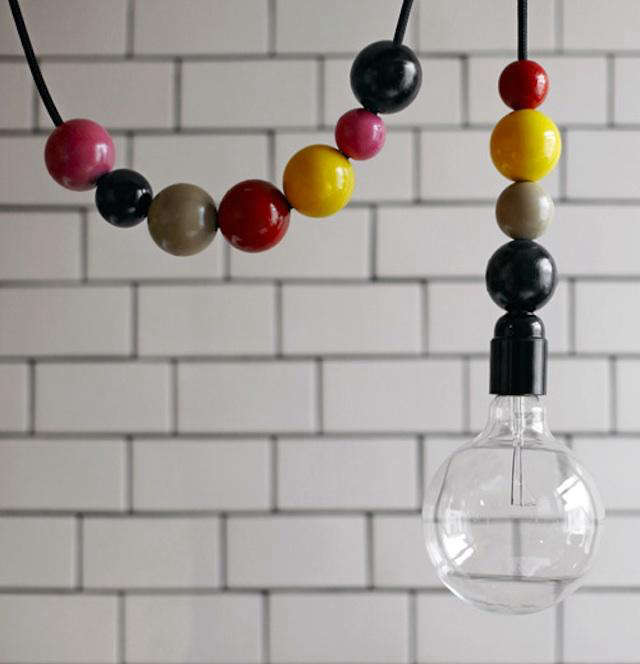
Some lights try to disappear into the ceiling. Lightlace by Dottir Sonur does the opposite. It walks into the room wearing a string of wooden beads and says, “Yes, I am the lamp, the necklace, and possibly the most cheerful object here.” That is exactly why this playful pendant light still feels worth talking about years after its original design-blog moment.
Lightlace is a pendant lamp built around a simple but memorable idea: a strand of wooden beads becomes both decoration and design language. Instead of hiding the cord or treating the lamp as a purely technical object, Dottir Sonur turned the supporting detail into the personality of the piece. The result is part Scandinavian lighting, part nursery charm, part handcrafted jewelry for your ceiling.
The original Lightlace appeared in the early 2010s as part of a small home-product collection from Dottir & Sonur, the Berlin-based Icelandic design studio associated with Ingvi Gudmundsson and Tinna Petursdottir. Design editors described it as a colorful wooden bead light available in multicolored and single-shade versions. That may sound simple, but good lighting often is simple. It only becomes complicated when someone insists on installing six recessed cans, two chandeliers, and a spotlight aimed directly at the family dog.
What Is Lightlace by Dottir Sonur?
Lightlace is best understood as a decorative pendant light with a tactile twist. Its defining feature is a string-like arrangement of wooden beads that adds color, rhythm, and softness to the fixture. In many pendant lamps, the shade gets all the applause and the cord gets ignored like an understudy. Here, the cord-like bead strand becomes the main character.
The design has a handmade quality without looking like a craft project gone rogue. The beads create a visual line from ceiling to bulb, giving the lamp a sense of movement. Depending on the color version, Lightlace can feel lively and playful or quieter and more tonal. The multicolored version naturally suits children’s rooms, creative corners, reading nooks, and relaxed family spaces. A single-color version can look more refined, especially in a minimalist room that needs one warm, human detail.
Its name is clever, too. “Lightlace” suggests both illumination and something woven, worn, or strung together. It feels less like a machine and more like an object with a hand, a mood, and a little wink. In a world full of lighting described as “architectural,” “monolithic,” and “precision-engineered,” Lightlace is refreshingly friendly. It does not need to look like it was designed by a spaceship to earn attention.
The Design Story: Icelandic Warmth Meets Berlin Playfulness
Dottir Sonur’s work fits into a familiar but always appealing design conversation: Nordic restraint with a playful heart. Scandinavian and Icelandic-inspired interiors are often associated with light woods, clean shapes, practical comfort, and an appreciation for natural materials. Lightlace borrows from that vocabulary but refuses to be cold or overly serious.
That balance is important. Too much minimalism can make a room feel like nobody lives there except a very disciplined vase. Too much color can make it feel like a birthday party trapped in a furniture catalog. Lightlace sits between those extremes. The wooden beads bring texture and warmth, while the pendant format keeps the object useful and visually contained.
Berlin’s influence also makes sense. The city has long been a magnet for experimental studios, independent designers, and creative people who enjoy making ordinary objects feel slightly unexpected. Lightlace has that spirit. It is not a giant chandelier trying to prove it has read philosophy. It is a small, clever pendant that knows how to make a space smile.
Why Wooden Beads Work So Well in Lighting
Wooden beads may seem like a modest design choice, but they do several things at once. First, they add texture. In a room with smooth painted walls, flat cabinetry, glass windows, and digital screens, texture matters. It gives the eye something to land on. The beads create tiny shadows and subtle dimension, even before the light is switched on.
Second, wood warms up electric light. Modern LED lighting can be wonderfully efficient, but without the right fixture or color temperature, it can feel clinical. Natural materials help soften the experience. A wooden detail near a warm bulb visually suggests comfort, even if the actual light source is modern and energy-saving.
Third, beads introduce rhythm. A row of repeated shapes naturally guides the eye. That visual rhythm can make a simple pendant feel designed rather than merely installed. Lightlace proves that a light fixture does not have to be huge to become memorable. Sometimes repetition, color, and scale do the job better than size.
Best Rooms for Lightlace
Children’s Rooms and Nurseries
Lightlace is especially easy to imagine in a child’s room. The multicolored bead version feels bright without being chaotic. It adds a playful focal point above a reading chair, beside a bed, or near a small activity table. Unlike many themed children’s fixtures, it does not scream “cartoon spaceship” or “plastic dinosaur emergency.” It can grow with the room as the child’s style changes.
For a nursery, the key is softness. Pair the lamp with warm white lighting, gentle wall colors, natural textiles, and storage that hides visual clutter. Lightlace can add personality while still keeping the room calm. It is charming, not loud. That is a rare skill in children’s decor, where some products appear to have been designed by a crayon after three espressos.
Reading Corners
A pendant like Lightlace can work beautifully in a reading nook when installed at the right height and paired with an appropriate bulb. The beads add character overhead, while the light can define a small zone within a larger room. Add a comfortable chair, a side table, and a stack of books you fully intend to read after scrolling for only “five minutes.” Congratulations: you have created a corner with actual emotional gravity.
Dining Areas
In a casual dining space, Lightlace can bring warmth and informality. It is not the fixture for a grand ballroom table that seats twenty-four and requires a footman named Charles. But above a small breakfast table, apartment dining nook, or family kitchen table, it can feel just right. It makes meals feel relaxed, colorful, and personal.
Creative Studios and Home Offices
Lightlace also belongs in creative workspaces. It has enough personality to keep a studio from feeling sterile, but it does not overwhelm the room. Designers, writers, illustrators, and anyone who has ever named a folder “final-final-real-final” can appreciate a fixture that adds cheer without stealing focus from the work surface.
How to Style Lightlace Without Overdoing It
The biggest styling mistake with a statement pendant is making every other object in the room compete for the microphone. Lightlace already brings color, texture, and charm. Let it have the solo. Surround it with calmer pieces so the room feels intentional rather than crowded.
For a modern Scandinavian look, pair Lightlace with white walls, pale wood furniture, linen curtains, wool throws, and simple ceramic accessories. The beads will stand out naturally. For a more playful room, echo one or two bead colors in pillows, artwork, or a rug. The trick is repetition, not duplication. You want the room to say, “I have a palette,” not “I bought everything in the same aisle.”
If you choose a single-shade version, let texture do the heavy lifting. A tonal Lightlace can work in beige, blush, soft gray, natural wood, or muted green interiors. It becomes a subtle sculptural detail rather than a bright accent. That version is especially useful for adults who love playful design but do not want their living room to resemble a toy store with a mortgage.
Light Quality Matters: Choose the Right Bulb
A beautiful fixture can still disappoint if the bulb is wrong. Lighting design is not just about the object; it is about the glow it produces. For a pendant like Lightlace, a warm white bulb is usually the safest choice. Look for color temperatures around 2700K to 3000K if the goal is cozy, flattering, and residential. Cooler bulbs can make colorful beads look sharper, but they may also make the room feel less inviting.
LED bulbs are the practical choice for most homes because they use far less energy than incandescent bulbs and last much longer. A quality LED also produces less heat, which is helpful for decorative fixtures. When shopping, pay attention to lumens instead of watts. Lumens measure brightness; watts measure energy use. In other words, watts tell you what the bulb eats, not how loudly it sings.
Dimmability is also worth considering. A dimmable warm LED gives a pendant more range. During homework, craft time, or cleaning, you can turn the light up. During bedtime routines, dinner, or low-key evenings, you can soften it. A lamp with personality becomes even more useful when it can change moods without changing outfits.
Lightlace and the Layered Lighting Rule
Interior designers often recommend layered lighting: ambient, task, and accent light working together. Lightlace is primarily decorative and ambient. It can help set the mood, but it should not be forced to do every job in the room. That is how innocent pendant lamps become overworked employees.
In a bedroom, combine Lightlace with a bedside lamp or wall sconce for reading. In a playroom, add ceiling or wall lighting for general brightness. In a dining nook, consider nearby cabinet or wall lighting if the pendant alone creates shadows. The goal is to let Lightlace bring charm while other lights handle the practical chores.
This is also why pendant placement matters. Hang it where it can be seen and enjoyed, but not where people will bump into it. Above a table, island, or corner seating area is usually safer than the middle of a traffic path. A pendant should create atmosphere, not a forehead-based learning experience.
Why Lightlace Still Feels Relevant
Design trends have changed dramatically since Lightlace first appeared, but its core appeal remains current. Today’s interiors are moving away from cold, blank minimalism and toward warmer spaces with natural materials, color, texture, and personal objects. Lightlace fits that shift beautifully.
It also reflects the broader popularity of statement lighting. Homeowners increasingly treat lighting as decor, not just hardware. A pendant light can define a room, introduce color, support a design theme, and express personality. Lightlace does this without relying on bulk or luxury materials. It proves that a smart idea can be more memorable than an expensive finish.
There is also a DIY-adjacent charm to the piece. It looks approachable. It invites the viewer to understand how it is made. That does not make it ordinary; it makes it relatable. Some design objects keep people at a distance. Lightlace feels like it would let you sit nearby with tea.
Who Should Consider a Lightlace-Style Pendant?
A Lightlace-style pendant is ideal for people who want lighting with warmth, playfulness, and a handmade feel. It suits parents designing a stylish child’s room, renters who need a personality boost, homeowners who love Scandinavian design, and anyone tired of fixtures that look like they were selected by a committee of beige rectangles.
It is less ideal for highly formal interiors, ultra-industrial spaces, or rooms where the lighting needs to be extremely bright and technical. It is also not the best choice if you dislike visible decorative cords or colorful accents. Lightlace has manners, but it does not plan to be invisible.
If original availability is limited, the design can still serve as inspiration. Look for pendant lights with wooden beads, textile cords, warm LED compatibility, and a balanced scale. The spirit of Lightlace is not about copying every detail; it is about choosing lighting that feels tactile, joyful, and human.
Practical Installation and Safety Notes
Decorative lighting should always be installed safely. If a pendant requires hardwiring, hire a qualified electrician. Make sure the fixture is rated for its location, especially if it will be used near moisture, in a bathroom, or in a kitchen area. Use the recommended bulb type and wattage or LED equivalent. A beautiful lamp should glow, not audition for a fire-safety pamphlet.
In a child’s room, placement is extra important. Keep hanging cords and decorative strands out of reach of small children. Install the pendant where it cannot be pulled, climbed on, or used as an experimental jungle gym. Lightlace may look playful, but it is still lighting, not playground equipment.
Design Takeaway: Small Object, Big Mood
Lightlace by Dottir Sonur is memorable because it treats lighting as an emotional object. It does not simply illuminate a room; it changes the room’s tone. The wooden beads make the fixture feel warmer, more approachable, and more personal. The color options give it flexibility. The pendant format keeps it useful.
That combination is why the design still resonates. It is simple enough to understand at a glance, but charming enough to remember. It works because it does not try too hard. In home design, that is often the secret sauce: one clever detail, handled with confidence, can do more than a room full of expensive noise.
Personal Experience: Living With Playful Lighting
There is something surprisingly powerful about changing one light in a room. I have seen plain corners become favorite corners simply because the lighting gained warmth and personality. A pendant like Lightlace is exactly the kind of fixture that can create that shift. It gives the room a small story. Guests notice it. Kids notice it. Even people who claim they “do not care about decor” suddenly have opinions, which is how you know the lamp is doing its job.
The best experience with this kind of lighting comes when it is used in a space that already has a little softness. Imagine a small bedroom with white walls, a low wooden bed, a striped rug, and shelves full of picture books. Add Lightlace above a reading chair, and the room immediately feels more complete. Not more expensive, necessarily. More loved. That is the real value of playful lighting.
In a home office, the effect is different but still useful. A colorful beaded pendant can break the stiffness of a work zone. Many home offices accidentally become storage rooms with a laptop. The right fixture helps declare, “This is a real space.” It can make sitting down to work feel less like entering a spreadsheet cave and more like joining a room designed for thinking.
I also like how Lightlace-style fixtures encourage restraint elsewhere. Once you install a pendant with color and texture, you naturally edit the room around it. You may choose simpler curtains, calmer bedding, or fewer accessories. That is a good thing. Statement lighting works best when it has breathing room. The lamp becomes the punctuation mark, not the entire paragraph written in capital letters.
Another lesson from this topic is that practical lighting and emotional lighting should not be enemies. You can use efficient LED bulbs, choose the right brightness, install dimmers, and still have a lamp that feels charming. Good design does not ask you to choose between beauty and function. It asks you to stop buying sad fixtures just because they were on sale and came in a box labeled “builder basic.”
For families, playful lighting can also become part of daily rituals. A pendant over a reading corner can signal story time. A warm lamp near a dining nook can make breakfast feel calmer. A colorful fixture in a craft area can make creativity feel welcome. These are small things, but homes are built from small repeated experiences. The lamp may not change your life, but it might make Tuesday evening feel less like a fluorescent waiting room.
Lightlace also offers a useful reminder for renters. Not every design upgrade requires renovation. Swapping a fixture, using a plug-in pendant where allowed, or choosing a beaded lamp for a corner can make a temporary home feel more personal. The goal is not perfection. The goal is connection. A home should contain at least a few objects that make you grin for no practical reason.
If I were styling a Lightlace-inspired pendant today, I would keep the surrounding palette simple: warm white walls, natural wood, one soft rug, and maybe a print that repeats one bead color. I would use a warm dimmable LED bulb and avoid harsh overhead brightness. I would let the lamp be visible from the doorway because first impressions matter. A good pendant should greet you before the laundry pile does.
Ultimately, the experience of Lightlace is about friendliness. It makes lighting feel less technical and more personal. It reminds us that design can be clever without being cold, colorful without being childish, and decorative without being useless. That is a rare combination, and it is why this little beaded pendant still earns a place in the conversation.
Conclusion
Lighting: Lightlace by Dottir Sonur is more than a nostalgic design find. It is a smart example of how a small decorative idea can change the mood of a room. With its wooden beads, pendant silhouette, and playful Nordic spirit, Lightlace brings warmth to modern interiors and proves that lighting can be both functional and delightful.
Whether used in a child’s room, reading nook, creative studio, or casual dining space, Lightlace shows the lasting appeal of tactile materials and cheerful design. Choose the right bulb, layer it with other light sources, install it safely, and give it room to shine. The result is not just better lighting. It is a room with a little more personality, and frankly, most rooms could use that.

