
Makeup
Can You Reset a Coolant Temp Sensor?
Jun
Yes and no. And before your dashboard starts judging you with that glowing check engine light, let’s clear up the confusion: you usually do not “reset” a coolant temp sensor itself. The sensor is a simple electronic part, not a tiny laptop hiding in your engine bay. What you can reset is the vehicle’s computer memory, diagnostic trouble codes, and sometimes the learned values the engine control module uses after a repair.
The real question is not just “Can you reset a coolant temp sensor?” It is, “Why does my car think the engine is too hot, too cold, or living in Antarctica?” A bad engine coolant temperature sensor, often called an ECT sensor or coolant temperature sensor, can cause hard starts, poor fuel economy, rough idle, incorrect temperature gauge readings, cooling fan problems, and a check engine light. In other words, one little sensor can make your car act like it just read a dramatic weather forecast.
This guide explains what the coolant temp sensor does, whether it can be reset, how to clear related codes safely, when replacement is smarter than wishful thinking, and what drivers usually experience after dealing with this common cooling system problem.
What Is a Coolant Temp Sensor?
The coolant temp sensor measures the temperature of the engine coolant and sends that information to the engine control module, also called the ECM or PCM depending on the vehicle. The computer uses this temperature data to adjust fuel mixture, ignition timing, cooling fan operation, emissions controls, and sometimes transmission behavior.
When the engine is cold, the computer may command a richer fuel mixture to help the engine start and run smoothly. Once the engine warms up, the computer leans things out for better fuel economy and cleaner emissions. If the sensor lies, the computer believes the lie. That is how a $20 to $100 part can create symptoms that feel like your entire car has entered a bad mood.
Where Is the Coolant Temperature Sensor Located?
In many vehicles, the coolant temp sensor is located near the thermostat housing, cylinder head, intake manifold, or another coolant passage where the sensor tip can contact coolant. Some vehicles use more than one temperature sensor: one for the engine computer and another for the dashboard gauge or radiator fan control.
This is why guessing is dangerous. Your friend’s truck may have the sensor right in front, practically waving hello. Your compact sedan may hide it under hoses, brackets, and one bolt that was clearly designed by someone having a difficult afternoon.
Can You Actually Reset a Coolant Temp Sensor?
Technically, the coolant temp sensor itself does not reset. It does not store long-term data, remember your driving habits, or hold a grudge because you ignored the coolant flush. It is usually a thermistor, meaning its electrical resistance changes as temperature changes. The vehicle computer reads that changing signal as temperature.
When people say they want to reset a coolant temp sensor, they usually mean one of four things:
- Clear the check engine light after replacing the sensor.
- Reset the ECU or PCM so it recognizes correct readings.
- Disconnect the battery to clear stored codes.
- Fix an incorrect temperature gauge reading.
Those are related to the vehicle’s computer system, not the sensor itself. Think of it like replacing a broken thermometer in your kitchen. You do not reset the thermometer’s personality. You install a working one, then stop blaming the oven for every weird number.
How the Coolant Temp Sensor Works
Most modern coolant temp sensors use a negative temperature coefficient design. In simple terms, resistance decreases as coolant temperature increases. The engine computer supplies a reference voltage, often around 5 volts, and watches the return signal. Based on the voltage change, the computer estimates coolant temperature.
If the signal is too high, too low, missing, erratic, or does not change when expected, the computer may store a diagnostic trouble code. Common coolant temperature sensor codes include P0115, P0116, P0117, P0118, P0119, P0128, and sometimes manufacturer-specific codes. These codes do not always mean the sensor is guilty. Wiring, connectors, coolant level, thermostat problems, air pockets, corrosion, and even a faulty computer can create similar symptoms.
Signs of a Bad Coolant Temp Sensor
A failing coolant temp sensor can be sneaky. Sometimes it fails dramatically with a check engine light and a temperature gauge that behaves like a yo-yo. Other times, the only clue is worse gas mileage or a cold start that sounds like the engine had too much coffee.
1. Check Engine Light
The most common sign is an illuminated check engine light. The computer may detect an ECT circuit issue, range/performance problem, or signal that does not match expected engine conditions. Clearing the code without fixing the cause is like muting a smoke alarm while the toast is still on fire.
2. Poor Fuel Economy
If the sensor reports that the engine is colder than it really is, the computer may add extra fuel. That rich mixture can waste gas, foul spark plugs, increase emissions, and make your wallet feel personally attacked at the pump.
3. Hard Starting
A bad reading can cause hard starts, especially when the engine is cold. If the computer thinks the engine is already warm, it may not add enough fuel for startup. If it thinks the engine is freezing when it is not, it may add too much fuel.
4. Rough Idle or Hesitation
Incorrect coolant temperature data can affect fuel mixture and timing. The result may be rough idle, hesitation, stalling, or sluggish acceleration. The car may still move, but it will not be sending you thank-you cards.
5. Cooling Fan Problems
Some vehicles use coolant temperature data to control radiator fan operation. A faulty signal may cause the fan to run constantly, not run when needed, or turn on at odd times. A cooling fan that runs after shutdown is not always a problem, but if it never seems to stop, the coolant temp sensor or its circuit deserves attention.
6. Incorrect Temperature Gauge
The dashboard temperature gauge may read cold all the time, spike hot, fluctuate, or show a value that does not match reality. However, some cars use a separate sending unit for the gauge, so testing matters.
7. Overheating or False Overheating Warnings
A bad sensor can contribute to overheating if it prevents the cooling fan from operating correctly. It can also create false warnings. Either way, never ignore an overheating warning. Real overheating can damage head gaskets, cylinder heads, plastic cooling components, seals, and other expensive parts.
How to Reset the Check Engine Light After Coolant Sensor Repair
Once the actual problem is fixed, the check engine light may turn off by itself after several successful drive cycles. But if you want to clear it sooner, there are a few common methods.
Method 1: Use an OBD-II Scanner
The cleanest method is to use an OBD-II scanner. Plug the scanner into the diagnostic port, read the stored codes, save or note them, repair the problem, then use the scanner to clear the codes. This resets the check engine light and allows you to verify live coolant temperature data.
Live data is especially useful. A healthy coolant temp reading after an overnight cold soak should be close to outside air temperature. If your scanner says the coolant is 260 degrees Fahrenheit before the engine even starts, the sensor is not being honest. If it says negative 40 degrees on a warm day, your engine is not vacationing in Alaska; the circuit likely has a fault.
Method 2: Disconnect the Battery
Disconnecting the battery may clear stored codes on many vehicles, but it is not the best first choice. It can reset radio presets, clock settings, idle memory, window auto-up functions, and emissions readiness monitors. Some vehicles also require special procedures after battery disconnection.
If you do disconnect the battery, make sure the ignition is off, follow the vehicle owner’s manual, and avoid shorting tools across battery terminals. Automotive electricity is not interested in your optimism.
Method 3: Let the Computer Clear Itself
After a proper repair, some vehicles will turn off the check engine light automatically after enough normal driving. The computer needs to see that the sensor signal is believable through warm-up, operating temperature, and cool-down conditions. This is why a light may not disappear immediately after replacing the coolant temp sensor.
Important: Clearing Codes Is Not the Same as Fixing the Problem
Clearing a code only removes the warning from memory. If the sensor, wiring, connector, thermostat, coolant level, or cooling system problem remains, the code will come back. Sometimes it returns immediately. Sometimes it waits until you are late for work, because cars have a theatrical sense of timing.
Before resetting anything, diagnose the cause. A coolant temp sensor code can be triggered by:
- A failed coolant temperature sensor
- Corroded or loose electrical connectors
- Damaged wiring or poor ground
- Low coolant level
- Air trapped in the cooling system
- A stuck-open or stuck-closed thermostat
- Engine overheating
- ECM or PCM faults, though these are less common
How to Diagnose a Coolant Temp Sensor Problem
You do not need to be a dealership technician to understand the basic diagnostic path, but you do need patience. Replacing parts randomly can get expensive quickly. A professional scan tool makes diagnosis easier, but even a basic code reader with live data can help.
Step 1: Read the Codes
Start with an OBD-II scanner. Record the exact code numbers and freeze-frame data before clearing anything. Freeze-frame data shows conditions when the code was set, such as coolant temperature, engine speed, vehicle speed, and load.
Step 2: Compare Cold Readings
After the car sits overnight, compare coolant temperature on the scanner with outside air temperature. The two should be reasonably close. A large difference suggests a sensor, connector, or wiring problem.
Step 3: Watch Warm-Up Behavior
Start the engine and watch the coolant temperature rise. It should climb gradually. A reading that jumps instantly, never changes, drops randomly, or moves in impossible ways points toward a signal issue.
Step 4: Inspect Coolant Level and Condition
Low coolant can expose the sensor tip to air instead of coolant, causing inaccurate readings. Dirty, rusty, or contaminated coolant can also contribute to corrosion and sensor failure. Always check coolant only when the engine is cool. Opening a hot cooling system can cause serious burns.
Step 5: Inspect the Connector and Wiring
Look for broken wires, green corrosion, loose pins, oil contamination, coolant leaks around the sensor, or brittle plastic. Many “bad sensor” stories are actually “bad connector” stories wearing a fake mustache.
Step 6: Test the Sensor
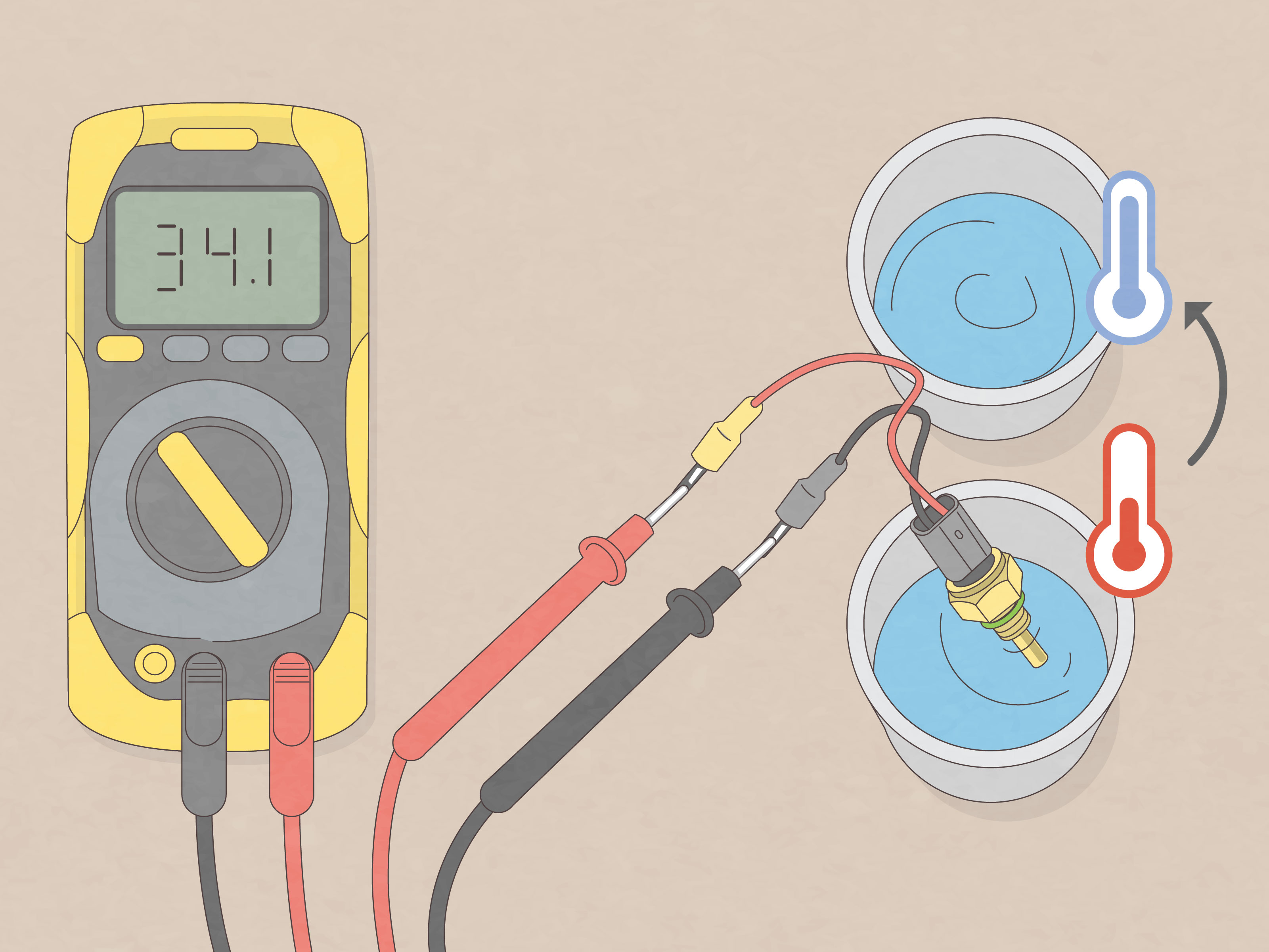
Depending on the vehicle, the sensor can be tested with a multimeter and temperature reference chart. Resistance should change smoothly as temperature changes. Vehicle-specific specifications matter, so use a service manual or reliable repair database.
Should You Replace or Reset the Coolant Temp Sensor?
If the sensor is working and the code was caused by a temporary issue, clearing the code may be enough after the underlying cause is corrected. But if the sensor readings are inaccurate, unstable, or outside specification, replacement is the real fix.
Coolant temperature sensor replacement is often straightforward on many vehicles, but not always. Some sensors are easy to access. Others require removing engine covers, intake parts, hoses, or other components. Coolant may spill during replacement, and air may need to be bled from the cooling system afterward.
Replacement sensor prices vary widely. Many aftermarket sensors are inexpensive, but total repair costs can climb when labor, diagnostics, coolant, and access difficulty are included. On some models, a professional repair may cost several hundred dollars.
Can You Drive With a Faulty Coolant Temp Sensor?
You may be able to drive with a faulty coolant temp sensor, but that does not mean you should treat it like a free personality upgrade. A bad ECT sensor can cause poor performance, excessive fuel use, rough running, fan problems, and possible overheating. If the car is overheating, stop driving as soon as it is safe and let the engine cool.
Driving with a false cold reading can also keep the engine running rich. Over time, that may increase carbon buildup, hurt fuel economy, and stress emissions components. Driving with a false hot reading may cause fans to run constantly or the vehicle to enter a reduced-power strategy.
What Happens After You Clear the Code?
After clearing codes with a scanner or battery disconnect, the check engine light may go off. However, the vehicle’s readiness monitors may reset to “not ready.” This matters if you need an emissions inspection soon. The car must complete certain self-tests during normal driving before the monitors return to ready status.
A drive cycle usually includes cold start, warm-up, steady cruising, acceleration, deceleration, and idle conditions. The exact pattern depends on the vehicle. If the original coolant temperature problem is still present, the monitor may fail again and the check engine light will return.
Common Mistakes People Make
Replacing the Sensor Without Checking Coolant
If coolant is low, the sensor may not read correctly. Always check the level and inspect for leaks. A sensor cannot measure coolant accurately if it is sitting in an air pocket like a lifeguard at an empty pool.
Ignoring the Thermostat
A stuck-open thermostat can keep the engine too cool and may trigger temperature-related codes. A stuck-closed thermostat can cause overheating. The sensor may simply be reporting the truth.
Using Cheap Parts Without Verification
Some bargain sensors work fine. Others create new problems immediately. Match the correct part number, connector type, thread size, and temperature range. If the old sensor failed due to corrosion, inspect the coolant condition too.
Clearing Codes Before Recording Them
Always record codes and freeze-frame data first. Once cleared, that information may be gone. It is like deleting the security camera footage before asking who ate the last slice of pizza.
Specific Example: False Cold Reading
Imagine a vehicle that has been parked overnight in 70-degree weather. Before startup, the scanner shows intake air temperature at 72 degrees, ambient air near 70 degrees, but engine coolant temperature at negative 40 degrees. That is a huge clue. The computer may add too much fuel because it thinks the engine is extremely cold. The likely suspects include an open circuit, unplugged connector, broken wire, or failed sensor.
Specific Example: False Hot Reading
Now imagine a car that has not been driven all day, but the scanner reports coolant temperature at 250 degrees before startup. The cooling fan may run immediately, the gauge may spike, or the computer may set a high-input or circuit code. This can point to a shorted circuit, sensor fault, connector issue, or incorrect sensor signal.
Experience-Based Notes: What Drivers Usually Notice
In real-world driving, coolant temp sensor problems often start quietly. A driver may first notice that the engine takes longer to start in the morning. It cranks, catches, stumbles, then finally settles down. The check engine light may appear a few days later. At that point, many people assume the battery, fuel pump, or spark plugs are failing. Those parts can cause similar symptoms, but the coolant temp sensor deserves a look because it directly affects cold-start fueling.
Another common experience is a cooling fan that seems to have joined a gym and refuses to stop running. Some vehicles will run the fan constantly when the computer sees an impossible coolant temperature reading. This is a protective strategy. The computer does not know whether the engine is actually overheating, so it plays defense. The result is a fan that roars like a small airport runway every time you start the car.
Some drivers replace the thermostat first because the temperature gauge looks strange. That can be correct if the thermostat is stuck, but it can be wrong if the gauge is reacting to bad sensor data. The smarter move is to compare scan-tool coolant temperature with actual conditions. If the upper radiator hose is still cool but the scanner says the engine is already extremely hot, the sensor circuit is suspicious. If the scanner shows normal temperature but the dashboard gauge is wrong, the vehicle may use a separate gauge sender or have an instrument cluster issue.
DIY replacement can be satisfying when access is simple. On some cars, you wait for the engine to cool, remove the connector, unscrew the sensor, quickly install the new one with the correct seal, top off coolant, clear the code, and verify live data. It feels like victory. You may even look at the engine bay with the confidence of someone who briefly understands machines.
But some jobs are not that friendly. A sensor may be buried under an intake duct, behind the engine, near fragile plastic fittings, or threaded into an area where coolant spills everywhere. If the cooling system traps air after replacement, the vehicle may overheat even though the new sensor works. That is why bleeding the cooling system properly is important. Air pockets can create false readings, poor heater performance, and overheating.
One practical lesson: do not judge the repair only by whether the check engine light turns off. Verify that the coolant temperature reading starts near ambient temperature when cold, rises smoothly during warm-up, stabilizes near normal operating temperature, and triggers fan operation when appropriate. A cleared light is nice, but believable data is better.
Another lesson: corrosion matters. If the old sensor tip looks crusty or the connector is green and fuzzy, the cooling system may need more attention than a quick sensor swap. Old coolant, mixed coolant types, leaks, or neglected maintenance can contribute to corrosion. Replacing the sensor without addressing coolant condition may mean the new part inherits the same ugly neighborhood.
Finally, timing matters. If you need an emissions test tomorrow, clearing codes today may reset readiness monitors and create a new problem: no check engine light, but monitors not ready. Plan repairs before inspection deadlines when possible. After fixing the issue, drive the car normally through several trips so the computer can complete its checks. The car is not being dramatic; it simply needs proof that everything is working again.
Conclusion: So, Can You Reset a Coolant Temp Sensor?
You cannot reset a coolant temp sensor in the way you reset a phone, router, or your attitude after bad parking. The sensor itself simply reports temperature through an electrical signal. What you can reset is the vehicle computer’s stored trouble codes and learned data after the real fault has been repaired.
If the coolant temp sensor is sending wrong data, replace it or repair the circuit. If the sensor is fine but the code came from low coolant, air pockets, thermostat trouble, or wiring corrosion, fix that root cause first. Then clear the codes with an OBD-II scanner, confirm live data, and complete a normal drive cycle.
The best repair is not the one that temporarily turns off the light. It is the one that gives the computer accurate coolant temperature information again. Your engine depends on that data for fuel mixture, fan control, emissions, drivability, and protection from overheating. In short: reset the code if you want, but fix the problem if you like your engine in one piece.

