
Hair Care
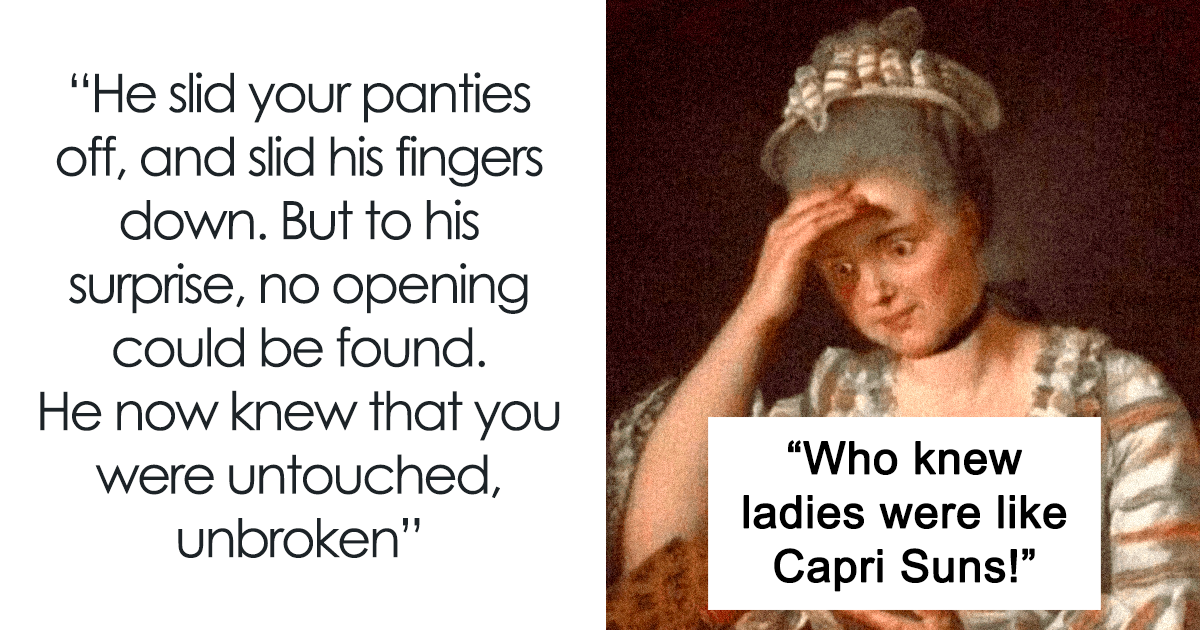
30 Times Male Authors Showed They Barely Know Anything About Women
Aug
Writing a convincing character requires imagination, empathy, observation, and occasionally the radical decision to ask another human being how their body works. Unfortunately, some fictional women appear to have been created after an author studied a perfume commercial, glanced at an anatomy diagram from across the room, and confidently declared, “Research complete.”
The internet often labels these spectacular literary misfires as men writing women: passages in which female characters obsess over their own breasts, experience biologically impossible periods, become irresistibly attracted to rude strangers, or pause during emergencies to assess whether they still look desirable.
To be clear, male authors can write brilliant female characters, just as women can write unconvincing men. The problem is not an author crossing gender lines. Fiction would be painfully dull if writers could create only people exactly like themselves. The problem begins when curiosity is replaced by stereotypes and a woman becomes a decorative object instead of a person with agency, contradictions, priorities, and an inner life.
The following examples are original paraphrases and composites inspired by widely discussed literary passages and recurring fictional tropes. They are not direct quotations from individual books. Let us enter the strange universe where breasts have independent thoughts, periods operate like kitchen timers, and every woman sees herself through the eyes of an imaginary male audience.
When Female Bodies Become Unsupervised Supporting Characters
-
1. She Introduced Herself Through Her Breasts
Before readers learned her occupation, ambitions, surname, or reason for entering the room, they received a detailed report on the size and emotional condition of her chest. Apparently, her personality was still loading, but her bra measurements had arrived early.
-
2. She Woke Up and Immediately Inspected Her Curves
Most people wake up thinking about the alarm, the bathroom, coffee, or why their neck hurts. This heroine opened her eyes and admired how attractively her body rested beneath the sheets, as though she were both sleeping and directing a luxury mattress commercial.
-
3. Her Breasts Reacted Before She Did
A surprising visitor entered, and her breasts supposedly tightened, trembled, rose, or otherwise issued an independent press release. Her face, hands, pulse, and thoughts remained strangely quiet while her chest handled all official emotional communications.
-
4. She Ran Without Appropriate Structural Consequences
The character sprinted down stairs in a thin blouse, apparently unconcerned with support, discomfort, or gravity. The scene described the visual performance in loving detail while ignoring the practical reality that many women would first secure the situation before chasing the villain.
-
5. Her Clothes Fit According to Fantasy Physics
She wore a shirt several sizes too small, yet it remained flattering, comfortable, office-appropriate, and mysteriously resistant to buttons launching across the room. Fabric, like everyone else in the story, had agreed not to challenge the male protagonist’s preferred view.
-
6. She Evaluated Her Attractiveness During a Crisis
While escaping danger, grieving a death, or discovering a conspiracy, she paused internally to wonder whether fear made her eyes look larger and more appealing. Survival could wait. The invisible photographer apparently needed one more shot.
-
7. She Had No Body Hair Unless It Was Symbolic
Years passed, civilization collapsed, and clean water became a precious resource, yet the heroine remained smoother than a new smartphone. If body hair appeared at all, it represented rebellion, despair, or moral decline instead of ordinary mammalian biology.
-
8. Her Makeup Survived the Apocalypse
She cried, fought, slept outdoors, crossed a desert, and escaped an explosion. Nevertheless, her eyeliner remained sharp enough to draft architectural plans. Meanwhile, one light drizzle turns real mascara into an experimental watercolor.
-
9. Her Age Was Measured by Male Approval
Rather than describing her experience or perspective, the narration explained that she was “still attractive” at 38, 45, or some other allegedly shocking age. Male characters were allowed to mature. Female characters apparently came with rapidly depreciating beauty warranties.
-
10. Every Physical Feature Was Compared to Food
Her skin was cream, her lips were cherries, her eyes were chocolate, and her hair flowed like honey. By the end of the paragraph, readers knew little about the woman but were strangely prepared to order dessert.
When Biology Was Treated as an Optional Elective
-
11. Her Period Arrived Like a Dramatic Plot Twist
She had no supplies, no awareness of her cycle, and no previous experience despite being an adult. The event arrived with the shock of an alien invasion. Real cycles can certainly be unpredictable, but menstruation is not usually a complete surprise every single month.
-
12. Menstrual Blood Behaved Like a Movie Injury
The description suggested a sudden, continuous gush rather than the shedding of uterine lining over several days. It was less reproductive biology and more a deleted scene from a low-budget horror film.
-
13. PMS Replaced Her Entire Personality
A thoughtful, competent woman transformed into a screaming hurricane because the calendar demanded it. Hormonal changes can affect mood and energy, but they do not automatically erase judgment, ethics, professional skills, or the ability to speak below concert volume.
-
14. She Became Pregnant Five Minutes After Sex
Before the evening ended, she somehow sensed conception, understood the baby’s personality, and perhaps selected a college. Pregnancy does not announce itself with an immediate internal notification reading, “Congratulations, implantation complete.”
-
15. Childbirth Lasted One Dramatic Push
Her water broke, everyone screamed, and a clean baby appeared moments later. Missing were cervical dilation, contractions, multiple stages of labor, delivery of the placenta, physical exhaustion, medical decisions, and the general refusal of childbirth to respect a novelist’s preferred pacing.
-
16. She Recovered From Delivery Before Lunch
Soon after giving birth, she stood elegantly, wore fitted clothing, entertained visitors, and resumed solving crimes. Her pelvic floor, bleeding, soreness, fatigue, and hormonal changes had apparently signed nondisclosure agreements.
-
17. The Vagina and Vulva Became the Same Thing
The narration used one term for every part of female external and internal anatomy. This is common in everyday speech, but an author writing explicit biological detail should probably know which structure is actually being described.
-
18. Arousal Happened Automatically
A handsome man entered the room, and her body instantly became ready for sex regardless of fear, irritation, trust, context, or desire. Female sexual response is not a motion-activated porch light triggered by cheekbones.
-
19. Pain Was Presented as Secret Pleasure
The story treated discomfort as evidence that the heroine wanted intimacy but was too shy to admit it. This trope does more than misunderstand bodies; it confuses pain, consent, and desire in a way that can make a supposedly romantic scene deeply unsettling.
-
20. Every Woman Had the Same Sexual Preferences
One technique worked instantly and universally, requiring no communication, adjustment, or attention to individual differences. The author approached human sexuality like a combination lock with one factory-set code.
When Women Existed Mainly to Decorate a Man’s Story
-
21. She Was Beautiful Without Knowing It
She had perfect features, attracted everyone nearby, and remained completely unaware of conventional beauty standards. This supposedly made her humble and therefore even more desirable. Conveniently, she possessed beauty without any of the confidence that might challenge the hero.
-
22. She Hated Other Women on Sight
Every female stranger was immediately classified as shallow, jealous, manipulative, or threatening. The heroine had no close women friends because she was “different,” which usually meant she liked the hero’s hobbies and required very little emotional effort.
-
23. Her Career Was a Decorative Accessory
The novel announced that she was a brilliant surgeon, attorney, scientist, or executive, yet never showed her performing meaningful work. Her impressive job existed mainly to prove that the hero had attracted a high-value collectible.
-
24. Competence Disappeared When the Hero Arrived
She had survived alone for years, managed dangerous missions, and defeated powerful enemies. Then a man joined the story, and she suddenly forgot how doors, weapons, plans, and shoelaces worked so he could rescue her.
-
25. Trauma Made Her More Attractive
Her grief, abuse, or loneliness did not produce complicated coping mechanisms. Instead, suffering gave her sad eyes, mysterious silence, and an urgent need for the hero’s love. Trauma became a beauty filter rather than a serious human experience.
-
26. She Fell in Love Because He Was Persistent
She said no, avoided him, criticized him, and established clear boundaries. He ignored all of that until she recognized his behavior as devotion. The narrative confused relentless pressure with romance and treated respect as an unnecessary side quest.
-
27. Her Anger Was Actually Sexual Tension
Whenever she objected to disrespect, betrayal, or incompetence, the hero concluded that she secretly desired him. Apparently, women cannot experience plain anger. Every disagreement must be translated into foreplay by the Department of Convenient Male Interpretation.
-
28. Motherhood Deleted Her Previous Identity
After having a child, she stopped having ambitions, friendships, hobbies, political opinions, or complicated feelings. She became “the mother,” permanently stationed near a kitchen doorway to deliver wisdom and sandwiches.
-
29. Her Death Existed to Improve a Man
She received minimal development before being killed, assaulted, kidnapped, or diagnosed with a fatal illness. Her suffering then motivated a male character to become stronger. She was not a person in the narrative; she was premium emotional fuel.
-
30. She Had No Desire Unrelated to the Hero
Her goals, fears, decisions, and future revolved entirely around one man. Remove him from the plot and she would have nothing left to do. That is the clearest warning sign of a poorly written female character: she does not appear to exist when nobody is looking at her.
Why Bad Female Character Descriptions Keep Appearing
These mistakes are funny when they involve gravity-defying breasts or makeup with military-grade durability. The deeper issue, however, is limited perspective. Many weak female characters are written from the outside inward. The author begins with appearance, desirability, or usefulness to a male protagonist and never reaches the character’s private logic.
This is a version of the male gaze in fiction: women are positioned primarily as people to be observed rather than people who observe, interpret, choose, and act. Even a physically strong heroine can feel shallow if every scene evaluates how attractive she looks while performing that strength.
Good characterization begins with agency. What does she want before the hero appears? What would she do if romance were impossible? Which beliefs does she defend? What does she misunderstand? Who annoys her? What private victory would matter even if nobody applauded?
Writers also need research. Anatomy should be checked with reliable medical references. Experiences involving menstruation, pregnancy, harassment, motherhood, sexuality, or workplace discrimination should be informed by multiple real perspectives. One conversation is useful, but no single woman serves as technical support for approximately four billion people.
Finally, authors should read books written by women across different genres, ages, cultures, races, sexual orientations, abilities, and economic backgrounds. Reading expands the library of human behavior available to the imagination. Without that library, writers tend to reach for the same dusty stereotypes.
Experiences From Reading and Discussing “Men Writing Women”
One of the strangest experiences in reading groups is watching everyone encounter a questionable description at the same moment. The conversation stops. Someone rereads the sentence aloud, slowly, as though the original meaning might improve with careful pronunciation. It does not. Another reader asks whether the character’s breasts have become separate narrators. Someone else opens a search engine to confirm that human anatomy has not received a surprise software update.
Humor makes these passages memorable, but discussing them often reveals why they feel so false. Women in the group rarely object simply because a female character is described as beautiful or sexual. The objection usually concerns perspective. A woman alone in her bedroom may think about comfort, soreness, temperature, an upcoming meeting, an unanswered message, or the mysterious stain on her ceiling. She is less likely to introduce her own body to herself as though writing catalog copy.
Another common experience is noticing how easily a female character’s competence can be announced but never demonstrated. A novel calls her the finest intelligence officer in the country, yet she repeatedly ignores obvious threats so the male lead can explain them. Readers do not dislike vulnerable women. They dislike when a character’s established abilities are switched off whenever the plot needs a rescue scene.
Conversations with editors and writers also show that these problems are usually fixable. A description can be rewritten from the character’s actual priorities. A romantic scene can include communication rather than magical mind reading. A mother can love her children while still wanting solitude, professional recognition, adventure, or eight uninterrupted hours of sleep. A heroine can be attractive without treating attractiveness as her primary contribution to civilization.
The most useful exercise is simple: remove every physical description and every relationship to a male character. Then list what remains. Does she still have goals, expertise, loyalties, flaws, habits, humor, and meaningful choices? Could she carry a scene with another woman without discussing a man? Would readers recognize her from her decisions rather than her hair color?
When the answer is no, the solution is not to add a tragic childhood, a leather jacket, or a scene in which she punches someone. Strength is not a personality, and suffering is not character development by itself. The writer must build an interior life.
Perhaps the best experience comes when a male author clearly did the work. The woman on the page is specific without being presented as a universal model of womanhood. She can be selfish in one scene and generous in another. Her body exists, but it does not perform acrobatics for the narrator. She surprises readers while remaining psychologically consistent. Nobody stops to praise the author for “writing a woman correctly” because the character simply feels human.
Conclusion: Women Are People, Which Is Excellent News for Writers
Writing believable women does not require supernatural access to a mysterious female consciousness. It requires the same fundamentals used to create any convincing character: observation, empathy, research, specificity, agency, and revision.
Male authors do not need to avoid female perspectives. They need to avoid assuming that attraction is insight. A description of a woman’s body tells readers what she looks likeor what the narrator thinks she looks like. It does not automatically reveal what she values, fears, misunderstands, remembers, or intends to do next.
The funniest examples of male authors writing women badly will continue circulating because they are wonderfully bizarre. Yet their popularity also points toward a practical lesson. Readers recognize when a character has been observed only from the outside. They also recognize when she has been allowed to become a complete, contradictory, gloriously inconvenient human being.
SEO Metadata

