
Makeup
“Will Never Eat Again At Wendy’s Until It Apologizes”: Wendy’s Speaks Out After Roasting Katy Perry
Aug
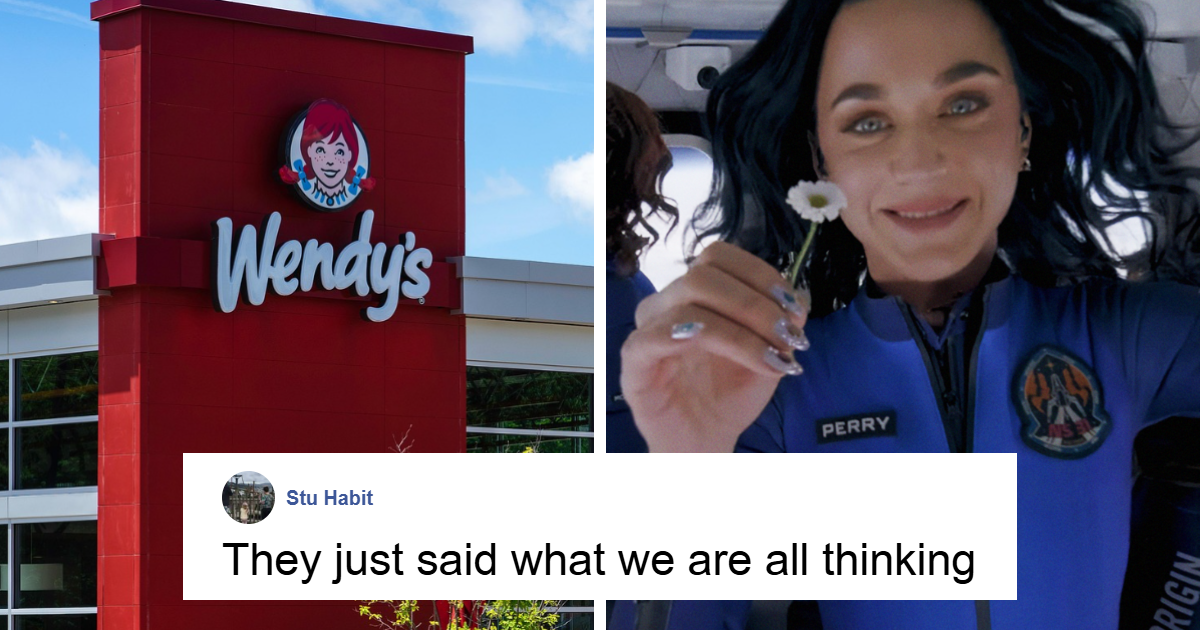
Fast food has always come with a side of opinions, but rarely does a burger chain find itself orbiting the same news cycle as a pop star, a billionaire-backed spaceflight, and a global debate about celebrity culture. Yet that is exactly what happened when Wendy’s, the brand famous for square patties and sharper-than-average social media replies, roasted Katy Perry after her Blue Origin space trip.
The drama began after Perry returned from Blue Origin’s NS-31 mission, an all-female suborbital flight that included Gayle King, Lauren Sánchez, Aisha Bowe, Amanda Nguyen, and Kerianne Flynn. The trip lasted roughly 11 minutes, but the internet discourse lasted much longer, because naturally, the internet treats every celebrity moment like a group project nobody asked to join.
When pop culture accounts posted that Katy Perry had returned from space, Wendy’s official social media account replied with a cutting joke: “Can we send her back?” The chain also leaned into Perry-related wordplay, including a riff on her famous song “I Kissed a Girl” after she kissed the ground upon landing. Some users laughed. Others winced. Perry’s supporters demanded an apology. A few declared they would “never eat again at Wendy’s” until the company made things right.
Wendy’s eventually responded, saying it always brings “a little spice” to its social channels but has “a ton of respect” for Katy Perry and her “out-of-this-world talent.” That statement cooled some of the flames, but it did not include a direct apology, which is why the controversy kept sizzling like fries left under a heat lamp.
What Happened Between Wendy’s and Katy Perry?
To understand why the Wendy’s Katy Perry roast became such a big story, it helps to rewind to April 2025. Katy Perry joined Blue Origin’s NS-31 mission, a high-profile all-female crewed spaceflight launched aboard the New Shepard rocket. The mission was promoted as a moment of representation, inspiration, and visibility for women in space-related fields.
The crew itself was intentionally headline-grabbing. Perry brought pop superstardom. Gayle King brought broadcast credibility. Lauren Sánchez helped organize the crew. Aisha Bowe and Amanda Nguyen brought serious science, advocacy, and aerospace credentials. Kerianne Flynn added a media and storytelling angle. In other words, this was never going to be a quiet little rocket ride. It was built for cameras, commentary, and, inevitably, memes.
After the capsule returned safely to Earth, Perry was photographed kissing the ground. The image instantly became one of the defining visuals of the flight. Supporters saw emotion, gratitude, and wonder. Critics saw theatrical branding. Wendy’s saw a setup for a joke.
The brand’s most viral response, “Can we send her back?” landed hard because it was simple, short, and unmistakably savage. That is the Wendy’s social media formula in a nutshell: fast, salty, and designed to be screenshotted before the ice melts in your drink.
Why Wendy’s Social Media Roasts Usually Work
Wendy’s did not become famous online by posting bland corporate messages like “Happy Tuesday, valued guests.” For years, the brand has built a reputation for clapbacks, jokes, and playful insults. Its social team has roasted competitors, teased customers, and created the kind of personality many brands desperately try to copy in meetings with names like “Gen Z Engagement Strategy.”
That tone works when the target is another brand, a harmless joke, or a willing participant. People enjoy seeing a fast-food account act like the funniest person in the group chat. The Wendy’s persona is not polished in the traditional sense. It is sarcastic, quick, and proudly unserious.
But the Katy Perry joke showed the danger of that strategy. The same tone that feels clever when aimed at a rival burger chain can feel mean-spirited when aimed at an individual woman in the middle of a larger cultural argument. Humor depends on context. A joke that gets applause in one setting can get a brand dragged through the digital parking lot in another.
Why Fans Wanted Wendy’s to Apologize
The backlash was not only about whether people liked Katy Perry or supported private space tourism. Many critics argued that Wendy’s crossed a line by using a massive corporate platform to pile onto an individual celebrity during a wave of public mockery. For some fans, the joke felt less like brand sass and more like bullying with a logo.
The phrase “Can we send her back?” became the central issue. To defenders of Wendy’s, it was just a joke in the brand’s usual voice. To critics, it sounded unnecessarily harsh, especially because the NS-31 mission had been framed as an all-female milestone. The criticism became even sharper because Wendy’s own mascot is a young red-haired girl, making the optics a little awkward. A brand represented by a female character telling a woman to go back to space? That is not exactly a crisis communications dream.
Some fans said they would stop eating at Wendy’s until the company apologized. Whether those boycotts were serious, temporary, or fueled by the same energy people use when they say they are “deleting the app forever” and return 14 minutes later, the sentiment was clear: many people wanted more than a playful clarification.
What Wendy’s Said After the Backlash
Wendy’s response tried to walk a narrow line. The company did not issue a traditional “we are sorry” statement. Instead, it defended the brand’s spicy social media identity while complimenting Perry’s talent.
The message was essentially: yes, we joke; no, we do not hate Katy Perry. That may satisfy people who already saw the roast as harmless. But for those who believed the tweet contributed to a pile-on, the statement was not enough. The absence of a direct apology became its own headline.
This is where brand communication gets tricky. Apologize too strongly, and the brand’s fans may accuse it of losing its edge. Refuse to apologize, and critics may see the company as arrogant. Offer a middle-ground statement, and everyone argues over whether it counts as accountability. Welcome to modern public relations, where every sentence is a trampoline and the internet is wearing muddy shoes.
The Bigger Debate: Was the Blue Origin Flight Inspiring or Tone-Deaf?
The Wendy’s controversy did not happen in a vacuum. Perry’s space trip was already being debated before the burger chain added seasoning. Supporters viewed the Blue Origin NS-31 mission as a symbolic moment for women’s visibility in space. They pointed to the presence of accomplished women such as Aisha Bowe, a former NASA rocket scientist, and Amanda Nguyen, a civil rights advocate and researcher, as proof that the flight was more than a celebrity stunt.
Critics, however, questioned the purpose of expensive private space tourism during a time of economic stress, climate anxiety, and public frustration with billionaires. Some celebrities and commentators argued that the mission felt out of touch. Others mocked the way it was packaged as empowerment while being tied to a commercial space company founded by Jeff Bezos.
Katy Perry became an easy target because she was the most famous and most meme-able crew member. Her emotional reaction, her song references, and her pop-star image made her the face of a much larger conversation. Wendy’s did not create the backlash, but it amplified it with a joke sharp enough to cut through the news cycle.
Was Wendy’s Roasting Katy Perry Smart Marketing?
From a pure attention standpoint, Wendy’s got what many brands want: visibility, headlines, shares, arguments, and cultural relevance. The brand was mentioned across entertainment, lifestyle, and business coverage. People who had not thought about Wendy’s all week were suddenly discussing its social media voice.
But attention is not always the same as brand love. A viral post can generate engagement while also alienating part of the audience. In this case, Wendy’s reinforced its reputation for fearless online humor, but it also reminded marketers that “savage” is a risky personality trait when the target is not another corporation.
The best brand jokes usually punch sideways or up. They poke fun at competitors, trends, or absurd situations. When a joke appears to punch down at a person already facing public criticism, the room changes. Suddenly, the brand is not the witty friend at the table. It is the person who made the group chat uncomfortable.
Why This Story Became So Viral
The story had every ingredient the internet loves: a celebrity, a brand with attitude, space travel, a possible boycott, and a statement that almost-but-not-quite apologized. It was practically engineered in a lab for social media debate.
There was also a contrast that made the controversy irresistible. Blue Origin’s mission was presented with grand language about exploration, inspiration, and seeing Earth from above. Wendy’s responded with the emotional subtlety of a spicy chicken sandwich launched from a cannon. That collision between cosmic ambition and fast-food sarcasm made the whole thing oddly funny, even for people who thought the joke went too far.
Another reason it spread is that people already have strong feelings about Katy Perry. She has been one of the most visible pop stars of the last two decades, which means she has devoted fans, longtime critics, casual listeners, and people who still cannot hear “Firework” without imagining a Fourth of July commercial. A joke about Perry was never going to remain small.
What Brands Can Learn From Wendy’s Katy Perry Controversy
1. A strong voice needs strong judgment
Wendy’s social media works because it has a recognizable personality. But personality without judgment can become a liability. Brands need to know when a joke fits the moment and when it adds fuel to a fire that is already burning.
2. Humor should have a clear target
The safest jokes are aimed at situations, not people. A joke about space tourism, celebrity culture, or the absurdity of rich people going to space might have landed differently. A joke aimed directly at Perry made the brand look personal.
3. Silence is not always golden
Once backlash starts, a brand has limited time to define its position. Wendy’s did respond, but the statement’s lack of a formal apology left room for continued debate. Sometimes a clearer message prevents a second wave of criticism.
4. Brand loyalty is emotional
People do not only buy fries. They buy feelings, habits, identities, and tiny moments of comfort after a long day. If a customer feels a brand has behaved cruelly, even a funny tweet can become a reason to choose another drive-thru.
Did Wendy’s Actually Need to Apologize?
That depends on who you ask. Fans of the brand’s edgy persona may say no. They may argue that Wendy’s did what Wendy’s always does: make a quick joke, generate laughs, and move on. In that view, demanding an apology from a roast-heavy fast-food account is like walking into a comedy club and asking why the microphone is loud.
But Perry’s supporters and many critics saw it differently. They argued that a corporation with millions of followers should be more careful, especially when public criticism is already disproportionately focused on one woman. For them, Wendy’s statement of respect was not enough because it did not acknowledge harm.
The most balanced answer is that Wendy’s did not legally or morally have to issue a dramatic apology, but it probably could have de-escalated the situation with a warmer one. Something as simple as, “We got carried away with the roast, but we respect Katy and the whole crew,” may have preserved the brand’s voice while showing more awareness.
The Katy Perry Factor
Katy Perry’s public image made the controversy even more complicated. She is a global pop star known for theatrical performances, playful visuals, and inspirational anthems. That makes her easy to parody, but it also means fans often interpret criticism through the lens of years of public scrutiny.
For Perry, the Blue Origin flight appeared to be meaningful. She spoke about love, motherhood, and the emotional impact of seeing Earth from above. Whether people found that moving or melodramatic, it was clearly not just a random Tuesday activity for her. Wendy’s joke reduced that experience to a punchline, which is why some fans reacted so strongly.
Public Experience: Why People React So Emotionally to Celebrity Roasts
At first glance, it may seem strange that anyone would change where they eat because a fast-food brand roasted a millionaire pop star. After all, Katy Perry is not exactly waiting in the rain for someone to defend her honor with a junior bacon cheeseburger. But consumer reactions are rarely that simple.
For many people, celebrity controversies become stand-ins for broader issues. The Wendy’s joke was not only about Katy Perry. It touched on how women are mocked online, how brands use sarcasm for engagement, how private space travel is perceived, and how quickly public humor can turn into a pile-on. When someone says, “I will never eat at Wendy’s again until it apologizes,” they may not be talking only about lunch. They may be saying, “I do not like what this brand chose to reward.”
There is also a personal experience element. Most people know what it feels like to be laughed at when they are proud of something. Maybe it was a graduation photo, a new job, a creative project, or a dream that looked silly to someone else. When Perry kissed the ground after landing, some viewers saw a dramatic celebrity moment. Others saw vulnerability. Wendy’s joke hit differently depending on which version a person saw.
On the other side, plenty of people experienced the roast as classic internet comedy. To them, Wendy’s was not launching a moral attack; it was doing the same thing users do every day on X, TikTok, Reddit, and Instagram. The joke was quick, topical, and connected to a public event. In their eyes, outrage over the tweet felt exaggerated, especially because the Blue Origin mission itself had already been widely criticized.
That split reaction is what makes the controversy useful to study. It shows that modern audiences do not share one humor code. A joke can be hilarious, cruel, harmless, strategic, and foolish all at once, depending on who is reading it. Brands used to worry about whether an ad would offend a target demographic. Now they must consider whether a nine-word reply might become a national personality test.
Personally, the most interesting lesson from the Wendy’s Katy Perry controversy is not that brands should stop being funny. Please, for the love of all things crispy and dipped in sauce, brands should not all become beige rectangles with mission statements. The lesson is that wit works best when it knows when to stop. A roast can be memorable without being needlessly personal. A brand can be spicy without turning every trending woman into a dipping sauce.
For everyday consumers, the incident also offers a small reminder: online outrage often moves faster than reflection. It is fine to laugh. It is fine to criticize. It is fine to skip Wendy’s for a while if the joke bothered you. But it is also worth asking what we want from brands online. Do we want them to be entertainers? Friends? Comedians? Responsible public voices? The answer may be “all of the above,” which is exactly why their job is so difficult.
Conclusion
The Wendy’s Katy Perry controversy proves that a single social media reply can travel almost as far as a rocket. What started as a snarky joke after Perry’s Blue Origin flight turned into a wider debate about brand humor, celebrity backlash, women in public life, and whether corporate accounts should apologize when their jokes go too far.
Wendy’s spoke out by saying it respects Katy Perry and her talent, but the company stopped short of a direct apology. For some users, that was enough. For others, especially fans demanding accountability, it felt like a missed opportunity. Either way, the moment will likely be remembered as one of those strange internet collisions where pop music, space tourism, and fast food all ended up in the same sentence.
In the end, Wendy’s got the attention it is famous for chasing, but the episode also showed the cost of being the internet’s favorite roast account. Sometimes the joke lands. Sometimes it lands, bounces, hits a celebrity fandom, and comes back asking for a public apology with extra fries.
Note: This article is written in original wording for web publication and is based on publicly reported information about Wendy’s, Katy Perry, and the Blue Origin NS-31 controversy.

