
Skincare
What Does CC Mean in an Engine?
Aug
Whether you are shopping for a motorcycle, comparing lawn mowers, or trying to decode a car specification sheet, you will eventually meet a number followed by two small letters: cc. You may see a 125cc scooter, a 500cc motorcycle, or a 190cc mower engine. The number looks importantand it isbut it does not tell the whole performance story.
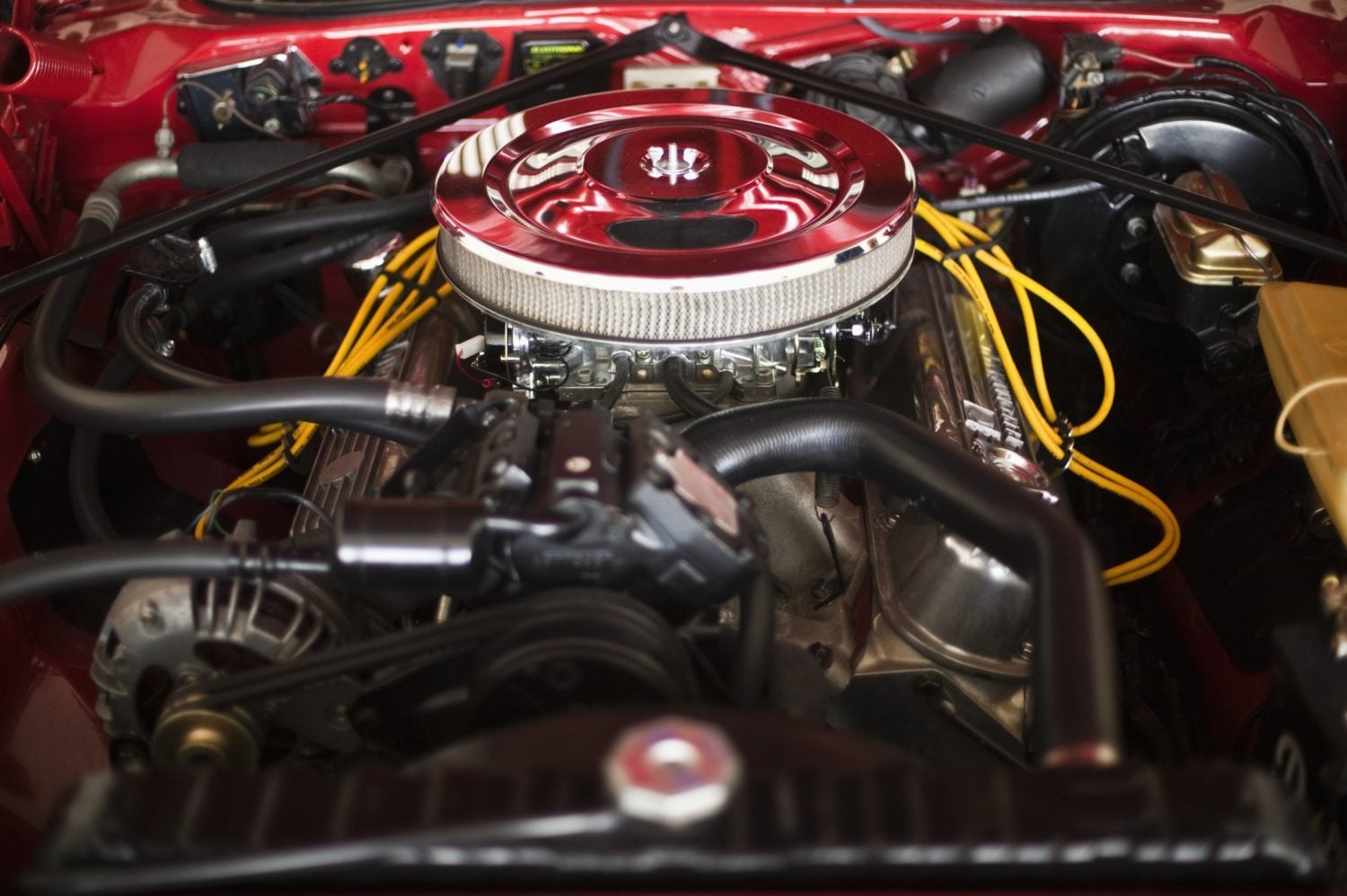
In an engine, CC means cubic centimeters. It measures engine displacement: the combined volume swept by all the pistons as they travel through their cylinders. In plain English, it describes how much space the pistons move through during one complete stroke. Think of it as the engine’s breathing capacity, not its report card.
A larger displacement engine can generally process more air and fuel per cycle, which may help it produce more torque and power. However, modern technology has made the relationship wonderfully complicated. A small turbocharged engine can embarrass a much larger naturally aspirated one, proving once again that size mattersbut engineering gets the final vote.
What Does CC Stand For?
CC stands for cubic centimeter, written scientifically as cm³. A cubic centimeter is a metric unit of volume equal to one milliliter. According to the National Institute of Standards and Technology, 1,000 cubic centimeters equal one liter.
- 1 cc = 1 cm³
- 1 cc = 1 milliliter
- 1,000 cc = 1 liter
- 1 cubic inch = approximately 16.387 cc
- 1 cc = approximately 0.061 cubic inch
That means a 2,000cc car engine is essentially a 2.0-liter engine. A 1,500cc engine becomes 1.5 liters, while a 4,998cc engine will usually be marketed as a 5.0-liter engine. Manufacturers commonly round the displayed liter figure, so the badge on the trunk may not reveal the exact displacement down to the last cubic centimeter.
What Is Engine Displacement?
Engine displacement is the total swept volume of every piston cylinder in a reciprocating internal-combustion engine. Each piston moves between two positions:
- Top dead center: The piston is at its highest point.
- Bottom dead center: The piston is at its lowest point.
The space displaced as the piston moves between these positions is the swept volume of that cylinder. Multiply it by the number of cylinders, and you have total engine displacement.
This measurement does not include the small clearance space remaining above the piston at top dead center. That space matters when calculating the compression ratio, but it is not included in the advertised CC figure.
How Engine CC Is Calculated
Engine displacement depends on three basic measurements: cylinder bore, piston stroke, and cylinder count.
Engine displacement = (π ÷ 4) × bore² × stroke × number of cylinders
The bore is the inside diameter of a cylinder. The stroke is the distance the piston travels from top dead center to bottom dead center. If bore and stroke are measured in millimeters, the result is initially in cubic millimeters. Divide that result by 1,000 to obtain cubic centimeters.
A Single-Cylinder Example
Imagine a small engine with a 56-millimeter bore and a 50-millimeter stroke:
(3.1416 ÷ 4) × 56² × 50 = approximately 123,150 mm³
Divide by 1,000, and the displacement is approximately 123.2cc. A manufacturer might advertise that engine as 123cc, 124cc, or even place it within a broadly defined 125cc class.
A Four-Cylinder Example
Now consider a four-cylinder engine with an 86-millimeter bore and an 86-millimeter stroke. Each cylinder displaces about 499.6cc. Multiplying that by four produces approximately 1,998cc, which would normally be described as a 2.0-liter engine.
Does More CC Mean More Power?
All other things being equal, additional engine displacement gives an engine the potential to burn more air and fuel during each operating cycle. That often produces stronger torque and makes it easier to move a heavy vehicle, climb a hill, tow a load, or accelerate without revving the engine into a mechanical opera.
The important phrase is all other things being equal. They rarely are.
Horsepower and torque also depend on:
- Turbocharging or supercharging
- Compression ratio
- Fuel-injection design
- Valve timing and airflow
- Maximum engine speed
- Combustion efficiency
- Cooling and exhaust systems
- Engine tuning and intended use
For example, Ford lists its turbocharged 2.3-liter EcoBoost Mustang engine at 315 horsepower. Meanwhile, some much larger engines designed for relaxed cruising, industrial equipment, or durability may produce less horsepower but deliver substantial torque at lower rpm.
At the more dramatic end of the spectrum, Car and Driver lists a modern Ferrari twin-turbo V-6 at 2,992cc and hundreds of horsepower. The example illustrates why displacement alone cannot predict output. A CC rating measures physical volume; horsepower measures how quickly the engine can perform work.
CC vs. Horsepower vs. Torque
These measurements describe different characteristics, even though sales brochures occasionally toss them together like ingredients in an automotive stew.
| Measurement | What It Describes | What It Helps You Understand |
|---|---|---|
| CC or liters | Total engine displacement | The engine’s physical breathing capacity |
| Horsepower | Rate of doing work | Acceleration and performance at speed |
| Torque | Rotational force | Pulling ability and low-speed response |
| RPM | Engine revolutions per minute | How quickly the crankshaft is rotating |
| Compression ratio | Relationship between maximum and minimum cylinder volume | Part of the engine’s efficiency and combustion design |
A high-CC engine is therefore not automatically a high-horsepower engine. A 600cc sport motorcycle may produce far more horsepower than a larger cruiser because it is designed to rev higher and move air differently. The cruiser may respond with stronger low-rpm torque and a calmer personality. One wants a racetrack; the other wants a long highway and perhaps a leather jacket with suspiciously perfect fringe.
How CC Affects Different Types of Machines
Cars and Trucks
Passenger-vehicle engines are usually described in liters in the United States. A 1.5-liter engine has roughly 1,500cc of displacement, while a 5.0-liter V-8 has about 5,000cc.
Higher displacement traditionally meant greater power and fuel consumption. Modern downsized engines complicate that rule. Turbocharging allows a smaller engine to force additional air into its cylinders and generate power that once required a larger displacement. Hybrid assistance can further reduce the connection between engine size and total vehicle performance.
Motorcycles and Scooters
Motorcycle engines are commonly identified directly by CC. Honda, for example, describes the Grom as having a 124cc single-cylinder engine and the Rebel 500 as using a 471cc parallel-twin. These figures help shoppers understand the broad size category, but weight, gearing, cylinder arrangement, and tuning still affect how each motorcycle behaves.
In general, smaller-displacement motorcycles are lighter, more approachable, and less demanding for urban use. Larger engines usually offer stronger acceleration, easier highway passing, and more relaxed performance while carrying a passenger or luggage.
Lawn Mowers and Outdoor Equipment
Small engines used in lawn mowers, generators, pressure washers, and tillers are also frequently rated in CC. A 140cc mower engine may be adequate for a small, level lawn, while a 190cc model can provide more useful torque for thick grass or tougher conditions.
However, Briggs & Stratton distinguishes displacement from gross torque and horsepower ratings. When comparing equipment, examine the CC figure alongside torque, cutting width, machine weight, transmission type, and intended workload.
Does a Bigger Engine Use More Fuel?
A larger engine has the capacity to consume more air and fuel per cycle, so it may use more fuel under comparable operating conditions. Yet engine displacement does not determine fuel economy by itself.
A vehicle’s actual fuel consumption is influenced by its weight, aerodynamics, transmission, gearing, driving speed, engine load, cylinder-deactivation technology, hybrid system, and driver behavior. A small turbocharged engine driven aggressively can consume fuel with surprising enthusiasm. A larger engine cruising lightly may operate more efficiently than expected.
For vehicle shopping, compare official EPA fuel-economy estimates and real-world tests rather than assuming the smallest engine always wins at the pump.
Two-Stroke and Four-Stroke Engine CC
CC is calculated from bore, stroke, and cylinder count in the same geometric way for both two-stroke and four-stroke engines. Their operating cycles, however, are different.
A four-stroke engine completes intake, compression, combustion, and exhaust over two crankshaft revolutions. A two-stroke engine completes its cycle in one revolution. Consequently, a two-stroke engine may produce impressive power for its displacement, although emissions, lubrication, fuel consumption, and durability characteristics can differ substantially.
This is why comparing a 250cc two-stroke dirt bike directly with a 250cc four-stroke motorcycle based only on displacement can be misleading. The matching numbers do not guarantee matching behavior.
Common Misunderstandings About Engine CC
CC Is Not the Fuel-Tank Capacity
Engine CC measures internal cylinder displacement. Fuel capacity is measured separately in gallons or liters. A 500cc motorcycle does not carry 500cc of gasoline unless its fuel tank was designed by someone who dislikes road trips.
CC Does Not Reveal the Number of Cylinders
A 1,000cc engine could be a single-cylinder, twin-cylinder, three-cylinder, or four-cylinder design. The listed displacement is the combined swept volume of all cylinders.
CC Is Not the Compression Ratio
Compression ratio compares cylinder volume when the piston is at the bottom of its stroke with the volume when the piston is at the top. It is normally written as a ratio, such as 10.5:1. Displacement is a volume, so the two specifications are related to cylinder geometry but describe different things.
CC Does Not Apply to Electric Motors
Electric motors do not contain piston cylinders that take in and burn an air-fuel mixture, so they have no engine displacement. Electric-vehicle performance is described with figures such as kilowatts, horsepower, torque, battery capacity, voltage, efficiency, and driving range.
How to Use CC When Comparing Engines
CC is most useful as a starting point when comparing engines built for similar purposes. It can help you place motorcycles, mowers, generators, or conventional vehicle engines into broad size categories. It becomes less useful when the designs are dramatically different.
For a meaningful comparison, consider:
- Displacement: How much total swept cylinder volume does the engine have?
- Power: How much horsepower or kilowatt output is available?
- Torque: How much rotational force is produced, and at what rpm?
- Weight: How much mass must the engine move?
- Power delivery: Is the output smooth, peaky, immediate, or delayed?
- Efficiency: How much fuel does the complete machine use in realistic conditions?
- Purpose: Was the engine designed for commuting, racing, towing, cutting grass, or running equipment?
The best engine is not necessarily the one with the largest CC rating. It is the one whose performance, efficiency, reliability, and operating characteristics fit the job.
Real-World Experiences: What Different CC Ratings Feel Like
Technical definitions explain what CC measures, but everyday use reveals why the number matters. The following practical scenarios illustrate how displacement can influence the experience without pretending that every engine of the same size behaves identically.
Moving From a 125cc Scooter to a Larger Motorcycle
A 125cc scooter can feel delightfully energetic on neighborhood streets. Its light weight, automatic transmission, and modest power make parking and low-speed maneuvering easy. In stop-and-go traffic, it may feel far more useful than its small number suggests.
Once the route includes steep grades or sustained highway speeds, the limits become clearer. Acceleration may soften, passing requires advance planning, and carrying a passenger can make the engine feel as though it has suddenly remembered an urgent appointment elsewhere.
Moving to a 300cc or 500cc motorcycle often brings more confident acceleration and additional performance in reserve. The rider may not use maximum power frequently, but the machine generally needs less effort to maintain speed. The experience also changes because of gearing, aerodynamics, chassis design, and vehicle weightnot simply because the CC figure increased.
Comparing Two Cars With the Same Displacement
Consider two cars equipped with 2.0-liter engines. One uses a naturally aspirated engine tuned for efficiency, while the other uses turbocharging and performance-oriented calibration. The first may deliver gentle, predictable acceleration. The second may produce dramatically more horsepower and torque despite having nearly identical displacement.
During a test drive, the differences can be obvious. The turbocharged car may surge forward with a light press of the accelerator, while the naturally aspirated model requires more rpm. Yet the calmer engine may be smoother, less complex, or perfectly adequate for daily commuting. The shared 2,000cc figure describes their internal volume, not their personalities.
Using CC to Choose a Lawn Mower
On a small, regularly maintained lawn, a modest-displacement mower engine can perform well while keeping the machine light and manageable. Increasing CC may not noticeably improve the experience if the grass is short and the terrain is level.
The situation changes with wet grass, dense growth, slopes, or a wider cutting deck. Under heavier load, an engine with stronger torque may maintain blade speed more consistently and stall less often. Even then, CC should be checked alongside the manufacturer’s torque rating. A well-designed smaller engine can outperform an older or less efficient engine with more displacement.
Why Bigger Can Feel More Relaxed
One of the most noticeable benefits of additional displacement is not always outright speed. It can be reduced effort. A larger motorcycle engine may hold highway speed at lower rpm. A truck engine may pull a trailer without frequent downshifts. A generator may handle a changing electrical load without sounding like it is negotiating its final will.
This relaxed behavior is often associated with stronger low- and midrange torque. However, the experience depends on gear ratios, engine tuning, load, and operating speed. A high-revving performance engine may have substantial displacement yet still encourage the driver to explore the upper half of the tachometer.
The Best Lesson From Real-World Use
The practical lesson is simple: use CC to narrow the field, then evaluate the complete machine. For a motorcycle, consider seat height, weight, power delivery, brakes, and intended roads. For a car, examine horsepower, torque, fuel economy, transmission behavior, and vehicle mass. For outdoor equipment, focus on workload, torque, deck or pump size, and service support.
A test drive or hands-on demonstration often tells you more than a single specification. CC explains how much cylinder volume an engine has. Your actual experience reveals whether the engineering surrounding that volume suits the task.
Conclusion
CC means cubic centimeters, a unit used to express the total swept volume of an internal-combustion engine’s cylinders. It helps identify engine size and provides a useful first clue about potential torque, power, and operating character.
Still, displacement is only one piece of the mechanical puzzle. Turbocharging, engine speed, cylinder design, compression, fuel delivery, gearing, vehicle weight, and tuning can allow two engines with the same CC rating to behave completely differently. Use CC as a helpful comparison toolnot as a magical number that predicts everything from acceleration to fuel economy.

