
Makeup
US Stocks Continue to Dominate 2013
Jul
In 2013, the US stock market did not merely outperform. It arrived wearing running shoes, grabbed the financial world’s microphone, and refused to leave the stage. Major American indexes repeatedly reached record highs while bonds struggled, gold tumbled, and emerging markets spent much of the year wondering where the party invitations had gone.
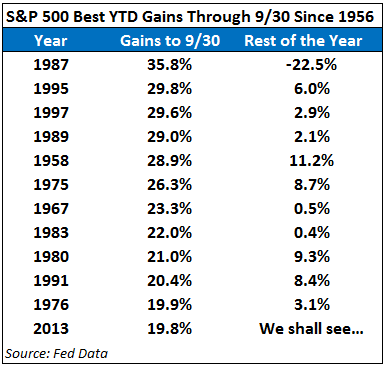
The S&P 500 gained approximately 29.6% on a price basis and more than 32% when dividends were included. The Dow Jones Industrial Average advanced about 26.5%, while the technology-heavy Nasdaq Composite surged roughly 38%. Smaller American companies joined the celebration as the Russell 2000 rose close to 37%.
Those results made US stocks one of the strongest major asset classes of 2013. The performance was especially striking because economic growth remained moderate, political arguments were plentiful, and investors spent months debating when the Federal Reserve would reduce its monetary support. Apparently, stocks did not receive the memo telling them to be nervous.
The 2013 US Stock Market Scoreboard
The year produced broad gains across company sizes and industries. Investors did not need to locate one magical corner of the market to participate. Large-cap stocks climbed, small-cap stocks climbed faster, and many cyclical sectors delivered exceptional returns.
- S&P 500: Up about 29.6%, excluding dividends
- Dow Jones Industrial Average: Up approximately 26.5%
- Nasdaq Composite: Up roughly 38.3%
- Russell 2000: Up around 37%
- S&P 500 total return: More than 32% with dividends reinvested
The S&P 500 finished the year at approximately 1,848 and recorded 45 record-high closes. The Dow ended near 16,577 after registering more than 50 record closes. For investors still emotionally recovering from the 2008 financial crisis, seeing indexes regularly establish new highs felt both encouraging and slightly suspicious.
Nevertheless, the advance was not built around one afternoon of speculative excitement. Stocks rose across most of the calendar, including a particularly strong first half. Short corrections occurred, especially when Federal Reserve policy rattled the bond market, but buyers repeatedly returned.
Why US Stocks Dominated in 2013
Federal Reserve Policy Kept Financial Conditions Supportive
The Federal Reserve was one of the most important forces behind the 2013 stock market rally. At the beginning of the year, it was purchasing approximately $85 billion of Treasury and mortgage-backed securities each month through its quantitative easing program. Short-term interest rates also remained near zero.
These policies lowered borrowing costs and reduced the appeal of cash and high-quality bonds. Investors searching for meaningful returns increasingly moved toward equities, corporate credit, and other risk assets. This did not mean the Federal Reserve directly programmed stock prices to rise every Tuesday. It did mean that the financial environment was unusually friendly to risk-taking.
In May, then-Fed Chairman Ben Bernanke suggested that policymakers might begin reducing, or tapering, asset purchases if the economy continued to improve. Treasury yields jumped, bond prices fell, and the episode became known as the “taper tantrum.”
Stocks briefly became more volatile, but the panic did not last. Investors gradually recognized that tapering was not the same as immediately raising interest rates. When the Federal Reserve finally announced in December that monthly purchases would be reduced from $85 billion to $75 billion, equities absorbed the news surprisingly well.
Corporate America Produced Solid Profits
US companies entered 2013 with healthy balance sheets, strong cash reserves, and leaner cost structures developed during the post-recession recovery. Revenue growth was not spectacular, but many businesses maintained or expanded profit margins.
Companies also returned enormous amounts of capital to shareholders. S&P 500 corporations spent approximately $475.6 billion on stock buybacks during 2013, about 19% more than in 2012. Share repurchases reduced outstanding share counts and helped support earnings per share. Dividends added another layer of return.
Buybacks were not a substitute for genuine business growth, but they were powerful in an environment where financing was inexpensive and corporate cash was plentiful. Wall Street loves efficiency, particularly when that efficiency arrives carrying several hundred billion dollars.
The US Economy Continued to Heal
The economic backdrop was better than the year’s headline growth rate suggested. Real US gross domestic product increased about 1.9% in 2013, slower than in 2012. However, growth became stronger during the middle of the year, and most major industry groups contributed to the expansion.
The labor market also improved. The unemployment rate declined from 7.9% in January to 6.7% in December. Housing prices and residential construction continued recovering from their post-crisis lows, supporting consumer confidence and household balance sheets.
Automobile sales strengthened, banks became healthier, and private-sector demand gradually expanded. The recovery was far from perfect, but markets respond to direction as well as speed. In 2013, the direction looked favorable.
Investors Became Less Afraid of Another Crisis
During the years immediately after the financial crisis, many investors treated every weak economic report as the possible opening scene of another disaster movie. By 2013, confidence was returning.
European financial risks appeared more manageable than they had during the sovereign-debt panic. US banks were better capitalized, household debt burdens had declined, and corporate default rates remained contained. As fears receded, investors were willing to pay higher valuations for future earnings.
This valuation expansion was a major part of the S&P 500’s return. Stock prices rose much faster than corporate earnings, meaning investors were assigning higher price-to-earnings multiples to American businesses. Optimism became more expensive as the year progressed.
Which US Stock Sectors Led the Rally?
Every major S&P 500 sector finished 2013 with a positive return, but economically sensitive industries generally outperformed defensive groups. Consumer discretionary stocks led with a gain of about 43%. Health care, industrials, and financials also produced exceptional results.
Consumer Discretionary
Retailers, media companies, automakers, and other consumer-oriented businesses benefited from improving employment, rising home values, and stronger household confidence. The sector’s roughly 43% return reflected expectations that Americans would spend more freely as the recovery matured.
Health Care and Industrials
Health care stocks gained more than 40%, supported by biotechnology enthusiasm, pharmaceutical pipelines, and defensive earnings characteristics. Industrials also rose about 41% as investors anticipated stronger manufacturing, transportation, and capital spending.
Financials
Financial stocks advanced approximately 36%. Banks benefited from improving credit quality, lower loan losses, healthier capital positions, and a steepening yield curve. The sector was still rebuilding its reputation after 2008, but in 2013 it finally looked less like a construction zone surrounded by warning tape.
Technology
Technology performed well, although the sector’s story was more complicated than a simple index number. Internet and social-media businesses attracted attention, cloud computing expanded, and investors rewarded companies with rapid revenue growth. Facebook more than doubled during the year, while Netflix rose nearly 300%.
Apple, one of the market’s largest companies, delivered a much smaller gain after its extraordinary earlier run. That relative weakness prevented technology from leading the entire S&P 500, even as several individual technology-related stocks produced spectacular returns.
The Individual Stocks That Defined 2013
Tesla became the year’s most famous momentum story. Its shares rose more than 300% as the Model S earned favorable reviews and the company reported its first quarterly profit. Investors began treating electric vehicles as a commercially serious category instead of a hobby for wealthy science-fiction fans.
Netflix also surged as subscriber growth and original programming improved the company’s outlook. Facebook rebounded strongly from its disappointing 2012 public-market debut, helped by progress in mobile advertising. Micron Technology benefited from improved conditions in the memory-chip industry, while Best Buy surprised investors with a dramatic turnaround.
Established industrial companies participated too. Boeing climbed sharply as commercial aircraft demand remained strong. Financial firms such as Bank of America advanced as investors grew more confident in the banking recovery.
These winners represented different industries, but they shared a common ingredient: improving expectations. Markets rarely wait for a company’s transformation to become obvious. By the time everyone agrees that a turnaround has succeeded, the stock may already have traveled most of the distance.
US Stocks Versus the Rest of the Investment World
International and Emerging Markets
Developed international markets generated respectable gains in 2013, with Japanese and European equities benefiting from improving sentiment and supportive central-bank policies. However, broad developed-market indexes generally trailed US stocks.
Emerging-market equities had a much more difficult year. Slower growth in China, falling commodity prices, political concerns, and capital outflows weighed on developing economies. The prospect of reduced Federal Reserve stimulus encouraged investors to move money away from markets considered more vulnerable to higher US interest rates.
This divergence helped make American equities look unusually dominant. Investors were not simply choosing stocks over bonds; they were frequently choosing US stocks over equities elsewhere.
Bonds
The broad US investment-grade bond market lost roughly 2% in 2013, its first negative calendar-year result in more than a decade. The yield on the 10-year Treasury rose from around 1.8% at the beginning of the year to approximately 3% by year-end. Because bond prices move inversely to yields, longer-duration securities were hit hardest.
The contrast was dramatic: a diversified US stock portfolio could gain more than 30%, while a high-quality bond portfolio lost money. That gap encouraged investors to question whether bonds still deserved their traditional portfolio role. They did, but 2013 was not the year to expect them to win a popularity contest.
Gold and Commodities
Gold fell approximately 28% in 2013, ending a long sequence of annual gains. Reduced fear of financial collapse, a stronger outlook for the US economy, and expectations of less aggressive monetary stimulus weakened demand for the precious metal.
Other commodities also struggled as global growth remained uneven. Investors who had entered the year expecting inflation protection to outperform instead watched productive American companies leave many hard assets behind.
Was the 2013 Rally Just a Federal Reserve Bubble?
Low interest rates and quantitative easing clearly supported asset prices, but describing the entire rally as artificial misses important details. Employment improved, housing recovered, corporate profits remained high, and financial institutions became more stable. The advance had fundamental support.
At the same time, stock valuations expanded significantly. The S&P 500’s gain was much larger than the growth in earnings, so investors were increasingly paying for optimism about future results. That created a more demanding starting point for subsequent returns.
The balanced conclusion is less exciting than shouting “bubble” on television, but it is more useful: Federal Reserve policy amplified a rally supported by genuine economic and corporate improvement. Both forces mattered.
Investment Lessons From the Dominance of US Stocks
First, markets can rise despite imperfect economic conditions. GDP growth was modest, political conflict was constant, and the federal government shut down for 16 days in October. Investors who waited for a flawless economy waited in cash while stocks established record after record.
Second, diversification can feel disappointing in a year dominated by one asset class. Bonds, gold, and emerging markets appeared unnecessary in comparison with US equities. Their weak performance, however, did not eliminate their long-term risk-management value.
Third, chasing the previous year’s winner is dangerous. After a gain exceeding 30%, expected future returns do not automatically increase. Higher prices can reduce the margin of safety, even when the economic story remains attractive.
Finally, staying invested mattered more than forecasting every policy announcement. Investors did not need to predict the precise date of the Federal Reserve’s taper. They needed a diversified strategy capable of surviving temporary volatility without an emergency meeting every time a central banker approached a microphone.
Investor Experiences: What Owning US Stocks in 2013 Felt Like
Looking at a year-end return table makes 2013 appear wonderfully simple: buy US stocks in January, admire the rising numbers, and celebrate in December. Living through the year was less tidy. Investors carried memories of the financial crisis, Europe’s debt troubles, repeated budget disputes, and the 2011 US credit-rating downgrade. Confidence had improved, but it had not developed amnesia.
The Cautious Investor Who Waited for a Pullback
Consider an investor who began 2013 holding substantial cash. Stocks had already rallied for nearly four years from their March 2009 lows, so waiting for a “better entry point” seemed responsible. When the S&P 500 climbed during the first quarter, that investor waited. When it reached new highs, the investor became even more certain that a correction must be nearby.
The market did decline after the Federal Reserve’s taper discussion in May and June, but the pullback was brief. Someone demanding a return to dramatically lower prices never received the desired invitation. By December, buying looked psychologically harder because the index was substantially higher.
The experience illustrates a common investing problem: cash feels safest immediately before rising prices make it emotionally uncomfortable. A systematic allocation plan would not have captured every gain, but it could have reduced the pressure to identify one perfect moment.
The Diversified Investor Who Felt Left Behind
Another investor held US stocks, international equities, bonds, and perhaps gold. The portfolio earned money, but its performance lagged the S&P 500. Financial headlines made diversification seem like a mistake because nearly every comparison began with America’s spectacular equity returns.
That frustration was real. Diversification guarantees that some part of a portfolio will usually underperform the winner. Its purpose is not to win every calendar year; it is to prevent one unfavorable scenario from causing permanent damage. A diversified investor traded a portion of 2013’s upside for protection against an unknowable future.
The Momentum Chaser Who Discovered Volatility
Rapidly rising stocks such as Tesla and Netflix attracted traders who feared missing the next great growth story. Some earned exceptional returns. Others bought after large price jumps and discovered that even the strongest stocks could fall sharply within days.
The lesson was not that growth stocks should be avoided. It was that a compelling company and a comfortable purchase price are separate questions. Position size also mattered. A volatile stock might be appropriate as a limited holding while becoming dangerous when treated as an entire retirement strategy with a stylish logo.
The Patient Index Investor
The simplest experience belonged to investors who regularly contributed to broad US index funds. They did not need to identify whether consumer discretionary stocks would beat utilities or whether Facebook would outperform Apple. Their funds automatically held the companies benefiting from the recovery.
Reinvested dividends increased their total return beyond the headline price gain. Regular contributions bought shares during both strong and weak weeks. This approach lacked the excitement of predicting the year’s best stock, but boredom was remarkably profitable in 2013.
The broader experience of the year was therefore not “US stocks always win.” It was that disciplined participation can work even when the outlook feels uncertain. Investors who maintained sensible allocations, controlled risk, and avoided dramatic reactions were positioned to benefit from a historic advance without needing supernatural forecasting powers.
Conclusion
US stocks dominated 2013 because several favorable forces arrived together: supportive Federal Reserve policy, improving employment and housing, strong corporate profitability, rising buybacks, and renewed investor confidence. The S&P 500, Dow, Nasdaq, and Russell 2000 all produced outstanding gains, while bonds, gold, and emerging markets struggled to keep pace.
The year also offered a lasting warning. Exceptional returns can make one market appear invincible and diversification appear outdated. Neither impression should be trusted indefinitely. The smartest takeaway from 2013 is not to chase whichever asset class currently owns the spotlight. It is to build a disciplined portfolio that can participate when opportunity arrives and remain standing when leadership inevitably changes.
Note: Market figures are historical approximations compiled from established index providers, US government data, regulatory filings, and reputable financial research. This article is for educational purposes and does not constitute investment advice.

