
Body Care
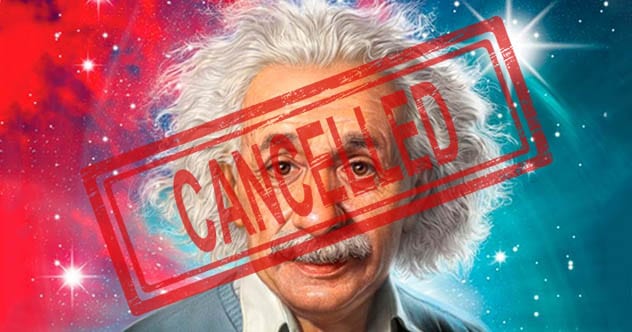
Top 10 Great Scientists Who Would Be #Cancelled Today
Jul
Note: “Cancelled” is used here as a modern thought experiment, not as a substitute for serious historical accountability. These scientists made real contributions, but many also promoted or enabled ideas and actions that would trigger intense ethical scrutiny today.
History loves a genius. Give us a rumpled coat, a chalkboard full of symbols, and an expression that suggests someone has just invented gravity in the break room, and we are ready to build a statue. But science history is not a superhero movie. Some of its biggest names produced breakthroughs that changed medicine, technology, spaceflight, and modern lifewhile also carrying beliefs, making choices, or supporting systems that look appalling through a twenty-first-century ethical lens.
That does not mean their scientific work disappears. It does mean we should stop treating intelligence as a moral force field. A person can help unlock the structure of DNA, revolutionize electronics, or send rockets toward the Moon and still say, do, or support things that deserve criticism. In fact, one of the best lessons from controversial scientists is that brilliance can coexist with bias, cruelty, arrogance, and spectacularly bad judgment.
Here are 10 great scientists who would likely face a very rough day on social media, campus panels, museum plaques, and probably several group chats if they were operating today.
Why These Scientists Would Face Backlash Today
Modern science is expected to follow standards that earlier generations often ignored: informed consent, respect for human dignity, evidence-based claims, transparency, and the rejection of racism and eugenics. Those standards are not perfect, and modern institutions still make serious mistakes. But the basic principle is clear: being smart does not give anyone permission to treat people as laboratory material, rank human beings by race, or use scientific language to decorate prejudice.
Several names on this list were shaped by the values of their own era. That context matters because history should be understood, not flattened into a meme. Still, context is not a magic eraser. Plenty of people in the same periods opposed slavery, racism, eugenics, forced sterilization, Nazi ideology, and medical abuse. The better question is not, “Were they products of their time?” It is, “What did they choose to do with the influence they had?”
1. James Watson
James Watson helped transform biology through his role in identifying the double-helix structure of DNA. That achievement helped launch modern molecular biology, genetics, biotechnology, and much of the science that now sits behind medical testing and gene research. On the scientific scoreboard, that is an enormous contribution.
But Watson’s later public comments about race, intelligence, gender, and other groups repeatedly overshadowed his scientific legacy. Cold Spring Harbor Laboratory publicly rejected his statements on ethnicity and genetics as unsupported by science and severed his remaining honorary roles after he repeated views widely condemned as racist. In today’s academic environment, a scientist making those claims would not merely receive “spirited feedback.” They would likely face professional investigations, public condemnation, lost affiliations, and a viral clip with approximately twelve million angry stitches.
The lesson is simple: a Nobel Prize is not a lifetime subscription to credibility outside your field.
2. William Shockley
William Shockley was one of the key figures behind the transistor, the invention that helped make modern computing, smartphones, telecommunications, and Silicon Valley possible. Without transistor technology, your laptop would probably be the size of a refrigerator and your phone would have a carrying handle.
Shockley’s later years, however, were dominated by racist theories about intelligence and heredity. He promoted eugenic ideas, argued for racial differences in intelligence, and supported policies tied to selective reproduction. His ideas were not simply controversial in a harmless “let’s debate this over coffee” way; they relied on scientifically flawed assumptions and helped revive racist thinking under the costume of data. Stanford’s own historical project documents his obsession with proving white intellectual superiority and his involvement with eugenic organizations.
Today, a famous technology founder expressing those views would not be celebrated as an eccentric genius. He would be a public-relations disaster with a rapidly shrinking boardroom.
3. Francis Galton
Francis Galton was a Victorian polymath whose work influenced statistics, weather studies, fingerprinting, heredity research, and the language of “nature versus nurture.” He was brilliant, curious, restless, and apparently unable to encounter a human trait without wanting to measure it.
Unfortunately, Galton also coined the term eugenics in 1883. He believed society could be improved by encouraging reproduction among people he considered superior and discouraging it among people he considered inferior. That idea eventually fueled policies involving segregation, forced sterilization, immigration restrictions, and racial hierarchy.
Modern genetics rejects eugenics as both scientifically erroneous and morally unacceptable. The National Human Genome Research Institute describes eugenics as an immoral pseudoscientific theory built on prejudiced ideas about inheritance and “racial improvement.” Galton’s statistical legacy remains important, but his social vision would be met today with immediate condemnationand deservedly so.
4. Charles B. Davenport
Charles Davenport was an American biologist who helped establish genetics research in the United States. He also directed the Eugenics Record Office at Cold Spring Harbor, an institution that became deeply involved in collecting family records, promoting hereditary theories, and pushing eugenic policies.
Davenport’s work helped turn bad ideas into organized systems. The Eugenics Record Office promoted the belief that poverty, criminality, disability, intelligence, and social behavior could be explained through simplistic heredity claims. These flawed theories were used to support immigration restrictions and sterilization programs targeting people labeled “unfit.”
This is an important distinction: Davenport was not merely a person with ugly private opinions. He helped build an institutional machine that gave racism and class prejudice the polish of scientific authority. The National Park Service notes that Eugenics Record Office research was based on false claims and racist assumptions, yet it still influenced public policy and harmed vulnerable people.
5. Louis Agassiz
Louis Agassiz made major contributions to natural history, zoology, geology, and the study of glaciers. His work helped popularize the idea that Earth had experienced ice ages, which was a major scientific advance. In another category, however, he became a leading promoter of racist scientific theories.
Agassiz supported polygenism, the false idea that human racial groups came from separate origins. He used this framework to argue for biological racial differences and hierarchy. In 1850, he commissioned photographs of enslaved Black people in South Carolina for research intended to support his racial theories. The people in those images were not volunteers in a scientific study. They were enslaved human beings whose bodies were used to manufacture evidence for racist pseudoscience.
Harvard’s historical research describes these images as part of Agassiz’s attempt to prove biological racial difference. Today, the project would be recognized not as neutral research but as an abuse of power, consent, and human dignity.
6. J. Marion Sims
J. Marion Sims is often called the “father of modern gynecology” because he developed surgical techniques for treating vesicovaginal fistula, a painful and serious childbirth-related injury. His medical contributions were significant, but the way he pursued them has made his legacy one of the most controversial in American medical history.
In the 1840s, Sims performed repeated experimental surgeries on enslaved Black women without anesthesia. These women could not freely consent under slavery, and their pain was treated as secondary to the surgeon’s ambition and the future medical value of his techniques. Their names deserve to be remembered alongside his, including Anarcha, Betsy, and Lucy.
A modern physician doing anything remotely similar would face criminal charges, loss of medical licensure, civil lawsuits, professional expulsion, and a documentary series before the year was over. Sims’s story is a reminder that medical progress is not automatically ethical progress. Medical innovation that ignores consent is not heroic; it is exploitation wearing a lab coat.
7. Fritz Haber
Fritz Haber helped develop the Haber-Bosch process, which allowed scientists and industry to produce ammonia on a massive scale. This breakthrough transformed agriculture because ammonia became a foundation of synthetic fertilizer. It helped feed billions of people and remains one of the most consequential chemical processes in human history.
Haber also played a central role in developing chemical warfare during World War I. He supervised the deployment of chlorine gas at Ypres in 1915 and became closely associated with the weaponization of chemistry. The same scientific mind that helped turn air into fertilizer also helped turn air into a battlefield weapon.
Haber’s legacy is not easy to summarize because his work had both life-saving and devastating effects. Still, today’s public would not politely shrug at a scientist who helped develop poison gas and then treated it as a patriotic achievement. His career would spark fierce debate about whether technical achievement can ever be separated from the human consequences of its use.
8. Wernher von Braun
Wernher von Braun became one of the most famous rocket engineers of the twentieth century. He played a major role in the development of the V-2 rocket and later helped lead the U.S. space program, including the Saturn V rocket that carried astronauts toward the Moon. His technical influence on spaceflight is enormous.
But von Braun’s path to NASA ran through Nazi Germany. He joined the Nazi Party, became an SS officer, and worked on rocket programs connected to the V-2 weapon system. V-2 rockets were produced using forced labor in brutal conditions, including at the Mittelbau-Dora concentration camp system. Historians have found evidence connecting engineers in the V-2 program to forced labor, while postwar accounts often minimized or obscured that relationship.
NASA itself acknowledges von Braun’s Nazi Party and SS membership, as well as the deadly conditions tied to underground V-2 production. In today’s world, a rocket visionary with that record would not simply become a cheerful space-program mascot in a television special. His hiring would create a moral firestorm bigger than a launchpad exhaust plume.
9. Hans Asperger
Hans Asperger was an Austrian pediatrician whose name became associated for decades with “Asperger syndrome,” a term once used within autism diagnosis. For many years, he was sometimes portrayed as a physician who protected children from Nazi persecution. Later archival research made that comforting story much harder to defend.
Historical evidence indicates that Asperger cooperated with the Nazi medical system and referred some profoundly disabled children to the Am Spiegelgrund clinic in Vienna. That clinic participated in the Nazi child euthanasia program, in which children classified as disabled or “unfit” were at risk of being killed.
The point is not to flatten a complicated historical record into a single slogan. The point is that modern medicine has a duty to confront what doctors did when they placed ideology above the lives of vulnerable patients. A pediatrician today connected to a system that treated disabled children as disposable would face immediate outrage, legal scrutiny, and professional exile.
10. Alexis Carrel
Alexis Carrel was a pioneering surgeon and biologist who won the Nobel Prize in Physiology or Medicine for work on vascular sutures and the transplantation of blood vessels. His research helped lay groundwork for later developments in organ transplantation and cardiovascular surgery.
Carrel also embraced eugenic thinking. In his influential book Man, the Unknown, he argued that society was declining because supposedly inferior people were reproducing too much. He promoted ideas about controlling reproduction, sorting people by perceived value, and reshaping society around biological hierarchy.
Today, a prominent medical researcher promoting those views would be removed from leadership panels before the conference coffee cooled down. Carrel’s case shows how dangerous it can be when medical authority becomes mixed with fantasies about “improving” humanity. A surgeon can be gifted with a scalpel and still be disastrously wrong about society.
What We Can Learn From the Experience of Studying Controversial Scientists
Reading about these scientists can feel uncomfortable because it ruins the clean version of history. We like our great thinkers packaged neatly: discoverer, inventor, pioneer, genius. The trouble is that real people rarely arrive in neat packaging. Some of the most celebrated figures in science were capable of extraordinary insight in one area and extraordinary blindness in another.
The first experience many readers have is disbelief. How could someone intelligent believe something so obviously wrong? But intelligence does not automatically create wisdom, humility, empathy, or moral courage. A person can understand advanced mathematics and still use bad assumptions about race. They can build rockets and still ignore the suffering of forced laborers. They can invent new surgical techniques and still fail to recognize the humanity of the people whose bodies made those techniques possible.
The second experience is often frustration with the word “genius.” Society tends to use genius as a permission slip. We excuse cruelty because someone changed the world. We call arrogance “eccentricity.” We call harmful behavior “complicated.” We call prejudice “a product of the times.” Sometimes those phrases are useful, but they can also become a luxury blanket thrown over ugly facts.
A better way to study science history is to hold two ideas at once. First, the achievements were real. DNA research, modern electronics, surgical advances, fertilizer chemistry, statistical methods, and spaceflight all changed human life. Second, the harms were also real. Racist theories shaped policy. Eugenics encouraged coercive sterilization. Medical experiments exploited enslaved and disabled people. War technologies killed civilians and relied on forced labor.
This approach does not erase scientific accomplishments. It makes the story more honest. Instead of asking whether a scientist deserves to be remembered as either saint or villain, we can ask better questions. Who benefited from their work? Who paid the price? What assumptions shaped their research? Who was ignored, harmed, or denied credit? What safeguards were missing? And what can modern scientists do differently?
The experience also teaches us to be skeptical when science is used to rank human worth. Scientific language can sound powerful, especially when it comes with charts, measurements, gene talk, and someone wearing a blazer near a microphone. But data can be collected badly. Categories can be invented badly. Questions can be designed badly. A spreadsheet does not become moral simply because it has columns.
Today’s researchers have better ethical frameworks than many of these historical figures had. Institutional review boards, informed consent, peer review, research ethics training, disability advocacy, anti-racism standards, and public accountability all exist for a reason. They are not bureaucratic decorations. They are guardrails built from painful lessons.
The final lesson is perhaps the most useful: admire discoveries, but do not worship discoverers. Science works best when it is willing to correct itself, question authority, and recognize that no reputation is too large for scrutiny. The microscope is supposed to help us see clearly. History should do the same.
Conclusion: Genius Is Not an Ethical Get-Out-of-Jail Card
The story of these controversial scientists is not really about internet outrage, hashtags, or imagining Isaac Newton getting ratioed on social media. It is about accountability. Great discoveries do not cancel out harmful beliefs, unethical research, racism, eugenics, forced labor, or the abuse of vulnerable people.
Some of these figures would probably lose jobs, honors, platforms, institutional support, and public trust if they were active today. Others would face much more serious consequences. That is not proof that modern society is too sensitive. It is evidence that scientific ethics have evolvedand that they still need to keep evolving.
The healthiest way to remember great scientists is neither blind praise nor lazy condemnation. It is honest recognition: celebrate the discovery, confront the damage, remember the people harmed, and refuse to let genius become an excuse for injustice.

