
Beauty Tools & Accessories
Smelly Ultrasound
Jun
“Smelly ultrasound” sounds like the name of a terrible band, a suspicious hospital hallway, or the world’s most awkward baby shower gift. But the phrase is more interesting than it first appears. It points to a strange intersection of sound waves, medical imaging, brain science, smell perception, ultrasound gel, infection control, and the future of immersive technology. In other words, it is not just about a machine that smells funny. It is about whether ultrasound can help us see inside the body, guide procedures, and perhaps even trigger the sensation of smell without an actual odor in the room.
For most people, ultrasound means a screen, a wand-like probe, a cool blob of gel, and a technician who politely knows more about your internal organs than you do. In medicine, ultrasound uses high-frequency sound waves to create real-time images of soft tissues, organs, blood flow, and fetal development. It does not use ionizing radiation, which is one reason it is widely used in pregnancy, heart exams, abdominal scans, breast imaging, biopsies, and emergency care.
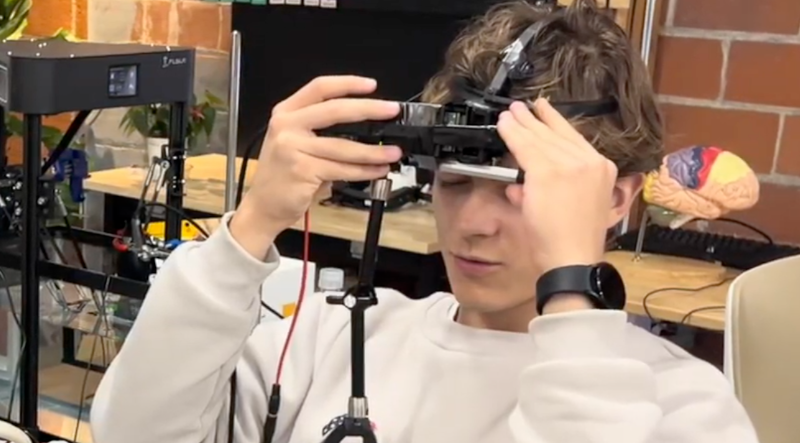
But the word “smelly” adds a twist. Recent experiments and tech coverage have explored whether focused ultrasound aimed near the olfactory system can create smell-like sensations. Reports describe perceived scents such as fresh air, ozone, campfire, or something less charming, like old fruit peels. That does not mean your local clinic’s ultrasound machine is secretly making you smell toast. It means researchers are probing a weird and fascinating question: can carefully targeted sound energy interact with the brain’s smell-processing pathways?
What Is Ultrasound, Really?
Ultrasound is sound above the range of human hearing. In medical imaging, a transducer sends sound waves into the body and receives echoes as those waves bounce back from tissues, fluids, and organs. A computer turns those echoes into moving images. If that sounds like sonar, that is because the principle is similar: send out a wave, listen for the return, and learn something about what is hidden.
The everyday medical version is practical, not mysterious. A sonographer applies gel to the skin because air blocks sound transmission. The gel fills tiny air gaps between the probe and the body, helping sound waves move efficiently. Then the probe glides across the area being examined while images appear on a monitor. Doppler ultrasound can also show the movement of blood, which is useful for evaluating circulation, heart function, clots, and other vascular concerns.
Ultrasound is valued because it is portable, fast, noninvasive, and capable of showing motion in real time. A CT scan may offer detailed cross-sectional views, and MRI can provide excellent soft-tissue contrast, but ultrasound has the charm of being available at the bedside, in clinics, and sometimes even in ambulances. It is the medical imaging tool that shows up wearing sneakers instead of a tuxedo.
So Why Would Ultrasound Be “Smelly”?
There are two main ways to understand the phrase. The first is ordinary and very human: ultrasound rooms can have smells. Gel may have a mild scent, disinfectants may smell sharp, and hospitals often carry that unmistakable “clean but anxious” aroma that says, “Someone here owns a clipboard.” The second meaning is more futuristic: ultrasound may be able to influence smell perception by stimulating parts of the olfactory system.
The olfactory bulb is one of the brain’s key smell-processing structures. It sits near the front of the brain, close to the nasal cavity. Smell is unusually emotional compared with many senses because olfactory pathways are closely tied to memory and feeling. That is why one whiff of sunscreen can send you back to a childhood beach trip, while the smell of cafeteria pizza can awaken memories you were not emotionally prepared to revisit.
Independent researchers have publicly described experiments in which focused ultrasound was directed toward the scent-processing region, reportedly producing smell-like sensations in a tiny number of people. Because the early work involved very small samples and experimental setups, it should be treated as fascinating but preliminary. It is not a consumer product, not a medical treatment, and definitely not a weekend project for curious gadget fans.
How Could Sound Create a Smell Without an Odor?
The basic idea is that smell is not only about molecules entering the nose. It is also about the nervous system interpreting signals. Normally, odor molecules bind to receptors in the nasal cavity, and those signals travel to the olfactory bulb and onward through brain networks involved in perception, memory, and emotion. If a technology can influence those pathways directly, the brain might register a smell-like experience even when no matching odor is present.
That does not mean sound waves are turning into perfume. Ultrasound is not secretly a tiny candle. Instead, focused ultrasound can deliver mechanical energy to targeted tissue. In established medical contexts, ultrasound can image tissue, guide needles, measure blood flow, and, at higher intensities under strict medical control, treat certain conditions. In brain research, focused ultrasound is being studied for neuromodulation, drug delivery, and other advanced applications. The smell experiments sit in that broader world of “can sound influence neural activity?”
Still, the responsible answer is caution. Early demonstrations do not prove that we are one software update away from smelling digital coffee in virtual reality. Human smell is complex, individual, and deeply tied to biology. A smell that one person describes as “fresh air” might feel to another person like “airport bathroom after a thunderstorm.” Science is magical, but noses are dramatic.
Medical Ultrasound: Safe, Useful, and Not a Toy
Diagnostic ultrasound has an excellent safety record when used properly by trained healthcare professionals. It does not use ionizing radiation, which makes it different from X-rays and CT scans. However, ultrasound still delivers energy into tissue. Under certain settings, it can produce slight heating or mechanical effects. That is why medical organizations recommend prudent use, especially in pregnancy and fetal imaging.
This matters because “smelly ultrasound” can sound playful, but ultrasound devices are not toys. The same broad family of technology includes routine scans, Doppler fetal heart monitoring, ultrasound-guided biopsies, echocardiograms, and high-intensity focused ultrasound treatments. The difference between useful imaging and risky misuse depends on equipment, energy level, training, target tissue, duration, and medical purpose.
So, if you read about someone creating smell sensations with ultrasound, the takeaway should not be “where can I buy a probe?” The takeaway should be: the nervous system is astonishing, ultrasound is versatile, and experimental brain stimulation belongs in controlled research environments with safety review, not in the garage next to the half-repaired lawn mower.
The Surprisingly Important Role of Ultrasound Gel
Now let us return to the less glamorous but very real smell issue: ultrasound gel. That clear, slippery gel is essential because air interferes with the transmission of sound waves. Without gel, image quality suffers. With gel, the probe makes better contact with the skin and the machine can produce clearer images.
Most ultrasound gel is water-based and designed to be gentle on skin. It usually has little to no scent, though some patients notice a faint chemical, plastic-like, or slightly medicinal smell. Warmed gel may smell more noticeable than room-temperature gel. If the room has strong disinfectant odor, the gel may seem guilty even when it is innocent. Gel is basically the quiet intern of ultrasound: doing the important work while everyone complains about its texture.
In clinical settings, gel handling matters for hygiene. Single-use sterile gel is preferred for invasive procedures, exams involving nonintact skin, neonatal exams, and situations where infection risk is higher. Multidose gel bottles must be handled carefully, sealed properly, not refilled, and kept from touching patients, probes, or other surfaces. If a gel bottle smells strange, looks contaminated, or seems improperly stored, staff should replace it. In healthcare, “probably fine” is not a sterilization strategy.
Probe Cleaning and the Smell of Disinfectant
Another reason ultrasound rooms may smell distinctive is transducer cleaning. External probes require cleaning between patients, and internal probes require higher-level disinfection because they contact mucous membranes. Facilities also clean scanner surfaces, cords, keyboards, gel warmers, and exam tables. The result can be a room that smells like disinfectant, gloves, paper sheets, and nervous small talk.
That smell is not automatically bad. In many cases, it is evidence that infection prevention practices are happening. But overpowering chemical smells, visibly dirty equipment, dried gel on probes, or open gel containers can make patients uneasy. A good clinic should be able to explain its cleaning routine without acting as if you asked for the launch codes.
Patients should feel comfortable asking simple questions: “Has the probe been cleaned?” “Is this sterile gel?” “Will the gel be wiped off afterward?” “Is this an internal or external ultrasound?” These are reasonable questions, not diva behavior. Medical care works better when patients understand what is happening and why.
Could Smelly Ultrasound Change Virtual Reality?
One of the most exciting possibilities is virtual reality. Today’s VR mainly targets sight and sound, with some haptic feedback. Smell remains difficult because real odor delivery usually requires cartridges, airflow, cleanup, and timing. If you want a virtual forest to smell like pine, someone must release a pine-like scent. If the next scene is a spaceship, the pine must disappear quickly unless the spaceship belongs to a very outdoorsy alien.
Ultrasound-based smell perception, if it ever becomes safe, reliable, and scalable, could change that. A headset might someday create the sensation of smoke, rain, fresh bread, ocean air, or engine oil without spraying chemicals into the room. That could help games, films, training simulations, museums, therapy tools, and remote presence systems feel more immersive.
But the challenges are huge. The system would need to be safe for repeated use, personalized to different anatomy, carefully regulated, comfortable, affordable, and consistent. It would also need to avoid unpleasant surprises. Nobody wants to play a cozy farming game and randomly smell burnt electronics because the calibration had a bad day.
What Smell Science Teaches Us About Memory
Smell is powerful because it is tied to memory and emotion. A perfume can bring back a person. A kitchen smell can bring back a holiday. A hospital smell can bring back fear, relief, grief, or gratitude. That emotional intensity is why “smelly ultrasound” captures attention. It combines a clinical tool with one of the most intimate senses we have.
In medical imaging, ultrasound shows the inside of the body. In olfactory research, smell reveals something about the inside of the mind. Put the two together and the topic becomes a little absurd, a little brilliant, and very human. We are creatures who can diagnose a gallbladder with sound waves and still be emotionally defeated by the smell of old gym socks.
Common Myths About Smelly Ultrasound
Myth 1: A normal ultrasound should smell strong
Most routine ultrasound exams should not smell strongly. A mild gel scent or disinfectant odor is common, but a foul or unusual smell should be mentioned to staff.
Myth 2: Ultrasound smell experiments are ready for home use
No. Experimental olfactory ultrasound is early-stage research and should not be copied outside proper safety-controlled settings.
Myth 3: Ultrasound gel is just decoration
Absolutely not. Gel helps sound waves pass between the probe and the body. Without it, the image quality can drop quickly.
Myth 4: If ultrasound does not use radiation, it can be used casually
Ultrasound is generally safe when used appropriately, but professional guidance still matters. Medical use should be purposeful and performed by trained providers.
Experiences Related to Smelly Ultrasound
The most common “smelly ultrasound” experience is not futuristic at all. It is the patient who walks into an imaging room and notices a clean, chemical scent before noticing the machine. The paper sheet crinkles. The monitor glows. The gel bottle sits in a warmer like a tiny spa guest. Then comes the first cold or warm smear of gel, and suddenly the patient is thinking less about anatomy and more about why medicine has not yet invented a gel that feels like room-temperature silk.
In pregnancy scans, the emotional experience can be intense. A patient may remember the smell of disinfectant, the soft hum of the equipment, and the moment a heartbeat appears on screen. The smell becomes part of the memory, even if it is not pleasant. Years later, walking into another clinic can bring that moment back instantly. That is the quiet power of scent: it records the room around the event.
In emergency departments, ultrasound may feel completely different. A clinician may use a portable device quickly at the bedside to check fluid, heart movement, abdominal concerns, or blood flow. The smell might be gloves, sanitizer, and warmed plastic. There is no dramatic movie soundtrack, just a practical tool answering urgent questions. In that setting, ultrasound is less “miracle machine” and more “flashlight for the inside of the body.” Very useful, slightly gooey.
For sonographers, smell can be part of workflow awareness. A normal day includes gel, disinfectant wipes, probe covers, laundry carts, exam tables, and equipment fans. If something smells off, it may signal a spill, old gel, a cleaning issue, or a room that needs attention. Good imaging departments take those details seriously because patient comfort and infection control are connected. A clean room should not feel like a mystery novel titled The Case of the Questionable Probe.
For technology enthusiasts, the experimental smell-by-ultrasound idea feels like science fiction climbing into real life with muddy shoes. Imagine a future museum exhibit where visitors explore ancient markets and smell spices without actual spice dispensers. Imagine firefighter training simulations where smoke smell is represented safely without filling a room with irritants. Imagine culinary VR where a digital bakery finally smells like bread instead of your living room couch. The possibilities are funny, useful, and slightly unsettling.
But the best experience-related advice is simple: separate curiosity from caution. In a clinic, speak up if a smell seems unusual or equipment appears unclean. In tech research, enjoy the wonder but respect the risks. “Smelly ultrasound” is a memorable phrase because it is strange, but the real story is serious: sound can reveal hidden structures, hygiene protects patients, and the brain’s sense of smell may be more reachable than we once imagined.
Conclusion
Smelly ultrasound is more than a quirky headline. It is a doorway into how ultrasound works, why gel matters, how infection control protects patients, and how researchers are exploring the relationship between sound and smell perception. In everyday medicine, ultrasound remains a trusted imaging tool because it is fast, flexible, noninvasive, and radiation-free. In experimental science, focused ultrasound may someday help create smell-like sensations for virtual reality, neuroscience, or new forms of sensory communication.
The topic is funny because it sounds ridiculous. It is important because it touches real medicine and real safety. And it is fascinating because it reminds us that the human body is not a simple machine. It is a concert of echoes, signals, memories, and sometimes, apparently, imaginary campfires.

