
Beauty Tools & Accessories
Occupational Therapy vs. Physical Therapy: How Do They Differ?
Jun
Occupational therapy and physical therapy sound like two cousins who show up at the same family reunion wearing matching sneakers. They both help people recover, move better, function better, and return to daily life after injury, illness, surgery, disability, or age-related changes. But they are not the same profession, and understanding the difference can save patients time, confusion, and possibly a few awkward clinic conversations that begin with, “Wait, aren’t you the one who helps me walk?”
The simple version is this: physical therapy, often called PT, focuses mainly on improving movement, strength, balance, flexibility, pain, mobility, and physical function. Occupational therapy, often called OT, focuses on helping people perform meaningful daily activities, from bathing and dressing to cooking, working, writing, driving, managing routines, or safely navigating home life. One is not “better” than the other. They are different tools in the same rehabilitation toolbox, and many people benefit from both.
This guide breaks down occupational therapy vs. physical therapy in clear, practical language, with real-life examples, key differences, similarities, treatment goals, and tips for choosing the right type of therapy.
What Is Occupational Therapy?
Occupational therapy helps people participate in the activities they need, want, or are expected to do in daily life. In OT, the word “occupation” does not only mean a job. It means everyday activities that give life structure and meaning. That can include brushing your teeth, getting dressed, returning to school, preparing meals, using a computer, playing with your child, managing medications, or getting back to a favorite hobby without turning your living room into an obstacle course.
Occupational therapists work with people of all ages. A child with developmental delays may see an OT to build fine motor skills for handwriting, dressing, or feeding. An adult recovering from a stroke may work with an OT to relearn one-handed dressing techniques or use adaptive equipment. An older adult with arthritis may learn safer ways to cook, bathe, conserve energy, and reduce fall risk at home.
Common Occupational Therapy Goals
OT goals are usually built around independence, safety, confidence, and participation. A therapist may help a patient improve:
- Activities of daily living, such as bathing, dressing, toileting, grooming, and eating
- Instrumental daily activities, such as cooking, cleaning, shopping, money management, and medication routines
- Fine motor skills, hand strength, coordination, and dexterity
- Cognitive skills, including planning, attention, memory, and problem-solving
- Home safety, fall prevention, and environmental modifications
- Energy conservation for chronic illness, pain, or fatigue
- Use of adaptive tools, splints, braces, grab bars, shower chairs, reachers, or modified utensils
- Return to work, school, hobbies, social activities, and community participation
In other words, OT asks, “What does this person need to do in real life, and how can we make that possible?” It is practical, creative, and occasionally MacGyver-like. If there is a safer way to open a jar, button a shirt, use a laptop, or shower without risking a slip, an OT has probably thought about it.
What Is Physical Therapy?
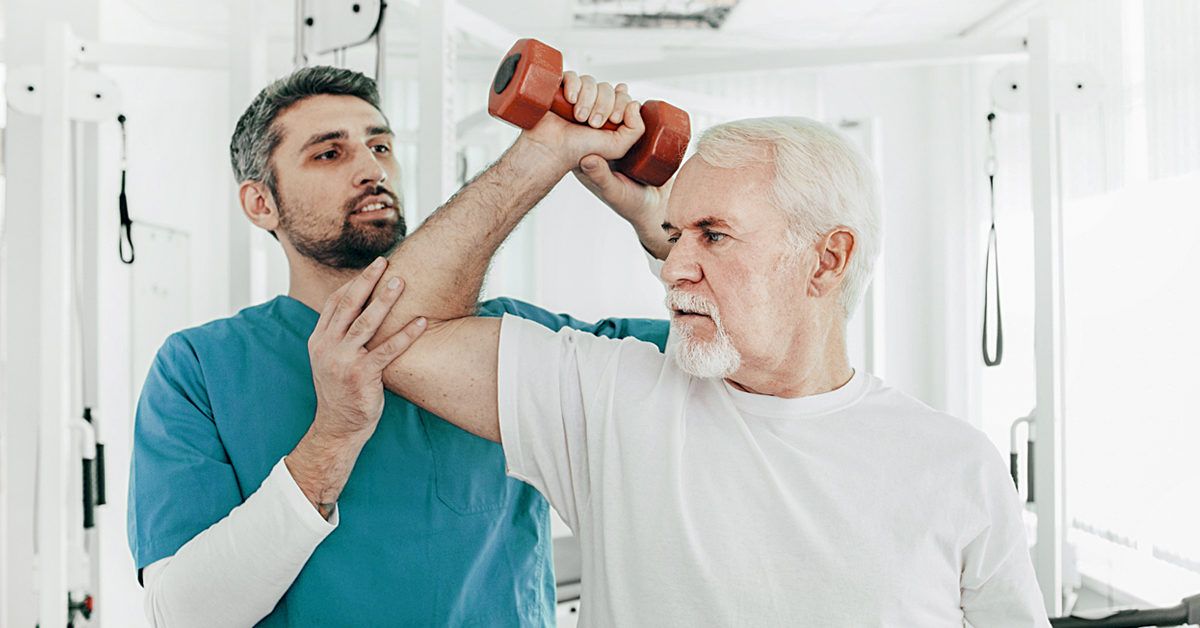
Physical therapy focuses on movement, mobility, strength, flexibility, posture, balance, endurance, pain reduction, and physical recovery. Physical therapists are movement specialists who evaluate how the body moves and create treatment plans to improve function. If occupational therapy is about doing daily tasks more independently, physical therapy is often about improving the physical foundation that makes those tasks possible.
A person may see a physical therapist after knee replacement surgery, a sports injury, back pain, stroke, fracture, balance problems, neurological conditions, or general weakness after a hospital stay. PT can be short-term, such as a few weeks after an ankle sprain, or longer-term, such as therapy for Parkinson’s disease, multiple sclerosis, spinal cord injury, or chronic pain.
Common Physical Therapy Goals
PT goals often focus on restoring or improving the body’s ability to move safely and efficiently. A physical therapist may help a patient improve:
- Walking, transfers, stair climbing, and overall mobility
- Muscle strength and endurance
- Balance and fall prevention
- Joint range of motion and flexibility
- Posture, body mechanics, and movement patterns
- Pain management through exercise, manual therapy, education, and other treatment techniques
- Recovery after surgery, injury, or prolonged illness
- Sports performance, conditioning, and safe return to activity
PT often asks, “How can we help this person move better, hurt less, and regain physical function?” That may involve exercises, stretching, manual techniques, gait training, balance work, strengthening programs, education, and a home exercise plan that the patient promises to do faithfully. Whether everyone actually does the home exercises is another matter, but the intention is noble.
Occupational Therapy vs. Physical Therapy: The Main Difference
The main difference between occupational therapy and physical therapy is the focus of treatment. Physical therapy focuses on improving movement and physical ability. Occupational therapy focuses on using those abilities to complete meaningful daily activities.
For example, after a hip replacement, a physical therapist may teach a patient how to walk safely with a walker, climb stairs, improve hip strength, and reduce stiffness. An occupational therapist may teach the same patient how to get dressed without bending too far, use a raised toilet seat, safely step into the shower, organize the bedroom to reduce fall risk, and return to normal morning routines without turning breakfast into a full-contact sport.
Both therapies can overlap. Both may address strength, balance, coordination, safety, mobility, and function. But their lens is different. PT often starts with body movement. OT often starts with the activity the person wants or needs to perform.
How OT and PT Work Together
In hospitals, rehabilitation centers, outpatient clinics, schools, home health, and nursing facilities, occupational therapists and physical therapists often work as a team. This collaboration is especially common after stroke, major surgery, traumatic injury, neurological disease, or long hospital stays.
Imagine someone recovering from a stroke. A physical therapist may help the patient regain leg strength, balance, and walking ability. The occupational therapist may help the patient relearn dressing, bathing, meal preparation, hand use, visual scanning, problem-solving, and home safety. Speech-language therapy may also be involved if the person has communication, swallowing, or cognitive challenges. Rehabilitation is rarely a solo act; it is more like a carefully coordinated band, ideally with fewer cymbal crashes.
Examples: When You Might Need OT, PT, or Both
After Knee Surgery
Physical therapy is commonly needed after knee replacement, ACL repair, or other knee surgeries. PT may focus on reducing swelling, improving range of motion, rebuilding strength, walking properly, and returning to stairs or exercise. Occupational therapy may be involved if the person struggles with dressing, bathing, household tasks, or safe routines during recovery.
After a Stroke
Both OT and PT are often important after stroke. PT may address walking, transfers, balance, and strength. OT may address daily activities, arm and hand function, adaptive strategies, cognition, home setup, and caregiver training. The goal is not just movement for movement’s sake; it is helping the person return to life as fully and safely as possible.
For Arthritis
A physical therapist may help someone with arthritis improve joint mobility, strengthen surrounding muscles, and learn safe exercises. An occupational therapist may recommend joint protection strategies, modified tools, splints, ergonomic changes, and easier ways to cook, clean, write, type, or dress without aggravating pain.
For Children
Children may receive OT for sensory processing challenges, feeding, handwriting, dressing skills, play skills, or developmental delays. They may receive PT for gross motor delays, walking issues, strength, posture, balance, or coordination. In schools, therapy goals often connect directly to participation in the educational environment.
For Older Adults
Older adults may benefit from PT for fall prevention, strength, balance, walking, and recovery after illness or surgery. OT may help with home safety, bathroom modifications, adaptive equipment, medication routines, energy conservation, and strategies for aging in place. Together, they can help a person stay safer and more independent at home.
Education and Training: OT vs. PT
In the United States, both occupational therapists and physical therapists are licensed healthcare professionals with graduate-level education. Physical therapists typically earn a Doctor of Physical Therapy degree and must pass a national licensing exam. Occupational therapists typically enter the field with a master’s or doctoral degree in occupational therapy and must also meet licensing requirements.
Both professions may pursue specialty training. Occupational therapists may specialize in areas such as hand therapy, pediatrics, mental health, low vision, rehabilitation, assistive technology, or aging-related care. Physical therapists may specialize in orthopedics, sports, neurology, geriatrics, pediatrics, cardiovascular and pulmonary rehabilitation, women’s health, wound care, or other areas.
For patients, the most important point is simple: both OT and PT are evidence-informed professions that require serious training, clinical judgment, and individualized care planning. They are not just “exercise people” or “people who hand out grab bars.” Although, to be fair, a well-placed grab bar can be a bathroom superhero.
What Happens During an Occupational Therapy Visit?
An occupational therapy visit usually begins with an evaluation. The therapist asks about your health history, daily routines, challenges, goals, home setup, work or school needs, pain, strength, coordination, cognition, and support system. The OT may watch how you perform certain tasks, such as dressing, reaching, writing, transferring, using your hands, or moving safely through a simulated environment.
Treatment may include task practice, hand exercises, cognitive strategies, adaptive equipment training, splinting, environmental modifications, caregiver education, or step-by-step routines. The therapist may help you practice the exact task that matters to you, whether that is getting in and out of the shower, cooking safely, typing after a wrist injury, or holding a fork after neurological changes.
What Happens During a Physical Therapy Visit?
A physical therapy visit also begins with an evaluation. The therapist may assess strength, flexibility, balance, gait, posture, joint mobility, pain, range of motion, endurance, and movement patterns. The PT will ask about your goals, such as walking without a cane, returning to running, climbing stairs, recovering after surgery, or lifting a grandchild without making your lower back file a formal complaint.
Treatment may include therapeutic exercises, stretching, manual therapy, balance training, gait training, neuromuscular re-education, pain-relief strategies, education, and a home exercise program. PT is often active and progressive, meaning exercises may become more challenging as your body improves.
Which Therapy Should You Choose?
The right choice depends on the problem you are trying to solve. Choose physical therapy if your main concern is movement, walking, pain, strength, balance, flexibility, recovery after orthopedic surgery, or returning to sports and exercise. Choose occupational therapy if your main concern is completing daily tasks, using your hands, adapting your home, returning to work or school, managing routines, improving independence, or learning safer ways to function with an injury, disability, or chronic condition.
However, real life is not always neatly divided. Many people need both. If you are unsure, ask your doctor, rehabilitation team, insurance provider, or local therapy clinic which service best fits your condition. Some states and insurance plans allow direct access to therapy, while others may require a referral, prior authorization, or documentation of medical necessity.
Common Myths About OT and PT
Myth 1: Occupational Therapy Is Only About Jobs
Nope. The “occupation” in occupational therapy refers to meaningful daily activities, not just paid employment. OT may help with work tasks, but it also supports self-care, home life, school, leisure, social participation, and independence.
Myth 2: Physical Therapy Is Only for Athletes
Physical therapy helps athletes, but it also helps people recovering from surgery, injuries, strokes, neurological conditions, chronic pain, balance problems, weakness, and age-related mobility changes. You do not need a jersey or a dramatic slow-motion sports injury to qualify.
Myth 3: OT and PT Do the Same Thing
They overlap, but they are not interchangeable. PT often targets movement and physical performance. OT targets practical participation in daily life. Together, they can help a person move better and use that movement in meaningful ways.
Myth 4: Therapy Ends When Pain Improves
Pain relief is important, but therapy may also focus on function, safety, strength, endurance, confidence, prevention, and long-term habits. Feeling better is great. Moving and living better is the bigger prize.
Experience Section: What People Often Notice When Comparing OT and PT
Many patients first understand the difference between occupational therapy and physical therapy only after they experience both. On paper, the distinction sounds clean: PT improves movement, OT improves daily function. In real life, the difference becomes clearer when the therapist starts asking questions. A physical therapist may ask, “How far can you walk? Can you climb stairs? Where does it hurt? What movement makes it worse?” An occupational therapist may ask, “Can you get dressed safely? Can you prepare meals? Is your bathroom set up in a way that helps or hurts you? What activity do you miss most?” Both sets of questions matter, but they look at recovery from different angles.
One common experience is that PT can feel more like rebuilding the engine. Patients often work on muscle strength, joint motion, balance, walking mechanics, and endurance. Sessions may include repetitions, progressions, resistance bands, step-ups, stretches, and carefully supervised movements. At first, the exercises may seem small, even suspiciously simple. Then the next day arrives, and the body politely announces that yes, those tiny movements were absolutely real exercise. Over time, patients may notice they can stand longer, walk farther, climb stairs with less fear, or move with less pain.
OT, on the other hand, can feel like redesigning the driver’s seat, dashboard, and route map so the person can actually use the engine in daily life. A patient recovering from a wrist fracture may build strength in PT, then work with OT on gripping utensils, typing, opening containers, bathing safely, or returning to work tasks. A stroke survivor may practice balance and walking in PT, then practice dressing, kitchen tasks, memory strategies, and safe bathroom routines in OT. The OT session may look less like a workout and more like life practice with expert troubleshooting.
Patients also often notice that occupational therapy is deeply personal. Two people with the same diagnosis may have very different OT goals. One person may want to garden again. Another may want to cook breakfast independently. A parent may want to lift and dress a child. A musician may want to use their hands with precision. A retiree may want to stay safely at home without feeling like the house is secretly plotting against them. OT takes these goals seriously because independence is not abstract; it lives in the small routines that make a day feel normal.
Physical therapy can be just as personal, especially when mobility affects identity. For a runner, returning to a safe jogging pattern may mean freedom. For an older adult, improving balance may mean confidence walking to the mailbox. For someone after surgery, bending a knee a few more degrees may mean getting in and out of a car without performing an accidental interpretive dance. PT turns physical milestones into real-life wins.
The biggest lesson from patient experience is that OT and PT are strongest when they communicate. If a patient can walk farther in PT but still cannot shower safely, recovery is incomplete. If a patient can dress independently in OT but lacks the strength to move around the home safely, something is missing. The best rehabilitation plans connect movement with meaning. That is where occupational therapy and physical therapy stop competing for definitions and start working together like a well-trained team.
Conclusion: OT and PT Are Different, But Both Can Change Lives
Occupational therapy and physical therapy both help people recover, adapt, and participate more fully in life. The difference is mainly in the focus. Physical therapy improves how the body moves. Occupational therapy improves how a person uses skills, strategies, tools, and environments to complete meaningful daily activities. PT may help you walk across the room. OT may help you use that ability to shower safely, cook dinner, return to work, or enjoy a hobby again.
If you are deciding between OT and PT, start with your main challenge. If the problem is movement, pain, strength, balance, or mobility, physical therapy may be the best first step. If the problem is daily function, independence, self-care, hand use, home safety, or adapting routines, occupational therapy may be the better fit. If your recovery touches both areas, you may need bothand that is not overkill. That is smart rehabilitation.
Note: This article is for educational publishing purposes and is based on reputable U.S. healthcare, rehabilitation, professional association, Medicare, and labor information. It should not replace personalized medical advice from a licensed healthcare professional.

