
Beauty Tools & Accessories
Nitroglycerin: Uses, Dosage, Side Effects, Risks, and Interactions
Aug
Nitroglycerin is a fast-acting prescription medication best known for relieving angina, the chest discomfort caused when the heart muscle does not receive enough oxygen-rich blood. It is also available in longer-acting forms that help prevent angina and as a specialized ointment for pain associated with chronic anal fissures.
Although nitroglycerin has been used in medicine for generations, it deserves modern respect. The right formulation and dose can quickly reduce the heart’s workload. The wrong combinationparticularly with certain erectile dysfunction or pulmonary hypertension medicationscan cause a dangerously dramatic drop in blood pressure. In other words, this is not a medication for improvisation.
What Is Nitroglycerin?
Nitroglycerin belongs to a group of medicines called nitrates or nitrate vasodilators. Inside the body, it contributes to the formation of nitric oxide, a signaling molecule that relaxes smooth muscle in blood vessel walls. The veins generally respond more strongly than the arteries, so less blood returns to the heart with each beat. That reduces pressure inside the heart and lowers the amount of oxygen the heart muscle needs.
Nitroglycerin may also widen coronary blood vessels and improve blood flow in areas where the vessels are capable of relaxing. The combined result is a heart that can do its job with less strainessentially giving the cardiac engine a slightly easier hill to climb.
Nitroglycerin Does Not Remove Artery Blockages
A dose may relieve angina, but it does not dissolve cholesterol plaques, cure coronary artery disease, or rule out a heart attack. Long-term cardiovascular treatment may also involve cholesterol-lowering medication, antiplatelet therapy, blood pressure management, exercise, nutrition changes, smoking cessation, or procedures to restore blood flow.
What Is Nitroglycerin Used For?
Rapid Relief of an Angina Attack
Sublingual tablets and lingual sprays are used at the beginning of an angina episode. Because the medication is absorbed through tissues in the mouth, it can begin working much faster than a conventional swallowed tablet. People with predictable stable angina may also be instructed to take a dose shortly before exercise, sexual activity, climbing stairs, or another activity known to trigger symptoms.
Prevention of Recurring Angina
Nitroglycerin patches and 2% topical ointment release medication more gradually. These forms are intended to reduce the frequency of angina during a planned period of the day. They are not fast enough to serve as rescue treatments during an acute attack. A person using a patch may therefore also have a separate prescription for sublingual tablets or spray.
Chronic Anal Fissure Pain
Nitroglycerin 0.4% intra-anal ointment may be prescribed for moderate to severe pain caused by a chronic anal fissure. By relaxing the internal anal sphincter and improving local blood flow, the medication may reduce pressure and support healing. This product is different from the 2% skin ointment used for angina and must not be substituted for it.
Hospital Uses
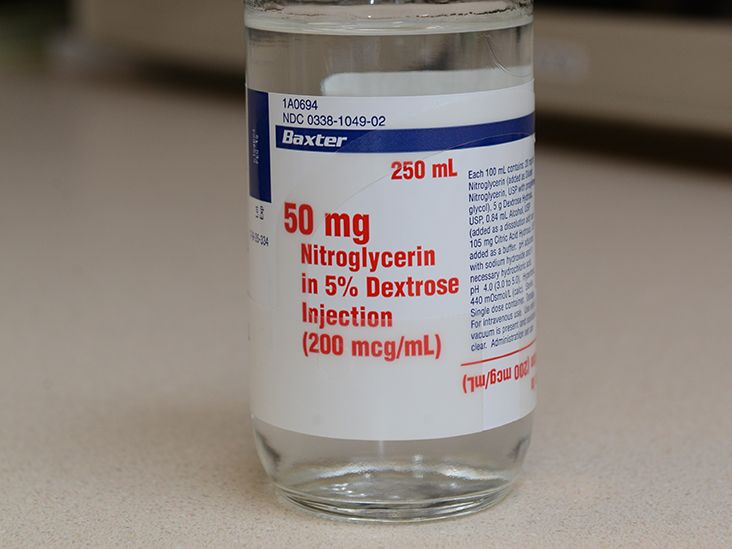
Intravenous nitroglycerin may be used in closely monitored hospital settings for selected patients with acute coronary syndromes, severe hypertension, acute heart failure, or pulmonary edema. The infusion is adjusted according to blood pressure, symptoms, and clinical response. This is specialist territory, complete with monitors, pumps, and people who understand what all the alarms mean.
Nitroglycerin Forms and Typical Dosages
Nitroglycerin products are not interchangeable. A “dose” may mean a fraction of a milligram under the tongue, a measured spray, a patch that releases medication hourly, or an inch of ointment. The prescription label and clinician’s instructions always take priority over general dosage information.
| Form | Common purpose | Typical U.S. label directions |
|---|---|---|
| Sublingual tablet | Relieve or prevent an acute angina episode | One 0.3, 0.4, or 0.6 mg tablet under the tongue or in the cheek pouch. Another tablet may be used every five minutes if prescribed, with no more than three tablets in 15 minutes. |
| Lingual spray | Relieve or prevent acute angina | One or two 400-microgram sprays on or under the tongue. Additional dosing may be allowed after five minutes, but no more than three sprays should be used within 15 minutes. |
| Transdermal patch | Prevent angina over several hours | A common starting release rate is 0.2 to 0.4 mg per hour. Many regimens use the patch for 12 to 14 hours, followed by a patch-free period. |
| Topical 2% ointment | Prevent angina | The prescribed length of ointment is measured on the supplied applicator. One labeled starting regimen uses one-half inch twice daily, with doses about six hours apart and a daily nitrate-free period. |
| Intra-anal 0.4% ointment | Chronic anal fissure pain | One inch of ointment, equal to approximately 1.5 mg of nitroglycerin, applied every 12 hours for up to three weeks. |
| Intravenous infusion | Selected cardiovascular emergencies | Individually adjusted by medical professionals in a monitored setting. |
These examples come from U.S. product labeling and may not match every brand, condition, or patient. Never double a dose because symptoms are being stubborn, and never borrow another person’s nitroglycerin.
How to Use Sublingual Nitroglycerin Safely
- Stop the activity and sit down. Nitroglycerin can lower blood pressure quickly, so standing adds an unnecessary opportunity to meet the floor.
- Place the tablet under the tongue. Let it dissolve without chewing, crushing, or swallowing it. A spray should be directed on or under the tongue and should not be inhaled.
- Use only the prescribed amount. Follow the specific plan provided by the clinician who treats your angina.
- Pay attention to the symptom pattern. Pain that is stronger, lasts longer, occurs at rest, or feels different from usual may represent unstable angina or a heart attack.
- Do not delay emergency care. Call 911 immediately for severe, new, worsening, persistent, or unusual chest discomfort, particularly when it occurs with shortness of breath, sweating, nausea, weakness, or fainting. Do not drive yourself.
Product labels commonly allow repeated doses five minutes apart, up to three doses in 15 minutes. However, a person should not patiently complete a three-dose experiment while serious symptoms are escalating. Follow the emergency plan created by your healthcare professional, and call 911 when symptoms are not promptly relieved or are different from your normal angina.
Common Nitroglycerin Side Effects
Most nitroglycerin side effects result from blood vessel relaxation. They are often more noticeable when treatment begins or when the dose increases.
- Throbbing or pounding headache
- Dizziness or lightheadedness
- Facial warmth or flushing
- Weakness or unusual fatigue
- Nausea
- Awareness of the heartbeat or palpitations
- Low blood pressure, especially after standing
- Skin irritation where a patch or ointment is applied
Headache is especially common because blood vessels in the head also respond to nitrates. It can be annoying enough to make a person glare suspiciously at the medicine bottle, but changing or skipping the prescribed schedule without medical guidance may reduce the medication’s benefit. Ask a clinician which pain reliever, if any, is appropriate.
Serious Reactions
Seek urgent medical help for fainting, severe weakness, confusion, difficulty breathing, a severe allergic reaction, or signs of profound low blood pressure such as cold clammy skin, marked paleness, and collapse. Excessive exposure may cause dangerous hypotension and, rarely, methemoglobinemia, a condition in which hemoglobin cannot carry oxygen normally. Bluish or gray skin, severe breathlessness, confusion, seizures, or loss of consciousness require emergency care.
Nitroglycerin Risks and Contraindications
Nitroglycerin should not be used in people with certain conditions unless a qualified medical professional has determined that it is appropriate. Major contraindications in U.S. sublingual labeling include severe anemia, increased pressure inside the skull, acute circulatory failure or shock, and allergy to nitroglycerin or related nitrates.
Extra caution may be necessary for people with existing low blood pressure, dehydration, blood-volume depletion, certain valve disorders, hypertrophic obstructive cardiomyopathy, or a recent heart attack. Older adults may be more vulnerable to dizziness, low blood pressure, and falls. Pregnancy, breastfeeding, pediatric use, and major liver, kidney, or heart conditions should be discussed with the prescriber.
Nitrate Tolerance
Continuous nitrate exposure can make the body less responsive, a phenomenon called tolerance. This is why patches and preventive ointments are often scheduled with a daily nitrate-free interval. Wearing a patch around the clock may seem wonderfully thorough, but more exposure does not necessarily mean more protection. Most patch regimens include roughly 10 to 12 hours without the medication, timed according to when angina is most likely to occur.
Nitroglycerin Drug and Alcohol Interactions
PDE5 Inhibitors: A Dangerous Combination
Do not combine nitroglycerin with phosphodiesterase-5 inhibitors such as sildenafil, tadalafil, vardenafil, or avanafil. These medicines are used for erectile dysfunction, and some are also prescribed for pulmonary hypertension. Combining them with a nitrate can cause severe hypotension, fainting, reduced blood flow to vital organs, or myocardial ischemia.
The interaction applies to every nitroglycerin form, including tablets, sprays, patches, skin ointment, rectal ointment, and intravenous medication. If chest pain develops after taking a PDE5 inhibitor, call 911 and tell emergency personnel exactly which medicine was taken and when. Do not self-administer nitroglycerin while waiting.
Riociguat and Related Medicines
Riociguat, a soluble guanylate cyclase stimulator used for certain forms of pulmonary hypertension, is also contraindicated with nitroglycerin because the combination can dangerously intensify blood pressure reduction.
Other Blood Pressure-Lowering Substances
Antihypertensive medicines, diuretics, beta-blockers, calcium channel blockers, and other vasodilators may add to nitroglycerin’s blood pressure effects. These combinations are not automatically forbidden; many are deliberately prescribed together. They do, however, require appropriate dosing and monitoring.
Alcohol
Alcohol can increase flushing, dizziness, fainting, and low blood pressure. Ask the prescriber whether any alcohol is safe with the specific nitroglycerin regimen. “I only had a little” is not a reliable blood pressure monitoring system.
Additional Interactions
Ergotamine and related migraine drugs may interact with nitroglycerin and are generally avoided or closely monitored. Aspirin can increase nitroglycerin exposure, although the two medicines are frequently used together under medical supervision. Intravenous nitroglycerin may affect heparin or tissue-type plasminogen activator treatment, so hospital clinicians monitor anticoagulation and treatment response when these drugs are combined.
Storage and Handling
Keep sublingual tablets in their original, tightly closed glass container. Do not routinely move them into a plastic pill organizer, where heat, moisture, air, and light may reduce potency. Store the bottle at controlled room temperature and away from bathroom humidity. Check the expiration date and ask a pharmacist when an opened bottle should be replaced.
Keep spray containers away from flames and high heat. Store patches in their sealed pouches until use, remove the old patch before applying a new one, and fold used patches with the adhesive sides together before disposal. Wash your hands after handling ointment, and keep every formulation away from children and pets.
Practical Experiences: What Nitroglycerin Users Often Learn
The following scenarios are educational composites rather than individual medical testimonials. They reflect common practical issues that patients and caregivers discuss with healthcare professionals.
Experience 1: The Medicine Is Useful Only When It Is Nearby
A person with predictable exertional angina may feel perfectly prepared because a nitroglycerin bottle exists somewhere in the house. Unfortunately, chest discomfort may begin in a parking lot, on a staircase, or halfway through an enthusiastic attempt at yard work. The practical lesson is simple: rescue medication should be carried as directed, not displayed at home like a tiny pharmaceutical trophy.
People commonly keep the original bottle in an easily accessible pocket or bag and teach a partner or family member where it is. They also check the expiration date before travel and bring an adequate supply rather than assuming a pharmacy will be conveniently located beside every vacation attraction.
Experience 2: Sitting First Prevents a Second Problem
A fast-acting dose may relieve pressure in the chest while simultaneously producing dizziness. Someone who takes a tablet while standing, then attempts to walk around to “see whether it worked,” may discover that nitroglycerin has opinions about gravity.
A safer routine is to stop, sit down, use the prescribed dose, and remain seated while monitoring symptoms. Standing should be slow and cautious. This habit is particularly important for older adults, people taking several blood pressure medicines, and anyone who is dehydrated or has recently consumed alcohol.
Experience 3: A Changing Angina Pattern Matters
People sometimes become accustomed to recurring chest discomfort and begin treating every episode as routine. However, angina that appears with less activity, lasts longer, occurs more often, awakens someone from sleep, or begins at rest deserves urgent attention. A rescue dose is not permission to ignore a worsening cardiovascular pattern.
Keeping a simple angina log can help. Useful details include the date, time, trigger, duration, associated symptoms, number of nitroglycerin doses used, and how quickly relief occurred. A noticeable change gives the cardiology team actionable information instead of the famously imprecise report, “It has been acting kind of weird lately.”
Experience 4: The Patch-Free Period Is Part of Treatment
A patient may assume that removing a preventive patch leaves the heart unprotected and decide to wear it continuously. In reality, the off-period may be intentionally prescribed to reduce nitrate tolerance. Skipping it can make the medication less effective.
Helpful routines include applying and removing the patch at consistent times, rotating application sites, writing the date and time on the patch if the product allows it, and checking that yesterday’s patch is no longer hiding under clothing. Skin irritation should be reported, especially if it is persistent or severe. The timing of the nitrate-free interval should not be changed without medical guidance because angina patterns differ among patients.
Experience 5: Medication Lists Prevent Dangerous Surprises
The most important practical lesson may be the least glamorous: keep an updated medication list. Nitroglycerin interactions can involve prescriptions from different specialists, including erectile dysfunction drugs, pulmonary hypertension treatments, blood pressure medicines, migraine drugs, and hospital anticoagulants.
Patients may feel embarrassed discussing sexual-health medication, but emergency clinicians need accurate information, not an edited version of events. Listing the drug, dose, and last administration time can prevent a potentially catastrophic nitrate interaction. The same list should include over-the-counter medicines, supplements, allergies, and emergency contacts. Good medication safety is rarely dramatic, which is precisely the goal.
When to Contact a Healthcare Professional
Arrange a prompt medical review if angina episodes become more frequent, more intense, longer-lasting, less predictable, or harder to relieve. Contact the prescriber if headaches, dizziness, low blood pressure, skin reactions, or other side effects interfere with daily activities. Do not independently stop preventive nitrate therapy or change the nitrate-free period.
Call 911 for new or severe chest pressure, pain at rest, symptoms that differ from your usual angina, discomfort that does not improve promptly after prescribed nitroglycerin, fainting, severe shortness of breath, or symptoms accompanied by sweating, nausea, jaw pain, arm pain, or profound weakness. A person experiencing possible heart attack symptoms should not drive to the hospital.
Conclusion
Nitroglycerin is an effective vasodilator that can rapidly relieve angina, help prevent predictable chest discomfort, and treat pain from chronic anal fissures in its specialized rectal form. Its benefits depend on using the correct formulation, dose, technique, and schedule.
The most important safety rules are memorable: sit before taking a rapid dose, recognize changes in chest-pain patterns, respect the prescribed nitrate-free interval, store rescue tablets correctly, and never combine nitroglycerin with PDE5 inhibitors or riociguat. Above all, nitroglycerin should never be used to postpone emergency care when symptoms suggest unstable angina or a heart attack.

