
Beauty Unlocked
Memories of Muppet Vision 3D: The Man Behind Rizzo the Rat Shares His Memories of Making a Disney World Classic Attraction
Jun
Some theme park attractions close with a shrug. Others close like someone just packed up your childhood, put it behind construction walls, and told you a Monsters, Inc. door coaster would explain everything later. Muppet Vision 3D belongs firmly in the second category.
For more than three decades at Walt Disney World’s Hollywood Studios, the attraction was not simply a 3D film. It was a glorious indoor explosion of foam, feathers, bad jokes, patriotic penguins, heckling balcony critics, and the kind of controlled chaos that only the Muppets could make feel comforting. It also carried an unusually heavy historical weight: it was one of Jim Henson’s final major creative projects before his death in 1990.
That is why recent memories from Steve Whitmire, the legendary puppeteer behind Rizzo the Rat, Bean Bunny, and Waldo C. Graphic in the attraction, feel less like standard nostalgia and more like opening a time capsule with googly eyes. Whitmire’s recollections reveal a production caught between eras: the Muppets were exploring a future with Disney, 3D film technology was still a clanking mechanical beast, and Jim Henson was dreaming about what came next.
Why Muppet Vision 3D Still Matters
Muppet Vision 3D opened at Disney-MGM Studios, now Disney’s Hollywood Studios, on May 16, 1991. The show combined a 3D movie with in-theater effects, Audio-Animatronics, practical gags, smoke, bubbles, a live Sweetums performer, and enough mayhem to make a safety inspector quietly reconsider their career path.
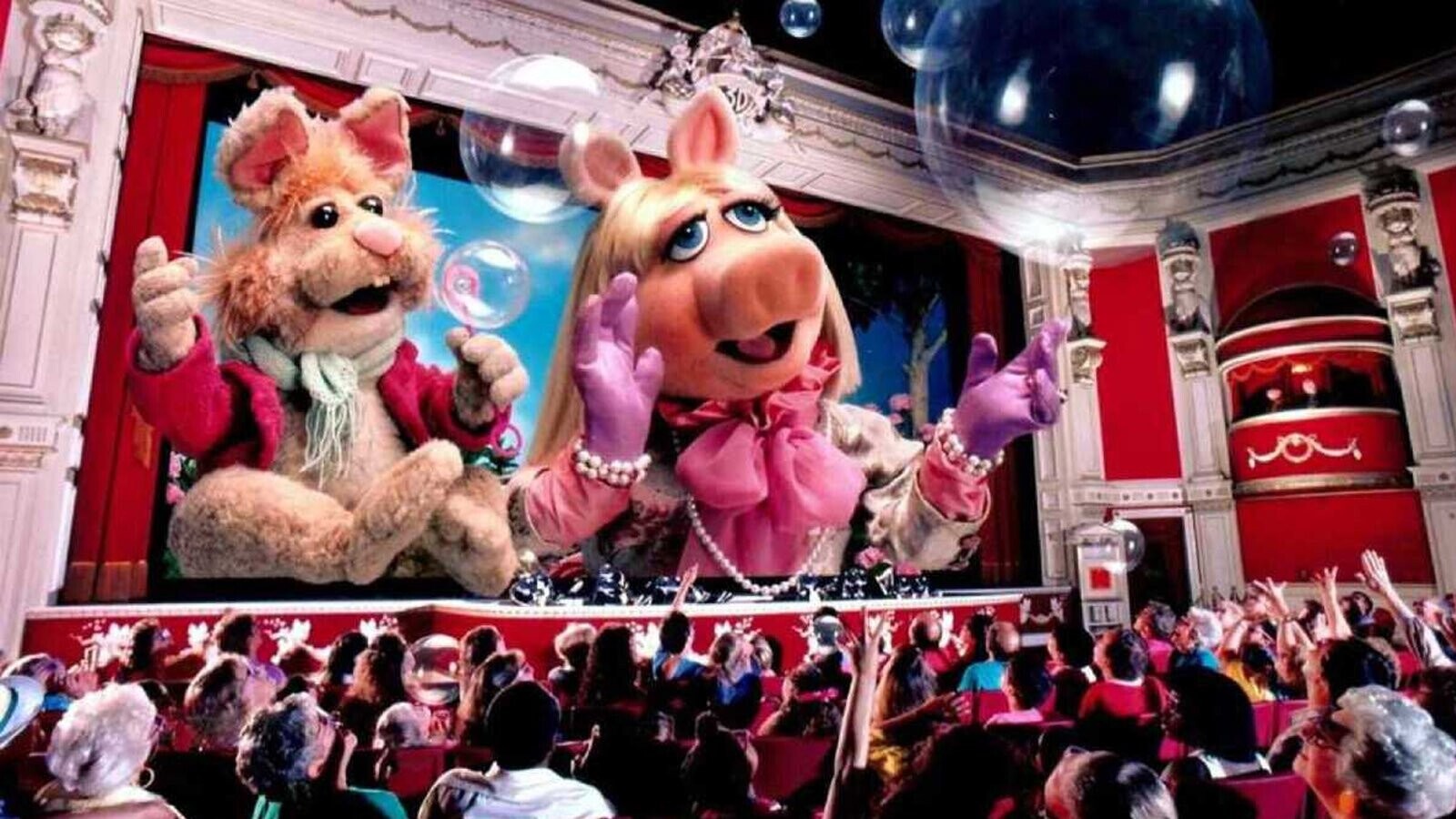
The premise was simple and perfect: Kermit the Frog invites guests on a tour of Muppet Studios, where the gang is preparing to demonstrate “Muppet Vision,” a breakthrough in 3D technology. Naturally, this demonstration goes about as smoothly as letting Animal host a TED Talk. Dr. Bunsen Honeydew and Beaker unveil Waldo C. Graphic, a digital 3D character who quickly escapes control. Bean Bunny tries to help Miss Piggy and makes everything worse. Sam Eagle attempts dignity and is punished for it. Statler and Waldorf do what they do best: insult everyone from a safe altitude.
The attraction worked because it understood the Muppets at a molecular level. The jokes were silly, but the craft was serious. The show did not merely put the Muppets on a screen; it made the theater part of the joke. The frame broke, the walls “exploded,” Sweetums wandered into the audience, and the final gag made guests feel as if the entire building had been drafted into the act. It was immersive before “immersive” became a corporate theme park spell cast over every snack cart and restroom sign.
Steve Whitmire, Rizzo the Rat, and the Muppet DNA
Steve Whitmire’s connection to the Muppets runs far deeper than one theme park attraction. He joined the Jim Henson world as a young performer and eventually developed Rizzo the Rat, a wisecracking, streetwise rodent with a tiny body and a gigantic attitude. Rizzo started as a background rat on The Muppet Show, but he gradually became one of the franchise’s funniest supporting players, especially when paired with Gonzo.
Rizzo’s appeal is that he never acts like a mascot. He acts like a guy who knows exactly where the good snacks are hidden and will sell you that information for a modest fee. He is sarcastic, opportunistic, surprisingly tender when the moment calls for it, and proudly allergic to taking anything too seriously. In a universe full of pigs, frogs, bears, chickens, and whatever Gonzo is, Rizzo feels like the little hustler at the edge of the stage saying what everyone else is too polite to say.
In Muppet Vision 3D, Whitmire did more than perform Rizzo. He also played Bean Bunny and Waldo C. Graphic, which means he helped operate three very different kinds of Muppet comedy: Rizzo’s fast-talking mischief, Bean’s weaponized cuteness, and Waldo’s early digital lunacy. That range matters. The attraction was not just a greatest-hits reel; it was a laboratory where old-school puppetry, live performance, film, and computer-generated imagery collided in a way that felt unmistakably Henson.
The Disney Deal That Almost Changed Everything
Whitmire’s memories of the project begin during a fascinating moment in Muppet history. Jim Henson was in discussions about selling his company to Disney, and the possibilities seemed enormous. Disney could offer the Muppets long-term stability, a permanent theme park presence, and a larger platform. Henson, meanwhile, could gain creative freedom to explore new ideas without carrying every business burden himself.
That context makes Muppet Vision 3D feel even more important. It was not designed as a nostalgic farewell. It was meant to be a doorway. Henson loved technology, loved theme parks, and loved experimenting with form. A 3D Disney attraction gave him a giant sandbox full of expensive toys, and he was exactly the sort of artist who would look at that sandbox and ask whether it could also explode, sing, and insult the audience.
According to Whitmire’s recollections, the team was producing a huge project while the broader Disney relationship was still being negotiated. That tension gives the attraction a strange emotional glow in hindsight. Everyone involved thought they were building the first chapter of a new Muppet era at Disney. Instead, after Henson’s sudden death in May 1990, it became one of the last major pieces of work directly shaped by him.
Making 3D the Hard Way
Today, 3D filmmaking can sound almost ordinary. In the late 1980s and early 1990s, however, creating a polished theme park 3D film was a heavyweight technical challenge. Whitmire has described the process as exciting but difficult, involving large synchronized cameras that were loud, cumbersome, and prone to problems. If modern digital cameras are sleek cats, those old 3D rigs were two refrigerators trying to dance the tango.
The sound issues were not a minor inconvenience. Loud cameras meant that dialogue often had to be re-recorded later. Puppet performance already requires extreme precision: the performer is acting, voicing, timing mouth movements, hitting marks, and often coordinating with other puppeteers while hidden below or behind a set. Add noisy 3D equipment, complex blocking, and Disney-level expectations, and suddenly a frog introducing a tour becomes a feat of engineering.
The preshow was another example of clever problem-solving. Guests waiting in the lobby watched multiple screens showing Muppet backstage chaos. Rizzo appeared in this environment, and the three-monitor setup created its own visual rhythm. It made the queue feel alive. You were not waiting for the show; the show had already started, and it had apparently misplaced several employees.
Waldo C. Graphic and Henson’s Love of New Toys
One of the most interesting pieces of Muppet Vision 3D history is Waldo C. Graphic. Waldo had appeared earlier in The Jim Henson Hour and represented Henson’s fascination with digital puppetry. The character was not simply animation dropped into a Muppet project. He was a performance-driven digital figure, controlled in a way that connected new technology to traditional puppeteering instincts.
That is classic Henson. He did not treat technology as a replacement for performance. He treated it as another kind of puppet. Whether the tool was felt, foam, rods, radio controls, animatronics, or computer graphics, the goal was the same: make the audience believe there was a personality on the other end.
Waldo’s role in the attraction is wonderfully appropriate. He is a “new effect” that refuses to behave. In other words, he is the perfect metaphor for technology itself. Every office worker who has ever tried to connect a laptop to a conference room projector knows Waldo personally. He lives in the HDMI port.
Jim Henson’s Final Creative Footprints
Because Jim Henson died before the attraction opened, Muppet Vision 3D became tied forever to grief, legacy, and unfinished possibility. Henson performed Kermit, Waldorf, and the Swedish Chef in the film. Frank Oz, Dave Goelz, Richard Hunt, Steve Whitmire, and other Muppet performers helped fill the attraction with the voices and rhythms of a company at the height of its craft.
Whitmire has recalled that the team had already completed much of the 3D film before Henson became ill. After Henson’s death, the remaining work took on a deeper meaning. The performers were no longer merely finishing a theme park attraction; they were completing one of Jim’s last big projects. That emotional responsibility can be felt in the final result. The attraction is funny, yes, but it also has a sense of warmth that cannot be manufactured by committee.
It is also important to remember that Henson was not a museum artist. He was not interested in preserving the Muppets in amber. Whitmire has suggested that Henson tended to look forward rather than obsess over past work. That idea complicates the sadness around the attraction’s closure. Fans mourned because they loved it. Henson, one imagines, might have mourned for five minutes, then started sketching something stranger, bigger, and harder to explain to accountants.
The 2025 Closure and Why Fans Took It Personally
Disney announced that Muppet Vision 3D and surrounding Grand Avenue locations would close to make way for a new Monsters, Inc.-themed land at Disney’s Hollywood Studios. The final public day to experience Muppet Vision 3D was June 7, 2025. Disney also said the Muppets would move to Sunset Boulevard through a new Muppet-themed version of Rock ’n’ Roller Coaster.
On paper, that is theme park evolution. Attractions close. New attractions open. Beloved buildings become construction zones. A churro cart survives everything, somehow. But for fans, this closure felt different because Muppet Vision 3D was a rare direct link to Jim Henson’s creative hand. It was not merely an old show; it was a living artifact that still made people laugh.
The reaction was intense because the attraction’s appeal had never depended on cutting-edge technology alone. Some effects aged. Some jokes became familiar. Some guests could probably recite the preshow by heart while half-asleep and holding a melting Mickey bar. But that was part of the charm. Muppet Vision 3D became a ritual: a cool, dark theater where families could rest, laugh, and watch chaos triumph over professionalism.
What the Attraction Taught Disney Fans About Comedy
The genius of Muppet Vision 3D was that it trusted the audience. It did not need a complicated plot. It needed momentum, personality, and a complete disregard for architectural safety. Every character had a clear comic function. Kermit tried to maintain order. Fozzie attempted showmanship. Miss Piggy demanded glamour. Sam Eagle chased dignity. Bean wanted to help so badly that help became a public hazard. Statler and Waldorf provided quality control by insulting the product while still attending every show.
That structure is why the attraction remained funny for so long. It was not built only on topical jokes. It was built on character conflict. The Muppets can survive almost any setting because the comedy comes from who they are. Put them in a theater, a pirate movie, a Christmas story, a spaceship, or a doomed 3D demonstration, and the same beautiful disaster emerges.
For SEO-minded Disney history fans searching for Muppet Vision 3D memories, Steve Whitmire Rizzo the Rat, or Jim Henson Disney World attraction, the heart of the story is this: the attraction endured because it made craftsmanship invisible. Guests saw jokes. Behind those jokes were performers, Imagineers, engineers, camera crews, builders, writers, and technicians making extremely difficult work look like an accident caused by penguins.
Experiences and Memories: What It Felt Like to Sit in That Theater
To understand why fans still talk about Muppet Vision 3D with such affection, you have to think beyond the facts. The experience began before the film. You entered a lobby that looked like the Muppets had been given control of a working studio and immediately violated several workplace policies. Props, signs, jokes, and visual puns rewarded anyone who slowed down long enough to look around. It was the rare queue where waiting did not feel like punishment. It felt like snooping.
Then came the preshow monitors, where Scooter, Rizzo, Gonzo, Sam, and the rest of the gang pulled you into the rhythm of the place. By the time the theater doors opened, the audience had already crossed a border. Outside was Florida heat, park maps, mobile app refreshes, and debates about lunch. Inside was Muppet logic, where a rat could impersonate Mickey Mouse and somehow get one of the biggest laughs in the room.
The theater itself felt like a character. Statler and Waldorf’s balcony was not decoration; it was a promise. You knew those two old men were watching, judging, and preparing to say something rude enough to be useful. When Sweetums appeared in the room, children looked around with genuine surprise. Adults did too, though they tried to act cool because adults are silly creatures who pretend not to be impressed by giant monsters walking past their row.
For many guests, the best memories were small ones. A parent hearing a child laugh at Fozzie’s terrible joke. A longtime Muppet fan noticing a background gag they had missed for years. A tired family finding fifteen minutes of air-conditioned happiness. A first-time visitor realizing that Disney attractions could be theatrical, handmade, weird, and deeply human all at once.
The final explosion gag captured the whole spirit of the show. The attraction did not end by politely concluding. It ended by blowing a hole through its own illusion, waving goodbye, and acting as if this was a perfectly reasonable way to run a theater. That is why the memory sticks. Muppet Vision 3D was never only about seeing the Muppets in 3D. It was about being invited into their disaster and discovering that the disaster was the point.
Conclusion: A Classic Attraction With a Very Muppet Afterlife
Muppet Vision 3D is gone from its longtime Walt Disney World home, but its reputation has only grown louder. Steve Whitmire’s memories help explain why. The attraction was born at a turning point, shaped by Jim Henson’s optimism, Disney’s theme park machinery, and a group of performers willing to wrestle with difficult technology if it meant making something joyful.
As a Disney World classic attraction, it belonged to a specific era of theme park design, but its emotional power remains current. It reminds fans that entertainment can be silly without being empty, sentimental without being sticky, and technically ambitious without losing its handmade soul. Also, it reminds us that penguins should not be trusted with artillery.
The Muppets have always survived by moving forward, even when fans look backward with misty eyes and souvenir 3D glasses. Rizzo the Rat would probably tell everyone to stop crying unless there was money in it. Kermit would say it is not easy saying goodbye. Statler and Waldorf would say the closure was the best part of the show. And somewhere in the middle of all that noise, Jim Henson’s spirit of invention would still be visible: curious, restless, funny, and ready for the next big thing.
Note: This article is a fully rewritten, publication-ready synthesis based on publicly available historical reporting, interviews, Disney attraction records, and real background information about Muppet Vision 3D, Steve Whitmire, Rizzo the Rat, and Jim Henson’s Disney work.

