
Makeup
Meghan Markle Makes Emotional Confession Related To Queen Elizabeth’s Passing
Jul
Meghan Markle has never been a stranger to public attention, but some of her most revealing moments have not come from palace balconies, red carpets, or royal documentaries. They have come in quieter scenes: a conversation at a kitchen table, a pause between laughs, or a sentence that says more than a headline ever could.
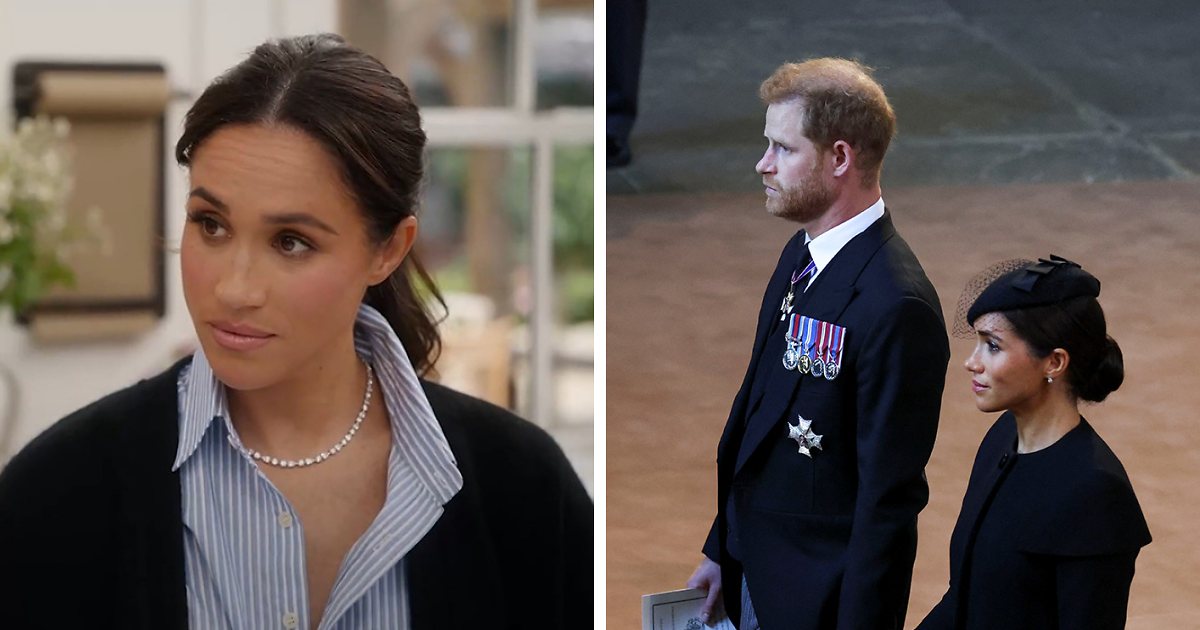
One such moment arrived when the Duchess of Sussex reflected on being separated from her children, Prince Archie and Princess Lilibet, for almost three weeks. Although she did not directly name Queen Elizabeth II’s funeral in the comment, the timing strongly pointed to the period in September 2022, when Meghan and Prince Harry were in Europe and unexpectedly remained in the United Kingdom after the Queen’s death.
Her confession was simple and emotional: being away from her children for that long left her “not well.” For a public figure often discussed in terms of fashion, feuds, royal protocol, Netflix deals, and online debates that multiply faster than laundry, it was a strikingly human admission. Behind the royal drama was a mother who missed her kids.
The Emotional Confession That Restarted the Conversation
During a conversation with Tan France on the second season of With Love, Meghan, Meghan spoke about motherhood and the deep attachment she feels to Archie and Lilibet. The discussion turned to the longest stretch she had spent away from them. Meghan said it had been almost three weeks, adding that she was “not well” during that time.
That remark quickly drew attention because royal watchers connected it to September 2022. Meghan and Harry had traveled to Europe for planned charitable appearances. Then Queen Elizabeth II died on September 8, 2022, at Balmoral Castle. The couple remained in the United Kingdom through the official mourning period and attended the state funeral at Westminster Abbey on September 19.
At the time, Archie was three years old and Lilibet was around fifteen months old. They stayed in California while their parents remained overseas. Anyone who has ever tried to leave a toddler for a weekend knows that three weeks can feel less like a business trip and more like a tiny emotional hostage situation, complete with stuffed animals, bedtime routines, and guilt packed neatly in the carry-on.
For Meghan, the confession did not seem designed as a grand royal statement. It was not a speech, not a formal palace message, and not a polished press release. It was a personal memory shared in the language of parenthood. That may be why it resonated with some viewers and irritated others. Meghan’s public comments often land in a cultural thunderstorm before anyone has had time to pour tea.
Why Queen Elizabeth’s Passing Changed the Trip
Prince Harry and Meghan were not originally expected to be away from their children for such an extended period. Their Europe trip included public-facing events, but the Queen’s declining health and death transformed the visit into something much larger and more emotionally complicated.
Queen Elizabeth II’s death marked the end of a historic 70-year reign. Her passing was not simply a family loss for Harry; it was a national and global event. The United Kingdom entered a period of mourning, and the royal family appeared together during carefully organized ceremonies, processions, public tributes, and the state funeral.
Harry and Meghan’s presence became part of a larger royal narrative. They appeared with Prince William and Catherine, Princess of Wales, outside Windsor Castle to greet mourners and view floral tributes. It was one of the most analyzed royal walkabouts in recent memory, partly because it placed the two brothers and their wives together after years of public tension.
For the public, the moment was symbolic. For the family, it was grief under floodlights. For Meghan, it also meant remaining thousands of miles away from her young children during a time that had already become emotionally heavy. That combination helps explain why the confession carried weight.
Meghan’s Earlier Comments About the Queen
This was not Meghan’s first time speaking publicly about Queen Elizabeth’s passing. In a 2022 interview with Variety, she described the period after the Queen’s death as complicated and said she felt grateful to have spent time with the late monarch. She also praised Queen Elizabeth’s legacy, especially her example of female leadership.
Meghan’s comments at the time were measured. She acknowledged public support, spoke about being there for Harry, and framed the Queen’s death through both grief and legacy. She also referenced Harry’s optimistic view that Queen Elizabeth had been reunited with Prince Philip, who died in 2021.
That earlier interview showed Meghan walking a careful line: honoring the Queen while also existing within the strained reality of the modern royal family. It is not easy to speak warmly about a family institution that has also been the source of highly public conflict. In Meghan’s case, every comma seems to arrive with its own committee of critics.
A Motherhood Moment More Than a Royal Bombshell
The phrase “emotional confession” may sound dramatic, but the heart of the story is surprisingly ordinary. Meghan was talking about missing her children. That experience is not exclusive to duchesses, celebrities, or people with excellent lighting in Netflix kitchens. It is familiar to parents who travel for work, families separated by emergencies, and anyone who has ever watched a child grow slightly bigger while they were away.
What makes Meghan’s situation different is the scale. Most parents do not have their absence connected to a state funeral, a royal succession, global headlines, and the internet’s endless appetite for hot takes. Meghan’s confession became news because it touched three powerful themes at once: royal history, motherhood, and grief.
Her words also revealed something about how public events can create private costs. The Queen’s passing required royal family members to perform duty in front of the world. That duty came with travel, protocol, appearances, and emotional restraint. But behind the formal clothing and solemn processions were people managing personal grief, family tensions, and the ordinary ache of separation.
Why the Public Reaction Was Divided
As with nearly everything involving Meghan Markle, reactions were mixed. Some people saw her confession as honest and relatable. Others criticized it, arguing that the Queen’s funeral should remain the focus rather than Meghan’s personal feelings. A third group simply rolled its eyes at another royal headline and returned to whatever peaceful activity people enjoyed before comment sections were invented.
The divide reflects a larger pattern. Meghan is often interpreted through preexisting opinions. Supporters tend to see vulnerability and unfair scrutiny. Critics tend to see calculation or self-focus. The same sentence can be read as heartfelt, strategic, inappropriate, brave, or annoying depending on who is reading it.
That does not mean every reaction is equally fair. Public figures can be criticized, but it is also worth remembering that talking about missing one’s children is not a scandal. It is a normal human response. The controversy says as much about modern celebrity culture as it does about Meghan herself.
Prince Harry’s Side of the Separation
Prince Harry has also referred to the difficulty of being away from Archie and Lilibet during that period. In his memoir Spare, he described the days after Queen Elizabeth’s death as difficult and wrote about being separated from the children longer than planned.
That detail matters because it shows Meghan’s confession was not isolated. The extended stay in the United Kingdom affected both parents. Harry was grieving his grandmother while also navigating his complicated relationship with the royal institution. Meghan was supporting him while also missing their children back in California.
The Sussexes have often emphasized their family life in Montecito, California, as central to their post-royal identity. Their children are mostly kept out of the public eye, and Meghan’s lifestyle projects frequently present home, cooking, gardening, hosting, and motherhood as part of a new chapter. Against that backdrop, the memory of being separated from Archie and Lilibet becomes more than a throwaway detail. It reinforces the image Meghan wants to share: after the royal storm, family is the anchor.
Queen Elizabeth’s Legacy in Meghan’s Words
Queen Elizabeth II remains one of the most important figures in modern British history. Her reign covered dramatic changes in politics, culture, technology, and the monarchy itself. Meghan’s earlier description of the Queen as a shining example of female leadership fits into a broader public understanding of Elizabeth as a monarch defined by duty, consistency, and restraint.
For Meghan, that legacy is personal as well as historical. The Queen was Harry’s grandmother, Archie and Lilibet’s great-grandmother, and the monarch who welcomed Meghan into royal life at the time of her marriage. The Queen was also the head of an institution Meghan later publicly criticized. That combination makes any comment from Meghan about Elizabeth emotionally layered.
It is possible to respect the Queen’s legacy while acknowledging that royal life was difficult for Meghan. It is also possible to understand Meghan’s grief without pretending every royal relationship was simple. Real families are complicated. Royal families are complicated with better hats.
The Role of “With Love, Meghan” in Reframing Her Image
With Love, Meghan has been part of Meghan’s broader attempt to define herself beyond royal conflict. The series focuses on cooking, entertaining, friendship, creativity, and domestic rituals. It is intentionally softer than courtroom headlines, palace briefings, and explosive interviews.
That setting makes her emotional confession stand out. The conversation was not framed like a dramatic royal exposé. It came during a lifestyle program, where personal stories appear alongside food, hosting, and relaxed conversation. The contrast is part of the appeal. One moment there are flower sprinkles and friendly jokes; the next, there is a reminder that public lives contain private pain.
For SEO readers searching “Meghan Markle Queen Elizabeth passing,” the key point is this: Meghan’s recent emotional comment appears tied to the extended separation from her children during the Queen’s funeral period, while her earlier public remarks about Queen Elizabeth focused on gratitude, legacy, and support for Prince Harry.
How Grief Looks Different in Public
Grief is rarely tidy. It does not always arrive in one clean feeling. Meghan’s experience around Queen Elizabeth’s passing likely included many overlapping emotions: concern for Harry, respect for the Queen, pressure from public attention, discomfort around royal tensions, and sadness over being away from her children.
Public grief adds another layer. At a state funeral, the world watches posture, facial expressions, seating arrangements, clothing, and every interaction. A family member cannot simply grieve; they are expected to grieve correctly, visibly, and in a way that satisfies millions of strangers. That is an impossible job description, even before breakfast.
Meghan’s confession reminds readers that historic events are lived by individuals in ordinary bodies. They get tired. They miss their kids. They worry. They replay decisions. They carry personal emotions through public rituals.
What This Reveals About Meghan’s Current Public Voice
In recent years, Meghan has leaned into a more personal and lifestyle-driven public identity. She speaks more often about motherhood, food, friendship, and building a home life than about royal conflict directly. Her emotional confession fits that pattern.
Rather than presenting the Queen’s passing as a political or institutional moment, Meghan approached it through the lens of family separation. That choice may be strategic, but it may also simply be honest. For parents, the emotional geography of a major event is often measured by where the children are.
That does not erase the historical significance of Queen Elizabeth’s death. It does, however, show how one event can hold multiple meanings at once. For Britain, it was the end of an era. For Harry, it was the loss of a grandmother. For Meghan, it was also a painful stretch away from her children.
Experiences Related to Meghan Markle’s Emotional Confession
Meghan’s confession connects with a broader experience many people understand: the emotional strain of being pulled between duty and family. Whether someone is a public figure, a business traveler, a military parent, a student living away from home, or a caregiver managing a family emergency, separation from loved ones can feel heavier than outsiders realize.
Parents often describe long separations from young children as uniquely difficult because small children change quickly. A toddler learns a new phrase. A baby develops a new routine. A preschooler suddenly decides that socks are the enemy of civilization. These tiny changes may seem ordinary, but to a parent far away, they can feel like missed chapters.
There is also a special kind of guilt that comes with necessary absence. The parent may know logically that they had to travel, work, attend a funeral, support a spouse, or handle a crisis. Still, logic does not always quiet the ache. Meghan’s “not well” comment captured that emotional tug-of-war. She could be present for Harry and the royal mourning period, but that did not make being away from Archie and Lilibet easy.
Many families have lived some version of this. A parent takes a work trip that expands unexpectedly. A grandparent’s illness pulls someone across the country. A funeral requires travel at the worst possible time. A family emergency interrupts normal routines. The calendar says “temporary,” but the heart hears “too long.”
Those experiences are often made harder when people feel judged for how they respond. Some are told to be strong. Others are told they are too emotional. Some are criticized for attending to duty; others are criticized for speaking about the personal cost of that duty. Meghan’s situation was extreme because the judgment came from the entire internet, which is basically a village square with Wi-Fi and no closing hours.
The more useful lesson is not whether every reader likes Meghan. It is that emotional honesty can make public stories more human. Her confession opened a window into what a global event looked like from the perspective of a mother. It also reminded people that grief often overlaps with parenting, marriage, travel, obligation, and unfinished family conversations.
For readers who have been away from their children during a hard time, Meghan’s words may feel familiar. For readers who have had to support a spouse through loss while managing their own emotions, the situation may feel even more layered. And for anyone who has ever smiled through a formal event while privately wishing they were home, the confession lands with quiet clarity.
In the end, Meghan Markle’s emotional confession related to Queen Elizabeth’s passing is not only a royal story. It is a story about the private cost of public duty, the ache of motherhood, and the complicated way historic moments enter family life. Queen Elizabeth’s death belonged to history. But for Meghan, Harry, Archie, and Lilibet, that period also belonged to the intimate calendar of family separation, reunion, and memory.
Conclusion
Meghan Markle’s emotional confession adds a deeply personal layer to the public memory of Queen Elizabeth II’s passing. While the world saw ceremonies, protocol, and royal symbolism, Meghan remembered another part of that period: being away from her young children for nearly three weeks. Her words do not replace the historical importance of the Queen’s death, but they do reveal how public events can carry private emotional costs.
The reaction to Meghan’s comment may remain divided, as most royal reactions do. Still, the heart of the story is simple. A mother missed her children during a difficult time. A husband mourned his grandmother. A family navigated duty, grief, and distance under extraordinary public pressure. That is why the confession continues to attract attention: beneath the royal headlines, it sounds unmistakably human.

