
Beauty Tools & Accessories
Lighting: Bright Side Lights from Rich Brilliant Willing
Jul
Some lights simply brighten a room. Others also brighten the mood, clean up the visual clutter, and quietly make you feel like your life is a little more pulled together than it actually is. Bright Side Lights from Rich Brilliant Willing belong to that second category. They are playful without being goofy, sculptural without becoming “gallery piece only, please do not touch,” and optimistic without slapping your walls with motivational-poster energy.
That balancing act is a big reason these lights still deserve attention. Bright Side Lights arrived as cast-glass pendants with a clever emotional twist: they treated lighting not just as a functional object, but as a message. In a market crowded with cold minimalism and over-designed statement pieces, Rich Brilliant Willing offered something more human. These lights felt smart, warm, and just strange enough to be memorable. In other words, they understood the assignment before “understood the assignment” became everyone’s favorite tired phrase.
For anyone interested in modern lighting design, designer pendants, or the evolution of RBW lighting, Bright Side Lights are more than a pretty footnote. They reveal how Rich Brilliant Willing built a visual language that mixed industrial references, emotional intelligence, and material honesty. And that language still matters today.
Why Bright Side Lights Still Matter
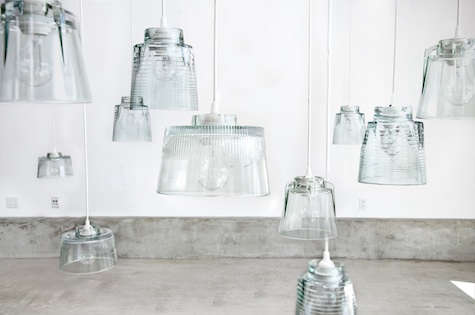
At first glance, Bright Side Lights seem disarmingly simple. The forms are compact, rounded, and glassy in a way that feels familiar, almost like an object you have seen before in another life. That is part of their charm. The collection taps into industrial memory while smoothing it into something softer and more domestic. It does not scream. It glows. It lingers. It makes a point without throwing a design tantrum.
What makes the collection stand out is the way it combines utility and feeling. These are not just decorative pendants. They were conceived as durable cast-glass lights that could function as hanging fixtures or rest on their sides as table lamps. That small shift in use is surprisingly powerful. It turns the object from a fixed piece of overhead hardware into something more flexible and intimate. One minute it reads like a pendant. The next it behaves like a luminous tabletop sculpture.
That flexibility also reflects a larger truth about great lighting: the best fixtures do not only solve illumination problems. They create atmosphere, shape routines, and change how a room behaves after sunset. Bright Side Lights understand this. They are not only about brightness. They are about emotional tone.
The Origin Story: Where the Glow Began
A young studio with a sharp eye
Rich Brilliant Willing was founded by Theo Richardson, Charles Brill, and Alexander Williams, three design-school friends who built the studio around a mix of experimentation and practicality. Early coverage of the brand consistently pointed to a signature blend: industrial components, unexpected material pairings, and an ability to make restrained objects feel witty rather than stiff.
Bright Side Lights fit beautifully into that early identity. They came from a period when the studio was establishing itself as a design force with objects that felt both conceptually fresh and physically approachable. This was not design for the sake of designer ego. It was design that wanted to be used, lived with, and remembered.
Old insulators, new ideas
One of the most interesting details behind Bright Side Lights is their historical reference. The forms were inspired by old American glass insulators once used on telephone and overhead utility lines. That source material matters. It grounds the collection in everyday infrastructure rather than luxury tradition. Instead of borrowing from chandeliers dripping in old-world drama, Rich Brilliant Willing looked to the humble language of functional glass objects that quietly helped power modern life.
Then the studio translated that reference into something warmer and more contemporary. The result was not a literal reproduction of industrial hardware. It was a reinterpretation: smoother, friendlier, and more poetic. Architectural Digest even described the collection as mason jar–inspired, which makes sense visually, but Bright Side Lights feel more refined than farmhouse nostalgia. They are less “rustic pantry” and more “urban optimism with excellent taste.”
What Makes the Design So Distinctive
Cast glass with actual personality
Glass can be many things in lighting. It can be icy, precious, fussy, or anonymous. Here, it feels grounded. Bright Side Lights use cast glass in a way that gives the fixtures weight and presence. They do not disappear into the room. They hold their own. That matters because a lot of modern lighting chases invisibility so aggressively that you forget it exists until the bulb burns out at the worst possible time.
Bright Side Lights go the other direction. They make glass feel tactile and substantial. Even when switched off, they read as objects worth noticing. Turn them on, and that physicality helps the glow feel richer and more dimensional.
Optimism, but make it design
The collection is also famous for its upbeat messaging. Rather than treating words as decoration slapped on after the fact, Rich Brilliant Willing integrated language into the object itself. Each piece carried its own phrase or title, including Light Without Darkness, Bright Side of Life, and In the Right Light. The messaging gave the collection a conceptual through-line: light as a practical tool, yes, but also as an emotional device.
That idea could have gone terribly wrong. Design plus inspirational language is a dangerous combo. One wrong move and you end up with the visual equivalent of a coffee mug that tells you to hustle. But Bright Side Lights avoid that trap because the words are not the whole story. They are embedded within a thoughtful material and formal language. The optimism feels earned.
Versatility without visual chaos
Another reason the collection works is its adaptability. Because the lights can function as pendants or as table lamps placed on their sides, they open up more styling possibilities than a typical designer pendant. In a dining nook, one can read as a small jewel overhead. On a console, it becomes a conversation piece. In a bedroom, it can soften a space that might otherwise feel too strict or minimal.
That kind of versatility is not only convenient; it is very modern. Today’s homes do not always have perfect architecture, ideal junction boxes, or giant ceilings begging for a statement fixture. People want lighting that can perform beautifully under real-world conditions. Bright Side Lights anticipated that need.
How Bright Side Fits into the Bigger RBW Story
Looking back, Bright Side Lights feel like an early hint of what Rich Brilliant Willing would later become. The studio eventually evolved into RBW, a brand widely associated with LED innovation, sculptural restraint, and higher-quality light for residential, hospitality, and workplace settings. Along the way, the company built a reputation for thoughtful forms and a broader manufacturing vision in the United States.
That evolution matters because it shows Bright Side was not a random one-off. It was part of a larger design philosophy. Later products and collections continued to explore reduced geometry, warm illumination, and a balance between technical precision and visual softness. The studio’s language matured, but the core instinct stayed recognizable: use modern production and careful materials to make lighting feel smarter, calmer, and more inviting.
RBW’s later story also adds another layer to the Bright Side conversation. The company has highlighted sustainability, B Corp values, ethical manufacturing, and transparency around materials in parts of its current business. That does not magically turn every lamp into a saint, of course, but it does suggest a continuity between early design intelligence and later operational ambition. The bright side, it turns out, was not only an aesthetic idea. It became part of the company’s larger identity.
Why Designers and Homeowners Still Respond to It
It softens modern interiors
One of the biggest challenges in decorating with modern lighting is avoiding a room that feels too sharp, too cold, or too proud of its own minimalism. Bright Side Lights offer a solution. Their rounded glass forms soften hard-lined spaces filled with stone, steel, white walls, or boxy furniture. They bring a little emotional cushioning to interiors that might otherwise feel like they are trying to impress an architecture jury.
It adds meaning without clutter
Many homeowners want rooms that feel personal but not messy. That is harder than Pinterest makes it look. Bright Side Lights help because they communicate personality through form and concept rather than through piles of accessories. You do not need a shelf full of quirky objects when one strong light fixture can do the talking.
It bridges art and utility
Some lights are pure workhorses. Some are pure decoration. The magic category sits in between, and that is where Bright Side belongs. It is useful enough to justify its place and artistic enough to elevate a room. That balance is why thoughtful lighting design ages well. When a fixture can operate as both an object and a source of atmosphere, it remains relevant long after trendier pieces have packed their tiny brass bags and left.
How to Style a Bright Side Look Today
If you are drawn to the Bright Side Lights aesthetic, think less about copying the exact object and more about recreating the feeling. Start with one sculptural glass light rather than a cluster of competing fixtures. Let it be the visual punctuation mark in the room. Then support it with materials that know how to behave: wood, matte paint, linen, plaster, aged metal, and maybe one glossy element to bounce light around.
In a kitchen, a cast-glass pendant over a small breakfast table can bring warmth to cabinetry and tile. In an entryway, a compact sculptural lamp on a console can make the house feel welcoming before anyone notices the pile of shoes you swear you were about to organize. In a bedroom, one softly glowing fixture can be more effective than multiple aggressive lamps that make the room feel like a dentist’s office.
The other key is restraint. Bright Side works because it has a point of view. Give it breathing room. Do not bury that point of view under twelve decorative objects, three competing metals, and a rug that appears to have lost a fight with a crayon factory.
Experiences with Bright Side–Inspired Lighting
Living with lighting in the Bright Side spirit is different from simply owning a lamp. It changes the mood of ordinary moments in a way that sneaks up on you. The first thing you notice is that the room feels friendlier at night. Not brighter in a harsh, stadium-light way. Friendlier. Softer. More forgiving. The corners do not disappear, but they stop looking dramatic and mysterious like they are auditioning for a crime show.
Imagine coming home after a long day, dropping your bag by the door, and switching on a cast-glass light with a warm glow. The room does not just light up; it exhales. Countertops look calmer. Bookshelves look less chaotic. Even the chair where you have been piling laundry somehow seems more intentional, which is a minor miracle and frankly deserves its own award.
That is one of the best experiences tied to this kind of designer lighting: it elevates routine. Making tea feels a bit more ceremonial. Eating leftovers feels less like defeat and more like a curated late-night supper. Reading on the sofa feels more luxurious, even if you are technically just re-reading the same page because your brain checked out twenty minutes ago.
There is also a tactile pleasure in the object itself. A glass light with visual heft gives a room an anchor. During the day, it catches ambient sunlight and reflects it gently. At dusk, it shifts roles and becomes the thing everything else in the room begins responding to. Shadows sharpen or soften around it. Metals gleam more kindly. Wall color deepens. Texture comes alive. Lighting people say this all the time, but it is true: light does not just reveal a room. It edits it.
Guests tend to respond to Bright Side–inspired lighting in a particular way too. They often ask about it, but not in the generic “where’d you get that?” tone reserved for impulse purchases and suspiciously cheap side tables. They ask because the light feels like it has a story. It looks considered. It looks designed. It suggests that the homeowner did not just buy the first fixture with four stars and free shipping.
Another experience people underestimate is emotional consistency. Bad lighting can make a good room feel off. Great lighting makes a room reliable. It tells your nervous system, “Yes, you can relax here.” A warm glass pendant or sculptural tabletop light can become part of the rhythm of daily life: switched on during dinner, glowing during conversations, standing by while you work, read, or simply stare into space pretending you are thinking deep thoughts when really you are wondering whether you remembered to move the laundry.
That may be the real legacy of Bright Side Lights from Rich Brilliant Willing. They remind us that lighting is not only about lumens, finishes, or trend forecasts. It is about lived experience. It is about how a room greets you, how it holds you through the evening, and how one well-designed object can make everyday life feel a little more intentional, a little more beautiful, and yes, a little more on the bright side.
Conclusion
Bright Side Lights from Rich Brilliant Willing remain compelling because they fuse modern lighting design with personality, flexibility, and emotional warmth. Their cast-glass forms, optimistic spirit, and industrial roots help them stand out in a crowded world of designer lighting that often leans too cold or too complicated. More importantly, they forecast the qualities that would continue to define RBW lighting: careful material choices, human-centered illumination, and a belief that great light can shape both spaces and moods. Whether you admire them as design history, use them as inspiration for your own home, or simply appreciate a fixture that knows how to be smart without being smug, Bright Side Lights still make a strong case for thoughtful illumination.

