
Body Care
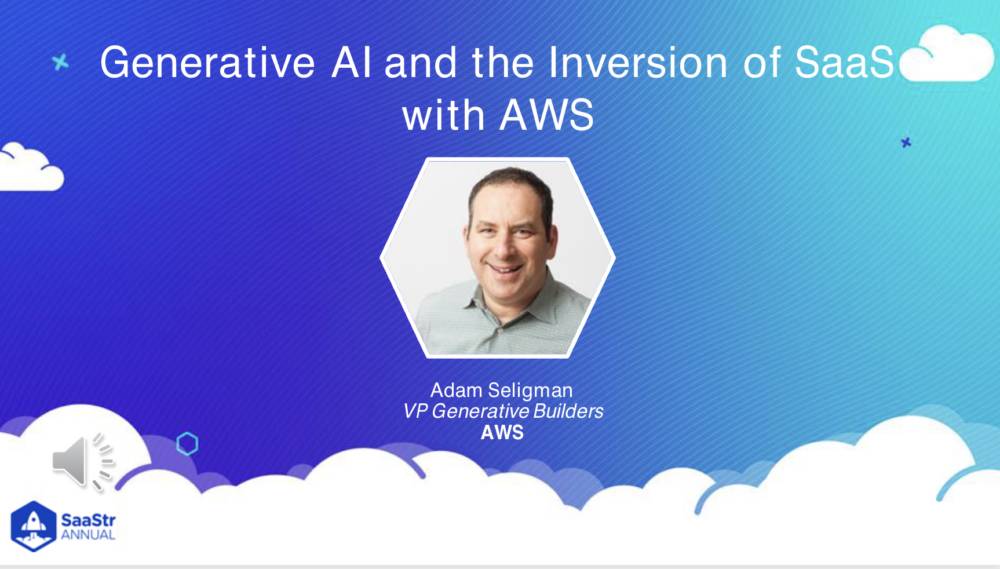
How Generative AI Will Turn Traditional SaaS Models On Their Head with AWS VP of Generative Builders Adam Seligman
Aug
Editorial note: This title reflects Adam Seligman’s position when he presented the ideas that inspired the original discussion. Seligman subsequently became Chief Technology Officer at Workato. This article synthesizes research and commentary from SaaStr, AWS, Workato, RedMonk, McKinsey, Deloitte, GitHub, Stack Overflow, Stripe, IBM, NIST, and CISA.
Role and presentation context verified through official Workato, AWS, SaaStr, and RedMonk materials.
Traditional software-as-a-service companies were built around a familiar formula: hire domain experts, assemble a sizable engineering team, spend months building a polished interface, connect the product to dozens of other systems, and then unleash an expensive sales organization to persuade people to buy seats.
Generative AI is politely picking up that formula, turning it upside down, and shaking the loose change out of its pockets.
In the presentation that inspired this topic, Adam Seligman argued that cloud platforms, modern developer tools, and generative AI were converging to create an “inversion of SaaS.” His central point was not merely that developers would type code faster. The bigger change was that many assumptions underpinning SaaS product development, customization, distribution, and pricing could stop being reliable.
The result will not necessarily be the death of SaaS. It will be something more uncomfortable for established vendors: a version of SaaS in which creating software becomes easier, interfaces become less important, customers expect products to adapt automatically, and pricing must reflect completed work rather than the number of humans clicking buttons.
The SaaS Inversion Seligman Saw Coming
Seligman focused on four assumptions that have shaped cloud software for years:
- A company needs deep domain expertise to design a useful application.
- Building high-quality software is expensive and time-consuming.
- Customers struggle to configure, integrate, and extend SaaS products.
- Go-to-market operations are labor-intensive and costly.
Generative AI challenges all four. It can help teams research unfamiliar markets, generate prototypes, write and review code, create integration logic, explain product value, personalize sales materials, and support customers in natural language.
That does not mean founders can ask a chatbot for “one profitable SaaS company, please” and return after lunch to find a functioning business. AI compresses parts of the journey; it does not repeal reality. Customer discovery, security, reliability, distribution, and judgment remain stubbornly human problems.
The four assumptions and SaaS inversion thesis are based on Seligman’s SaaStr presentation.
1. Domain Expertise Becomes a Starting Prompt, Not a Fortress
One of Seligman’s most memorable examples involved asking a large language model to help define a SaaS application for veterinary dental practices serving zoos. It was an intentionally obscure concept. Most product managers do not wake up knowing the ideal workflow for scheduling an elephant’s root canal.
The model proposed functions such as appointment scheduling, treatment planning, supply management, billing, regulatory recordkeeping, and animal-specific care considerations. It could also suggest an initial data model and identify questions the product team should investigate.
This illustrates a meaningful change in product discovery. Generative AI can provide a first draft of a market map, user workflow, data structure, feature set, compliance checklist, or competitive analysis. A founder exploring construction software, dental billing, freight management, or agricultural inspections can begin with more than a blinking cursor and a growing sense of regret.
However, AI-generated domain knowledge is an accelerator, not a substitute for qualified experts. A model may identify a regulation while misunderstanding how it applies. It may produce a convincing workflow that makes no sense to the person who actually performs the job. In regulated sectors such as healthcare, finance, insurance, and government, expert validation remains essential.
The competitive advantage therefore shifts. Knowing basic industry terminology becomes less defensible because AI can summarize it quickly. The stronger moat comes from proprietary operational knowledge: unusual edge cases, real customer behavior, historical outcomes, trusted relationships, and the small details that never make it into public documentation.
2. Building Software Gets Cheaper, but Shipping Trust Does Not
Generative AI coding tools can draft functions, create tests, explain unfamiliar code, modernize old components, identify errors, and scaffold entire applications. Product managers can create interactive prototypes. Designers can move closer to production code. Engineers can delegate repetitive work to coding agents and focus more attention on architecture and difficult trade-offs.
Research supports the productivity potential, although results vary by team and task. GitHub reported substantial speed improvements in controlled Copilot research, while McKinsey found that leading AI-enabled software organizations were achieving measurable gains in productivity, time to market, customer experience, and software quality.
The important word is leading. Installing an AI assistant does not automatically transform a software organization. It can also produce insecure code, duplicate bad patterns, invent APIs, or create a beautifully organized pile of technical debt. Stack Overflow’s 2025 survey found that AI-tool adoption was increasing even as developer trust in AI accuracy declined.
In other words, AI can make code inexpensive while making verification more valuable. The scarce resources become clear specifications, system design, evaluation, security review, observability, and experienced people who know when an answer is confidently wrong.
The new engineering bottleneck may no longer be typing. It may be deciding what should be built, supplying the correct context, testing the result, and integrating it safely into a complicated production environment. The keyboard is not disappearing, but it is losing its starring role.
Developer productivity and trust claims are supported by McKinsey, GitHub, and Stack Overflow research.
3. Configuration Turns Into Conversation
Traditional SaaS applications often require administrators to navigate settings pages, define rules, map fields, install connectors, and read documentation written by someone who apparently disliked readers.
Generative AI changes the interaction model. Instead of clicking through twelve menus, a customer might say:
“When a high-value customer submits a critical support ticket, summarize the account history, notify the assigned manager, prepare a response, and create a follow-up task if nobody replies within two hours.”
An AI-native system can translate that intent into a workflow, identify missing information, connect approved tools, and show the user what will happen before activation. Configuration begins to resemble a conversation rather than an expedition through an administrative dashboard.
Agents also make SaaS more proactive. Traditional software waits for a person to log in and perform an action. Agentic AI can observe permitted events, reason across data sources, recommend a response, and execute approved steps. The product is no longer only a tool used by employees; it begins behaving like a participant in the workflow.
This is where integration becomes strategically important. A chatbot that writes a wonderful email but cannot access accurate customer data, request approval, send the message, update the CRM, or record the outcome is helpful but incomplete. Enterprise value appears when AI can move securely from language to action.
That requires permissions, identity controls, audit trails, tool orchestration, data governance, and reliable connectors. As Seligman has emphasized in his later work, an agent that cannot safely act across enterprise systems remains closer to a clever demo than a dependable digital worker.
Agent integration, action layers, Bedrock capabilities, and enterprise orchestration are supported by AWS and Workato materials.
4. Go-to-Market Becomes a Learning System
A traditional SaaS go-to-market organization may employ marketers, sales development representatives, account executives, sales engineers, customer-success managers, and support teams. Each group produces content, researches accounts, answers questions, prepares demonstrations, and interprets customer feedback.
Generative AI can assist throughout that cycle. It can create industry-specific landing pages, summarize account activity, draft outreach, analyze successful sales conversations, prepare personalized demonstrations, answer technical questions, and convert support patterns into product recommendations.
The most valuable change is not simply producing more content. The internet already has enough mediocre emails asking recipients whether they “have fifteen minutes to connect.” AI’s larger opportunity is helping teams learn from thousands of interactions.
Suppose a company sends 10,000 prospecting messages and receives meaningful responses to 37. A language model can compare the successful messages, identify recurring objections, detect which benefits resonated by industry, and help the team improve its next campaign. Similar analysis can be applied to demonstrations, onboarding sessions, renewal calls, and support tickets.
Sales does not disappear, especially in complex enterprise deals. Buyers still need trust, internal alignment, procurement assistance, security reviews, and credible guidance. However, one salesperson supported by strong AI systems may research more accounts, prepare better materials, and handle more opportunities than a traditional representative.
The danger is automated sameness. When every vendor generates personalized outreach from the same public data, buyers receive a tidal wave of messages that all begin with suspicious enthusiasm about their latest LinkedIn post. Authentic expertise and genuine customer understanding may become more valuable precisely because synthetic personalization becomes cheap.
The Business Model Flip: From Seats to Work
Per-seat pricing made sense when software value was closely tied to the number of employees using an application. A company with 500 sales representatives purchased more CRM seats than a company with 50 representatives.
AI agents scramble that logic. One employee may supervise several agents that qualify leads, update records, prepare proposals, and schedule follow-ups. The customer receives more work while using fewer human seats. Charging only per person can disconnect the vendor’s revenue from both its operating costs and the value it creates.
That is why AI-native SaaS companies are experimenting with several models.
Usage-Based Pricing
Customers pay for measurable consumption, such as tokens, API calls, records processed, minutes of execution, or agent actions. This aligns revenue with activity but can produce unpredictable bills. Nobody enjoys discovering that an enthusiastic digital intern consumed the quarterly software budget before breakfast.
Outcome-Based Pricing
The vendor charges for completed or successful results: invoices processed, support cases resolved, qualified appointments booked, documents reviewed, or dollars recovered. This aligns pricing with customer value, but attribution becomes complicated. Was the sale created by the agent, the salesperson, the marketing campaign, or the customer’s sudden desire to spend money?
Hybrid Pricing
A base subscription includes platform access and a predictable allowance, followed by usage charges or outcome-based fees. This model can give vendors recurring revenue while allowing customers to expand gradually.
Pricing will increasingly become part of product design. Vendors need real-time metering, cost controls, spending alerts, transparent usage reports, and clear definitions of actions and outcomes. Stripe describes bill shock as a product problem, not merely an invoicing problem. That observation will become painfully relevant as autonomous software performs more work without waiting for a human to click “Continue.”
Agentic SaaS pricing trends and metrics are supported by AWS, Deloitte, and Stripe research.
Where the Defensible SaaS Moats Move
If AI lowers the cost of creating software, a polished interface and a long feature list become less defensible. Competitors can reproduce surface-level functions faster, while customers may create lightweight internal alternatives.
Successful SaaS companies will need stronger foundations.
Proprietary Context
AI applications become more useful when they understand the customer’s terminology, policies, history, permissions, and operating patterns. Trusted, well-structured context may matter more than access to any single foundation model.
Workflow Reach
A product deeply embedded in critical workflows is difficult to replace. Systems that can coordinate actions across finance, sales, support, human resources, and operations have an advantage over isolated AI features.
Trust and Governance
Enterprise customers need security, privacy, reliability, explainability, auditability, and control. NIST’s generative AI risk guidance highlights issues such as fabricated information, harmful bias, data risks, and unreliable outputs. These are not decorative compliance items. They determine whether customers will permit an agent to recommend an action or actually execute it.
Distribution and Relationships
When building becomes easier, reaching customers becomes relatively harder. Brand credibility, community, partnerships, customer data, implementation experience, and trusted support relationships remain meaningful advantages.
The new moat is not “we have AI.” That is rapidly becoming as distinctive as saying a website uses electricity. The moat is applying AI to a valuable workflow better, more safely, and with more relevant context than anyone else.
Governance and risk analysis is grounded in NIST, CISA, AWS, and IBM guidance.
Why Traditional SaaS Is Not Dead
Predictions about the death of SaaS often confuse a change in interface with the disappearance of the underlying system. Agents still need authoritative data, permissions, business rules, transaction engines, compliance controls, and records of what happened.
Those capabilities already live inside SaaS platforms.
The visible dashboard may become less central as users express intent through conversational interfaces. However, the system of record, execution layer, and governance framework may become even more important. An AI agent can request a refund, but trusted software must confirm the customer, apply the policy, process the transaction, prevent fraud, and preserve an audit trail.
The strongest SaaS platforms may therefore evolve into operating environments for humans and agents. Their value will come not from maximizing the number of screens users visit, but from controlling how safely and effectively work gets completed.
A Practical Playbook for SaaS Leaders
Start With a Workflow, Not an AI Button
Identify a repetitive, expensive, or slow business process. Map its inputs, decisions, exceptions, approvals, and measurable outcome. Then determine where AI can assist or act. Adding a sparkling chatbot to the navigation bar is not a strategy.
Measure Economics From the Beginning
Track inference costs, tool calls, human-review time, error rates, completion rates, and business value. A feature that looks magical during a demonstration can become financially awkward at production scale.
Design Human Checkpoints Intentionally
Low-risk actions may run automatically. High-impact decisions involving money, employment, health, legal obligations, or sensitive data should receive appropriate review. Human oversight should be part of the workflow architecture, not an emergency brake installed after launch.
Keep the Architecture Flexible
Foundation models are improving quickly. SaaS companies should avoid building their entire identity around one model unless it provides a durable advantage. Model choice, routing, evaluation, and replacement should be treated as normal platform capabilities.
Compete on Outcomes
Customers rarely wake up excited to purchase tokens. They want faster hiring, fewer unresolved tickets, more accurate forecasts, shorter sales cycles, or lower operating costs. Product design, pricing, and marketing should connect AI activity to those outcomes.
Practical Experience: What Building AI-Native SaaS Feels Like
The recurring experience among teams building generative AI applications is that the first prototype arrives shockingly fast. A small group can connect a model, add retrieval, generate a basic interface, and demonstrate a compelling workflow in days. The room becomes excited. Someone uses the word “revolutionary.” A roadmap is created before the pizza boxes are removed.
Then production begins.
The team discovers that customer documents use inconsistent terminology. Permissions differ across departments. The model occasionally produces an answer that sounds excellent but cites a policy that does not exist. A simple request triggers too many expensive model calls. An integration fails quietly, leaving the agent convinced it completed an action that never happened.
This is the moment when AI-native SaaS stops being a model demonstration and becomes software engineering.
Successful teams typically narrow the initial scope. Instead of building an autonomous “employee,” they automate one clearly defined workflow. For example, a support product might first classify incoming requests, retrieve relevant account information, and draft a proposed response. A human reviews the answer before sending it. The team measures accuracy, response time, escalation rates, customer satisfaction, and cost per completed case.
As confidence grows, the system receives more authority. It may send routine responses automatically, issue refunds below a defined threshold, or create follow-up tasks. Each increase in autonomy is connected to evaluation results and explicit controls.
Teams also learn that users care less about which model is behind the product than builders initially expect. Customers care whether the answer is correct, the workflow is fast, the system protects their data, and the monthly bill can be explained without summoning three finance analysts and a spiritual adviser.
Another common lesson involves product management. AI makes feature creation faster, but that does not eliminate prioritization. In fact, it can make prioritization harder because dozens of plausible features become inexpensive to prototype. Strong teams resist the temptation to ship every generated idea. They spend more time observing users, defining success, and deciding which problems are important enough to solve.
Engineering roles change as well. Developers write less routine code but spend more time specifying intent, reviewing generated changes, designing evaluations, securing tool access, tracing failures, and understanding end-to-end systems. Product managers become more technical, while engineers need a better understanding of customers and business processes.
Finally, teams discover that trust accumulates slowly and disappears quickly. A conventional SaaS bug may inconvenience a user. An autonomous agent can inconvenience an entire department at machine speed. Clear activity logs, approval controls, reversible actions, and honest explanations of uncertainty become essential product features.
The practical experience is therefore both exciting and humbling. Generative AI can dramatically reduce the distance between an idea and a working product. It does not remove the distance between a working product and a trusted business. That second journey still requires disciplined engineering, customer insight, responsible governance, and enough humility to know that fluent software is not automatically correct software.
Conclusion
Adam Seligman’s SaaS inversion thesis is ultimately about a change in scarcity. Code, prototypes, content, and basic product research are becoming cheaper. Judgment, proprietary context, workflow integration, distribution, governance, and customer trust are becoming more valuable.
Generative AI will not simply add clever features to traditional SaaS. It will reshape who can build software, how customers configure it, how products perform work, how vendors charge, and where lasting competitive advantages are found.
The winners will not be the companies that attach the loudest AI label to an existing dashboard. They will be the ones that redesign important workflows around intelligent assistance and controlled autonomy, measure real outcomes, and make complicated technology feel dependable. In the next era of SaaS, the best interface may be a conversation, the best pricing metric may be completed work, and the best feature may be the one users never have to operate manually.

