
Beauty Unlocked
Future-Ready Skills in World Language Class
Aug
Ask students why they study another language, and someone will inevitably say, “Because it is required.” Fair enoughbut spectacularly incomplete. A modern world language class can prepare learners to collaborate across cultures, evaluate information, use artificial intelligence responsibly, solve unfamiliar problems, and communicate when the perfect word refuses to appear.
These abilities matter in a labor market shaped by automation, global teams, rapid technological change, and careers that may not exist yet. In fact, workforce research suggests that a substantial share of today’s job skills will change by 2030. Students therefore need more than memorized vocabulary. They need transferable, future-ready skills that remain useful when software, workplaces, and social expectations evolve.
World language education is unusually well suited to this challenge. Every meaningful language task requires students to interpret context, consider an audience, tolerate uncertainty, and make choices. That turns the classroom into a rehearsal space for real lifeonly with fewer awkward airport announcements.
What Are Future-Ready Skills?
Future-ready skills are transferable abilities that help people learn, work, and participate responsibly in a changing world. They include communication, critical thinking, collaboration, creativity, digital literacy, adaptability, self-direction, and intercultural competence.
The term does not mean that every student must become a programmer or begin discussing retirement accounts in seventh grade. It means learners can apply knowledge in new situations, work with people whose experiences differ from their own, and continue learning when familiar procedures stop working.
Language proficiency and future readiness reinforce one another. Students do not build communication skills by silently circling answers all year. They build them by interpreting messages, negotiating meaning, presenting ideas, receiving feedback, and trying again. Those behaviors mirror the communication, teamwork, technology, and career-development competencies valued in higher education and the workplace.
Why World Language Class Is a Future-Skills Laboratory
The World-Readiness Standards for Learning Languages emphasize five broad areas: Communication, Cultures, Connections, Comparisons, and Communities. Together, these “Five Cs” move language learning beyond isolated grammar exercises and toward purposeful participation in the world.
Communication itself includes three complementary modes. In the interpretive mode, students understand and analyze something they hear, read, or view. In the interpersonal mode, they exchange ideas and negotiate meaning. In the presentational mode, they create messages for an audience. A strong unit connects all three.
Consider a Spanish class investigating water use. Students might interpret an infographic from a Spanish-speaking community, interview classmates about household habits, compare regional perspectives, and present a conservation proposal. One project develops language proficiency while also exercising research, teamwork, media literacy, problem-solving, and civic awareness.
That is the central advantage of future-ready language instruction: skills are not stapled onto the curriculum as decorative extras. They emerge from what students do with the language.
Essential Future-Ready Skills Developed Through Language Learning
1. Purposeful Communication
Knowing a language is not the same as successfully using it. A learner may understand every verb tense in a textbook and still freeze when a real person asks an unexpected question. Future-ready communication therefore focuses on accomplishing a purpose rather than producing flawless sentences.
Students should practice asking follow-up questions, clarifying misunderstandings, summarizing another person’s point, and adjusting language for different audiences. A message to a friend, a formal proposal, and a public-service announcement should not sound identical. Learning to make those distinctions builds audience awareness that transfers to interviews, presentations, customer interactions, and international teamwork.
Teachers can create authentic scenarios such as planning an itinerary, explaining a school policy to a new student, or recommending a community improvement. Accuracy still matters, but it serves meaning instead of becoming the entire meal.
2. Intercultural Competence and Empathy
Culture should not be reduced to holiday slides, famous monuments, and an emergency recipe for crêpes. Intercultural competence involves examining how values and perspectives influence behavior, language, institutions, and everyday decisions.
Learners can compare how communities approach punctuality, family life, education, environmental responsibility, or professional etiquette. They should investigate diversity within cultures rather than treating millions of people as one cheerful stereotype. They also need opportunities to reflect on their own assumptions.
This process develops curiosity, empathy, and the ability to communicate appropriately across cultural boundaries. In global organizations and diverse local communities, those abilities can prevent misunderstandings that even the most enthusiastic translation app cannot repair.
3. Critical Thinking and Media Literacy
World language students regularly encounter incomplete information. They infer meaning from context, compare possible interpretations, and decide whether a source is trustworthy. These are critical-thinking habits in linguistic clothing.
Teachers can provide two target-language reports about the same event and ask students to examine vocabulary, evidence, omissions, tone, and intended audience. Learners might compare a news report with a social media post or evaluate whether an online health claim is supported by a credible institution.
Working across languages adds another valuable question: Does the translated version preserve the original meaning, or does it introduce a different emphasis? Students begin to see that translation is interpretation, not a magical conveyor belt carrying perfectly identical sentences between languages.
4. Collaboration and Negotiation
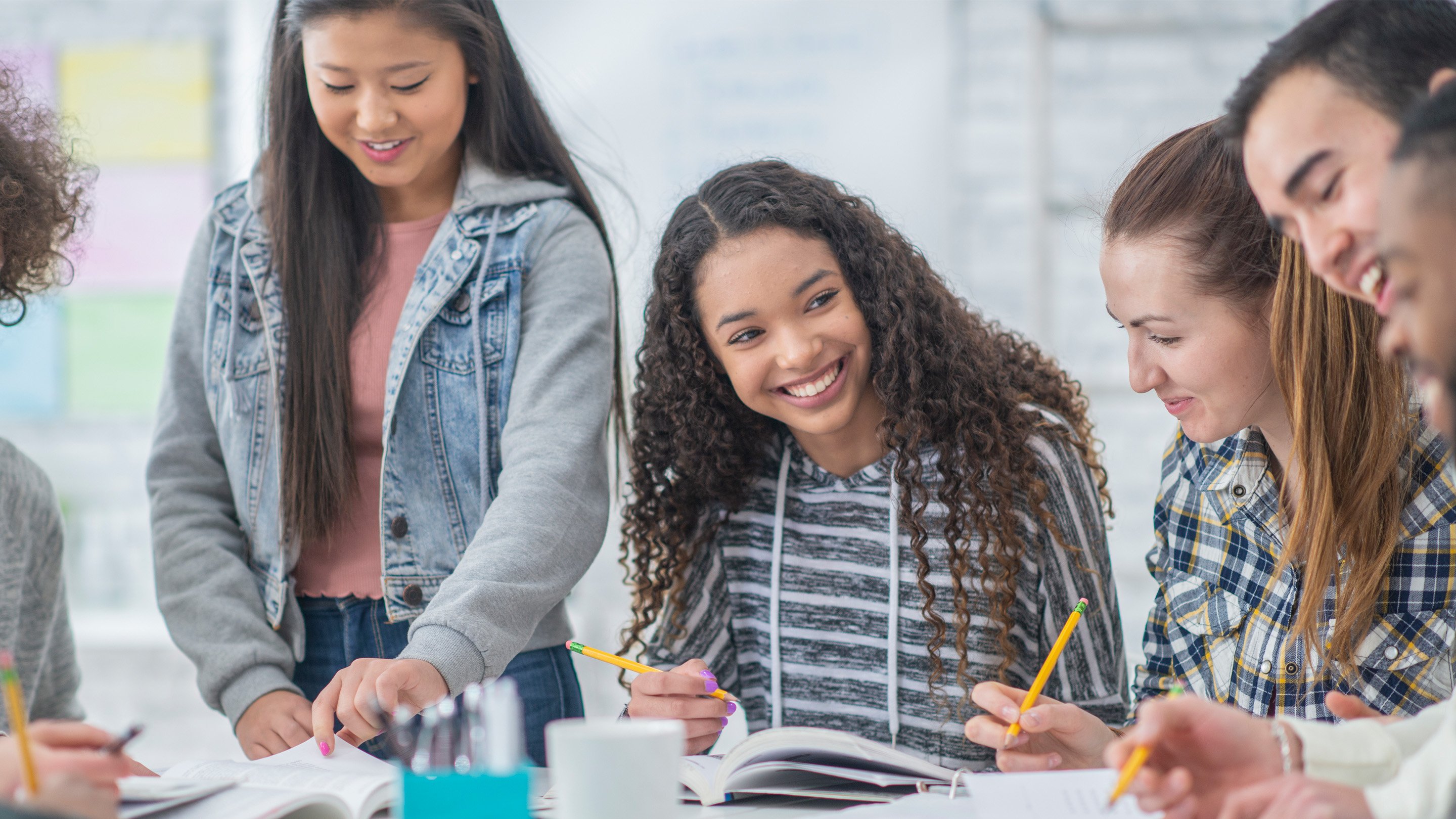
Authentic communication is collaborative. Speakers listen, respond, clarify, disagree, compromise, and repair confusion. Group language tasks make those invisible social processes visible.
A team might design a bilingual museum exhibit or recommend a destination for a student exchange. Members must divide responsibilities, compare evidence, resolve competing ideas, and combine their contributions into a coherent product. Teachers can assign rotating rolesfacilitator, evidence checker, language coach, and audience advocateto prevent one confident student from becoming the group’s unpaid chief executive.
Useful assessment criteria include active listening, equitable participation, constructive feedback, and the ability to build on another person’s idea. These behaviors are central to effective teamwork in nearly every career.
5. Creativity and Real-World Problem-Solving
Language learners constantly make creative decisions. When they do not know a word, they describe it, gesture, use a synonym, or restructure the sentence. That strategic flexibility is a form of problem-solving.
Open-ended projects can strengthen it. Students might design a multilingual welcome guide, record a public-health message, create a sustainable travel plan, or propose a product for an international audience. The best tasks have more than one reasonable solution and require students to justify their choices.
Constraints can improve creativity. Ask learners to communicate an idea with limited vocabulary, adapt a message for two age groups, or turn a formal announcement into a short video. They discover that effective creativity is not random inspiration; it is purposeful invention within real limits.
6. Digital and AI Literacy
Technology literacy means more than knowing where the “share” button lives. Students must select appropriate tools, protect personal information, assess digital content, credit creators, and understand how technology shapes communication.
Artificial intelligence makes these responsibilities more urgent. Generative tools can create practice dialogues, suggest revisions, simulate audiences, and provide feedback. They can also invent facts, reproduce bias, flatten cultural differences, or produce language beyond a student’s actual ability.
A future-ready world language class teaches students to question AI output. They can compare a machine translation with a human revision, identify unnatural phrasing, verify cultural claims, and explain every final choice. Teachers might require an AI-use log documenting the prompt, output, changes, and verification process.
The guiding principle is simple: technology should extend student thinking, not quietly perform all of it while the learner watches from a comfortable chair.
7. Adaptability, Reflection, and Lifelong Learning
Language acquisition is an extended lesson in productive discomfort. Students forget words, misunderstand fast speech, receive corrections, and discover that progress arrives in uneven bursts. With supportive instruction, those experiences build resilience.
Can-Do Statements help learners identify what they can accomplish consistently and set realistic next steps. A goal such as “I can ask and answer follow-up questions about weekend activities” is clearer than “I need to get better at French.” Portfolios can capture recordings, drafts, feedback, reflections, and revised work so students see development over time.
This approach encourages self-direction. Learners become better at identifying gaps, choosing strategies, requesting help, and monitoring progresshabits they will need whenever a career, technology, or life situation asks them to learn something new.
How to Teach Future-Ready Skills Without Overloading the Curriculum
Teachers do not need to create an additional “future skills” unit. A better method is to redesign familiar lessons so that students use language to investigate, decide, collaborate, and create.
Begin With an Authentic Purpose
Replace “Students will learn restaurant vocabulary” with “Students will recommend an affordable meal for a visitor with dietary restrictions.” The second objective still requires vocabulary, but it also adds audience, constraints, research, and decision-making.
Use Authentic Materials With Appropriate Scaffolds
Menus, transit maps, advertisements, podcasts, interviews, and public information pages expose students to language created for real audiences. Teachers can support comprehension with guiding questions, visuals, glossaries, shortened excerpts, and repeated listening. Authentic does not have to mean “drop learners into the linguistic ocean and wish them luck.”
Build an Inquiry-to-Action Sequence
A strong project can follow four steps: investigate an issue, recognize perspectives, communicate findings, and take informed action. For example, students may examine food waste, compare community practices, interview peers, and produce a target-language awareness campaign.
Create Genuine Information Gaps
Conversation becomes meaningful when participants need information from one another. Give partners different schedules, maps, data sets, or witness accounts. They must ask questions and listen carefully to complete the task. Everyone reading the same script is technically speaking, but it is not much of a conversation.
Add Reflection to Every Major Task
After an activity, ask what strategy helped, where communication broke down, how cultural knowledge affected choices, and what the learner would change. Reflection converts an entertaining project into durable learning.
Assessing Skills That Matter
If assessment rewards only grammatical precision, students quickly learn that creativity, collaboration, and risk-taking are optional. Future-ready assessment should examine both language performance and the quality of the process.
An integrated performance assessment can connect interpretive, interpersonal, and presentational communication. Students first analyze authentic material, then exchange ideas, and finally create a product for a defined audience. A rubric may evaluate comprehensibility, evidence, cultural appropriateness, interaction, strategic use of technology, and reflection.
Teachers should assess skills through multiple performances rather than a single polished task. Self-assessment, peer feedback, conferences, drafts, and portfolio evidence reveal growth that a one-day test can miss. Expectations must also match proficiency. A novice can demonstrate excellent critical thinking with simple sentences, visuals, and carefully selected phrases.
Equity Must Be Part of Future Readiness
Technology-rich instruction is not automatically equitable. Students may have unequal device access, limited connectivity, disabilities, privacy concerns, or different levels of experience with digital tools. Teachers should offer accessible formats, explain tools directly, provide school-based work time, and maintain meaningful low-tech options.
Heritage speakers and multilingual learners also bring valuable cultural and linguistic knowledge. They should not be treated as unpaid classroom dictionaries or assumed to have identical literacy skills. Flexible roles, differentiated goals, and asset-based instruction allow every learner to contribute while continuing to grow.
Future readiness means being able to participate, not merely being invited into a digital activity that was designed without one’s needs in mind.
Conclusion: Language Learning Is Preparation for What Comes Next
The future-ready world language class is not a vocabulary warehouse. It is a place where students interpret complicated messages, collaborate across differences, test ideas, use technology ethically, and recover from communication breakdowns.
Grammar and vocabulary remain essential, but they become tools for purposeful action. When learners use another language to investigate genuine questions and serve real audiences, they develop abilities that extend far beyond the classroom. They become more observant communicators, more responsible digital citizens, and more adaptable learners.
No teacher can predict every platform or profession students will encounter. Teachers can, however, help them practice curiosity, judgment, empathy, and communication. Those skills travel remarkably welland they never need a voltage adapter.
A 500-Word Classroom Experience: From Vocabulary List to Community Solution
Imagine Ms. Rivera beginning a high school Spanish unit called “Healthy Communities.” In previous years, the unit centered on food vocabulary, formal commands, and a tidy test on Friday. Students performed reasonably well, yet many struggled to order lunch in an unrehearsed role-play a week later. The vocabulary had apparently packed its bags immediately after the exam.
This time, Ms. Rivera introduced a practical challenge: create a bilingual campaign helping newly arrived families find affordable, nutritious food in the community. The final products would be reviewed by the school’s family liaison and displayed during a community resource night.
Students first examined Spanish-language grocery advertisements, nutrition graphics, bus schedules, and community-service announcements. In groups, they identified main ideas, compared prices, and discussed how layout and word choice influenced readers. When two sources offered conflicting nutrition advice, students investigated the author, supporting evidence, publication date, and intended audience.
The next stage required interpersonal communication. Each team received different information about an imaginary family’s budget, dietary needs, transportation, and work schedule. Students interviewed one another in Spanish to assemble the full profile. They soon discovered that asking a follow-up question was more useful than repeating a memorized sentence at increasing volume.
Teams then chose a format: infographic, short video, audio guide, or folded brochure. Roles rotated so that every student contributed to research, language development, design, and presentation. A heritage speaker who communicated confidently but wanted to improve formal writing became a revision lead. A novice learner used visuals and brief rehearsed phrases while taking responsibility for checking prices and transit information.
Ms. Rivera permitted limited use of translation and generative AI tools, but students had to document their process. They highlighted machine-generated phrases, checked them against reliable examples, and explained revisions. One group discovered that an AI-produced slogan was grammatically possible but culturally awkward. Rather than accepting it, the team interviewed a bilingual staff member and created a more natural alternative.
Peer feedback took place through a simple protocol. Reviewers identified one clear message, asked one genuine question, and suggested one audience-focused improvement. Because the feedback had a defined purpose and sentence starters matched students’ proficiency levels, the room filled with target-language interaction instead of vague comments such as “It looks good.”
During the community event, students watched adults use their maps and ask questions about their recommendations. That real audience changed how learners viewed accuracy. Clear directions and verified information were no longer requirements invented by a teacher; they affected whether another person could use the resource.
Afterward, students added drafts, feedback, final products, and individual reflections to their portfolios. One student wrote that she had improved at explaining an unfamiliar word without switching to English. Another recognized that attractive design could not rescue unreliable information. A third noted that his group’s first solution ignored families without cars.
The project did not eliminate explicit language instruction. Ms. Rivera still taught vocabulary, commands, comparisons, pronunciation, and text organization. The difference was that students immediately used those elements to solve a meaningful problem. Their growth was visible not only in more comprehensible Spanish but also in research habits, teamwork, cultural awareness, digital judgment, and confidence.
That is what future-ready skills in world language class look like in practice: language becomes the vehicle for thoughtful action, while the classroom becomes a small but convincing version of the connected world students are preparing to enter.

