
Body Care
Exercises for a Tipped Uterus
Jun
A tipped uterus sounds like something that should come with an instruction manual, a tiny warning sticker, and maybe a dramatic violin soundtrack. In reality, a tipped uterusalso called a tilted uterus or retroverted uterusis usually a normal anatomical variation. Instead of leaning forward toward the bladder, the uterus tilts backward toward the spine. For many people, it causes no symptoms at all and is discovered during a routine pelvic exam, which is not exactly the glamorous origin story anyone asks for, but there it is.
Still, if you have been told you have a tipped uterus and you also experience pelvic pressure, painful periods, discomfort during sex, low back tension, constipation, or urinary symptoms, it is fair to wonder whether exercises can help. The honest answer is: exercises usually cannot permanently “flip” a naturally tipped uterus into a new position. Your uterus is not a couch you can rearrange because the room feels off. However, the right exercises may support the pelvic floor, improve core stability, ease muscular tension, reduce pressure, and make daily life more comfortable.
This guide explains the best exercises for a tipped uterus, what they can and cannot do, when to be careful with Kegels, and when symptoms deserve a visit with an OB-GYN or pelvic floor physical therapist.
What Is a Tipped Uterus?
A tipped uterus is a uterus that leans backward toward the rectum and spine rather than forward toward the bladder. Medical providers often call this a retroverted uterus. It is common, often harmless, and not automatically a disease. Some people are born with this uterine position. Others develop it after childbirth, pelvic surgery, menopause, fibroids, endometriosis, pelvic inflammatory disease, or scar tissue that changes how the uterus sits in the pelvis.
The important thing to know is that a tipped uterus by itself usually does not prevent pregnancy, cause infertility, or create major health problems. If fertility problems or severe pelvic pain are present, another conditionsuch as endometriosis, fibroids, adhesions, infection, or pelvic floor dysfunctionmay be the real troublemaker. Think of the tipped uterus as a clue, not necessarily the villain wearing the cape.
Can Exercises Fix a Tipped Uterus?
Exercises may help some people feel better, but they usually do not permanently correct the position of the uterus. A provider may sometimes manually shift a mobile retroverted uterus during an exam, and pelvic floor exercises may help support the area afterward. But if the uterus is tilted because of scar tissue, endometriosis, fibroids, or adhesions, exercise alone is unlikely to change its position.
That does not make exercise useless. Far from it. A smart routine can strengthen weak pelvic floor muscles, relax overactive muscles, improve hip mobility, reduce low back strain, and support the deep core. These benefits may ease symptoms that people often blame on a tipped uterus, including pelvic heaviness, painful sex, lower back aches, and menstrual discomfort.
Before You Start: Know Your Pelvic Floor Type
The pelvic floor is a group of muscles and connective tissues that supports the bladder, bowel, uterus, cervix, and vagina. These muscles also help with bladder control, bowel control, sexual function, and pelvic stability. When they are weak, symptoms may include urine leakage, pelvic heaviness, or a feeling of poor support. When they are too tight or overactive, symptoms may include painful sex, pelvic burning, constipation, urinary urgency, and pain that feels like your pelvis is clenching for dear life.
This matters because Kegel exercises are not right for everyone. If your pelvic floor is weak, Kegels may help. If your pelvic floor is already tight, too many Kegels can make symptoms worse. In that case, relaxation, breathing, stretching, and pelvic floor physical therapy may be more useful than squeezing exercises.
Best Exercises for a Tipped Uterus
The following exercises are generally gentle and can be done at home. Stop any movement that causes sharp pain, dizziness, heavy bleeding, worsening pelvic pressure, or discomfort that does not settle. If you are pregnant, recently postpartum, recovering from surgery, or dealing with diagnosed endometriosis, fibroids, prolapse, or pelvic pain, ask a clinician before starting a new routine.
1. Diaphragmatic Breathing
Diaphragmatic breathing is the “reset button” for the pelvic floor. It helps the diaphragm, abdomen, and pelvic floor move together instead of acting like three coworkers who refuse to attend the same meeting.
How to do it:
- Lie on your back with your knees bent and feet flat, or sit comfortably in a chair.
- Place one hand on your lower ribs and one hand on your lower belly.
- Inhale slowly through your nose and let your ribs expand outward.
- Imagine the pelvic floor softening downward as you breathe in.
- Exhale gently through your mouth and let your belly relax.
- Repeat for 2 to 5 minutes.
Why it helps: Deep breathing may reduce pelvic floor guarding, lower tension, and improve awareness of the muscles that support the uterus and surrounding organs.
2. Pelvic Tilts
Pelvic tilts are simple, low-risk movements that help improve mobility in the lower back and pelvis. They are especially useful if your lower back feels stiff during your period or after long hours of sitting.
How to do it:
- Lie on your back with knees bent and feet flat on the floor.
- Inhale and let your lower back gently arch away from the floor.
- Exhale and gently flatten your lower back toward the floor by tipping your pelvis upward.
- Move slowly and avoid forcing the motion.
- Repeat 10 to 15 times.
Why it helps: Pelvic tilts can ease low back tension and help you reconnect with pelvic movement without aggressive stretching.
3. Knee-to-Chest Stretch
The knee-to-chest stretch may help relieve lower back tightness and gentle pelvic pressure. It is not a magic uterus repositioning trick, but it can feel wonderful when your back is acting like it has filed a formal complaint.
How to do it:
- Lie on your back with both knees bent.
- Bring one knee toward your chest.
- Hold behind your thigh or over your shin, whichever feels comfortable.
- Hold for 20 to 30 seconds while breathing slowly.
- Switch sides and repeat 2 to 3 times per side.
Why it helps: This stretch can reduce tension in the low back, hips, and glutes, which may indirectly ease pelvic discomfort.
4. Child’s Pose
Child’s pose is a gentle yoga-based stretch that encourages pelvic floor relaxation. It is especially helpful for people who feel tightness, pressure, or discomfort with penetration.
How to do it:
- Start on your hands and knees.
- Bring your big toes together and widen your knees comfortably.
- Sit your hips back toward your heels.
- Rest your forehead on the floor, a pillow, or stacked hands.
- Breathe slowly into your lower ribs and back body.
- Hold for 1 to 3 minutes.
Why it helps: Child’s pose may help relax tight pelvic floor muscles and calm the nervous system. Your pelvis likes a little peace and quiet too.
5. Cat-Cow Stretch
Cat-cow is a gentle spinal mobility exercise that moves the pelvis, back, and abdomen through a comfortable range of motion.
How to do it:
- Start on your hands and knees.
- Inhale as you gently arch your back and lift your chest.
- Exhale as you round your spine and tuck your pelvis slightly.
- Move slowly with your breath.
- Repeat 8 to 12 times.
Why it helps: Cat-cow can reduce stiffness, improve pelvic mobility, and support better coordination between the spine and pelvis.
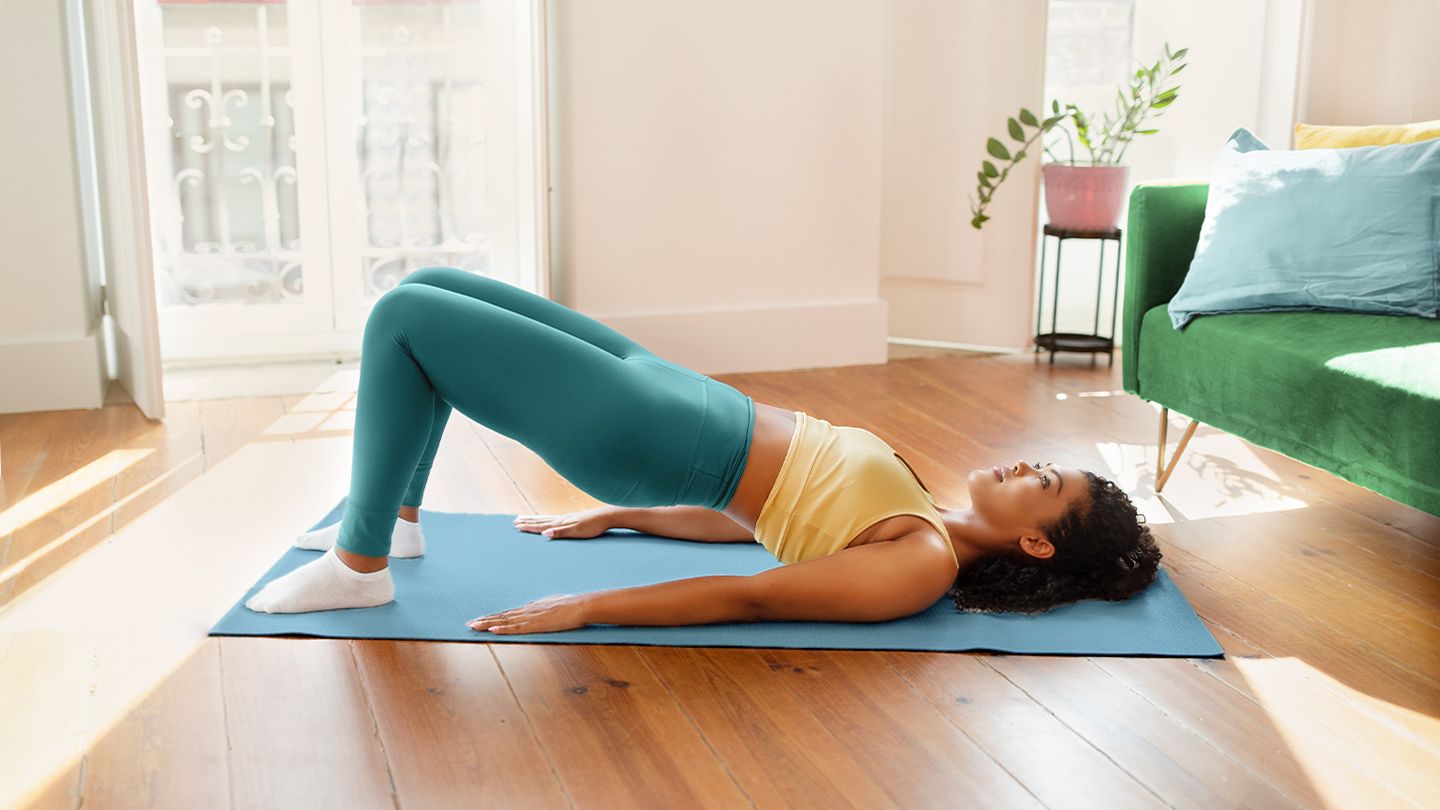
6. Glute Bridges
Glute bridges strengthen the hips, glutes, hamstrings, and deep core. Strong glutes help support pelvic alignment, which is helpful whether your uterus tips forward, backward, or simply prefers to be mysterious.
How to do it:
- Lie on your back with knees bent and feet hip-width apart.
- Inhale to prepare.
- Exhale and lift your hips until your body forms a straight line from shoulders to knees.
- Keep your ribs relaxed and avoid over-arching your back.
- Lower slowly.
- Do 2 sets of 8 to 12 repetitions.
Why it helps: Bridges improve pelvic stability and may reduce strain on the lower back and pelvic floor.
7. Bird Dog
Bird dog is a core stability exercise that trains the back, abdomen, hips, and pelvic stabilizers to work together.
How to do it:
- Start on your hands and knees.
- Gently draw your lower belly inward without holding your breath.
- Extend your right arm forward and left leg back.
- Keep your hips level.
- Hold for 2 to 3 seconds, then return to start.
- Switch sides and repeat 6 to 10 times per side.
Why it helps: Bird dog builds coordination and support through the core and pelvis without heavy pressure on the pelvic floor.
8. Happy Baby Pose
Happy baby pose stretches the inner thighs, hips, and pelvic floor region. Yes, the name is ridiculous. Yes, it can still be useful.
How to do it:
- Lie on your back.
- Bring both knees toward your chest.
- Hold behind your thighs, ankles, or the outside edges of your feet.
- Let your knees open gently toward your armpits.
- Breathe deeply and hold for 30 to 60 seconds.
Why it helps: This pose may release tension in the hips and pelvic floor, especially when paired with slow breathing.
9. Supported Deep Squat
A supported squat can stretch the pelvic floor and hips. It should feel like a gentle opening, not like an audition for a circus act.
How to do it:
- Stand with feet slightly wider than hip-width.
- Hold a countertop, sturdy chair, or doorframe for support.
- Slowly lower into a comfortable squat.
- Keep your heels supported with a folded towel if needed.
- Breathe slowly for 20 to 30 seconds.
- Rise carefully and repeat 2 to 3 times.
Why it helps: Supported squats can improve hip mobility and pelvic floor relaxation. Avoid this if it worsens prolapse symptoms or pelvic heaviness.
10. Gentle Kegel Exercises
Kegels strengthen the pelvic floor by contracting and relaxing the muscles that help control urine, gas, and bowel movements. They may be helpful if you have weak pelvic floor muscles, mild urinary leakage, or postpartum weakness. They may not be helpful if your pelvic floor is tight or painful.
How to do it:
- Empty your bladder first.
- Sit or lie down comfortably.
- Imagine gently stopping gas or lifting a marble upward with the vaginal muscles.
- Hold for 3 to 5 seconds.
- Relax fully for 3 to 5 seconds.
- Repeat 10 times, up to 3 times daily.
Important: Do not regularly practice Kegels while urinating. Using them to stop urine midstream too often can interfere with normal bladder function. Also, do not squeeze your thighs, buttocks, or stomach. The pelvic floor is the star of this tiny show.
A Simple Weekly Routine for a Tipped Uterus
If you are not in acute pain and your provider has not restricted exercise, try this gentle routine 4 to 5 days per week:
- Diaphragmatic breathing: 3 minutes
- Pelvic tilts: 10 to 15 reps
- Cat-cow: 8 to 12 reps
- Child’s pose: 1 to 3 minutes
- Glute bridges: 2 sets of 8 to 12 reps
- Bird dog: 6 to 10 reps per side
- Knee-to-chest stretch: 2 rounds per side
- Kegels only if appropriate: 10 gentle contractions
Start small. More is not always better, especially with pelvic health. Your goal is not to turn your pelvis into a boot camp. Your goal is comfort, strength, mobility, and better body awareness.
Exercises to Avoid or Modify
Most people with a tipped uterus can exercise normally. However, if you have pelvic pain, prolapse symptoms, urinary leakage, or pressure, certain moves may need modification.
Heavy Lifting Without Breath Control
Holding your breath while lifting increases pressure downward on the pelvic floor. Exhale during effort and use lighter loads until symptoms are stable.
High-Impact Workouts During Flares
Jumping, sprinting, and intense plyometrics may worsen pelvic pressure or bladder leakage in some people. Choose walking, cycling, swimming, or low-impact strength training during symptom flares.
Too Many Kegels
If Kegels cause pain, burning, pressure, constipation, or discomfort during sex, stop and consult a pelvic floor physical therapist. A tight pelvic floor needs release and coordination, not another round of “squeeze harder.”
When to See a Doctor
A tipped uterus is often harmless, but symptoms should not be ignored. Contact a healthcare provider if you have severe pelvic pain, painful sex, heavy bleeding, pain with bowel movements, trouble urinating, repeated urinary tract infections, infertility concerns, a feeling of vaginal bulging, or pain that interferes with work, exercise, sleep, or relationships.
You should also seek care if symptoms began suddenly, worsened after surgery or childbirth, or are paired with fever, unusual discharge, or pregnancy. A pelvic exam, ultrasound, and medical history can help determine whether the tipped uterus is just a normal variation or whether another condition is involved.
How Pelvic Floor Physical Therapy Can Help
Pelvic floor physical therapy is one of the most useful options for people with pelvic pain, painful sex, bladder symptoms, constipation, endometriosis-related muscle guarding, postpartum weakness, or suspected pelvic floor dysfunction. A pelvic floor physical therapist can assess whether your muscles are weak, tight, poorly coordinated, or overworking like they are trying to win employee of the month.
Treatment may include breathing exercises, hip and core strengthening, stretching, manual therapy, posture work, bladder and bowel habit coaching, and customized home exercises. For many people, individualized care works better than random internet routines because pelvic floor problems can look similar but require very different solutions.
Practical Lifestyle Tips That Support Pelvic Comfort
Prevent Constipation
Straining during bowel movements increases pressure on the pelvic floor. Drink enough fluids, eat fiber-rich foods, walk regularly, and consider using a footstool to support a better bathroom posture.
Use Heat for Menstrual Back Pain
A heating pad on the lower abdomen or back may ease cramps and muscular tension. Pair it with slow breathing for maximum “please stop yelling, uterus” energy.
Try Different Sex Positions
A tipped uterus can sometimes make deep penetration uncomfortable. Positions that allow you to control depth and angle may help. Communication, lubricant, and patience are not optional accessories; they are the main event.
Build Core Strength Gradually
Gentle core exercises such as dead bugs, heel taps, bridges, and bird dogs can support pelvic stability. Avoid intense abdominal bracing if it worsens pelvic pressure.
Experience-Based Notes: What It May Feel Like to Exercise With a Tipped Uterus
Many people describe the experience of having a tipped uterus as confusing because the diagnosis sounds dramatic, but the advice is often strangely casual: “It is normal. Don’t worry.” That can be reassuring, but it can also feel incomplete if you are the person dealing with cramps, backache, or discomfort during sex. The body may be normal and still be noisy. A tipped uterus is often harmless, but symptoms are still worth listening to.
One common experience is lower back discomfort around the period. Some people notice that traditional abdominal exercises, long sitting, or high-impact workouts make the ache more noticeable. Gentle movement often feels better than doing nothing. Pelvic tilts, cat-cow, and knee-to-chest stretches are popular because they are easy, quiet, and do not require special equipment. They also help you feel like you are doing something useful without turning your living room into a sports medicine clinic.
Another shared experience is the trial-and-error nature of Kegels. Some people feel improvement in bladder control and pelvic support after several weeks of consistent, gentle contractions. Others feel worse because their pelvic floor was already tight. This is why “just do Kegels” is not always good advice. Pelvic health is more like tailoring than buying socks; the fit matters. If symptoms include pain with penetration, constipation, urinary urgency, or a clenched feeling in the pelvis, relaxation exercises may be the better starting point.
People who work with a pelvic floor physical therapist often report that the biggest surprise is how connected everything is. A sore hip, shallow breathing, jaw tension, constipation, and pelvic pain can all be part of the same conversation. The uterus may get the headline, but the supporting cast includes muscles, nerves, fascia, posture, stress, hormones, and daily habits. Pelvic therapy can feel awkward at first because it involves intimate topics, but many patients find it empowering once they understand what their body is doing.
Consistency also matters more than intensity. A five-minute routine done most days usually beats one heroic 45-minute session followed by two weeks of pretending the yoga mat is decorative. Gentle breathing before bed, a few pelvic tilts in the morning, bridges after a walk, and stretching during period cramps can create a routine that fits real life. The best exercise plan is not the fanciest one; it is the one you can actually repeat without dreading it.
Finally, many people feel relief simply from learning that a tipped uterus is not a personal failure, a fertility sentence, or proof that something is “wrong” with their body. Anatomy varies. Some noses point up, some hair parts on the left, and some uteruses lean backward. The goal of exercise is not to shame the uterus into standing up straight. The goal is to reduce symptoms, improve support, and help you feel more at home in your body.
Conclusion
Exercises for a tipped uterus can be helpful, but they work best when expectations are realistic. A tipped or retroverted uterus is usually a normal anatomical variation, not a problem that must be corrected. Exercises may not permanently change the uterus’s position, especially if scarring, fibroids, or endometriosis are involved. But gentle pelvic mobility, breathing, hip stretching, core strengthening, glute work, and appropriate pelvic floor training may reduce discomfort and improve support.
The smartest approach is balanced: strengthen what is weak, relax what is tight, and get professional help when symptoms are persistent or painful. If your pelvis could talk, it would probably say, “Please stop guessing and give me a customized plan.” Fair enough, pelvis. Fair enough.
Note: This article is for educational purposes only and is not a substitute for medical diagnosis or treatment. Anyone with severe pelvic pain, heavy bleeding, painful sex, fertility concerns, pregnancy-related symptoms, urinary problems, or suspected pelvic floor dysfunction should consult a qualified healthcare professional.

