
Body Care
Dresser “Montigny”
Aug
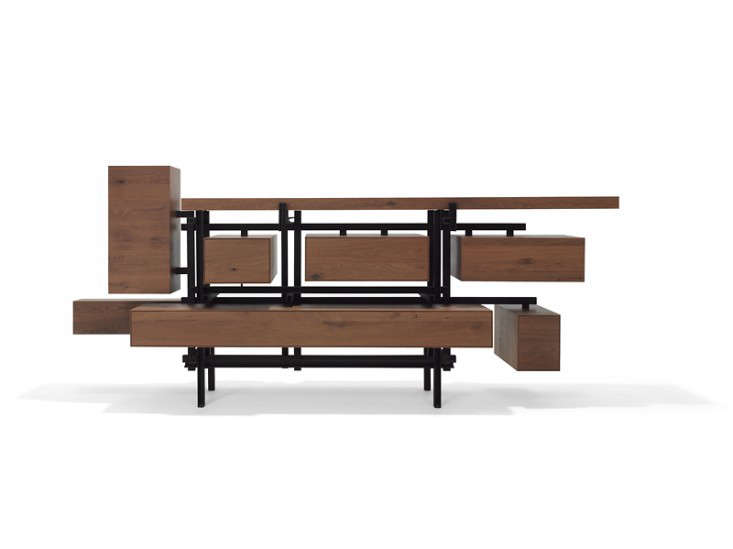
The Montigny dresser is not the kind of furniture that fades politely into the background. Designed by Roderick Vos, it was conceived after a kitchen commission for the French bed-and-breakfast Château de la Resle and is described as a playful, imposing piece with a carefully balanced composition. Its steamed oak warmth sits against a powder-coated steel frame, and the whole form is built around a subtle visual tension that makes the storage blocks feel almost weightless. That balance is the trick: Montigny looks sculptural, but it still behaves like a serious dresser.
In practical terms, that matters because a dresser is one of the hardest-working pieces in a bedroom. American design sources consistently treat dressers as more than a place to toss T-shirts; they are storage anchors, style setters, and space planners all at once. A well-chosen dresser can help a room feel calmer, smarter, and less like laundry has won the war. Better Homes & Gardens, The Spruce, House Beautiful, Real Simple, Apartment Therapy, and Good Housekeeping all emphasize the same idea in different ways: a dresser should solve storage problems without turning the room into a furniture showroom.
What makes Montigny different from a standard dresser
Most dressers follow a predictable formula: rectangular box, aligned drawers, conventional base. Montigny breaks that habit. Its design language is architectural rather than purely utilitarian, which is why it reads more like a carefully composed cabinet than a basic bedroom chest. The stepped arrangement of drawers and blocks creates depth, and the steel structure gives the oak a sharper edge. In design terms, that combination is a neat example of contrast done well: soft versus hard, natural versus industrial, playful versus disciplined.
A sculptural silhouette with real storage value
One reason Montigny stands out is that it does not hide its storage mission. Some designer furniture tries so hard to be “minimal” that it becomes forgettable. Montigny goes the opposite direction. It celebrates the act of storing things. The result is a dresser that feels like an object of interest even before you place a lamp, tray, or mirror on top of it. That balance between personality and purpose lines up with broader furniture advice from U.S. home editors, who increasingly recommend pieces that do double duty: practical storage plus visual impact.
Why the materials matter
The Montigny dresser’s material story is one of its strongest selling points. Steamed oak brings visual warmth and texture, while the powder-coated steel frame introduces crispness and durability. That pairing feels contemporary without becoming cold. In the United States, furniture guides repeatedly note that solid wood tends to offer better longevity than lightweight veneer constructions, especially when the goal is to keep a dresser in service for years rather than seasons. Even when veneer has its place, readers are encouraged to look at density, finish quality, and structural integrity before choosing.
Montigny also aligns with a broader design trend that favors tactile materials over purely glossy surfaces. Editors at Martha Stewart, Veranda, and House Beautiful frequently point to bedrooms that feel calmer when they mix natural textures, softer colors, and fewer visual interruptions. In that environment, a piece like Montigny can work as the room’s visual punctuation mark: one object that carries enough presence to organize the rest of the composition.
How Montigny fits into a modern bedroom
A dresser succeeds when it fits the room both physically and emotionally. The Spruce notes that dressers come in a range of widths, heights, drawer counts, and materials, which is a polite way of saying that the wrong dresser can overwhelm a room fast. Better Homes & Gardens also highlights how buyers should pay attention to size, drawer count, and material before falling for a pretty finish. Montigny is best thought of as a statement piece for a room that can afford some visual confidence. It is not shy furniture, and that is exactly the point.
In a master bedroom, Montigny can function as the main storage chest and the primary design anchor. In a guest room, it can create a boutique-hotel feeling, especially when paired with a simple lamp, a framed print, and a tray for essentials. In a smaller room, however, its bold form would need breathing space. House Beautiful and Martha Stewart both recommend using mirrors, lighter color palettes, and carefully scaled furniture to keep compact bedrooms from feeling cramped. A dresser with a strong profile can absolutely work there, but only if the rest of the room stays visually disciplined.
Styling the top without turning it into a junk drawer in public
The top of a dresser is where good intentions go to become clutter if nobody intervenes. Real Simple recommends keeping the surface intentionally simple: a small jewelry tray, a few curated objects, and not much else. The Spruce makes a similar case for decorative boxes that hide small items without adding chaos. That advice suits Montigny especially well, because its design already carries enough energy. It does not need a crowded top to feel complete. A lamp, one mirror, and a small tray are usually enough.
How to think about dresser organization
Montigny is a good reminder that storage design is also behavior design. Apartment Therapy and Good Housekeeping both stress decluttering before organizing, because neat drawers do not happen by accident. Clothing should be sorted by frequency of use, season, and category. The best dresser setup is one that makes your morning routine easier, not one that forces you to play archaeologist before breakfast. If a drawer is packed too tightly, the piece stops being useful and starts being decorative luggage.
A practical way to use a dresser like Montigny is to assign the upper drawers to daily items and the lower sections to less frequently used clothing, linens, or accessories. That mirrors the advice in dresser and bedroom-organizing coverage across Real Simple, Good Housekeeping, and Apartment Therapy: visible order is easier to maintain when the most used things are the easiest to reach. The fewer extra steps between you and your socks, the more likely the dresser is to stay organized.
Safety, stability, and everyday durability
Any dresser with height, drawers, and a substantial front profile should be treated with respect. The U.S. Consumer Product Safety Commission has spent years warning about furniture tip-over risks and has tied dresser safety to serious injury and child fatalities. Its current guidance and public education campaign emphasize anchoring furniture to the wall and using stability protections, especially in homes with children. A beautiful dresser is still beautiful after it is anchored; a toppled dresser is just a bad afternoon.
That caution does not make Montigny less appealing; it makes the piece feel more realistic. Substantial furniture should be installed thoughtfully. Consider floor clearance, wall material, drawer glide quality, and the kind of traffic the room gets. U.S. furniture retailers such as IKEA and Walmart increasingly highlight safety, dimensions, and storage function together, which reflects a broader shift in how shoppers judge dressers: not just by looks, but by how responsibly they fit into a home.
Care and maintenance for a dresser like Montigny
A high-quality dresser should be treated like a long-term guest, not a disposable prop. This Old House recommends gentle cleaning, furniture wax or polish for nourishment, and keeping wood furniture out of direct sunlight to avoid fading and drying. Architectural Digest similarly advises careful cleaning and protection from moisture when dealing with wood furniture. For a piece that combines oak and steel, that means regular dusting, quick wipe-downs, and restraint with abrasive cleaners.
If drawers begin to feel sticky, a tiny amount of wax on the rails can help movement without forcing the hardware. This Old House notes that beeswax can free a stubborn drawer by reducing friction on contact points. That kind of maintenance is small, almost boring work, but boring is underrated when the payoff is a dresser that opens smoothly every morning for years.
Why Montigny feels current right now
The reason Montigny still feels fresh is that it sits at the intersection of several modern tastes. Buyers want furniture that does not look generic. They want practical storage. They want materials that feel honest. And they want pieces that look intentional rather than algorithmically assembled. Montigny checks all of those boxes. It is both expressive and disciplined, which is a rare enough combination to matter. In a market full of “neutral but fine” dressers, a piece with a real point of view becomes memorable quickly.
That is also why the dresser works so well as a case study in bedroom design. It shows how a single storage piece can influence scale, texture, and mood. It can make a room feel more designed without making it feel overdesigned. That balance is what many U.S. style editors keep returning to in coverage of bedroom decor: the best rooms are not the most crowded rooms, but the most considered ones.
Experience notes: living with a dresser like Montigny
In day-to-day use, a dresser like Montigny tends to change the way a bedroom behaves. The first change is visual. Once a strong piece is in place, the room starts to feel organized even before the drawers are full. That is a surprisingly powerful effect, because many bedrooms do not suffer from a lack of storage so much as a lack of visual order. Montigny solves that by acting as an anchor. It gives the eye somewhere to land, and that makes the rest of the room feel less frantic.
The second change is behavioral. People usually treat ordinary dressers as catchalls, but a distinctive dresser encourages better habits. When a piece looks carefully made, the impulse to respect it goes up. Clothes get folded more neatly. Jewelry has a better chance of ending up on a tray instead of scattered across the top. Even daily routines become a little more deliberate. That is one reason designer storage furniture often outlasts trend-driven furniture psychologically, not just physically.
The third change is tactile. Oak has a different emotional effect than glossy laminate. It feels warmer in the room, and paired with steel it creates a subtle tension that keeps the eye interested. In a bedroom, that matters more than people expect. A bedroom is not a showroom; it is where you start and end the day. Furniture that feels calm but not bland tends to age better in that environment. Montigny has that quality. It does not demand attention every minute, but it never disappears.
In a small room, the experience becomes more strategic. A bold dresser can either save the space or suffocate it. Montigny works best when the surrounding decor is pared back: a restrained color palette, one mirror, one lamp, and not much else competing for attention. This is the point at which the dresser stops being just a storage object and starts acting like a room’s visual editor. It decides what is loud, what is quiet, and what gets ignored.
From a maintenance perspective, the real-world experience is also reassuring. Good furniture should not make you nervous every time you touch it. It should wipe clean, open smoothly, and continue to feel sturdy after repeated use. If you anchor it properly, keep the surface clean, and treat the finish with ordinary respect, a dresser like Montigny should not become high maintenance. It should become background competence, which is honestly the highest compliment furniture can receive.
The last useful experience note is resale and longevity. Pieces with a recognizable design point often retain interest longer than generic furniture because they feel authored. A Montigny-style dresser is the sort of item someone notices in a room years later and asks about. That matters for anyone who thinks beyond one season of décor. You are not just buying drawers. You are buying a piece of the room’s identity, and that identity can stay relevant even when bedding, wall color, and rugs change around it.
Conclusion
Montigny works because it understands something many dressers never learn: storage can be beautiful without pretending to be invisible. Its mix of oak and steel, its layered form, and its strong but balanced presence make it feel more like a designed object than a commodity. In a bedroom, that can be exactly what the space needsa piece that organizes clothes, sharpens the room, and quietly raises the standard for everything else around it.

