
Hair Care
Can Mother-of-Pearl Make Stronger Armor?
Aug
Mother-of-pearl sounds like something you would find in a jewelry box, not in a lab full of impact machines, microscopes, and engineers drinking suspiciously cold coffee at 2 a.m. Yet this shimmering material, also called nacre, has become one of the most fascinating models for stronger armor and next-generation protective materials. The reason is simple: nacre is beautiful, but it is not delicate. It is nature wearing formalwear and steel-toed boots at the same time.
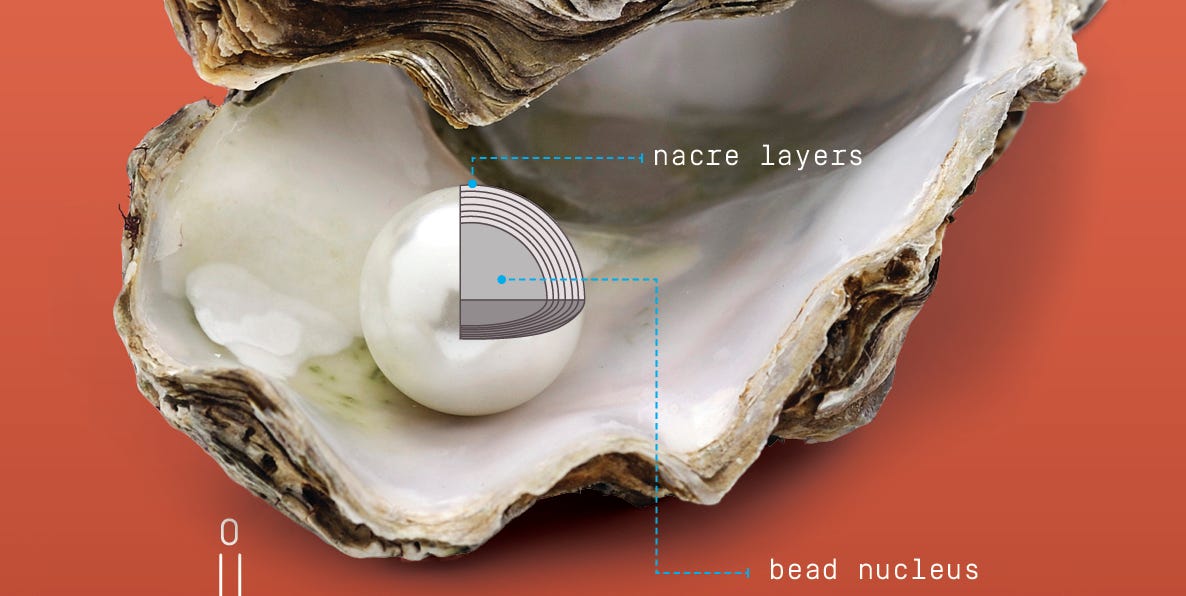
Found inside the shells of oysters, abalones, mussels, and other mollusks, mother-of-pearl is famous for its iridescent glow. But beneath that rainbow surface is a microscopic architecture that materials scientists love almost as much as coffee and grant funding. Nacre combines hard mineral tablets with soft organic layers in a structure often described as “brick and mortar.” The bricks are mostly aragonite, a crystal form of calcium carbonate. The mortar is a thin organic biopolymer layer that helps the whole structure bend, slide, and resist cracking.
So, can mother-of-pearl make stronger armor? The short answer is: not by gluing seashells onto a vest like a craft project gone rogue, but absolutely by inspiring armor materials that are tougher, lighter, and better at managing impact energy. The real magic is not the shiny surface. It is the design rule hidden underneath: hard layers stop and spread force, while softer layers absorb energy and keep cracks from racing through the material like they paid for express shipping.
What Is Mother-of-Pearl, Really?
Mother-of-pearl, or nacre, is an organic-inorganic composite material produced by certain mollusks as part of their inner shell layer. It is also the material that coats pearls, giving them their famous luster. But nacre is more than a pretty coating. It is a natural defense system designed over millions of years to protect soft-bodied animals from rough environments, predators, pressure, and everyday ocean chaos.
At first glance, nacre should not be as tough as it is. Most of it is aragonite, which is a brittle mineral. A block of pure aragonite can crack relatively easily. Yet nacre resists fracture far better than its ingredients suggest. That is the first big lesson for armor research: strength is not just about what a material is made of. It is also about how the material is organized.
The Brick-and-Mortar Secret
Under a microscope, nacre looks a little like a tiny stone wall. Thousands of hard aragonite tablets are stacked in layers, and between them are extremely thin sheets of organic material. When force hits nacre, the tablets do not simply snap in a straight line. They slide, interlock, redirect cracks, and spread energy across a wider area. In other words, nacre makes a crack take the scenic route.
This matters because many protective materials fail when cracks travel too quickly. A crack in a brittle ceramic, for example, can move rapidly and cause sudden failure. Nacre slows that process. It uses controlled sliding, crack deflection, tablet pull-out, and organic matrix stretching to waste the energy that would otherwise create a clean break. The result is a material that is both hard and tough, which is a difficult combination to achieve.
Why Armor Designers Care About Nacre
Armor is not just about hardness. A very hard material may stop sharp or fast-moving threats, but if it is too brittle, it can shatter. A very flexible material may absorb energy, but if it is too soft, it may deform too much. Stronger armor needs balance: hardness, toughness, low weight, durability, and comfort. That is where nacre-inspired design becomes exciting.
Modern protective materials often use layers. Helmets, shields, transparent panels, and protective composites may combine ceramics, fibers, polymers, and energy-absorbing backings. Nacre suggests a smarter version of that layered idea. Instead of simply stacking materials like a sandwich, researchers try to arrange them so cracks twist, stresses spread, and energy is absorbed gradually rather than released all at once.
Hardness Stops; Toughness Survives
In materials science, “strength” and “toughness” are not the same thing. Strength describes how much stress a material can handle before deforming or failing. Toughness describes how much energy a material can absorb before fracturing. Armor needs both. A material that is strong but not tough may behave like a fancy dinner plate: impressive until gravity gets involved.
Nacre is impressive because it combines stiffness and toughness through structure. The hard tablets provide resistance, while the soft layers allow controlled movement. This helps explain why nacre-inspired materials are being studied for lightweight armor, impact-resistant glass, stronger cement composites, aerospace parts, and even biomedical implants.
Real Research: Nacre-Inspired Lightweight Armor
One of the most direct examples comes from research associated with the University at Buffalo and supported by the Army Research Office. Scientists studied a nacre-inspired approach using ultrahigh molecular weight polyethylene, commonly called UHMWPE. That mouthful of a material is already valued because it is lightweight and strong. The nacre-inspired version used a graded structure, meaning its properties changed from one layer to another in a way that helped manage impact energy.
The concept is similar to natural nacre: a harder facing region helps manage initial impact, while more deformable inner regions absorb energy. This is not a copy-and-paste version of a pearl. It is a lesson taken from pearl structure and translated into engineered polymers. Research reports described the resulting lightweight plastic as significantly stronger than steel by specific strength comparisons and much less dense. The point is not that plastic suddenly became a superhero cape. The point is that architecture can dramatically improve how a material responds under impact.
For armor design, weight is not a small detail. Heavy protective gear can limit movement, increase fatigue, and reduce practical usability. A lighter material that still manages impact well could improve protective equipment, vehicle panels, helmets, and other safety systems. Nacre-inspired design is attractive because it aims to provide protection without turning the wearer into a walking refrigerator.
Nacre-Inspired Glass: When Transparent Materials Need Toughness
Armor does not always mean opaque plates. Transparent protective materials are also important, especially in windows, shields, electronics, vehicle glazing, and safety barriers. The trouble is that glass is strong in some ways but notoriously brittle. Drop a phone once and suddenly your screen looks like a spider held a committee meeting on it.
Researchers at McGill University developed nacre-inspired glass composites that mimic the layered, sliding behavior of mother-of-pearl. Instead of letting cracks race through one brittle sheet, the design encourages layers to slide and absorb energy. This kind of bioinspired glass has been reported as more impact resistant than conventional laminated or tempered glass while keeping useful transparency and stiffness.
The lesson is clear: nacre-inspired materials are not only about stopping force; they are about controlling damage. A material that bends, slides, or redistributes stress may stay useful after impact, while a brittle material may fail dramatically. For protective design, graceful damage is often better than sudden collapse.
Princeton’s Cement Composite: Armor Lessons Beyond Armor
At Princeton, engineers applied nacre-inspired ideas to cement-based materials. Cement is not body armor, obviously, unless your fashion sense is extremely committed. But cement is a classic example of a brittle material that can benefit from crack control. Princeton researchers created architected cement composites inspired by nacre’s layered structure and reported major improvements in crack resistance and ductility compared with standard cement paste.
This matters for the armor question because the same design principle appears again: layered architecture, controlled sliding, crack bridging, and tortuous crack paths can make brittle materials behave in a tougher way. Whether the material is cement, glass, polymer, or ceramic, nacre teaches engineers to think less like a brick and more like a system.
How Nacre Handles Impact
Impact is not the same as slow bending. When something is hit quickly, materials behave differently. Nacre has been studied under high-strain-rate conditions, meaning researchers examine how it responds when force is applied rapidly. Studies have shown that nacre’s structure can help distribute stress and reduce catastrophic failure under fast loading.
At the microscopic level, several mechanisms work together. Aragonite tablets may slide slightly. Organic layers stretch and deform. Tablet roughness and waviness can create interlocking resistance. Cracks are redirected along interfaces instead of cutting straight through. The result is not invincibility, but it is impressive damage management.
Crack Deflection: Making Failure Work Harder
One of nacre’s smartest tricks is crack deflection. In a simple brittle material, a crack may run straight through. In nacre, the crack meets layers, interfaces, and obstacles. It turns, branches, slows, and consumes more energy. Imagine trying to sprint through a house where every hallway becomes a maze. That is what nacre does to cracks.
Tablet Sliding: Controlled Movement Instead of Sudden Breakage
Another key mechanism is tablet sliding. The aragonite tablets can move slightly against the organic layers, which allows the material to deform without instantly breaking. This sliding is limited and controlled, not sloppy. It is more like a suspension system than a pile of loose tiles.
Organic Layers: The Tiny Shock Absorbers
The organic material in nacre makes up only a small fraction of the structure, but it plays an outsized role. It acts like a flexible glue, helping the hard tablets stay connected while allowing energy-dissipating movement. In engineered armor, this idea translates into combining hard and soft phases carefully rather than assuming one material can do everything alone.
Could We Make Actual Armor From Mother-of-Pearl?
Using natural mother-of-pearl directly as modern armor is not practical. Nacre grows slowly, varies by species, and is limited in size and shape. It is also not optimized for every modern threat or engineering requirement. No serious designer is planning to harvest oysters and assemble a high-tech protective suit like a seafood-themed medieval knight.
The real opportunity is biomimicry: learning from nacre’s structure and applying those principles to engineered materials. That might mean layered ceramics and polymers, nacre-like glass, graded plastics, 3D-printed composites, or hybrid systems that combine hard plates with flexible energy-absorbing layers. The goal is not to wear mother-of-pearl. The goal is to borrow its playbook.
Advantages of Nacre-Inspired Armor Materials
Nacre-inspired armor research points to several promising advantages. First is improved toughness. By redirecting cracks and spreading stress, these materials may resist sudden failure better than monolithic brittle materials. Second is lighter weight. Polymers and composites inspired by nacre may offer strong protection without excessive mass. Third is better damage tolerance. Instead of shattering, a nacre-like material may deform, delaminate in controlled ways, or preserve enough structure to remain useful after impact.
Another advantage is design flexibility. Engineers can adjust layer thickness, material choice, surface patterning, interface strength, and geometry. This makes nacre a design philosophy, not a single recipe. It can inspire transparent shields, wearable panels, vehicle protection, aerospace components, construction materials, and consumer electronics.
Challenges: Why We Are Not Wearing Pearl Armor Tomorrow
There are still big challenges. Natural nacre works beautifully because it is built with extraordinary precision across many length scales, from nanometers to centimeters. Replicating that level of order in a factory is difficult. Manufacturing nacre-inspired materials at scale must be affordable, consistent, and reliable. A brilliant lab sample is exciting, but industry needs repeatable performance on Monday morning after the machine has already had a bad weekend.
Another challenge is testing. Armor materials must be evaluated under specific standards, environmental conditions, aging effects, temperature changes, moisture exposure, repeated impacts, and real-world wear. A material may perform well in one test but struggle in another. Nacre-inspired design is promising, but it must be proven in complete systems, not just admired under a microscope.
There is also the issue of trade-offs. Making a material tougher may reduce stiffness. Making it lighter may affect durability. Adding layers may increase complexity or cost. Engineers must balance protection, comfort, weight, flexibility, repairability, and manufacturing speed. Nature had millions of years to tune nacre. Humans have project deadlines.
What Mother-of-Pearl Teaches About the Future of Protection
The biggest lesson from mother-of-pearl is that toughness comes from cooperation. Hardness alone is not enough. Flexibility alone is not enough. The winning design is a team effort between materials that perform different jobs. The hard phase resists force. The soft phase absorbs energy. The interface manages motion. The structure forces cracks to waste energy. It is less “one hero saves the day” and more “well-organized group project, but somehow everyone actually did their part.”
This idea fits the future of armor and protective systems. Instead of simply searching for the hardest possible substance, researchers are designing architectures that guide damage. A next-generation protective material may include ceramic layers, polymer layers, fibers, nanoparticles, textured interfaces, and gradient zones. It may be lighter, tougher, and more adaptable because it behaves more like nacre than like a single slab.
Specific Examples of Nacre-Inspired Innovation
Several research directions show how powerful the mother-of-pearl model can be. Nacre-inspired polymers aim to combine low density with high energy absorption. Nacre-like glass tries to preserve transparency while increasing impact resistance. Architected cement composites use layered and patterned structures to improve crack resistance. Ceramic-polymer hybrids explore how hard plates and soft binders can work together under stress. Additive manufacturing may eventually make it easier to create complex nacre-like patterns in customized shapes.
These examples show that the answer to “Can mother-of-pearl make stronger armor?” is not a fantasy. It is already influencing real materials research. The final products may not look shiny, pearly, or oceanic at all. They may look like ordinary panels, sheets, coatings, or composites. But hidden inside, their structure may owe a debt to mollusksthe quiet engineers of the sea.
Experience-Based Insights: What It Feels Like to Study Nacre-Inspired Armor Ideas
When you first read about mother-of-pearl as a model for stronger armor, it can sound like one of those science headlines that escaped from a comic book: “Pearls may save the future!” But the deeper you go, the more reasonable the idea becomes. The experience is a little like opening a plain toolbox and finding a tiny cathedral inside. Nacre looks smooth and decorative from the outside, but its internal design is remarkably disciplined.
One useful way to understand the topic is to compare it with everyday breakage. Think about dropping a ceramic mug. It usually fails suddenly because cracks travel quickly through the brittle material. Now think about laminated safety glass. It may crack, but the layers help hold pieces together and absorb energy. Nacre belongs to that second family of ideas, only with a far more elegant microscopic structure. It does not prevent all damage. Instead, it manages damage intelligently.
Another experience that helps explain nacre-inspired armor is handling layered materials. Even something simple like plywood shows the value of direction, layering, and structure. Plywood is not stronger than solid wood because each ingredient is magical. It is stronger because layers are arranged to resist splitting and spread force. Nacre takes that logic to a microscopic extreme. Its tablets and organic interfaces create a natural composite that resists cracks with impressive efficiency.
From a writer’s perspective, the funniest part of this subject is that mollusks have been solving engineering problems without attending a single conference. They do not publish papers, argue over terminology, or create terrifying spreadsheet names like “Impact_Test_Final_FINAL_v7.” They simply build shells that survive. Scientists then spend years trying to understand what the shell already knows. Nature is not always perfect, but when it gets something right, it gets annoyingly right.
For readers interested in technology, the most important takeaway is that stronger armor will probably come from smarter structures, not just stronger substances. The future may involve materials that are layered, graded, flexible in some regions, stiff in others, and designed to fail slowly rather than all at once. This is a major shift in thinking. Instead of asking, “What is the strongest material?” engineers increasingly ask, “What structure gives the best performance for the least weight?” Nacre answers that question with a shimmering little wink.
There is also a practical humility in this topic. Nacre-inspired materials are promising, but they are not magic. A lab result does not instantly become a mass-produced helmet, shield, vehicle panel, or transparent barrier. Between discovery and real-world use are years of testing, certification, cost analysis, manufacturing improvement, and design refinement. That process is slow because protective materials must be reliable. When safety is involved, “probably works” is not a product category.
Still, the excitement is justified. Mother-of-pearl proves that toughness can emerge from ordinary ingredients arranged in extraordinary ways. Calcium carbonate and organic polymer do not sound futuristic, but nacre turns them into a natural armor system. That idea is powerful because it gives engineers a blueprint: combine hardness with controlled movement, strength with flexibility, and beauty with function. Not bad for something best known for making pearls look expensive.
Conclusion: Pearl Wisdom for Stronger Armor
Mother-of-pearl can help make stronger armor, not as a direct shell-based material, but as a blueprint for smarter protective design. Its layered brick-and-mortar architecture shows how hard and soft materials can cooperate to resist cracks, absorb energy, and reduce sudden failure. Research into nacre-inspired polymers, glass, cement, and composites suggests that the future of armor may be lighter, tougher, and more damage-tolerant because engineers are learning from a material that mollusks perfected long before humans invented the word “biomimicry.”
The next generation of protective materials may not sparkle like jewelry, but it may carry the same internal wisdom: let hard layers resist, soft layers absorb, and cracks wander until they run out of ambition. In the world of armor, that is not just elegant. It is potentially game-changing.

