
Skincare
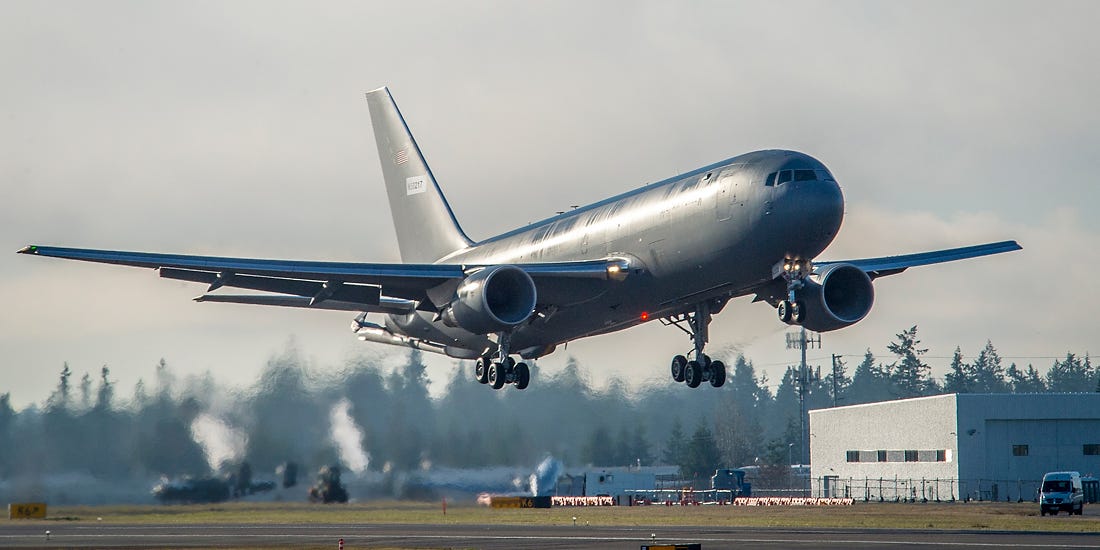
Boeing’s First Operational KC-46 Pegasus Takes Maiden Flight
Jul
Some airplanes make a first flight and quietly slip into service. The KC-46 Pegasus was never going to be that kind of airplane. When Boeing’s first operational KC-46A lifted off for its maiden flight, the moment carried more weight than your average “new jet goes up, new jet comes down, everyone claps” aviation milestone. This was the Air Force’s long-awaited next-generation tanker, the aircraft meant to start replacing the aging KC-135 fleet and drag American aerial refueling into a more modern era.
That is why the flight mattered so much. It was not just another development test hop. It was the first aircraft built for actual operational service, the one that signaled Boeing was moving from prototypes and program promises toward real-world fielding. In other words, the KC-46 was finally stepping out of the conference room and onto the runway.
And yet, because this is aerospace, the story was never going to be as simple as “mission accomplished.” The maiden flight was a genuine milestone, but it also sat in the middle of a program already wrestling with delays, technical issues, and the sort of budget pain that makes accountants stare into the middle distance. The result is one of the more fascinating modern military aviation stories: a tanker with real capability, a rocky road to service, and a first operational flight that was both triumphant and loaded with caveats.
The Flight That Finally Turned a Program Milestone Into Something Real
What happened on the day
Boeing’s first operational KC-46A Pegasus completed its maiden flight on December 5, 2017. The aircraft departed from Paine Field in Everett, Washington, and stayed airborne for roughly three and a half hours. During the sortie, Boeing test pilots took the tanker to 39,000 feet and ran operational checks on the engines, flight controls, and environmental systems. Nothing about that profile sounded flashy, but that was exactly the point. A first flight for an operational aircraft is supposed to be controlled, methodical, and deeply unglamorous. If the jet behaves itself, that is a win.
And the Pegasus behaved. The flight followed an FAA-approved profile, and Boeing framed it as the newest step toward delivery. For aviation fans, it was the kind of milestone that feels deceptively modest. No airshow theatrics. No dramatic afterburner climb. Just a big gray tanker proving it could do the boring things correctly, which, to be fair, is a large portion of military aviation’s day job.
Why the word “operational” mattered
The key phrase in the headline was not just maiden flight. It was first operational. The KC-46 program had already flown earlier aircraft. A 767-2C test aircraft had flown in 2014, and the fully equipped KC-46A tanker variant took its first flight in 2015. By the time this operational aircraft flew in late 2017, Boeing had already accumulated thousands of test hours and hundreds upon hundreds of refueling contacts across the program. But those earlier jets were development and test assets. This aircraft was different. It was built as part of the production path to actual Air Force service.
That distinction matters because programs do not truly become real when engineers say they are promising. They become real when the aircraft destined for squadrons starts flying. In that sense, Boeing’s first operational KC-46A maiden flight was the moment the Pegasus stopped being only a troubled development effort and started looking like a future fleet.
Why the Air Force Wanted the KC-46 So Badly
To understand the excitement around the flight, you have to understand the problem the Air Force was trying to solve. The service’s KC-135 Stratotankers have been the workhorses of American air refueling for decades. They are iconic, useful, and older than many grandparents, which is both impressive and slightly terrifying. Keeping them flying forever was never a realistic long-term strategy.
Boeing won the KC-X tanker competition in 2011 with its 767-based design, later designated the KC-46A. The plan called for 179 aircraft to begin recapitalizing the tanker fleet. The Air Force wanted more than a gas station with wings. It wanted a tanker that could also move cargo, carry passengers, support aeromedical evacuation missions, and bring updated defensive and mission systems into a contested environment.
On paper, the KC-46 sounded like exactly the kind of aircraft modern planners love. It could offload large amounts of fuel, refuel aircraft using both boom and hose-and-drogue methods, carry up to 18 cargo pallets, haul mixed passenger and cargo loads, and shift into aeromedical evacuation work without becoming a maintenance diva. Boeing also promoted the aircraft’s ability to convert quickly between mission sets. In simple terms, the Pegasus was designed to be less of a one-trick pony and more of a whole logistics toolbox.
That multi-role flexibility helps explain why the first operational aircraft’s maiden flight drew so much attention. The KC-46 was not supposed to be just a replacement for the KC-135. It was supposed to be a tanker for a different era, one where mobility aircraft need to do more than circle safely far from the action and wait for fighters to sip fuel politely.
A Big Milestone, Yes, but With Asterisks the Size of Hangar Doors
The program had already been slipping
By the time the first operational KC-46 flew in December 2017, the program was already carrying baggage. Boeing had missed earlier delivery goals, and the first 18 tankers originally due by 2017 were not arriving on schedule. The company’s fixed-price development contract turned those delays into real financial pain. Boeing, not the government, had to absorb major overruns, and the program racked up billions in charges along the way.
That context is crucial. The maiden flight was good news, but it was not a clean victory lap. It was more like a very encouraging step forward in hiking boots full of gravel. The Air Force needed the tanker. Boeing needed momentum. And both sides needed the operational aircraft to fly successfully because too much time, money, and political oxygen had already been spent getting to that point.
Then came the technical headaches
Unfortunately, making the first operational aircraft fly did not mean the program’s hardest problems were over. Some of the most stubborn issues involved the very systems that made the KC-46 modern in the first place.
The biggest long-term headache was the Remote Vision System, or RVS. Instead of positioning the boom operator in the rear of the aircraft with a direct view outside, as older tankers did, the KC-46 uses cameras, displays, and computer processing so the operator can manage refueling remotely. In theory, that is smart, modern, and efficient. In practice, early versions of the system struggled with visual clarity, lighting conditions, depth perception, and image distortions. That created situations where operators could have trouble seeing receiver aircraft properly, especially in challenging light.
That problem fed directly into another concern: inadvertent contact or scraping around receiver aircraft during boom operations. For stealthy aircraft, that was no small issue. Aircraft coatings and structures do not appreciate being treated like a shopping cart in a windy parking lot.
Then there was the boom stiffness issue, which complicated refueling for lighter receiver aircraft such as the A-10. Later, another major deficiency emerged involving cargo floor locks, leading the Air Force to temporarily restrict the KC-46 from carrying cargo and passengers until a fix was installed. Add foreign object debris issues during production, and the Pegasus program began to look like a student who aced the presentation but kept forgetting the homework.
What the Maiden Flight Still Proved
Here is the part that is easy to miss if you focus only on the problems: the first operational KC-46A maiden flight still mattered enormously. In fact, it mattered because the program was difficult. Programs that glide along without friction do not teach much. Programs that stumble, recover, and keep moving reveal what the customer truly values.
In the Pegasus case, that value was obvious. The Air Force kept pushing because the mission was too important to abandon. Tankers are not glamorous compared with fighters and bombers, but modern U.S. military power depends on them in almost absurd ways. Fighters need them. Bombers need them. Airlift operations need them. Long-range deterrence planning needs them. Even the concept of American global reach quietly leans on tanker availability like a ladder leaning on a wall.
So when Boeing’s first operational KC-46A flew successfully, it demonstrated that the production aircraft was moving closer to service even if the program still had miles to go. The maiden flight did not solve the tanker shortage. It did not erase schedule slips. It did not magically make the RVS perfect. But it did show that the operational fleet was beginning to exist in physical form, and that matters more than many headlines admit.
What Happened After the Flight
The years immediately after the maiden flight showed both the promise and the frustration of the KC-46 story. The Air Force accepted its first KC-46A in January 2019, and the first two aircraft were delivered to McConnell Air Force Base later that month. That was a major step because it moved the Pegasus from factory milestone to operational unit reality.
At the same time, the technical problems did not disappear. The Air Force and Boeing continued working through deficiencies, especially around the Remote Vision System and other refueling-related concerns. In 2020, the two sides agreed on the RVS 2.0 redesign path, aimed at bringing the system into full compliance with contract requirements. That redesign included upgraded cameras, larger displays, a laser range capability, and augmented-reality boom assistance. In other words, the “we can fix this with software” stage had given way to the “bring in more hardware” stage.
Even so, the aircraft’s useful capabilities kept becoming more visible. The KC-46’s cargo, passenger, and aeromedical features reinforced the argument that the Air Force had not bought a dud so much as a promising platform that entered service before every rough edge had been sanded down. That may not be comforting to program managers, but it is an important distinction. By 2022, the Air Force had approved the KC-46 for worldwide deployment in support of combatant command taskings, showing that the Pegasus had moved beyond its awkward early years and into more practical operational use.
Why This Flight Still Matters in Military Aviation History
Boeing’s first operational KC-46 Pegasus maiden flight now looks like one of those deceptively small milestones that gains more meaning with time. It was not the first flight of the overall program. It was not the delivery ceremony. It was not the moment the tanker was declared ready for every mission under the sun. But it was the point where the Air Force’s next tanker began looking like something more than a test campaign and less than a finished success. It was the hinge point.
That is why the event deserves more than a quick headline. The maiden flight captured the exact moment when promise met pressure. It showed the aircraft was moving into the operational pipeline, even as the broader program kept reminding everyone that aviation is a cruel editor. The KC-46’s first operational flight was a milestone worth celebrating, but it also came with a warning label: building a modern tanker is hard, integrating new technology is harder, and replacing legacy aircraft that quietly underpin global military operations is harder still.
Still, history is usually kind to milestones that move essential capability forward. The Pegasus may have arrived with a few bruises, some engineering arguments, and enough paperwork to bury a forklift, but the December 2017 maiden flight marked the moment the operational KC-46 truly began its journey.
The Human Experience Behind the KC-46 Story
One of the most interesting ways to think about Boeing’s first operational KC-46 Pegasus taking its maiden flight is to stop looking only at the aircraft and start looking at the people around it. For Boeing workers, that flight had to feel like relief mixed with pressure. Building military aircraft is not just about assembling metal, wiring, software, and systems. It is about living under a microscope. Every delay becomes a headline. Every defect becomes a congressional question. Every successful takeoff buys confidence, but only temporarily. So when that first operational tanker finally lifted off, it likely felt less like a champagne moment and more like the first deep breath after months of stress.
For Air Force crews, the experience was probably even more complicated. Tanker crews know better than most people that aerial refueling is not a luxury. It is the quiet, repetitive, absolutely essential work that lets everything else happen. Fighter sorties stretch farther. Bombers stay on task longer. Airlift missions move more efficiently. The entire system of American military reach depends on someone showing up with fuel in the sky. So seeing the first operational KC-46 fly would have been exciting, but also deeply practical. The question was never just “Isn’t this a cool new airplane?” It was “Can this thing finally start helping the fleet?”
Then there is the experience of boom operators and maintainers, who tend to view glossy rollout ceremonies with the healthy skepticism of people who know they will be the ones dealing with real-world friction. A beautiful aircraft on delivery day is one thing. An aircraft that works smoothly at odd hours, in ugly weather, with tight timelines, and under pressure from operational schedules is another thing entirely. For those crews, the KC-46 story has likely felt like a long negotiation between potential and practicality. They could see the advantages of the Pegasus, especially its multi-role flexibility and newer systems, but they also had to live through the consequences when the technology did not behave perfectly.
Even for aviation observers, the experience of following the KC-46 has been oddly emotional. Tankers are not usually celebrity aircraft. They do not get the cultural glow of stealth bombers or high-performance fighters. But the KC-46 program became a window into something larger: how hard it is to modernize the backbone of military logistics. The maiden flight of the first operational aircraft was exciting precisely because it suggested forward motion in a part of defense aviation that usually works in the background. It reminded people that logistics aircraft are not side characters. They are the reason the stars of the show can keep flying.
That is what gives the December 2017 flight staying power. It was not just a test point on a program chart. It was a moment thousands of people could read differently: engineers saw validation, crews saw overdue progress, commanders saw future capacity, and skeptics saw only the next exam the aircraft would have to pass. All of them were right, at least a little. And that blend of hope, realism, frustration, and persistence is exactly what makes the KC-46 story feel so human.
Conclusion
Boeing’s first operational KC-46 Pegasus taking its maiden flight was more than a routine aviation milestone. It marked the moment the Air Force’s next-generation tanker began transitioning from development effort to operational reality. The flight proved the production-bound aircraft could perform its early test profile successfully, and it pushed a critical modernization program one step closer to service.
At the same time, the event also previewed the truth of the KC-46 era: this would be a story of real capability arriving through a very imperfect process. Delays, cost overruns, remote vision problems, boom issues, and cargo lock fixes all complicated the path forward. But the importance of the tanker mission never changed. That is why the maiden flight still matters. It was the day the Pegasus stopped being mostly a promise and started becoming part of the Air Force’s future.

