
Skincare
There’s No Excuse For Sales Qualification Meetings in the Age of AI
May
Once upon a time, the sales qualification meeting had a noble purpose. A prospect filled out a form, a sales development representative booked a call, and both sides spent 30 minutes discovering whether they should have been speaking in the first place. Very efficientif your business model was powered by rotary phones, fax machines, and a deep emotional attachment to calendar clutter.
Today, that model is showing its age. In the age of AI, there is no good reason to force every buyer through a generic qualification meeting just to answer questions your company could have learned before the call. Company size? Available from firmographic data. Industry? Public. Tech stack? Often detectable. Hiring signals? Searchable. Intent? Trackable. Budget indicators? Inferable. Fit? Scorable. Timeline? At least partially predictable.
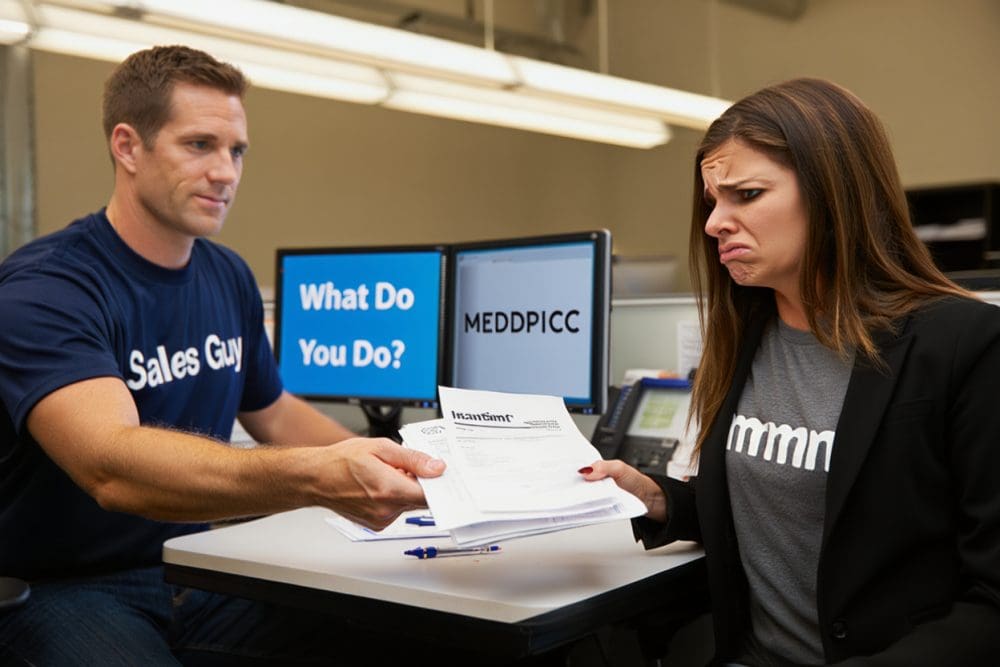
The real issue is not that sales qualification is dead. Qualification is still essential. What is deador should beis the lazy qualification meeting: the “just checking a few boxes” call where the seller asks basic questions, the buyer repeats information already typed into a form, and everyone pretends this is relationship-building. Spoiler alert: it is not. It is a meeting wearing a fake mustache.
What Is a Sales Qualification Meeting?
A sales qualification meeting is traditionally the first live conversation between a sales representative and a potential buyer. Its purpose is to decide whether the prospect is a good fit for the product or service. Sellers typically ask about budget, authority, need, timeline, company size, pain points, current tools, and buying process.
Classic frameworks such as BANT, MEDDIC, CHAMP, and SPICED gave sales teams a way to organize discovery. They helped sellers separate serious opportunities from tire-kickers, students doing “market research,” competitors being sneaky, and people who downloaded an eBook because the title had the word “growth” in it.
But the modern buyer journey has changed. B2B buyers now research vendors, compare alternatives, read reviews, watch demos, consult peers, and build shortlists before ever speaking with sales. By the time a buyer requests a demo, they may already know your pricing range, product category, competitors, feature gaps, and your CEO’s favorite conference buzzword.
Why Old-School Qualification Meetings Feel Broken
The traditional qualification meeting often creates friction because it is designed around the seller’s uncertainty, not the buyer’s experience. The seller does not know enough, so the buyer pays with time. That may have been acceptable when data was scarce. It is much harder to justify when AI can assemble a prospect profile in seconds.
Buyers Do Not Want to Repeat Themselves
Imagine filling out a detailed demo request form and then joining a meeting where the first question is, “So, tell me a little bit about your company.” That sound you hear is buyer trust quietly leaving the building.
When a prospect has already provided their name, company, role, use case, team size, and problem, the first call should not be a verbal copy-and-paste exercise. It should begin with context: “Based on what you shared and what we know about your market, here is where we think we can help.” That is a completely different experience.
Qualification Calls Delay Buyer Momentum
Many qualification calls exist because sales teams are protecting account executives from bad-fit leads. That goal makes sense. But if the process adds unnecessary delay, it may also punish ready buyers. A high-intent prospect should not have to sit through a basic screening call before seeing relevant value.
AI can help identify which leads need human discovery and which are ready for a tailored demo, pricing conversation, product consultation, or self-serve purchase path. The point is not to remove humans from sales. The point is to stop using humans as data-entry toll booths.
Sales Teams Are Already Drowning in Non-Selling Work
Sales representatives spend a shocking amount of time on administrative tasks, research, CRM updates, meeting notes, follow-ups, and internal coordination. When reps spend more time preparing to sell than actually selling, adding low-value qualification meetings only makes the problem worse.
AI can summarize calls, enrich CRM records, analyze lead behavior, draft follow-up emails, prioritize accounts, and surface buying signals. If a sales team still relies on live meetings to collect basic qualification data, the problem is not a lack of technology. It is a lack of process imagination.
How AI Changes Sales Qualification
AI transforms sales qualification from a one-time meeting into a continuous intelligence process. Instead of waiting for a prospect to explain everything on a call, AI can gather, analyze, and update information before, during, and after buyer engagement.
1. AI Can Enrich Lead Data Automatically
Modern AI-powered sales tools can enrich inbound leads with company size, industry, revenue estimates, location, job title, technology usage, funding events, hiring trends, and recent news. This gives sales teams a more complete view of the account before anyone opens Zoom and says, “Can you see my screen?”
For example, if a VP of Operations at a 500-person logistics company requests a demo for workflow automation software, AI can flag relevant details: rapid hiring in operations, recent expansion into new regions, current use of legacy systems, and content consumed on the website. That context helps the seller start with insight instead of interrogation.
2. AI Can Score Leads Based on Fit and Intent
Lead scoring used to be painfully simple: give points for job title, company size, email opens, and white paper downloads. That approach often treated a curious intern and a budget-holding executive like they were equally ready to buy. Charming, but dangerous.
AI-based lead scoring can evaluate many more signals, including behavioral patterns, historical conversion data, account-level engagement, deal velocity, product usage, and intent data. It can identify leads that resemble past successful customers and deprioritize leads that look impressive but rarely convert.
3. AI Can Route Prospects to the Right Experience
Not every prospect needs the same next step. A small business owner comparing basic plans may need an interactive pricing page and a chatbot. A mid-market operations leader may need a use-case demo. An enterprise buying committee may need a solution consultant, security documentation, ROI modeling, and procurement support.
AI can help route leads based on complexity, urgency, account potential, and buyer behavior. Instead of forcing every prospect through the same qualification meeting, companies can design multiple paths: self-serve, assisted buying, product-led trial, technical consultation, executive briefing, or full discovery.
4. AI Can Prepare Sellers for Better Human Conversations
The best use of AI in sales is not replacing every conversation. It is making the conversations that remain dramatically better. A seller should enter a call already knowing the buyer’s industry, likely pain points, competitive landscape, relevant case studies, potential objections, and recommended next steps.
That means the first human meeting can focus on diagnosis, strategy, consensus, risk, and value. Those are areas where skilled sellers still matter. Nobody wants to spend 30 minutes telling a stranger how many employees work at their company. But many buyers will make time for someone who can help them think more clearly about a costly problem.
The New Rule: Qualify Before the Meeting
In the age of AI, qualification should happen before a sales meeting whenever possible. That does not mean every answer will be perfect. AI can be wrong, incomplete, or hilariously overconfidentrather like a junior rep after one sales kickoff. But AI can still give teams a strong starting point.
The new standard should be simple: never ask a buyer a basic question that your systems could reasonably answer first. If the answer is available through form data, CRM history, website behavior, enrichment tools, product analytics, support records, public information, or previous conversations, do not spend live meeting time collecting it again.
Bad Qualification Question
“What does your company do?”
Better AI-Assisted Opening
“I saw your company helps regional healthcare providers manage staffing workflows. Based on your demo request, it looks like you may be exploring ways to reduce manual scheduling. Is that the main issue, or is there another operational bottleneck we should focus on?”
The second version still allows the buyer to correct the seller. But it proves preparation. It respects time. It creates momentum.
What Should Replace Sales Qualification Meetings?
Sales teams should not simply delete qualification meetings and hope the pipeline becomes magically efficient. Hope is not a strategy, although it does appear in many CRM forecasts. Instead, companies should replace generic qualification meetings with smarter buyer pathways.
AI-Powered Intake Forms
Demo forms should adapt based on buyer responses. If a visitor selects “enterprise security,” the form can ask about compliance needs. If they select “team productivity,” it can ask about workflow volume. AI can summarize responses, enrich the account, and recommend the best next step.
Instant Fit Assessments
Instead of making buyers wait for a screening call, companies can provide instant guidance: “Based on your team size and use case, Plan B is likely the best starting point,” or “Your request may require a custom implementation; we recommend a solution consultation.”
Self-Serve Product Education
Many buyers want to explore independently before speaking with sales. Give them interactive demos, comparison pages, transparent pricing ranges, implementation guides, security documentation, ROI calculators, customer stories, and honest product-fit guidance. If your website hides everything behind “Contact Sales,” do not be surprised when buyers contact your competitors instead.
AI Chat and Conversational Qualification
An AI assistant can answer common questions, collect missing details, recommend resources, and schedule the right type of meeting. The best systems do not pretend to be human. They simply make the buying process faster and easier. Nobody needs a chatbot named “Brandon” with a stock photo and suspiciously perfect teeth.
High-Value Human Discovery
When a human meeting is needed, it should be worth the calendar invite. Discovery should uncover business impact, decision criteria, internal politics, risk, urgency, implementation realities, and success metrics. That is where great sellers shine.
When Human Qualification Still Makes Sense
There are still situations where live qualification is useful. Complex enterprise deals often involve multiple stakeholders, unclear ownership, technical requirements, procurement hurdles, legal review, security concerns, and change management. AI can support those conversations, but it should not fully replace them.
Human qualification also matters when the buyer’s stated problem is not the real problem. A prospect may ask for reporting software when the deeper issue is poor data governance. They may ask about automation when the real obstacle is team adoption. They may ask for pricing when they actually need internal consensus. AI can detect patterns, but skilled sellers can read nuance, emotion, hesitation, and organizational complexity.
The goal is not “no meetings ever.” The goal is “no unnecessary meetings.” A qualification meeting should earn its place by creating value the buyer could not get from a form, chatbot, content hub, or automated assessment.
How to Build an AI-First Sales Qualification Process
Companies that want to modernize sales qualification should begin with process design, not software shopping. Buying another AI tool without fixing the workflow is like buying a treadmill and using it as a laundry rack. Technically impressive, strategically tragic.
Step 1: Define Your Ideal Customer Profile
AI needs clear criteria. Define your best-fit accounts by industry, company size, revenue, use case, technology environment, urgency, budget range, buying maturity, and success potential. The clearer your ideal customer profile, the better AI can identify strong opportunities.
Step 2: Map Buyer Signals
List the behaviors and data points that suggest interest or readiness. These may include pricing page visits, product comparison views, webinar attendance, trial activity, repeat visits from the same account, job changes, funding announcements, hiring trends, or engagement from multiple stakeholders.
Step 3: Separate Fit From Intent
A company can be a perfect fit but not ready to buy. Another company can show high intent but be a poor fit. AI qualification should evaluate both. The best leads show strong fit and strong intent. The worst leads make everyone excited before quietly becoming “closed lost: no decision.”
Step 4: Create Multiple Conversion Paths
Do not send every prospect to the same meeting scheduler. Create paths for self-serve buyers, high-intent demo requests, enterprise consultations, technical evaluations, partner inquiries, and unqualified leads. A good system helps buyers move forward without forcing them into the wrong motion.
Step 5: Use AI Summaries in the CRM
Every lead record should include an AI-generated summary: who the buyer is, why they may be interested, what signals matter, what risks exist, and what the recommended next action should be. This gives sellers instant context and reduces manual research.
Step 6: Keep Humans in the Approval Loop
AI should recommend, not blindly decide. Sales leaders should review scoring logic, audit outcomes, and look for bias or false assumptions. If AI deprioritizes a lead, the team should understand why. Automation without accountability is just a faster way to make mistakes.
Specific Example: Before and After AI Qualification
Before AI
A marketing director downloads a guide. An SDR sends a generic email. The buyer books a qualification call. The SDR asks about company size, goals, timeline, and budget. The buyer says they are “just researching.” The account is marked unqualified. Two months later, the company signs with a competitor.
After AI
The same buyer downloads a guide. AI enriches the account, detects multiple visits from the same company, sees pricing page activity, identifies recent hiring for demand generation roles, and notices engagement from a VP-level stakeholder. The system scores the account as high-fit and medium-intent. The SDR sends a personalized message referencing likely growth goals and offers a relevant benchmark report plus a short strategy call. The buyer accepts because the outreach is useful, not because the calendar gods demanded sacrifice.
The Real Problem Is Not Qualification. It Is Lazy Selling.
Sales qualification meetings became unpopular because too many of them are designed to benefit the seller only. They help the company decide whether the buyer deserves attention. That may be operationally convenient, but it feels backward to the buyer.
AI gives companies a chance to flip the model. Instead of asking, “Is this lead worth our time?” sales teams can ask, “How can we make this buyer’s next step more useful?” That shift changes everything. Qualification becomes less about gatekeeping and more about guidance.
The best sales teams will use AI to reduce friction, increase relevance, and protect human selling time for moments that matter. The worst sales teams will use AI to send longer cold emails and automate bad habits at scale. Please do not be the second group. The internet has suffered enough.
Experience-Based Insights: What This Looks Like in the Real World
In real sales environments, the difference between old qualification and AI-assisted qualification is immediately obvious. Traditional qualification often feels like a waiting room. The buyer raises a hand, then waits for someone to ask a checklist of questions. The seller may be polite and professional, but the structure is still slow. It is built around internal process rather than buyer momentum.
AI-assisted qualification feels more like a prepared consultation. Before the first meeting, the seller can review a concise account summary, recent buyer actions, likely pain points, relevant case studies, possible objections, and recommended discovery angles. Instead of spending the first half of the call gathering facts, the seller can spend it testing assumptions and building trust.
For example, consider a software company selling project management tools to operations teams. In the old model, an SDR might ask, “How many people are on your team?” “What are you using today?” “What made you reach out?” These are not terrible questions, but they are basic. In the AI-first model, the seller might begin by saying, “It looks like your operations team has been growing quickly, and your interest seems focused on workflow visibility. Teams at this stage often struggle with handoffs between departments. Is that what prompted your search?”
That kind of opening does three things. First, it shows effort. Second, it gives the buyer something to react to. Third, it moves the conversation toward business impact. Even if the assumption is slightly wrong, the buyer can correct it quickly. The seller has created a useful starting point instead of asking the buyer to build the entire context from scratch.
Another common experience is the “hidden buying committee” problem. A lead may look simple because only one person filled out a form. But AI can detect broader account activity: several people from the same company visiting comparison pages, one person reading security documentation, another viewing implementation content, and a senior executive checking pricing. That is not one curious lead. That is a buying group leaving digital breadcrumbs like very corporate Hansel and Gretel.
In that situation, a basic qualification meeting may understate the opportunity. The seller might treat the lead as early-stage when the account is actually deep into evaluation. AI helps teams see the bigger picture and respond appropriately. The next step might not be a generic intro call. It might be a tailored demo, a security review, or a business case workshop.
AI also helps sales managers coach more effectively. Instead of relying only on rep notes, managers can review AI-generated call summaries, objection trends, conversion patterns, and lost-deal signals. They can identify whether reps are asking repetitive questions, missing key stakeholders, or failing to connect product features to business outcomes. This makes qualification a learning system, not just a pipeline filter.
Of course, AI does not fix everything. Bad data creates bad recommendations. Weak messaging remains weak, even when delivered by a shiny automation platform. A confusing product still confuses buyers. And if leadership measures only meeting volume, teams will keep booking unnecessary meetings because people do what dashboards reward.
The practical lesson is simple: AI works best when paired with clear strategy. Define what makes a lead qualified. Decide which meetings are truly necessary. Give buyers better self-serve resources. Train sellers to use AI insights thoughtfully. Audit the process often. The companies that win will not be the ones with the most AI tools. They will be the ones that use AI to remove friction and make every human interaction more valuable.
Conclusion: The Future of Sales Qualification Is Smarter, Faster, and More Human
There is no excuse for generic sales qualification meetings in the age of AI. Buyers have changed. Technology has changed. The amount of available data has changed. What must change now is the sales process.
AI should handle the basic research, enrichment, scoring, routing, summarizing, and preparation that once consumed valuable selling time. Human sellers should focus on the work AI cannot fully own: understanding complex needs, building consensus, navigating risk, creating urgency, and helping buyers make confident decisions.
The future is not AI versus salespeople. It is AI versus lazy sales processes. Companies that understand this will create smoother buyer journeys, better-qualified pipelines, and more productive sales teams. Companies that ignore it will keep asking prospects, “So, what does your company do?” while those prospects quietly open another vendor’s pricing page.
Note: This article is written for web publication in standard American English and is based on current sales, AI, and B2B buyer behavior research without inserting source links into the article body.

