
Beauty Tools & Accessories
17 Easy Ways to Become Better at Math
Aug
Math has a dramatic reputation. Some people treat it like a mysterious ancient language guarded by calculators, graph paper, and one very strict teacher from seventh grade. But here is the good news: becoming better at math is not about being “born a math person.” It is about building better habits, practicing in smarter ways, and learning how to think through problems without panicking when numbers start wearing letters as disguises.
Whether you are a student preparing for exams, a parent helping a child with homework, an adult returning to school, or someone who simply wants to stop sweating when the restaurant bill needs splitting, math skills can improve with steady effort. The key is not to grind through endless worksheets until your pencil begs for retirement. The key is to practice deliberately, understand concepts deeply, learn from mistakes, and make math part of your everyday thinking.
This guide breaks down 17 easy ways to become better at math, using practical strategies supported by education research, learning science, and real classroom experience. You will find simple tips, examples, study routines, mindset shifts, and a few friendly reminders that even mathematicians make mistakes. They just call them “interesting results” first.
Why Getting Better at Math Is Easier Than You Think
Many people struggle with math because they try to memorize steps without understanding why those steps work. That approach can help for one homework assignment, but it falls apart when a problem looks slightly different. Strong math learning combines three things: conceptual understanding, procedural fluency, and problem-solving confidence.
Conceptual understanding means you know what the math idea actually means. Procedural fluency means you can use methods accurately and efficiently. Problem-solving confidence means you can face an unfamiliar question without immediately whispering, “Absolutely not.” When these three work together, math becomes less like a locked door and more like a puzzle you can actually solve.
17 Easy Ways to Become Better at Math
1. Build a Growth Mindset About Math
The first step to becoming better at math is changing the story you tell yourself. If you constantly say, “I am bad at math,” your brain starts treating every problem like evidence in a courtroom case against you. Replace that with, “I am learning math,” or “I have not mastered this yet.” The word “yet” is tiny, but it has muscles.
A growth mindset means believing your ability can improve with effort, feedback, and better strategies. This does not mean pretending math is always easy. It means understanding that struggle is part of learning. When you get stuck, your brain is not failing; it is lifting weights.
2. Master the Basics Before Chasing Advanced Topics
Math builds on itself. Fractions support algebra. Algebra supports geometry, statistics, calculus, physics, finance, coding, and many other subjects. If your foundation has cracks, advanced math will feel shaky no matter how hard you study.
Before moving forward, review basic operations, fractions, decimals, percentages, ratios, negative numbers, and simple equations. For example, if solving 3x + 5 = 20 feels confusing, jumping into quadratic equations will be like trying to decorate a cake before baking it.
Spend a little time each week strengthening old skills. You do not need to redo an entire grade level. Just identify weak spots and repair them patiently.
3. Practice Every Day, Even for 15 Minutes
Math rewards consistency more than heroic last-minute effort. A focused 15-minute session every day is often more effective than a three-hour panic marathon the night before a test. Short sessions help your brain revisit ideas repeatedly, which makes them easier to remember.
Try a simple daily routine: solve three review problems, learn one new example, and write down one question you still have. That is manageable, even on busy days. Over time, those small sessions add up like compound interest, except with fewer bank fees.
4. Work Problems Without Looking at the Solution First
Reading solved examples can be helpful, but only watching someone else solve math is like watching cooking videos and expecting dinner to appear. To get better, you need to try problems on your own before checking the answer.
When you attempt a problem from memory, you practice retrieval. This strengthens learning because your brain has to pull information out instead of simply recognizing it on the page. Even if you get stuck, the attempt prepares your mind to understand the solution more deeply afterward.
5. Learn From Mistakes Instead of Hiding Them
Mistakes are not proof that you are bad at math. They are clues. A wrong answer can show whether you misunderstood the concept, skipped a step, copied the problem incorrectly, or made a simple arithmetic slip.
Keep an “error notebook.” Whenever you miss a problem, write the original question, your mistake, the correct solution, and one sentence explaining what to remember next time. For example: “I forgot to distribute the negative sign. Next time, I will circle negatives before simplifying.”
This turns mistakes into a personalized study guide. It also makes you look very organized, which is a nice bonus.
6. Explain Math Out Loud
If you can explain a concept clearly, you probably understand it. If your explanation sounds like, “You just do the thing with the number because… math,” then you have found a learning gap.
Try explaining a problem out loud as if you are teaching a younger student. Say each step and why it matters. For example: “I subtract 5 from both sides because I want to isolate the term with x.” This forces you to slow down and connect actions to reasons.
You can explain math to a friend, a parent, a classmate, your dog, or an extremely patient houseplant. The houseplant may not applaud, but it will not interrupt either.
7. Use Visuals to Understand Abstract Ideas
Many math ideas become easier when you can see them. Fractions make more sense with pie charts or number lines. Area becomes clearer with drawings. Algebra can be understood with balance scales. Geometry practically begs for sketches.
For example, instead of memorizing that 1/2 + 1/4 = 3/4, draw a rectangle divided into four equal parts. Shade two parts for one-half, then one more part for one-fourth. Suddenly, the answer is not just a rule; it is visible.
Use diagrams, graphs, tables, models, and color coding. Visual learning helps connect symbols to meaning, which is especially useful when math starts getting abstract.
8. Memorize Key Facts, But Do Not Stop There
Yes, memorization has a place in math. Knowing multiplication facts, squares, common fractions, formulas, and basic conversions can make problem-solving faster. If you have to pause for thirty seconds to remember 7 × 8, algebra becomes more exhausting than it needs to be.
However, memorization alone is not enough. You also need to understand when and why to use a fact or formula. Memorize the area of a triangle as 1/2 × base × height, but also understand that a triangle is half of a related rectangle or parallelogram. That understanding makes the formula stick.
9. Mix Different Types of Problems
Many students practice math in blocks: ten fraction problems, then ten equation problems, then ten word problems. That can help at first, but tests and real life rarely announce, “Hello, I am a fraction problem.”
Mixing different problem types trains your brain to identify what kind of strategy is needed. This is called interleaving. For example, create a review set with fractions, percentages, equations, and geometry questions together. At first it may feel harder, but that difficulty is productive. You are practicing decision-making, not just repetition.
10. Study in Spaced Sessions
Cramming can create the illusion of learning, but it often fades quickly. Spaced practice means reviewing material over multiple days or weeks. This helps your brain store information for the long term.
Try this pattern: learn a topic today, review it tomorrow, revisit it three days later, and solve a few problems again next week. You can use a planner, calendar, flashcards, or a study app to schedule reviews.
Math is not a one-night guest. It is more like a roommate. Check in regularly, or it will leave mysterious messes in your memory.
11. Turn Word Problems Into Smaller Steps
Word problems can feel intimidating because they hide the math inside a story. The trick is to translate the words into smaller pieces.
Use this process: read the problem twice, underline important numbers, identify what is being asked, choose a strategy, solve, and check whether your answer makes sense. If a problem says, “A jacket is 25% off and now costs $45,” ask yourself: Are we finding the original price, the discount, or the sale price?
Writing down what each number represents prevents the classic mistake of grabbing every number and throwing them into a calculator like confetti.
12. Ask Better Questions When You Are Confused
“I do not get it” is honest, but it is not very specific. Better questions lead to better help. Try asking:
- “Which step changes the expression, and why?”
- “How do I know which formula to use?”
- “Where did my solution stop making sense?”
- “Can you show a similar problem, then let me try one?”
Specific questions help teachers, tutors, classmates, and online resources give you useful answers. They also help you understand your own thinking.
13. Use Online Tools Wisely
Online math platforms, videos, calculators, and step-by-step tools can be excellent learning aids. The danger is using them as answer machines instead of learning tools.
Before watching a video or checking a solution, try the problem yourself. After viewing the explanation, close the tab and solve a similar problem without help. This keeps you active instead of passive.
A calculator can confirm arithmetic, but it cannot build understanding for you. Think of technology as a coach, not a chauffeur.
14. Create a Math Study Routine
A good study routine removes the daily question of “What should I do now?” Try dividing your math study into four parts:
- Warm-up: Review a few old problems.
- Practice: Work on current homework or skill drills.
- Reflection: Correct mistakes and write notes.
- Preview: Look briefly at the next topic.
This routine works because it balances review, new learning, correction, and preparation. It also makes math feel less chaotic. Your brain likes patterns, even if it pretends to be spontaneous.
15. Connect Math to Real Life
Math becomes more meaningful when you see it outside textbooks. Percentages appear in sales tax, tips, discounts, and interest rates. Ratios show up in recipes, maps, and fitness plans. Geometry helps with decorating, construction, art, and design. Statistics appears in news, sports, health studies, and business decisions.
For example, if a $60 shirt is 30% off, you can calculate the discount by finding 10% first: $6. Three times that is $18, so the sale price is $42. Congratulations, you just used math and protected your wallet.
Real-life examples reduce the feeling that math is just a school subject. It is a practical tool for making smarter decisions.
16. Practice Calm Test-Taking Strategies
Math anxiety can make students forget things they actually know. Before a test, prepare with practice problems that look like the real exam. During the test, start with questions you can solve confidently, then return to harder ones.
If you freeze, pause and breathe slowly. Write down what you know. Draw a diagram. Estimate what the answer should roughly look like. Small actions can restart your thinking.
Also, do not judge your entire math ability by one test. A test measures performance on a particular day, under particular conditions. It is feedback, not a life sentence.
17. Get Help Early, Not After the Math Volcano Erupts
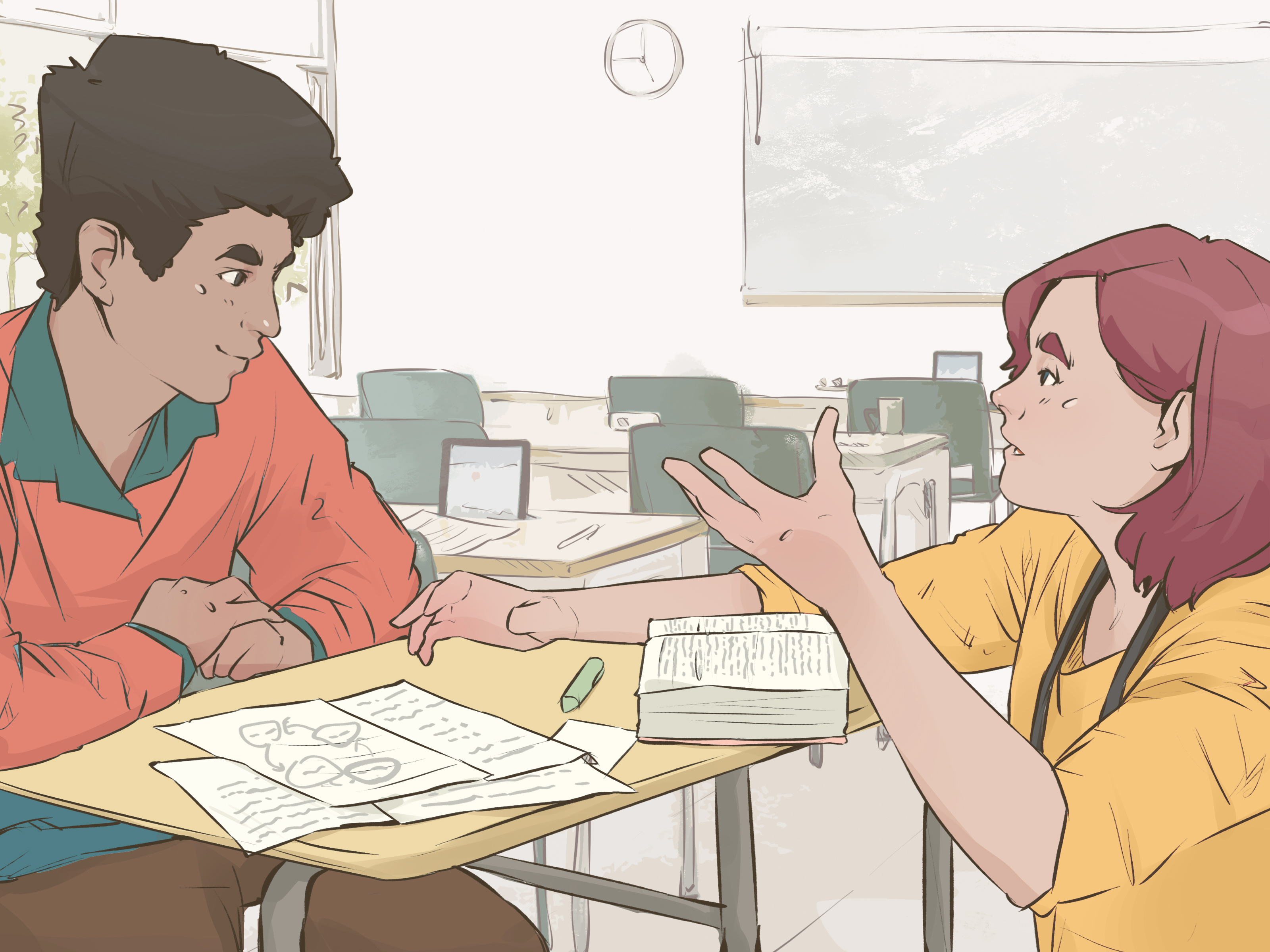
If you are confused, ask for help before the confusion grows teeth. Talk to your teacher, join a study group, visit a tutoring center, ask a classmate, or use a reliable learning platform.
Getting help early saves time and frustration. Math gaps tend to grow because new topics depend on old ones. Fixing a small misunderstanding now can prevent a major problem later.
There is no shame in asking for help. Professional mathematicians collaborate constantly. Apparently, even geniuses enjoy not suffering alone.
Common Mistakes That Slow Down Math Progress
Only Reading Instead of Doing
Math is learned by solving problems, not simply reading explanations. Reading is useful, but practice creates skill.
Skipping Steps Too Soon
Skipping steps may feel faster, but it often causes errors. Write full steps until the process becomes automatic.
Practicing Only Easy Problems
Easy problems build confidence, but challenging problems build growth. Include both in your study sessions.
Ignoring Old Mistakes
If you never review errors, you may repeat them. Treat mistakes like messages from your future self saying, “Please fix this before the quiz.”
A Simple Weekly Plan to Improve Your Math Skills
Here is a beginner-friendly weekly plan for anyone wondering how to get better at math without turning life into one giant worksheet.
- Monday: Review notes and solve five basic problems from the current topic.
- Tuesday: Watch or read one explanation, then solve three problems without help.
- Wednesday: Review mistakes and rewrite correct solutions.
- Thursday: Mix old and new problems for interleaved practice.
- Friday: Explain one concept out loud or teach it to someone else.
- Saturday: Take a short self-quiz and check your progress.
- Sunday: Rest or do a light real-life math activity, such as budgeting or cooking conversions.
This plan is flexible. The goal is not perfection; the goal is rhythm. A steady rhythm beats random panic every time.
Experiences: What Becoming Better at Math Actually Feels Like
Improving at math rarely feels like a movie montage. There is usually no dramatic music, no chalkboard covered in beautiful equations, and no sudden moment where the clouds part and algebra personally apologizes. In real life, getting better at math feels more like slowly turning on lights in a room that used to seem dark.
At first, many learners feel frustrated because they expect progress to be immediate. They study for one afternoon, miss several problems, and think, “See? I knew I was not good at this.” But that is the messy beginning of learning. The first stage often involves discovering exactly what you do not understand. That can feel uncomfortable, but it is also useful. You cannot fix a leak if you do not know where the water is coming from.
One common experience is realizing that small habits make a surprisingly big difference. A student who used to stare at homework for an hour might start by reviewing examples for five minutes, solving one problem slowly, and checking each step. After a week, the problems still may not feel easy, but they feel less impossible. That small shift matters. Confidence usually arrives quietly before it announces itself.
Another experience is learning not to fear wrong answers. Many people remember math classrooms where speed seemed more important than understanding. The fastest student finished first, and everyone else felt like their brain was walking through mud wearing boots. But when learners begin using mistakes as feedback, the emotional temperature drops. A wrong answer becomes something to investigate instead of something to hide.
For adults, becoming better at math can feel especially empowering. Maybe you want to understand loan interest, help your child with homework, prepare for a certification exam, or feel more confident at work. The progress may begin with basic skills, but it often changes how you see yourself. You start thinking, “Maybe I can learn things I used to avoid.” That mindset can spill into other areas of life.
There is also a satisfying moment when math starts appearing in everyday situations. You estimate a discount before reaching the register. You adjust a recipe without guessing wildly. You understand a chart in the news instead of nodding politely and hoping nobody asks follow-up questions. These little wins are powerful because they prove math is not just an academic obstacle. It is a useful language for patterns, decisions, and problem-solving.
The best experience of all is realizing that better math skills do not require becoming perfect. You will still make mistakes. You will still meet problems that look like they were written by a wizard with poor social skills. But you will have strategies. You will know how to start, how to check your work, how to ask questions, and how to keep going. That is what becoming better at math really means.
Conclusion
Becoming better at math is not about magic talent. It is about consistent practice, clear thinking, patient review, and the courage to keep working when a problem looks unfriendly. Start with the basics, practice a little every day, explain your thinking, learn from mistakes, and ask for help early. Use visuals, mix problem types, space out your study sessions, and connect math to real life.
Most importantly, stop treating math ability as fixed. Your skills can grow. Your confidence can grow. Your problem-solving power can grow. Math may never become your favorite hobby, and that is fine. But with the right approach, it can become less intimidating, more useful, and maybe even a little satisfying. Yes, satisfying. Math has range.

