
Beauty Tools & Accessories
How to Get in a Proper Boxing Stance: 10 Steps
Aug
A proper boxing stance is the foundate. Without it, even a powerful punch can leave you wobbling like a shopping cart with one rebellious wheel.
The ideal stance helps you stay balanced, protect vulnerable targets, generate power, and move in any direction without tangling your feet. Although professional boxers eventually customize their posture, beginners should first master a dependable neutral position. The following 10 steps explain how to build that position from the floor up.
Why a Proper Boxing Stance Matters
Your boxing stance affects nearly everything you do in the ring or during a heavy-bag workout. A stable base allows force to travel from the floor through your legs, hips, torso, shoulder, and fist. It also gives you enough control to recover after punching instead of falling toward the target.
A good stance should help you accomplish four things at once:
- Maintain balance while attacking or defending
- Protect your chin, face, ribs, and midsection
- Move forward, backward, and sideways efficiently
- Transfer weight without becoming stuck on either leg
The stance should feel athletic rather than rigid. Think “ready to move,” not “posing for a bronze statue.”
How to Get in a Proper Boxing Stance in 10 Steps
1. Choose Between an Orthodox and Southpaw Stance
Begin by deciding which side will lead. Most right-handed beginners use an orthodox boxing stance, placing the left foot and left hand forward. The stronger right hand stays behind, where hip and shoulder rotation can help it produce a powerful cross.
Most left-handed boxers use a southpaw stance, with the right foot and right hand in front. The left hand becomes the rear power hand.
Handedness is a useful starting point, but it is not an unbreakable law. Some cross-dominant athletes feel more coordinated in the opposite stance. A qualified boxing coach can watch how you move, balance, and rotate before recommending the best option.
Beginners should generally practice one stance consistently. Switching sides every few minutes may feel creative, but it can also turn basic footwork into a two-person argument between your legs.
2. Start With Your Feet About Shoulder-Width Apart
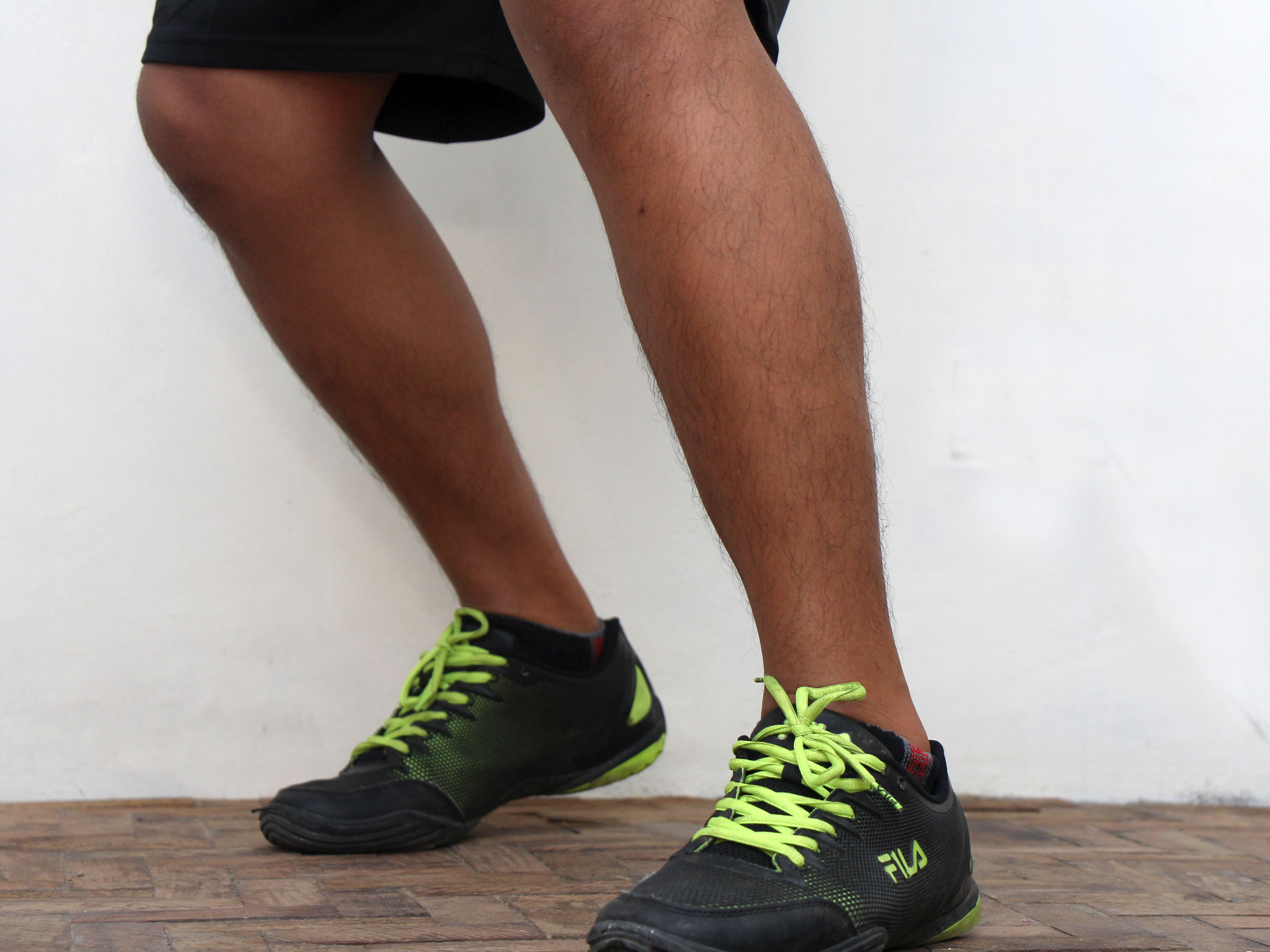
Stand naturally with your feet approximately hip- to shoulder-width apart. This gives you a practical starting base that is neither too narrow nor excessively wide.
A narrow stance may make you feel quick, but it reduces side-to-side stability. A very wide stance can make your legs feel strong while quietly stealing your mobility. You should be able to step in any direction without first pulling your feet back together.
Use the width of your shoulders as a guideline rather than an exact measurement. Body proportions differ, so a tall boxer with long legs may need a slightly longer base than a shorter athlete.
3. Step Your Dominant-Side Foot Back
For an orthodox stance, keep the left foot forward and step the right foot back. For a southpaw stance, keep the right foot forward and step the left foot back.
The rear foot should move back and slightly outward rather than directly behind the lead foot. When viewed from the front, your feet should occupy two separate tracks. Imagine standing on opposite sides of a narrow railroad linenot balancing both feet on one rail.
This staggered alignment gives your hips room to rotate and helps you resist being pushed off balance. If the feet sit directly behind one another, even a small sideways movement can make your stance collapse.
4. Angle Your Feet and Turn Your Body Slightly
Point the lead foot generally toward your target, allowing it to turn slightly inward if that feels natural. Angle the rear foot outward, often somewhere near 30 to 45 degrees.
Your hips, chest, and shoulders should turn partially sideways rather than facing the target completely square. This position reduces the amount of body presented to an opponent while keeping both hands available for punching.
Do not rotate so far sideways that your rear hand becomes trapped behind your torso. You also should not stand completely square unless a coach is teaching a specific close-range variation. A beginner-friendly boxing stance usually falls somewhere between those extremes.
5. Bend Your Knees and Lower Your Center of Gravity
Soften both knees and lower your hips slightly. You do not need to perform a deep squat. The goal is to create an athletic base that allows you to push against the floor quickly.
Locked knees make movement stiff and can cause your upper body to lean whenever you punch or evade. Excessively bent knees, however, waste energy and may place unnecessary stress on your legs.
You have found a useful height when you can bounce gently, shuffle in either direction, and stop without needing an extra recovery step. Your head should remain relatively level as you move rather than bobbing up and down like a dashboard ornament.
6. Distribute Your Weight Through Both Legs
Begin with your weight centered and reasonably even between the front and rear legs. Some coaches prefer a subtle rear-leg bias, while others teach a nearly equal distribution. The important point is that you should not become stranded on one foot.
Keep the lead foot connected to the floor. The rear heel may rise slightly so you can pivot through the ball of the foot, but avoid balancing on your toes. You want responsive feet, not permanent calf raises.
Test your balance by having a partner apply a gentle push to your shoulders from different directions. You should be able to stabilize yourself without crossing your feet or windmilling your arms. Use only light pressure; this is a balance check, not an audition for professional wrestling.
7. Bring Your Hands Into a Protective Guard
Raise both hands toward your face. Place the rear hand close to the rear cheek or jaw. Hold the lead hand slightly in front of the face, where it can jab, parry, or measure distance.
Keep your fists relaxed until the moment of impact. Constantly squeezing them wastes energy and creates tension through the forearms and shoulders.
The exact height and distance of the lead hand may vary by boxing style, but beginners benefit from a compact, responsible guard. After every punch, return the hand quickly to its protective position. A punch is not finished when it reaches the target; it is finished when the hand gets home safely.
8. Tuck Your Chin and Keep Your Eyes Forward
Lower your chin slightly toward your chest while keeping your eyes on the target. Do not stare at the floor. Your eyebrows may angle downward, but your vision should remain forward.
Bring the lead shoulder slightly closer to the chin without lifting it into an exaggerated shrug. The tucked position reduces exposure of the jaw and helps the gloves and shoulders form a defensive frame around the face.
Avoid sticking your head forward. Your head should stay above your hips and between your feet. Leaning toward the opponent may add reach, but it also weakens your balance and makes your face arrive before the rest of you.
9. Keep Your Elbows In and Your Shoulders Relaxed
Let your elbows rest near the rib cage. They do not need to be glued to your sides, but allowing them to flare outward creates openings around the body and makes straight punches less efficient.
Relax your shoulders and avoid raising them toward your ears. Tension slows punching speed, accelerates fatigue, and often causes beginners to hold their breath.
Take calm breaths through your nose and mouth. Exhale briefly when punching, moving sharply, or absorbing impact on protective equipment. Your posture should feel alert but sustainable. If your neck and shoulders are exhausted after 30 seconds of standing still, you are probably trying too hard.
10. Test the Stance by Moving in Every Direction
A boxing stance is not truly functional until you can move from it. Practice short, controlled steps forward, backward, left, and right while maintaining the original distance between your feet.
As a basic rule, move first with the foot nearest the direction of travel:
- To move forward, step with the lead foot and follow with the rear foot.
- To move backward, step with the rear foot and follow with the lead foot.
- To move toward the lead side, move the lead-side foot first.
- To move toward the rear side, move the rear-side foot first.
Use small steps and avoid bringing the feet together. Never cross them during basic movement. Crossing the feet may temporarily cover more distance, but it creates a moment when you cannot punch, defend, or change direction effectively.
After several steps, stop suddenly and check your position. Your knees should still be soft, your guard should be up, and your feet should remain staggered. If you have transformed into a wide-legged cowboy or a tightrope walker, reset and slow down.
Common Boxing Stance Mistakes
Standing Too Square
Facing the target with both shoulders aligned makes the torso a larger target and may limit rear-hand rotation. Turn the body slightly while keeping both eyes forward.
Standing Too Sideways
An excessively bladed stance can restrict the rear hand and make lateral movement awkward. Keep enough rotation available to throw both hands naturally.
Putting the Feet on One Line
A heel-to-toe alignment creates poor lateral balance. Keep the lead and rear feet on separate tracks.
Leaning Over the Lead Knee
Leaning forward may make punches feel longer, but it reduces your ability to retreat or defend against counters. Keep the head inside the base formed by your feet.
Keeping the Rear Heel Flat
A completely planted rear heel can restrict rotation. Allow it to lift naturally so the hip can turn, but do not stay unnecessarily high on both toes.
Holding the Breath
Beginners often become so focused on their hands and feet that breathing apparently leaves the curriculum. Continue breathing steadily and exhale during punches.
Dropping the Guard After Punching
Return each hand to the face immediately. Admiring your punch is optional; protecting yourself is not.
Drills for Improving Your Boxing Stance
Mirror Check
Stand in front of a full-length mirror and examine your foot width, knee bend, chin position, elbows, and guard. Move slowly in four directions while keeping your head level.
Tape-Line Drill
Place a strip of tape on the floor. Position one foot on each side so they remain on separate tracks. Shuffle forward and backward without allowing either foot to cross the line.
Freeze After Every Combination
Shadowbox at half speed. After each jab, cross, or short combination, freeze and inspect your balance. You should be able to defend or move immediately without rearranging your feet.
Balance-and-Return Drill
Throw a slow jab or cross, then return completely to your stance. Repeat while focusing on the path of your hands, the position of your head, and the stability of your feet.
Stance-Only Rounds
Set a timer for two or three minutes and move without punching. Maintain your guard, circle an imaginary opponent, and change direction regularly. This may not look as exciting as unloading on a heavy bag, but it builds habits that keep your exciting moments from ending with a stumble.
How to Know Whether Your Stance Is Correct
A useful stance should pass several practical tests:
- You can move in any direction without crossing your feet.
- You can stop instantly without taking an extra balancing step.
- You can throw either hand and return to guard.
- Your chin remains protected while your eyes stay forward.
- Your shoulders feel relaxed enough to punch quickly.
- You can maintain the position for several rounds without unnecessary leg tension.
There is no single stance measurement that suits every body type or boxing style. A coach may adjust your foot angle, base width, guard, or weight distribution according to your mobility, height, reach, and tactical preferences. These adjustments should improve function rather than merely make the stance look impressive in a photograph.
Safety Tips for Beginner Boxers
Practice stance and footwork on a dry, uncluttered surface. Wear athletic shoes that provide traction and allow controlled rotation. Warm up your ankles, knees, hips, shoulders, and wrists before increasing speed.
Use proper hand wraps and suitable boxing gloves before striking a heavy bag or focus mitts. A mouthguard is important for sparring and other drills involving possible contact. Sparring should take place only with appropriate protective equipment, clear rules, and qualified supervision.
Stop training if you experience sharp pain, dizziness, unusual shortness of breath, or loss of balance. People with an injury or medical condition should consult an appropriate healthcare professional before beginning a demanding boxing program.
Experiences From Learning and Refining a Proper Boxing Stance
One of the most common experiences among beginners is believing the stance has been mastered after approximately four minutes. The feet are staggered, the fists are raised, and everything looks reasonably heroic in the mirror. Then movement begins.
The first forward step may be fine. During the second, the rear foot creeps too close. After a combination, the boxer suddenly has a stance wide enough to park a bicycle between the feet. This is normal. Holding a stance while standing still is a posture exercise; preserving it while punching and moving is the actual boxing skill.
A useful early lesson is that comfort does not always equal correctness. Standing square often feels natural because it resembles an everyday athletic posture. It also makes both hands feel equally available. However, once a beginner tries to rotate the rear hip, defend the body, and retreat under control, the advantages of a staggered stance become clearer.
Another memorable discovery is that a wider base does not automatically produce better balance. Beginners sometimes spread their feet because the position feels stable. It may indeed be stableas long as nobody expects them to go anywhere. When asked to shuffle backward, the same stance becomes a small construction project. Narrowing the base slightly often improves both mobility and balance.
Shoulder tension is another frequent surprise. A new boxer may hold the guard as though two invisible people are trying to pull the gloves toward the floor. After one round, the shoulders burn, the punches slow down, and the hands begin drifting toward the waist. Learning to relax the arms while keeping them defensively responsible can dramatically improve endurance.
Mirrors and video recordings are especially useful because body position can feel different from how it looks. A boxer may believe the chin is tucked while video reveals it pointing toward the ceiling like a curious tourist. The rear foot may feel angled correctly but actually be turned so far outward that hip rotation becomes restricted.
Recording a short stance-only round from the front and side provides practical feedback. From the front, check whether the feet remain on separate tracks and whether the head stays between them. From the side, look for excessive forward leaning, locked knees, or a rear heel that never releases during rotation.
Many beginners also learn that punching power improves when they stop chasing power. Trying to hit as hard as possible often causes lunging, overrotation, and poor recovery. When the stance remains stable and the punch travels through an organized chain of movement, the bag may move more even though the effort feels lower.
The best training experience usually comes from slowing down. Practicing at 30 to 50 percent speed makes errors easier to detect. Once the stance survives slow jabs, crosses, defensive slips, and direction changes, speed can be added gradually.
Over time, the proper boxing stance stops feeling like a checklist. The feet adjust automatically, the hands return to guard, and the boxer can focus on distance, timing, and strategy. That automatic response is the real goal. A stance is not something you visit at the beginning of a combination; it is the position you carry through the entire round.
Conclusion
Learning how to get in a proper boxing stance begins with choosing a lead side, staggering the feet, softening the knees, centering your weight, protecting the chin, and keeping the upper body relaxed. The position must then survive movement, punches, defensive actions, and changes of direction.
Practice slowly and check your alignment frequently. Small corrections to foot placement or posture can produce major improvements in balance, speed, power, and defense. Master the stance before trying to imitate the unusual habits of elite fighters. Their customized techniques are supported by thousands of hours of practice; yours should first be supported by two feet that are not crossing each other.

