
Makeup
Tips to Help You Survive Your Toddler’s ‘Terrible Twos’
Aug
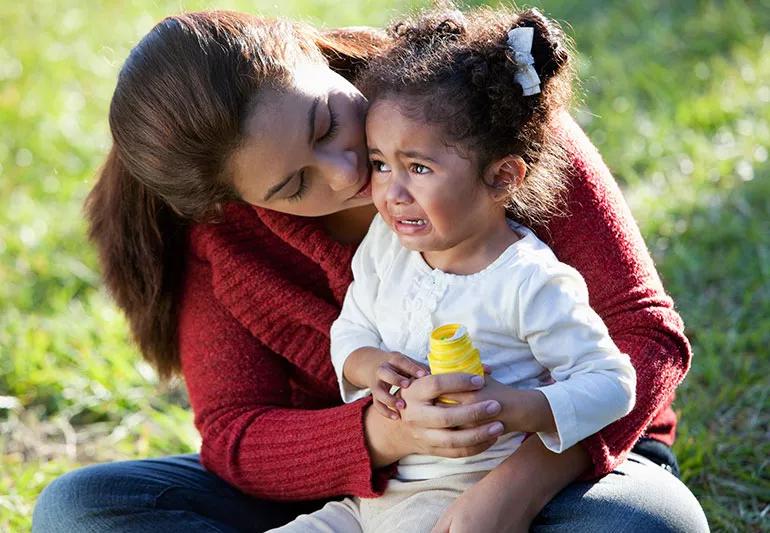
One minute, your toddler is offering you a damp cracker with the tenderness of a tiny philanthropist. The next, they are lying face-down on the kitchen floor because you peeled the banana they specifically asked you to peel. Welcome to the “terrible twos,” a developmental season powered by big emotions, growing independence and approximately three usable words for explaining either one.
Despite the dramatic nickname, the terrible twos are not evidence that your child is terribleor that your parenting has gone terribly wrong. This stage often begins between 18 and 24 months and may continue into the third year as toddlers test limits, develop preferences and discover the thrilling power of saying “no.” Their desire for independence is growing faster than their language, patience and self-control, creating a perfect little storm of frustration.
You cannot eliminate every tantrum, nor should that be the goal. Toddlers are learning how emotions work, and learning is rarely tidy. What you can do is reduce preventable meltdowns, respond safely and consistently, and help your child build emotional skills one imperfect day at a time.
Why Do the Terrible Twos Happen?
At age 2, children are making enormous gains in movement, thinking, communication and social awareness. They can form intentions“I will wear the rain boots to bed”but they do not yet have the emotional brakes, flexible thinking or vocabulary needed to cope when reality disagrees. The result may be screaming, crying, kicking, throwing, biting, collapsing or repeating “No!” like a very small attorney objecting to the entire household.
Independence Is Growing Faster Than Ability
Your toddler may insist on fastening a complicated buckle, pouring milk from a full carton or putting on pants without assistance. When their ambition exceeds their motor skills, frustration arrives quickly. This is why offering appropriate independence can prevent some conflicts while still keeping adults in charge of safety.
Emotional Regulation Is Still Under Construction
Two-year-olds are not miniature adults making carefully calculated decisions. Their self-control is limited, especially when they are hungry, tired, overstimulated or disappointed. They often need a calm adult to help them regulate before they can begin calming themselves. Responsive back-and-forth interactions with caregivers also support early communication and social development.
Behavior Is Often Communication
A tantrum may mean, “This transition surprised me,” “I need help,” “I am overwhelmed,” or “I wanted the blue cup, and this red cup is an unforgivable betrayal.” Looking for the need beneath the behavior does not require you to give your child everything they demand. It simply helps you respond to the actual problem rather than treating every outburst as deliberate misbehavior.
Practical Tips for Surviving the Terrible Twos
1. Check the Basics Before Blaming the Behavior
Many toddler meltdowns become more likely when a child is hungry, tired, sick, overstimulated or overdue for connection. Before launching into a discipline speech, ask yourself what happened during the previous hour. Did lunch get delayed? Was the room loud? Did your child skip a nap? Are you trying to complete six errands during the time they normally rest?
Meeting a basic need is not “rewarding bad behavior.” It is recognizing that a dysregulated toddler has fewer resources available for cooperation. Keep portable snacks, water and a realistic schedule nearby. A cheese stick cannot solve every parenting problem, but it has prevented more public relations disasters than many adults realize.
2. Lend Your Toddler Your Calm
When your child loses control, your nervous system becomes part of the environment. If you shout, threaten or argue, the emotional temperature usually rises. Lower your voice, slow your movements and use very few words. You might say, “You are safe. I’m here. We’ll talk when your body is calm.”
Staying calm does not mean pretending you are made of lavender-scented patience. Take a breath, relax your shoulders or briefly step back when another responsible adult can supervise. Children learn emotional regulation partly by watching how trusted adults manage frustration.
3. Set Simple, Firm and Predictable Limits
Toddlers need boundaries that are easy to understand and consistently enforced. Use short statements such as, “I won’t let you hit,” “Food stays on the table,” or “We hold hands in the parking lot.” Avoid turning every boundary into a five-minute lecture. During an emotional storm, your toddler is not available for a podcast episode about household values.
Choose a small number of important rules involving safety, kindness and essential routines. Whenever possible, caregivers should respond similarly. If throwing a toy earns laughter on Monday, a warning on Tuesday and immediate removal on Wednesday, your toddler will continue testing the rule because the experiment is producing fascinating results.
4. Offer Two Acceptable Choices
Limited choices give toddlers a healthy sense of control without handing them executive authority over the family. Ask, “Do you want the blue shirt or the green shirt?” “Would you like to walk to the bathroom or hop like a bunny?” or “Should we brush teeth before or after the story?” Both options should be acceptable to you.
Do not offer a choice when there is no choice. Asking, “Are you ready to leave the playground?” invites an entirely reasonable answer: “No.” Instead, state the limit and offer control within it: “It is time to leave. Would you like to walk or have me carry you?”
5. Make Transitions Predictable
Stopping a preferred activity can feel abrupt to a toddler. Give brief warnings before transitions: “Five more minutes,” followed by, “One more turn, then bath time.” Timers, cleanup songs and picture schedules can help children understand what comes next. Consistent routines also reduce the number of surprises toddlers must process during the day.
A warning will not magically make every child cheerfully leave the playground. Its purpose is to make the change less sudden, not to transform your toddler into a punctual corporate professional.
6. Use Short, Concrete Instructions
“Please behave while I get everything organized” is too vague. “Put the blocks in this box” is clearer. Get close, say your child’s name, make the request and give them a few seconds to process it. Toddlers may need gestures or physical guidance in addition to words.
Tell your child what to do instead of only what to stop doing. Replace “Don’t run” with “Use walking feet.” Replace “Stop screaming” with “Use your quiet voice.” Positive directions give the child an action they can actually attempt.
7. Name the Feeling Without Changing the Boundary
Validation does not mean agreement. You can recognize an emotion while maintaining the limit: “You are angry because you wanted another cookie. It is hard to hear no. We are finished with cookies today.” This approach teaches emotional language while showing that feelings are acceptable even when certain behaviors are not.
Use simple labels such as mad, sad, scared, disappointed and excited. After the child calms down, talk briefly about what happened and suggest a safer response: “Next time, say ‘help’ or stomp your feet on the floor. Hitting hurts.” Adults who model healthy emotional language give children examples they can gradually copy.
8. Do Not Negotiate in the Middle of a Tantrum
Once a full tantrum begins, reasoning usually becomes ineffective. Keep your child safe, stay nearby and reduce talking. If the behavior is loud but not dangerous, avoid supplying a large emotional audience. Giving a forbidden item solely to stop the screaming can teach the child that escalating eventually changes the answer.
If your toddler is hitting, biting, throwing hard objects or running toward danger, intervene immediately. Block the action, move dangerous items or carry the child to a safer place. Say, “I won’t let you hurt me,” rather than shaming them as “bad” or “mean.”
9. Catch Good Behavior While It Is Happening
Adults naturally notice behavior that creates problems, but toddlers repeat behavior that reliably receives attention. Offer specific praise when your child cooperates: “You put your shoes by the door,” “You used gentle hands,” or “You waited while I poured the water.” Specific praise teaches more than a general “Good job” because it identifies the behavior you want to see again.
Small moments count. A toddler who waits seven seconds without grabbing is practicing self-control. Celebrate progress rather than expecting preschool-level behavior from a child who recently discovered that crayons work on walls.
10. Prepare for Public Outings
Before entering a store or restaurant, explain the plan in one or two sentences: “We are buying groceries. You may choose one kind of fruit.” Bring a snack, one quiet activity and realistic expectations. Keep the trip short when possible, especially near nap or meal times.
If a public tantrum happens, focus on safety rather than the opinions of strangers. Move to a quieter area, stay calm and follow the same limits you use at home. The person glaring from aisle seven is not part of your parenting team and does not get a vote.
11. Create a Calm-Down Space, Not a Shame Corner
A cozy area with pillows, books, stuffed animals or sensory items can give a child a place to recover. Introduce it during a calm moment and use it as support rather than exile. Say, “Let’s sit in the cozy corner until your body feels better,” instead of, “Go away until you can act properly.”
Some toddlers want closeness during a meltdown; others need more space. Observe your child’s pattern. The goal is not to force instant calm but to provide a safe setting in which the emotional wave can pass.
12. Choose Your Battles
Not every strange toddler decision requires correction. Wearing mismatched socks, carrying a spoon to the mailbox or insisting that a stuffed dinosaur sit at breakfast may be harmless expressions of independence. Save firm limits for safety, health, kindness and necessary family routines.
Giving flexibility on minor matters can reduce unnecessary power struggles. You are not surrendering authority. You are conserving energy for the moment your toddler attempts to lick the shopping cart.
A Three-Step Tantrum Plan
Before the Tantrum
Track common triggers for one week. Note the time, location, activity, sleep, food and transition involved. Patterns often appear quickly. You may discover that nearly every meltdown happens during rushed mornings, screen shutdowns or the hour before dinner. Adjusting the environment can be more effective than repeatedly correcting the resulting behavior.
During the Tantrum
Stay close enough to maintain safety. Use one calm sentence, such as, “You’re upset, and I’m here.” Remove dangerous objects and prevent hitting, biting or running away. Avoid questions, lectures, bribes and threats. Your job is to be the guardrail, not to win an argument with a person wearing one shoe.
After the Tantrum
Reconnect before teaching. Offer a hug if your child wants one, get a drink of water and return to normal activity. Later, name the feeling and practice a replacement behavior: asking for help, taking breaths, squeezing hands together or using a simple phrase such as “my turn.” Keep the conversation brief and avoid demanding an elaborate apology from a child who is still learning what an apology means.
What Not to Do During the Terrible Twos
Avoid spanking, humiliating, threatening abandonment or labeling your child as naughty, manipulative or out of control. The American Academy of Pediatrics recommends positive discipline strategies that teach behavior through calm modeling, clear limits, attention to positive behavior and consistent consequences rather than physical punishment.
Do not tell a distressed toddler that their feelings are silly, and do not use sarcasm they cannot understand. Avoid making your emotions the child’s responsibility by saying, “You make Mommy so sad when you cry.” A healthier message is, “You are allowed to be angry. I will not let you throw the truck.”
Finally, do not expect perfect consistency from yourself. Parents become tired, raise their voices and choose convenience sometimes. When you make a mistake, repair it: “I yelled, and that was scary. I’m sorry. Next time I will take a breath.” Repair teaches responsibility more effectively than pretending parents never get it wrong.
When Should You Ask for Professional Help?
Tantrums are common in toddlerhood, but parents should contact a pediatrician when outbursts are unusually severe, persistent across settings, dangerous or seriously disruptive to family life. Seek guidance if your child frequently injures themselves or others, destroys property, cannot recover with adult support, loses previously acquired skills or has concerning delays in language, play, movement or social interaction.
Developmental milestones are guides rather than report cards, and children develop at different rates. Still, early discussion is valuable when something feels wrong. Bring specific notes or videos to your child’s healthcare provider and explain what happens before, during and after the behavior. The CDC also recommends acting early when a child is not meeting milestones or has lost skills they once had.
You should also request support if your own anger, exhaustion or stress is making it difficult to respond safely. Asking for help from a partner, relative, pediatrician, therapist or parenting program is not failure. It is maintenance for an extremely demanding job that does not include lunch breaks.
Real-World Experiences: What Terrible Twos Survival Looks Like
The following composite experiences reflect situations many families encounter. They are not promises of instant success; toddlers rarely sign performance guarantees.
The Grocery Store Meltdown
A parent enters the supermarket with a tired 2-year-old at 5:30 p.m. The child sees a brightly packaged snack, asks for it and hears, “No, we have snacks at home.” Within seconds, the toddler is crying, arching backward and attempting to abandon the cart like a captain escaping a sinking ship.
The parent’s first instinct is to explain nutrition, budgeting and the family’s grocery strategy. None of it works because the child is exhausted and overwhelmed. Instead, the parent moves the cart to a quiet corner, kneels nearby and says, “You wanted the snack. You are angry. We are not buying it.” The toddler continues crying. The parent does not change the answer, but remains close and calm. After several minutes, the child accepts water and helps place bananas in the cart.
The lesson is not that calm words immediately stop a tantrum. They often do not. The success is that the parent maintained the boundary, protected the child and avoided turning one difficult moment into a shouting contest. On future trips, the parent shops earlier, offers a snack before entering and gives the toddler one simple job.
The Playground Departure
Another family struggles every time playtime ends. The parent repeatedly announces, “We have to go,” while the toddler runs toward another slide. Frustration builds until the adult grabs the child without warning, producing a kicking and screaming exit.
The parent changes the routine. Ten minutes before leaving, they announce, “Soon we will go home.” At five minutes, they set a timer. When it rings, the child chooses one final activity. The parent then offers two options: “Would you like to walk to the car or ride on my back?”
The toddler still protests because leaving the playground remains deeply offensive. However, the protest is shorter because the transition is predictable and the child has a small amount of control. On a harder day, the parent calmly carries the child while saying, “You wanted to stay. It is time to go.” Consistency gradually makes the routine more familiar.
The Bedtime Negotiator
At bedtime, a toddler requests water, another story, a different stuffed animal, one more hug and an urgent inspection of an imaginary noise. The parents initially respond to every request, accidentally creating a 47-step bedtime ceremony.
They simplify the routine to bath, pajamas, two books, one song and lights out. A picture chart shows each step. The toddler chooses the pajamas and books, but not whether bedtime occurs. When additional demands begin, the parent responds with the same sentence: “Bedtime is finished. I love you. I’ll see you in the morning.”
The first nights are difficult because the old pattern has been interrupted. The parents support each other and remain predictable. Over time, bedtime becomes less of a nightly courtroom drama. The experience demonstrates an important truth: a strategy can be effective even when behavior temporarily becomes louder. Toddlers often test a new limit before accepting it.
The Parent Who Finally Needed a Break
One caregiver discovers that the hardest part of the terrible twos is not the toddler’s anger but their own. After a day of whining, spilled food and resistance, the caregiver feels dangerously close to exploding. Rather than forcing themselves to “stay positive,” they place the child safely in the crib, step into the hallway and breathe for two minutes. Later, they ask a relative to handle dinner while they take a walk.
This is also successful parenting. Regulation is easier when adults have sleep, food, support and moments away from responsibility. A caregiver who takes a safe break is not abandoning the child. They are preventing an exhausted nervous system from making the situation worse.
Across these experiences, improvement comes from repetition rather than one perfect response. The parent notices a pattern, changes one part of the environment, holds a clear boundary and reconnects afterward. Some days the strategy works beautifully. Other days the toddler screams because the moon is visible before bedtime. Progress in this stage is rarely a straight line, but calm, predictable responses give children the practice they need.
Conclusion: Survive the Stage Without Losing the Relationship
The terrible twos can be loud, exhausting and occasionally absurd, but they are also evidence of remarkable growth. Your toddler is developing preferences, language, independence and a sense of self. They are not giving you a hard time simply for sport; they are often having a hard time with skills that are still emerging.
Focus on prevention where possible, safety during the storm and connection afterward. Offer limited choices, prepare for transitions, praise cooperation and maintain a few clear boundaries. Most importantly, remember that calm consistency matters more than parental perfection.
One day, your child will leave the grocery store without becoming emotionally attached to a decorative pumpkin. Until then, pack snacks, lower your voice and keep going.

