
Body Care
Mandalorian Season 1 Episode 5 Review
Jul
If The Mandalorian had been cruising along like a cool, dusty space western, then Season 1 Episode 5 is the moment it pulls off the road, kicks up sand, and says, “You know what this story needs? Tatooine. Lots of Tatooine.” Chapter 5, better known as “The Gunslinger,” is one of the most talked-about episodes in the first season for a simple reason: it is both charming and frustrating at the same time. It looks great, sounds great, and knows exactly which Star Wars buttons to push. But it also feels like the show wandered into a side quest, grabbed some nostalgic souvenirs, and forgot to move the main plot very far forward.
That does not make it bad. Far from it. This is still a brisk, entertaining half hour of television with striking visuals, a few memorable guest characters, and a setting that practically comes with its own fan club. But if you are looking for one of the season’s most emotionally powerful episodes, this is not it. If you are looking for an episode that captures the old-school western spirit of Star Wars while also making you mutter, “Okay, but where is this all going?” then congratulations, you have found your winner.
Quick Verdict
“The Gunslinger” is a stylish, enjoyable, slightly shallow detour. It is a fun ride through Mos Eisley with strong atmosphere, a standout debut for Fennec Shand, and a welcome dose of grimy Star Wars flavor. At the same time, it leans so hard on familiar imagery that it occasionally feels less like bold storytelling and more like a franchise reunion tour. Think of it as a beautifully shot postcard from Tatooine with a blaster hole in the corner.
Episode Summary: A Dusty Job in a Familiar Place
The episode opens with action, and that is always a polite way for a show to say, “Please sit down; we have lasers.” The Razor Crest is damaged during a dogfight, forcing Mando to land on Tatooine for repairs. Once there, he leaves the Child in the care of mechanic Peli Motto and starts looking for work. Because apparently galactic parenting comes with no paid leave.
In Mos Eisley, Mando meets Toro Calican, a young bounty hunter with ambition, nice gear, and approximately the emotional maturity of a guy who bought fingerless gloves and immediately called himself a legend. Toro wants help capturing Fennec Shand, an infamous mercenary with a dangerous reputation. Mando agrees, mostly because ship repairs are not free and because “survive first, question the life choices later” is basically his business model.
From there, the episode follows a fairly simple structure: track the target, cross the desert, deal with Tusken Raiders, confront Fennec, and then discover that the bigger threat is not the professional killer you were hunting but the amateur standing right next to you. The plot is clean, efficient, and easy to follow. No galaxy-spanning mythology dump, no giant speeches about destiny, no ancient prophecy carved into a rock. Just sand, suspicion, and bad decisions.
What Works in “The Gunslinger”
Tatooine Still Knows How to Make an Entrance
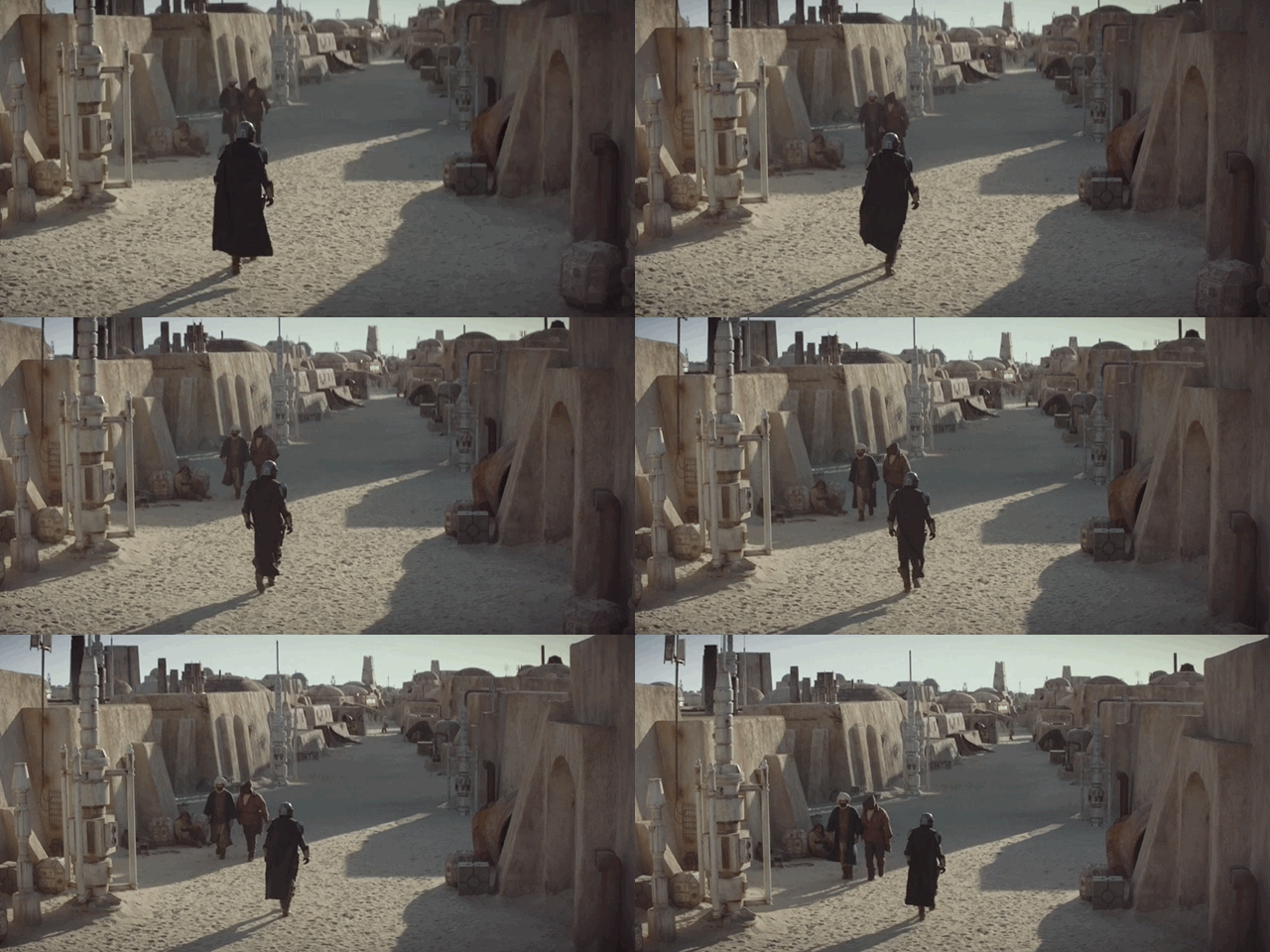
The smartest thing this episode does is understand the power of location. Tatooine is not just a planet in Star Wars. It is practically an heirloom. By bringing Mando to Mos Eisley, the episode taps into decades of audience memory without needing to explain why the place matters. The twin suns, the battered docking bays, the cantina energy, the dry emptiness of the dunes, and the general smell of “bad deals happen here” all do a lot of heavy lifting.
But the nostalgia works best when it is not just showing off scenery. This version of Tatooine feels a little sadder and quieter than the one many viewers remember. The Empire is gone, the legends have moved on, and life continues anyway. That low-key shift gives the episode texture. This is not a museum version of Star Wars. It is a working-class one. Droids serve drinks. Mechanics hustle for credits. Raiders negotiate passage. The galaxy feels lived in, not laminated.
Amy Sedaris Brings the Right Kind of Chaos
Peli Motto is one of the episode’s best surprises. She arrives with comedic energy, street-level practicality, and the exact vibe of someone who can fix your ship, roast your choices, and feed your weird green toddler in the same afternoon. In an episode that risks becoming too self-serious, Peli adds warmth and bounce.
More importantly, she helps humanize Mando’s situation. He may be a stoic bounty hunter in cool armor, but the second he has to hand over babysitting duties and haggle over repairs, the series reminds us that survival in this galaxy is messy, awkward, and expensive. That grounded quality is part of what makes The Mandalorian work in the first place.
Fennec Shand Makes an Immediate Impression
Ming-Na Wen does a lot with limited screen time. Fennec Shand enters the episode with presence, poise, and the kind of danger that makes everyone around her seem slightly less competent by comparison. Even when the script does not give her an enormous amount of room, the performance sells the idea that this is someone with history, skill, and a life beyond the frame.
That matters because Episode 5 is full of temporary characters. Some feel disposable by design. Fennec does not. She hints at a bigger world. She sounds like she has actually lived in this universe rather than just arrived five minutes before filming. In a season built on drifters, mercenaries, and moral gray zones, Fennec fits naturally.
The Western Vibe Is Still Strong
By this point in Season 1, The Mandalorian had already made its love for westerns pretty obvious. Episode 5 doubles down on that identity. There are speeder bikes cutting across open desert like horses across a frontier plain. There is a hired gun chasing reputation. There is a campfire conversation with an outlaw. There is a double-cross waiting just offscreen because of course there is. If a tumbleweed had rolled through the Dune Sea, it would not have felt out of place.
The action is not constant, but what is here is clean and readable. The desert chase has momentum, the nighttime assault on Fennec’s position looks sharp, and the episode understands that tension is often more effective than pure noise. That is a strength. Some shows confuse chaos for excitement. This one usually does not.
Where the Episode Stumbles
Toro Calican Never Quite Comes Alive
The weak link is Toro. The character is supposed to represent youthful arrogance, career desperation, and the fantasy of becoming a legend overnight. In theory, that is a solid foil for Mando, who is experienced, careful, and allergic to flashy nonsense. In practice, Toro mostly lands as “annoying kid with blaster privileges.”
That may be intentional, but intention only goes so far. The problem is not that Toro is unlikeable. Plenty of effective characters are unlikeable. The problem is that he is too thinly drawn to make the betrayal feel especially powerful. We see the twist coming from a mile away, and the episode never gives him enough depth to turn predictability into tragedy. He is less a character than a cautionary poster.
The Fan Service Is Fun… Until It Starts Waving Too Hard
There is a sweet spot for Star Wars nostalgia. When the series hits it, the result is electric. When it misses, it can feel like the show is elbowing the audience in the ribs every thirty seconds going, “Remember this? Remember that?” Episode 5 lands on both sides of that line.
Seeing Mos Eisley again is genuinely exciting. The Tusken Raider sequence adds useful flavor. The environmental details are strong. But a few references feel less organic than they should. The episode sometimes plays like it built a checklist of iconic Star Wars imagery and then made sure to stamp every square before the credits rolled. It is never unbearable, but it can feel a little too pleased with itself.
It Feels Like a Detour More Than a Destination
This is the biggest criticism, and it is the one that follows the episode everywhere. By the time Chapter 5 arrives, viewers are already invested in the larger story of Mando and the Child. So when an episode spends most of its runtime on a self-contained job with a one-off partner, it naturally risks feeling slight.
To be fair, episodic storytelling is part of the show’s charm. Not every chapter needs to explode the mythology. But strong standalone episodes still need emotional or thematic weight. “Sanctuary” gave Mando a glimpse of a life he cannot have. “The Gunslinger” mostly gives him a repair bill and another reason not to trust strangers. That is useful, but it is not especially profound.
The Episode’s Best Theme: Reputation Can Get You Killed
One of the more interesting ideas in Episode 5 is the difference between being a professional and playing one on holo-TV in your own head. Toro thinks bounty hunting is a fast track to glory. Mando knows it is a grind full of compromise, improvisation, and constant danger. Fennec survives because she understands how ruthless the game really is. Toro dies because he mistakes posture for skill.
That theme gives the episode a point beyond nostalgia. “The Gunslinger” is not just showing us another mission. It is showing us what separates Mando from the wannabes. He is not invincible, not glamorous, and not romantically attached to his own legend. He is alive because he respects the job and the danger that comes with it. In Star Wars terms, that makes him less a fairy-tale knight and more a deeply tired freelancer with excellent aim.
Small Details That Stick
The Child Quietly Steals Every Scene Anyway
Even in an episode that does not revolve around him, the Child remains a secret weapon. His presence softens Mando, raises the stakes, and adds humor without breaking the tone. Every time the episode cuts back to him with Peli, it gets a little more personality for free. That is not lazy storytelling. That is understanding your assets.
The Tusken Raider Sequence Is Better Than It Gets Credit For
The negotiation scene in the desert is short, but it does useful world-building. Instead of treating the Tuskens as faceless obstacles, the episode frames them as people with territory, customs, and leverage. It is a small touch, yet it makes the galaxy feel larger and more thoughtful.
The Ending Knows Exactly How to Tease the Audience
That final desert approach, with boots crunching toward Fennec’s body, is pure sequel bait. But it is effective sequel bait. The show knows when to leave the audience staring at the screen like conspiracy detectives with no sleep and too many screenshots. It is a classic “wait, who was that?” ending, and while it does not rescue the whole episode, it definitely helps it leave a stronger final impression.
Final Review: Good, Not Great, but Still Worth the Trip
So, is Mandalorian Season 1 Episode 5 one of the best episodes of the first season? No. Is it one of the most important? Also no. But is it a polished, entertaining, very watchable slice of Star Wars television with strong atmosphere, a memorable setting, and just enough grit to keep it interesting? Absolutely.
“The Gunslinger” succeeds when it embraces its space-western mood, lets side characters spark, and treats Tatooine like a real place instead of a nostalgia vending machine. It stumbles when it leans too heavily on familiar imagery and puts too much pressure on an undercooked guest character. The result is an episode that feels smaller than the chapters around it, but not empty.
In the end, this is a three-and-a-half-out-of-five kind of episode. It is the TV equivalent of finding a surprisingly good roadside diner on a long desert drive. Maybe it is not the destination. Maybe the menu leans a little too hard on old favorites. But the coffee is hot, the atmosphere is great, and there is at least one person there who looks like they could absolutely kill you for crossing them. In Star Wars, that counts as ambiance.
The Viewing Experience: Why Episode 5 Feels Better on Rewatch
One of the most interesting things about The Mandalorian Season 1 Episode 5 is how different it feels depending on when and how you watch it. On a first viewing, especially during the original weekly release, “The Gunslinger” could feel a little frustrating. The previous episodes had built real momentum around Mando’s bond with the Child, the collapse of his old bounty-hunter routine, and the sense that bigger danger was closing in from every direction. Then Episode 5 arrives and says, in effect, “Let us stop by Tatooine for a minute.” For some viewers, that felt like hitting the brakes.
But on rewatch, the episode becomes easier to appreciate for what it actually is: a compact mood piece. When you already know where the season is heading, you are less likely to sit there demanding giant answers every five minutes. Instead, you notice the craftsmanship. You notice how much visual storytelling is packed into the dusty streets of Mos Eisley, how naturally the show blends frontier western energy with Star Wars iconography, and how confidently Pedro Pascal’s performance carries scenes even when Mando is speaking in short, clipped sentences.
The rewatch experience also improves Toro Calican a little. Not because he suddenly becomes a great character, but because once you know his purpose, you stop waiting for him to be more complicated than he is. He is not meant to be a tragic antihero. He is a warning sign with a blaster. He represents the difference between wanting the image of a gunslinger and actually surviving like one. That idea plays more cleanly the second time around.
There is also a strong comfort-food quality to this episode. Some chapters of The Mandalorian ask viewers to focus on lore, reveals, and long-term consequences. Episode 5 mostly asks you to enjoy the ride. There is a busted ship, a pit-stop mechanic, a dangerous assignment, desert travel, an assassin with a sharp tongue, and a last-minute betrayal. That structure is almost old-fashioned, and that is part of the appeal. You can drop into it, enjoy the atmosphere, and leave satisfied even if it is not the season’s emotional peak.
For longtime Star Wars fans, the experience is even more layered. The return to Tatooine carries instant emotional weight, but the episode works best when that feeling is mixed with the realization that time has passed. This is not Luke’s story. This is not Anakin’s story. The legends are gone, and ordinary people are left to live among the leftovers. That gives the episode a worn-in beauty. It understands that Star Wars is not only about heroes changing the fate of the galaxy. Sometimes it is about mechanics, drifters, hired guns, and people trying to get through one more day under twin suns.
That is why “The Gunslinger” has lasted in conversation. It is not a top-tier episode, but it is a revealing one. It shows what kind of series The Mandalorian wants to be when it is not racing toward a finale. It wants to wander a little. It wants to breathe in the dust. It wants to treat the Star Wars universe like a place where stories can happen at street level, not just at throne-room height. And honestly, even when the episode is uneven, that is a pretty enjoyable place to spend half an hour.

