
Beauty Tools & Accessories
Bourbon Whiskey Flavor Jefferson’s Kentucky Bourbon Whiskey
Jul
Some bourbons introduce themselves with a polite handshake. Jefferson’s Kentucky Bourbon Whiskey tends to arrive carrying caramel, toasted oak, baking spices, and at least one experimental idea that sounds as though it was proposed after midnight. This is a brand built around blending and unconventional maturation, from approachable everyday bourbon to barrels sent across the ocean or exposed to tropical humidity.
Yet the most interesting part is not the travel itinerary printed on the bottle. It is what happens in the glass. Jefferson’s bourbon flavor can move from peaches, honey, and vanilla to tobacco, espresso, sea salt, dark fruit, and heavily toasted wood. Understanding those flavors makes it easier to select a bottle, taste it thoughtfully, and decide whether a particular expression belongs neat, over ice, or in a very respectable Old Fashioned.
What Makes a Whiskey Bourbon?
Bourbon is not simply any brown whiskey made near a horse farm. Under U.S. standards, bourbon must be produced in the United States from a fermented mash containing at least 51% corn. It must be distilled at no more than 160 proof, entered into new charred oak containers at no more than 125 proof, and bottled at a minimum of 80 proof. Straight bourbon must spend at least two years in new charred oak.
These rules create bourbon’s recognizable foundation. Corn generally supports sweetness, while rye may contribute pepper, cinnamon, mint, or herbal spice. Wheat can soften the profile and encourage impressions of bread, caramel, and gentle fruit. Malted barley helps fermentation and may add cereal, cocoa, or toasted-grain nuances.
The new charred oak barrel is the real flavor factory. Fresh distillate enters the barrel nearly clear and gradually extracts color, aroma, sweetness, tannin, and spice from the wood. Temperature changes push whiskey into and out of the staves, while compounds formed during toasting and charring can produce vanilla-like, fruity, smoky, coconut, caramelized, and spicy sensations. Research has identified vanillin, whiskey lactones, eugenol, and numerous other odor-active compounds as contributors to bourbon aroma.
Jefferson’s Approach to Kentucky Bourbon Whiskey
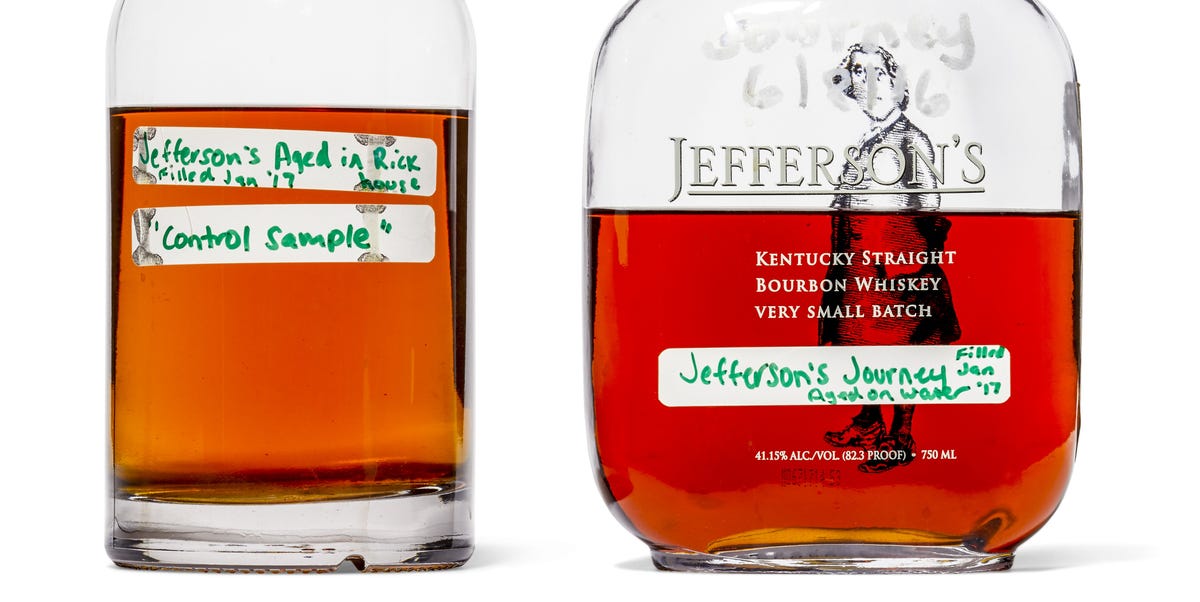
Jefferson’s was created by Trey Zoeller and his father, Chet Zoeller, a bourbon historian. The brand presents experimentation as its central theme, using mature whiskey, blending, barrel finishing, climate exposure, and unusual maturation environments to shape different expressions. Its official home is Kentucky Artisan Distillery, where the company says its distilling, blending, bottling, and experimental projects take place.
The standard Jefferson’s Bourbon is not designed around one loudly advertised mash bill. It combines a base bourbon with selected straight bourbons of different ages and mash bills. Blending allows the producer to build a consistent house profile while adding layers that a single barrel or single recipe might not provide.
Think of it as arranging a band. One component brings vanilla, another carries fruit, and a mature barrel supplies bass notes of leather and oak. Put the wrong barrels together and the result is three guitar solos occurring simultaneously. Put them together well and the flavors appear in sequence rather than fighting for the microphone.
The Core Jefferson’s Bourbon Flavor Profile
Aroma: Brown Sugar, Citrus, and Soft Oak
The signature Jefferson’s Bourbon opens on the sweeter side. The brand describes brown sugar with a touch of citrus on the nose, followed by vanilla, peach, and toffee on the palate. The finish is delicate, warm, and honeyed. Those descriptors make sense for an approachable blended bourbon: familiar sweetness arrives first, while citrus and fruit prevent the whiskey from tasting like liquid pancake syrup.
After several minutes in the glass, drinkers may also notice caramel corn, light oak, baked pastry, dried orange peel, or mild pepper. Tasting notes are comparisons rather than literal ingredients. A peach note does not mean someone dropped fruit into the barrel. It means the whiskey’s aromatic compounds remind the drinker of peach.
Palate: Vanilla, Peaches, Toffee, and Grain
Vanilla and caramel are common bourbon flavors because of new charred oak, but Jefferson’s signature bottling tends to present them without overwhelming the palate. Peach adds a rounded fruit character, while toffee contributes cooked-sugar richness. The whiskey’s lighter body makes those flavors relatively easy to recognize, especially for people still learning how to taste bourbon.
A second sip may reveal more grain and spice. That change is normal. The first sip often introduces alcohol to the palate; later sips allow subtler flavors to become clearer. In other words, the whiskey has not changed personalities. Your mouth has simply finished reading the opening credits.
Finish: Honeyed Warmth Without Excessive Oak
The finish is generally softer than Jefferson’s Reserve or the brand’s more intensely matured releases. Honey, vanilla, light spice, and mild oak tend to fade without a major tannic grip. That makes the standard expression versatile: gentle enough to drink neat and flavorful enough for highballs, Whiskey Sours, or an uncomplicated Old Fashioned.
How Jefferson’s Reserve Changes the Flavor
Jefferson’s Reserve moves toward a darker, weightier style. It is a small-batch blend of mature bourbons intended to deliver greater concentration through the middle of the palate and a longer finish. Official tasting notes identify honey and nutmeg on the nose, caramel, toffee, and cinnamon in the flavor, and leather and tobacco in the finish.
Compared with the signature bourbon, Reserve usually feels more oak-driven and structured. Caramel becomes darker, spice becomes warmer, and the finish shifts from soft honey toward dry leather, tobacco leaf, toasted nuts, and seasoned wood. Independent tasting descriptions have also found combinations such as toasted oats, chocolate, berries, vanilla, nuts, and orange blossom, illustrating how one whiskey can trigger different associations for different tasters.
Reserve is a better match for drinkers who want a substantial sipping bourbon without jumping immediately into an extremely high-proof bottle. It also has enough flavor to remain recognizable in a Manhattan, where vermouth and bitters can make a very delicate whiskey disappear faster than snacks at a family reunion.
Jefferson’s Ocean Aged at Sea Flavor
Jefferson’s Ocean is the brand’s most recognizable experiment. Fully matured bourbon barrels are placed aboard ships and carried through changing temperatures, climates, and constant motion. The company attributes the resulting profile to increased liquid-to-wood interaction, repeated temperature fluctuations, equatorial heat, humidity, and maritime exposure. A typical voyage may visit numerous ports, cross the equator, and travel through several climate zones.
Sweet and Savory Tasting Notes
The official aroma profile includes crème brûlée, sweet tobacco, and sea spray. On the palate, Jefferson’s lists caramel, light brown sugar, cinnamon, sea salt, and espresso. The finish is described as long and coating, with caramel-corn sweetness and a salty edge.
That sweet-savory contrast is the bottle’s calling card. Caramel and brown sugar establish familiar bourbon territory, but salt, coffee, tobacco, and darker oak make the experience less predictable. Some drinkers find a clear maritime quality. Others interpret it as salted caramel, roasted nuts, mineral character, or simply concentrated oak.
Independent reviews of different voyages have not always reached identical conclusions, which is unsurprising. The Ocean series has included varying voyages, mash bills, proofs, and releases. Its unusual aging story attracts enthusiastic fans as well as skeptics who question how much of the perceived maritime character comes from the voyage itself. The safest conclusion is also the most useful: taste the specific voyage in front of you rather than assuming every Ocean bottle will be identical.
Other Jefferson’s Expressions and Their Flavors
Jefferson’s Twin Oak
Twin Oak finishes mature Kentucky straight bourbon in a specially designed second barrel. Its grooved, toasted, and flash-charred staves increase the surface area available for wood contact. Additional oak exposure can deepen caramelized sugar, toast, vanilla, spice, and wood flavors while creating a rounder texture.
Jefferson’s Tropics Aged in Humidity
Tropics exposes mature Kentucky straight bourbon to intense equatorial heat and humidity. The brand’s tasting notes emphasize cinnamon, clove, Bing cherry, toffee, and a slight salty quality, followed by a long, full-bodied finish. It is a richer option for drinkers who enjoy dark fruit and baking spice.
Jefferson’s Reserve Cask Strength
The limited Reserve Cask Strength expression is an eight-year-old, unfiltered whiskey with baked apple, vanilla, caramel, toasted oak, leather, red fruit, barrel spice, almonds, and lingering wood among its official notes. Greater proof generally intensifies aroma and texture, although it can also increase alcohol heat. A few drops of water may reveal flavors that initially hide behind the proof.
How to Taste Jefferson’s Bourbon
You do not need a velvet jacket, a private library, or the ability to say “mouthfeel” with a completely straight face. A simple tasting process is enough.
- Use a clean glass. A tulip-shaped whiskey glass concentrates aromas, but a wine glass also works.
- Pour a modest amount. About one ounce is sufficient for analysis.
- Let it rest. Give the whiskey several minutes after pouring, especially when tasting a higher-proof expression.
- Smell gently. Keep your mouth slightly open and take several short sniffs instead of burying your nose in the glass.
- Take a small first sip. Let it coat the tongue before swallowing.
- Look for categories. Start with broad groups such as sweet, fruity, spicy, woody, roasted, floral, or savory.
- Add water gradually. A few drops can reduce alcohol dominance and change which aromatic compounds are most noticeable.
Professional tasting guidance emphasizes moving beyond vague labels. Instead of writing “fruit,” ask whether the impression resembles fresh peach, baked apple, orange peel, cherry preserves, or dried berries. Instead of “spice,” distinguish cinnamon, nutmeg, clove, black pepper, or mint. There are no prizes for inventing the longest note, however. “Caramel and oak” is more useful than claiming you detected “an antique cedar desk during a thunderstorm.”
Best Food Pairings for Jefferson’s Bourbon
The best pairings either echo the whiskey’s flavors or provide contrast. Jefferson’s signature bourbon works well with roasted pecans, mild cheddar, glazed pork, grilled peaches, bread pudding, and milk chocolate. These foods reinforce its honey, vanilla, fruit, and toffee qualities without burying the whiskey.
Jefferson’s Reserve can handle richer partners such as smoked brisket, aged Gouda, dark chocolate, bacon, mushrooms, or pecan pie. Its tobacco, leather, cinnamon, and mature oak notes pair naturally with roasted and savory foods.
Jefferson’s Ocean invites more adventurous combinations. Salted nuts, dark chocolate with sea salt, smoked salmon, oysters, caramel popcorn, and blue cheese can highlight its mix of sweetness and salinity. Keep portions small during a formal tasting so the food supports the whiskey instead of staging a hostile takeover.
Should You Drink Jefferson’s Neat, With Ice, or in a Cocktail?
Neat is the most revealing format. It makes differences among the signature bourbon, Reserve, Ocean, and cask-strength releases easier to identify.
A few drops of water can soften alcohol and lift fruit, vanilla, floral, or savory aromas. Add water slowly because removing it afterward requires equipment normally found in a laboratory.
A large ice cube cools and gradually dilutes the whiskey. Cooling may suppress some aromas, but it can make oak-heavy or high-proof releases more relaxed and refreshing.
Cocktails are not a demotion. The standard Jefferson’s Bourbon suits Whiskey Sours and Old Fashioneds, while Reserve offers enough body for a Manhattan. Ocean can create a distinctive Boulevardier or salted Old Fashioned, particularly when its roasted and savory notes are used deliberately.
A 500-Word Jefferson’s Bourbon Tasting Experience
A useful Jefferson’s tasting begins with three glasses: the signature Bourbon, Jefferson’s Reserve, and Jefferson’s Ocean. Pour them from lightest to most assertive and place water nearby. Skip scented candles, cologne, and heavily seasoned food. Bourbon tasting is difficult when the room smells like vanilla-lavender furniture polish.
The signature bourbon establishes the baseline. Its color is warm amber rather than exceptionally dark. The first aroma is sweet but not sticky: brown sugar, vanilla, peach, and a small curl of citrus. After resting, the glass may suggest honey, soft oak, or toasted cereal. The first sip is gentle, with toffee and vanilla arriving before fruit. The finish fades with honey and a mild warming spice. It feels friendly, balanced, and uncomplicated in the best sense of the word.
Moving to Reserve changes the atmosphere. The aroma seems deeper, with honey, nutmeg, darker caramel, and seasoned oak. The palate carries more weight. Toffee and cinnamon settle across the tongue, followed by dry wood, nuts, leather, or tobacco. The finish lasts longer and becomes less sweet as it develops. Returning to the signature bourbon afterward makes the differences obvious: the first glass seems brighter and fruitier, while Reserve feels broader and more mature.
Ocean is the curveball. Before tasting, it is worth ignoring the story on the label for a moment. Expectations can influence perception, and anyone told repeatedly to find sea salt will eventually discover an entire imaginary marina. Smell the whiskey without deciding what it is supposed to reveal.
The aroma may show caramelized sugar, custard, tobacco, oak, or coffee. On the palate, sweetness appears first, but a roasted or savory quality soon follows. Some drinkers interpret the contrast as salted caramel. Others find mineral notes, dark nuts, popcorn, espresso, or briny oak. The texture often feels more coating than that of the signature bourbon, and the finish may alternate between brown sugar and dryness.
Now add three or four drops of water to each glass. The signature bourbon may become more peach-forward. Reserve may expose vanilla, orange, or toasted grain beneath its oak. Ocean may shift toward crème brûlée, caramel corn, or spice while its sharper edges soften. These changes are often small, but that is the point. Good tasting is less like watching fireworks and more like adjusting the focus on a camera.
Finish the experience with a controlled pairing. Try the signature bourbon with a roasted pecan, Reserve with a square of dark chocolate, and Ocean with a lightly salted nut. Take one sip before the food and another afterward. Sweet foods can make whiskey seem drier, while salt may emphasize caramel and reduce perceived bitterness. Fat can soften alcohol heat and reveal spice.
The tasting does not need a winner. The signature bourbon may be the easiest everyday pour, Reserve the best slow sipper, and Ocean the most conversational. Preference depends on whether you value bright fruit, mature oak, sweetness, spice, texture, or novelty. The most useful conclusion is not “Bottle A scored 91.7.” It is “I enjoy peach and honey more than tobacco and heavy oak,” or “I like savory bourbon when it remains balanced by caramel.” That knowledge makes the next bottle easier to choose.
Final Thoughts on Jefferson’s Bourbon Whiskey Flavor
Jefferson’s Kentucky Bourbon Whiskey is best understood as a family of flavor experiments rather than one fixed profile. The signature bourbon emphasizes brown sugar, peach, vanilla, toffee, and honey. Reserve moves toward caramel, cinnamon, leather, tobacco, and mature oak. Ocean adds roasted, salty, coffee-like, and savory possibilities, while Twin Oak, Tropics, and Cask Strength explore additional wood, climate, fruit, and proof-driven intensity.
Start with the standard bourbon for an approachable introduction. Choose Reserve when you want more structure and a deeper finish. Explore Ocean when an unconventional sweet-savory profile sounds more exciting than a predictable pour. Whichever bottle you open, taste slowly, add water thoughtfully, and trust your own senses. The best bourbon note is not the fanciest one. It is the one that helps you remember what you actually enjoyed.

