
Makeup
Talk Your Book: The Mount Rushmore of ETFs
Jul
If you’ve spent more than 12 minutes in investing land, you’ve heard someone “talk their book.” It’s that special blend of conviction and caffeine where a person explainsat lengthwhy the thing they already own is obviously the best thing anyone could ever own. It’s human. It’s biased. It’s basically sports fandom with spreadsheets.
So today we’re going to do it on purpose. We’re carving the Mount Rushmore of ETFs: four funds so iconic that even people who don’t invest recognize the tickers the way they recognize “NFL” or “extra guac.” This is not a “top-performing last 12 months” list (that’s how you end up with a portfolio of regret and novelty socks). This is about ETFs with outsized cultural impactcore building blocks that shaped how Americans buy, hold, trade, hedge, and argue about markets.
Along the way we’ll keep it real: how ETFs work, what the costs actually are, where the hype traps hide, and how to use these staples without turning your brokerage account into a reality show. Not investment advicejust a guided tour of the granite.
What “Talk Your Book” Really Means (and Why It Matters for ETFs)
“Talk your book” is finance slang for promoting positions you already hold. Sometimes it’s harmless enthusiasm. Sometimes it’s marketing. Sometimes it’s a person on television confidently recommending the exact trade that benefits them if you copy it. The important part isn’t the phraseit’s the incentive.
ETFs are especially prone to this because they’re easy to package into a story: “This ETF owns the future.” “This ETF is the new safe haven.” “This ETF is like owning the entire economy.” All of those lines can be kind of trueand still be misleading if you don’t look at the index, the concentration, the costs, and the role the ETF plays in a portfolio.
So here’s our rule: we can “talk our book,” but we also have to read the fine print like we’re signing a lease.
What Makes an ETF Worth Carving in Granite?
Mount Rushmore has four faces. Your watchlist has 4,000+ ETFs (and at least 3,950 of them are trying to be “the next big thing”). To pick four, we need criteria that go beyond vibes.
1) Liquidity you can feel in your bones
A true blue-chip ETF trades with deep liquidity, meaning tight bid-ask spreads and the ability to get in and out without donating a chunk of your return to “market impact.” Regulators and broker education pages regularly warn that thinner products can trade with wider spreads or big premiums/discountsespecially when markets get spicy.
2) Costs that don’t sneak up behind you
The expense ratio is the headline fee, but it’s not the whole bill. Trading costsbid-ask spreads, commissions (if any), and premium/discount dynamicscan matter just as much depending on how often you trade. Long-term investors care more about expense ratios; frequent traders should basically be on a first-name basis with the bid-ask spread.
3) Broad, durable exposure (not a one-season wonder)
The ETFs that endure usually track well-known indexes with transparent rules. You should be able to describe the exposure in one sentence without using the words “revolutionary,” “disruptive,” or “quantum.”
4) Cultural impact
Some ETFs changed the way Americans invest: the rise of low-cost indexing, the ability to trade a basket intraday, the growth of options markets, and the “set it and forget it” portfolio approach. Those are Rushmore candidates.
The Mount Rushmore of ETFs
These four aren’t perfect for everyone. They’re not the only great ETFs. But if you want the most influential, most referenced, most “I’ve heard of that” funds in modern US investing, this is the mountain.
| ETF | What it represents | Index exposure | Typical role | Expense ratio (approx.) |
|---|---|---|---|---|
| SPY | The original “market” trade | S&P 500 | Liquidity king, trading/hedging | ~0.09% |
| VTI | “Own the whole US stock market” | CRSP US Total Market | Core long-term equity holding | ~0.03% |
| QQQ | Mega-cap growth/innovation tilt | Nasdaq-100 | Growth tilt, tech-heavy exposure | ~0.18% |
| BND | The bond market in a single ticker | Bloomberg US Aggregate (float-adjusted) | Ballast, income, diversification | ~0.03% |
Face #1: SPY The Original S&P 500 ETF (a.k.a. “Liquidity, But Make It Fashion”)
SPY is the grandparent of modern ETF culture. State Street launched the first US-listed ETF in 1993, and SPY became the shorthand for “the stock market” in a tradable wrapper. When people say “the market was up,” half the time someone is looking at SPY.
What you’re buying is straightforward: an ETF designed to track the S&P 500, a committee-built index of large US companies. That simplicity is the secret sauce. The complicated part is everything that grew around it: enormous trading volume, a massive options ecosystem, and the habit of using SPY as a default hedge or risk-on switch.
- Why it’s on Rushmore: it mainstreamed ETFs and became a financial “common noun.”
- What it’s best at: tight spreads, deep liquidity, and acting as a tool for traders and institutions.
- What to watch: the S&P 500 is broad, but not the whole marketmid/small caps live elsewhere.
Practical example: If an investor wants large-cap US exposure and expects to trade tactically (adding risk, reducing risk, hedging with options), SPY often shows up because it’s where the action is. Long-term investors sometimes choose cheaper S&P 500 ETFs, but SPY’s cultural footprint is basically carved already.
Face #2: VTI The “Own America” Total Stock Market ETF
If SPY is the headline, VTI is the entire newspapersports, weather, classifieds, and that weird column about municipal bonds that nobody reads until they’re 45.
VTI aims to track the CRSP US Total Market Index, giving you broad exposure across large-, mid-, and small-cap stocks. That “total market” framing matters: you get the megacaps and the smaller companies that might become the next megacapswithout you having to guess which ones.
- Why it’s on Rushmore: it’s a cornerstone of low-cost, long-term indexing in one ticker.
- What it’s best at: diversification, simplicity, and “core holding” behavior with a very low fee.
- What to watch: it’s still 100% stocksso it will act like stocks (including the ugly parts).
Practical example: A buy-and-hold investor building a simple retirement portfolio can start with VTI as the US equity foundation, then add bonds and international stocks around it. Many “three-fund portfolio” discussions use a total US stock ETF as the first building block, and VTI is one of the most referenced.
Face #3: QQQ The Nasdaq-100 Growth Engine (and the Concentration Machine)
QQQ is the ETF equivalent of a sports car: thrilling, loud, and capable of making you feel like a genius right up until it reminds you that gravity exists.
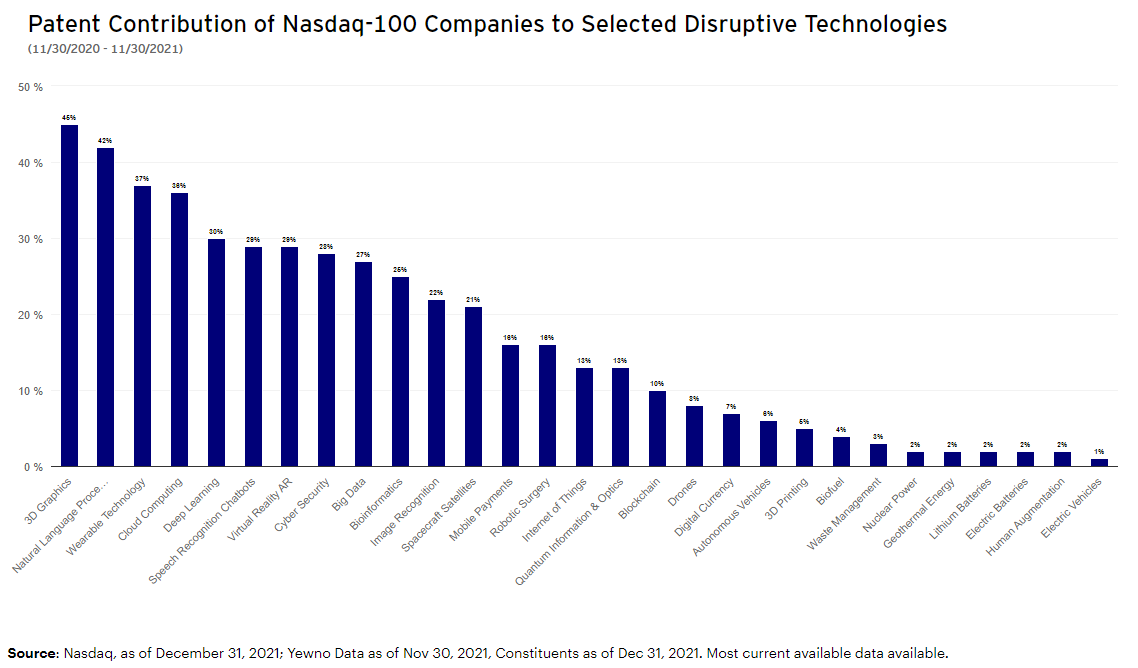
QQQ is built to track the Nasdaq-100, which means 100 of the largest non-financial companies on the Nasdaq. In plain English: it tends to be dominated by mega-cap growth names and tech-adjacent businesses. That ’s why people treat it like a one-ticker bet on innovation.
- Why it’s on Rushmore: it turned “growth tilt” into a household ticker and became a trading staple.
- What it’s best at: concentrated exposure to dominant growth companieswhen that style is in favor.
- What to watch: sector and single-stock concentration risk; it can swing harder than the broad market.
Practical example: Someone with a core portfolio (say, VTI + bonds) might add a modest slice of QQQ to tilt toward large-cap growth. The key word is modest. QQQ can be a spice; it’s usually not the whole meal unless you’re intentionally taking higher volatility.
One more nuance: QQQ’s expense ratio is higher than many broad-market index ETFs. That doesn’t make it “bad,” but it does mean you should be honest about what you’re paying for: a specific factor/sector tilt plus brand-level liquidity and recognition.
Face #4: BND The Bond Market “Ballast” ETF
Stocks get the glory. Bonds do the job.
BND is often used as a core US bond holding because it targets broad investment-grade exposure and seeks to track a version of the Bloomberg U.S. Aggregate bond benchmark (float-adjusted). In practice, that means a mix of Treasuries, agency mortgage-backed securities, and investment-grade corporate bondspackaged so you don’t have to buy 8,000 individual bonds and learn what “accrued interest” means at a dinner party.
- Why it’s on Rushmore: it made “the bond market” accessible and portfolio-friendly in one ticker.
- What it’s best at: diversification within bonds, low cost, and acting as a volatility dampener.
- What to watch: interest-rate risk and inflation risk; bonds can lose value when rates rise.
Practical example: A classic stock/bond allocation (like 60/40) often uses a broad bond ETF on the bond side. BND is a common candidate because it’s designed to represent the core of taxable US investment-grade bonds.
How to Use the Four Faces Without Starting a Portfolio Civil War
The point of Mount Rushmore isn’t that you must own all four. The point is that these four represent distinct “jobs” ETFs can do in a real portfolio.
A simple, long-term core (the “sleep at night” approach)
If you want a low-drama portfolio, start with broad exposure and add complexity only if it pays rent:
- VTI as the core US stock engine.
- BND as the stabilizer and income component.
- (Optional) add an international stock ETF (see Honorable Mentions) for global diversification.
A sample “core” blend might look like: 60% VTI / 30% BND / 10% (international stocks) for someone who wants growth but doesn’t want every market headline to feel personal. Your allocation should match your time horizon and risk tolerance, not your mood.
A tactical toolkit (the “I actually trade” approach)
If you trade, you care about liquidity and execution:
- SPY is commonly used for rapid S&P 500 exposure and hedging because it’s extraordinarily liquid.
- QQQ can be used for a growth tilt or a tech-heavy expression of risk-on/risk-off views.
Trading tip that sounds boring because it works: use limit orders, and be mindful around the open/close when spreads can widen. The difference between a “great ETF” and a “painful fill” is often just timing and order type.
Balancing risk: what bonds can (and can’t) do
Investors sometimes expect bonds to always go up when stocks go down. Real life is messier. Bond ETFs can help reduce volatility and provide income, but they’re still exposed to rate changes and inflation surprises. BND is “core bonds,” not a magic spell.
Honorable Mentions (Because Global Markets Exist)
Four faces means we had to leave out some all-timers. If you want to round out the mountain with additional exposures, these categories often show up in serious portfolios:
- Total international stocks (developed + emerging): for investors who don’t want to be 100% US-centric.
- Small-cap US stocks: a way to tilt toward smaller companies beyond the S&P 500.
- Emerging markets: higher growth potential, higher volatility, more geopolitical and currency risk.
- Gold: sometimes used as a hedge narrative (with its own quirks and long flat stretches).
The big idea: a “Mount Rushmore” list is about iconic building blocks, not a complete asset allocation. The most mature portfolios usually combine a broad US core with bonds and a deliberate choice about international exposure.
The ETF Fine Print That Actually Matters (Yes, We’re Doing This)
Premiums, discounts, and the “creation/redemption” superpower
ETFs trade on exchanges, so you buy them at market prices. That market price can be slightly above or below the ETF’s net asset value (NAV)a premium or discount. This is normal. What keeps most ETFs from drifting too far is the creation/redemption mechanism, where authorized participants can create new ETF shares or redeem them for underlying securities (or cash equivalents), helping align price and value.
Translation: the ETF structure has a built-in “tug” that often keeps prices close to the underlying basket. But in stressed markets or in ETFs with less liquid holdings, premiums/discounts can widen. If you’re trading niche, thin, or illiquid products, you’re signing up for extra complexity whether you meant to or not.
Bid-ask spreads are a real cost (especially if you trade a lot)
The bid is what buyers will pay. The ask is what sellers want. The gap is the spread, and it’s a cost you pay when you enter and exit. High-volume ETFs often have tighter spreads; thin ETFs can look cheap on fees and still be expensive to trade. If you trade frequently, spreads can matter more than a slightly higher expense ratio.
Tax efficiency: usually good, not always perfect
Many broad equity index ETFs are considered tax-efficient compared with traditional mutual funds because the in-kind creation/redemption process can reduce the need to distribute capital gains. But taxes depend on the fund’s strategy, turnover, and what’s happening inside the portfolio. Bonds also throw off interest income, which can be taxed differently than qualified dividends. Know what account you’re using (taxable vs. tax-advantaged) and what kind of distributions to expect.
Conclusion: Carve the Idea, Not the Hype
The Mount Rushmore of ETFs isn’t a prediction. It’s a recognition of what shaped modern investing: SPY made the market tradable and liquid; VTI made broad, low-cost US equity exposure ridiculously simple; QQQ turned growth investing into a single ticker (with all the excitement and concentration risk that implies); and BND gave everyday investors a practical way to hold the bond market without assembling a bond desk in their living room.
If you “talk your book,” talk the whole truth: what the ETF owns, what it costs to hold and trade, how it behaves in ugly markets, and what role it plays in a real asset allocation. Granite is forever. Your FOMO shouldn’t be.
of Experience: What People Learn After They “Talk Their Book”
Let’s end with the part nobody posts on social media: what tends to happen after the confident pitch. These are common investor experiences and patterns you’ll see in real portfolios, real behavior, and real emotional whiplashespecially with big-name ETFs like SPY, VTI, QQQ, and BND.
1) People don’t buy ETFs. They buy feelings.
SPY often gets purchased when someone wants to feel “in the market.” QQQ gets purchased when someone wants to feel “in the future.” VTI gets purchased when someone wants to feel “responsible.” BND gets purchased when someone wants to feel “safe.” The ticker is the vehicle; the emotion is the passenger. The problem is that emotions are terrible at rebalancing.
2) The real flex is staying invested, not picking a cooler ticker.
VTI looks boring because it’s designed to be boring. That’s the feature. A total market ETF won’t give you the bragging rights of a thematic fund, but it’s more likely to keep you invested through the cyclebecause you’re not constantly asking, “Is this theme dead?” You’re just owning the market and getting on with your life.
3) QQQ teaches concentration risk faster than any textbook.
When QQQ is ripping, it feels like a cheat code. When it’s not, it feels like you personally offended the Nasdaq. Investors often learn (the hard way) that “100 companies” can still be concentrated, and that “innovation” can be volatile. The lesson isn’t “never own QQQ.” The lesson is “position size matters.” A tilt is different from a takeover.
4) BND teaches patienceand the difference between safety and stability.
Many people buy bonds expecting the price to behave like a savings account. Then rates rise, bond prices fall, and suddenly the “safe” asset is red on the screen. That moment is where investors either learn how duration works or swear off bonds forever. The healthier takeaway: bonds can reduce portfolio volatility over time, but they still fluctuate. BND is a tool for balance, not a promise of constant gains.
5) SPY is the ETF that exposes your trading habits.
SPY is so liquid that it makes impulsive decisions easy. You can buy it in a heartbeat and sell it in a panic. Investors often discover that “access” is a double-edged sword: the easier it is to trade, the more temptation there is to trade. If you’re going to use SPY tactically, set rules (rebalance bands, hedging triggers, position limits). Otherwise SPY becomes less “market exposure” and more “mood ring.”
6) Costs are sneaky, but behavior is sneakier.
People obsess over whether an expense ratio is 0.03% or 0.09% and then trade in and out at the worst possible times, paying spreads repeatedly and missing rebounds. Fees matter, yes. But behaviorpanic selling, chasing winners, constant tinkeringcan cost far more than a few basis points. The best ETF strategy is usually the one you can follow without needing a pep talk every time the market sneezes.
7) The simplest portfolios are often the most “advanced.”
After enough cycles, many investors circle back to simple building blocks: a broad US stock ETF (like VTI), a broad bond ETF (like BND), and maybe a dash of international exposure. QQQ becomes a deliberate tilt rather than a religion. SPY becomes a tool rather than a lifestyle. The “advanced” part isn’t complexityit’s discipline: automating contributions, rebalancing calmly, and letting compounding do the heavy lifting.
If you want one final “experience-based” guideline: pick a core you can hold through embarrassment. Because every strategy looks smart in a bull market. The core that survives a bear market is the one that deserves the granite.

