
Beauty Unlocked
SpaceX Starship Reveal
Jun
The SpaceX Starship reveal was never just about a giant stainless-steel rocket gleaming under Texas floodlights. It was a declaration that spaceflight could become more like aviation: build a vehicle, fly it often, learn from every rough landing, repair what needs repairing, and fly again. That is an enormous promise, especially when the vehicle looks tall enough to apply for its own ZIP code.
Since its public debut, Starship has evolved from a shiny prototype and an ambitious Mars presentation into the centerpiece of SpaceX’s plans for heavy cargo, lunar missions, satellite deployment, and eventually interplanetary travel. The project has delivered dramatic progress, equally dramatic failures, and enough engineering plot twists to keep rocket fans refreshing launch streams like they are watching the season finale of a science-fiction show.
This SpaceX Starship reveal guide explains what made the vehicle different, why its design matters, what has changed since the first public presentation, and why the road to the Moon and Mars remains thrillingly difficult.
Why the SpaceX Starship Reveal Mattered So Much
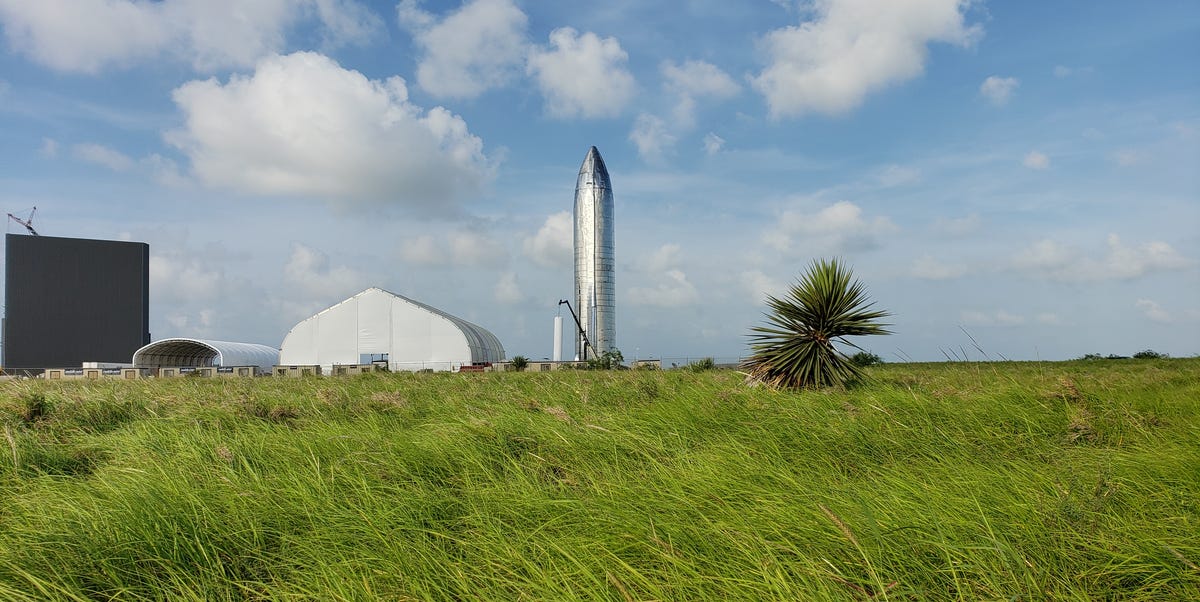
When SpaceX revealed its early full-scale Starship prototype in South Texas, the visual was striking. Instead of a sleek carbon-fiber spacecraft or a familiar white rocket, Starship looked like a polished science-fiction prop that had escaped from a 1950s movie set and discovered modern welding equipment.
But the presentation mattered because it changed the conversation around launch systems. Most rockets are designed for a specific mission profile, fly once, and become expensive space confetti. Starship was presented as a transportation system intended to be fully reusable, with both its booster and spacecraft designed to return for future flights.
The broader concept was simple, even if the engineering behind it is anything but simple: make rockets reusable enough that launching cargo, satellites, fuel, and eventually people becomes more frequent and less expensive. SpaceX has described Starship as a system capable of carrying more than 100 metric tons to orbit in a fully reusable configuration.
That goal is important because the biggest obstacle to ambitious space projects is rarely imagination. Humans have never lacked imagination. We imagined Moon bases before computers could fit on a desk. The difficult part is getting enough equipment, supplies, fuel, and people beyond Earth without requiring a national budget the size of a small galaxy.
What Is Starship?
Starship is not just one rocket. It is a two-part launch system made up of the Starship spacecraft and the Super Heavy booster. Together, they form one of the largest and most powerful launch vehicles ever developed.
The Starship Spacecraft
The upper stage, also called Starship, is designed to carry cargo, satellites, and eventually crew. It is the part of the system that would travel to orbit, return through Earth’s atmosphere, land, and potentially continue toward destinations such as the Moon or Mars.
Starship is designed to operate more like a reusable spacecraft than a disposable rocket stage. It uses aerodynamic flaps for control during atmospheric descent and relies on a heat shield to survive the extreme temperatures of reentry. The vehicle’s return maneuver is famously unusual: it descends in a horizontal “belly flop” position before using its engines to rotate upright for landing.
It is one of those ideas that sounds ridiculous until the video works. A skyscraper-shaped spacecraft falling sideways through the atmosphere should not look graceful, yet somehow it does.
The Super Heavy Booster
The lower stage, Super Heavy, provides the tremendous thrust needed to lift Starship off the launch pad. It uses a large cluster of SpaceX Raptor engines, which burn liquid methane and liquid oxygen.
The booster’s job is not to travel all the way to orbit. Instead, it launches Starship upward, separates after the initial climb, and then attempts to return to Earth for reuse. SpaceX has tested the idea of catching returning Super Heavy boosters with mechanical arms on the launch tower, a maneuver that has become one of the most eye-catching elements of the Starship program.
The tower arms are often called “chopsticks,” which is an amusing nickname for machinery designed to catch a descending rocket. It is also proof that aerospace engineers can build incredible things while refusing to give them boring names.
Why Starship Uses Stainless Steel
One of the biggest surprises of the original SpaceX Starship reveal was the use of stainless steel. In an industry where advanced composites and exotic materials often sound like the obvious choice, stainless steel seemed almost too ordinary.
Yet the choice was practical. Stainless steel is comparatively inexpensive, widely available, strong at cryogenic temperatures, and able to tolerate high temperatures better than many people assume. It also allows faster prototyping and manufacturing, which matters when a company is building, testing, modifying, and replacing large vehicles at a rapid pace.
The shiny surface became part of Starship’s identity, but the real value was not cosmetic. The material supported an aggressive development approach: build hardware quickly, test it in public, learn from failure, and iterate. In other words, the stainless steel was not merely a look. It was part of the business strategy.
From Reveal Event to Flight-Test Campaign
The Starship reveal introduced a bold vision, but the years afterward turned that vision into an engineering marathon. SpaceX moved through multiple prototype generations, short-hop flights, high-altitude tests, launch-pad upgrades, engine improvements, heat-shield changes, and increasingly ambitious orbital flight attempts.
The program’s progress has not been a straight line. Some test flights ended with successful milestones. Others ended with lost vehicles, debris investigations, and headlines containing phrases such as “rapid unscheduled disassembly,” which is aerospace language for “that was not supposed to happen.”
Still, the failures are part of the design philosophy. SpaceX develops Starship through hardware-rich testing rather than waiting for every subsystem to look perfect on paper. The approach is fast, visible, and occasionally spectacular. It also creates a large stream of real-world data that cannot be duplicated in a conference room filled with PowerPoint slides and lukewarm coffee.
Key demonstrations have included ascent performance, stage separation, atmospheric reentry, heat-shield testing, controlled splashdowns, and booster return operations. The successful capture of a returning Super Heavy booster by the launch tower was especially significant because it suggested that rapid reuse may be more than a good-looking animation.
The Real Goal: A Reusable Space Transportation System
Starship is often described as a Moon rocket or a Mars rocket, but its immediate value may be more practical. A highly reusable heavy-lift system could support large satellite deployments, cargo missions, orbital construction, space-station resupply, and large-scale propellant delivery.
Reusability is the heart of the economic argument. Falcon 9 already demonstrated that recovering and reflighting major rocket hardware can reshape launch economics. Starship aims to extend that logic much further by making both stages reusable rather than only the booster.
That goal remains extremely difficult. A vehicle cannot simply land once and declare victory. Rapid reuse requires inspection, maintenance, engine reliability, heat-shield durability, launch infrastructure, manufacturing capacity, and enough operational consistency that the vehicle can fly repeatedly without long rebuild periods.
In other words, it is not enough for Starship to land. It needs to land, be checked, refueled, prepared, and flown again without every mission turning into a full renovation project.
Starship and NASA’s Moon Plans
Starship has a major role in NASA’s Artemis program. NASA is working with SpaceX on a lunar variant called Starship Human Landing System, or Starship HLS. The concept is designed to transport astronauts from lunar orbit to the Moon’s surface and back.
The lunar version is expected to be a specialized vehicle rather than a standard Earth-returning Starship. NASA has described the lander as roughly 165 feet tall and equipped with an elevator system to move astronauts and cargo between the spacecraft and the lunar surface.
The scale is extraordinary. Landing astronauts from a tall spacecraft requires a practical way to bring people, tools, scientific equipment, and supplies down to the ground. On the Moon, there is no convenient loading dock, no forklift rental counter, and definitely no employee who can say, “Try the side entrance.”
Before Starship HLS can support astronauts, several major capabilities must be demonstrated. These include uncrewed lunar landing operations, safe crew systems, long-duration spacecraft performance, and cryogenic propellant transfer in orbit.
Orbital refueling is one of the most important technical challenges. A lunar Starship would require large amounts of propellant, and SpaceX’s concept relies on tanker versions of Starship transferring fuel in orbit. Moving and managing super-cold propellants in space is not routine work. It is one of the reasons the program remains ambitious even after multiple flight-test successes.
The Hard Problems Behind the Big Reveal
The Starship reveal gave the public a vision of large-scale reusable spaceflight. The difficult work comes from turning that vision into an operational system. Several major questions remain.
Can Starship Be Rapidly Reused?
A reusable rocket must survive launch, reentry, landing, inspection, and another launch cycle. Starship needs to prove that both its spacecraft and booster can do this reliably and often.
Can Orbital Refueling Work at Scale?
Refueling in orbit is essential for deep-space missions. The process involves transferring cryogenic propellants between large spacecraft while operating in microgravity. That makes it technically demanding and operationally complex.
Can the Program Meet Human-Rating Requirements?
Carrying satellites is difficult. Carrying people is a much higher bar. NASA and SpaceX must validate safety systems, life-support performance, mission procedures, docking operations, and emergency planning before astronauts use Starship HLS.
Can Starbase Support a High Flight Rate?
Starship testing and launch operations are centered at Starbase in South Texas. The Federal Aviation Administration has reviewed expanded launch and landing operations, including higher cadence activity and associated airspace considerations.
The local impact matters. Starship launches affect roads, beach access, airspace, wildlife habitats, nearby communities, and regional infrastructure. The excitement around space exploration does not eliminate those concerns. A serious space program has to address both the rocket and the place from which it flies.
What the Starship Reveal Says About the Future of Spaceflight
The most important lesson from the SpaceX Starship reveal is not that humanity will reach Mars next Tuesday. It is that the scale of spaceflight ambition has changed.
Starship represents a push toward larger payloads, more frequent launches, reusable infrastructure, and spacecraft designed for multiple destinations. Whether every timeline holds or not, the project has already influenced how governments, commercial space companies, and investors think about heavy-lift launch capability.
The real measure of success will not be a polished presentation, a viral launch clip, or even a single landing. It will be a steady operational rhythm: launch, recover, inspect, refuel, repeat. That is when Starship would shift from an engineering spectacle into transportation infrastructure.
The Starship Reveal Experience: What It Feels Like to Follow This Giant Rocket
Following the SpaceX Starship reveal and the tests that followed is a strange mix of optimism, suspense, and watching extremely expensive engineering happen in real time. Most technology products are revealed with music, bright lights, and a few carefully controlled demonstrations. Starship is revealed with smoke, flame, weather delays, launch holds, and the possibility that a prototype may turn itself into a cloud before lunch.
That is part of the appeal. Starship does not feel distant in the way traditional aerospace programs sometimes do. The public can see the vehicles being assembled, moved, stacked, tested, and launched. People watch engines ignite. They notice heat-shield tiles missing after reentry. They debate whether a booster catch looked smooth, rough, or “surprisingly normal for a flying building.”
The experience also teaches patience. Rocket development is not a highlight reel, even when social media tries very hard to make it one. A successful launch can include a failed landing. A failed vehicle can still return crucial data. A delayed test may be disappointing, but it can also mean a team found something worth checking before turning on dozens of engines.
For students, engineers, and curious observers, Starship offers a rare chance to watch the messy middle of innovation. Usually, people only see the finished product. They see the finished smartphone, the completed bridge, the polished electric car, or the successful spacecraft. Starship reveals the less glamorous parts: welds, plumbing, valves, pressure tests, software changes, damaged tiles, and long hours of trying to make a huge machine behave.
There is also an emotional side to it. A Starship launch can make the future feel close enough to touch. Even when the mission is only a test, the vehicle represents ideas that once belonged mostly to novels: reusable spaceships, Moon cargo systems, giant orbital depots, and eventually missions toward Mars.
At the same time, the experience reminds people not to confuse ambition with inevitability. Mars is still far away. Lunar landings still require difficult systems to work together. Reusability still has to be proven repeatedly. The distance between a reveal event and a mature transportation network is measured in years of hard engineering, regulation, testing, and lessons learned.
That may be the best reason to watch Starship. It is not a perfect machine arriving from the future. It is the future being built in public, one engine test, one launch attempt, and one very large stainless-steel prototype at a time.
Conclusion: The Starship Reveal Was a Beginning, Not a Finish Line
The SpaceX Starship reveal introduced a bold idea: a fully reusable heavy-lift system capable of carrying large amounts of cargo and eventually people beyond Earth. Years later, the project has moved from a dramatic prototype unveiling to real flight testing, booster recovery demonstrations, lunar lander development, and continued work on the hardest parts of reusable spaceflight.
Starship has not yet become a routine space transportation system, and it still faces serious technical, regulatory, environmental, and schedule challenges. But the project has already changed expectations. It has made giant reusable rockets feel less like fantasy and more like a difficult, expensive, noisy engineering problem that people are actively trying to solve.
Note: This article reflects publicly available SpaceX, NASA, FAA, and independent reporting available through June 2026. Starship test outcomes, Artemis schedules, and regulatory approvals can change quickly.

