
Hair Care
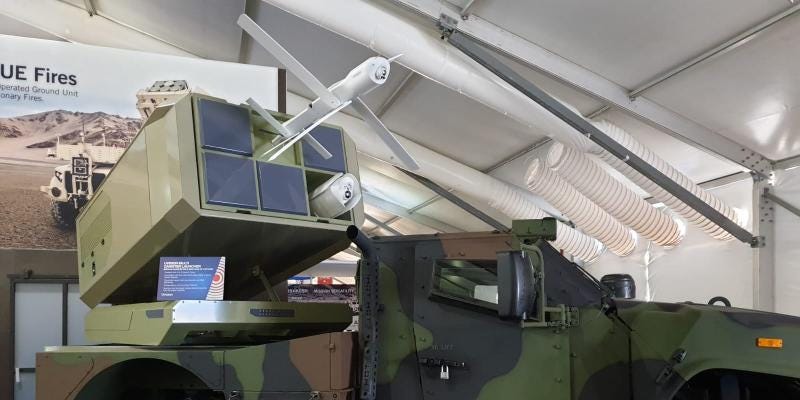
Loitering Munitions for U.S. Marines – The Marines Want to Arm Their Infantry With Suicide Drones
Jun
Note: This article discusses publicly reported defense modernization trends at a high level. It does not provide operational instructions, targeting procedures, or technical guidance for weapon use.
The phrase “suicide drones” sounds like something a movie trailer narrator would growl over thunder drums, but in modern military planning it points to a very real and fast-growing category of weapons: loitering munitions. For the U.S. Marine Corps, these systems are not science fiction, not a PowerPoint fantasy, and not merely another gadget for the already overstuffed infantry pack. They are part of a larger rethink of how small Marine units find, fix, and strike threats before those threats get close enough to ruin everyone’s day.
Loitering munitions for U.S. Marines matter because they sit in the useful middle ground between a reconnaissance drone and a precision missile. They can observe, wait, and then strike a target when authorized. That “wait” is the magic word. Traditional rounds are fired, fly, and hit or miss. A loitering munition can hang around long enough for a Marine unit to confirm what it is seeing, adjust to a changing battlefield, and deliver a precise effect without immediately calling for artillery, aircraft, or heavier support.
The Marine Corps calls its small-unit effort Organic Precision Fires-Light, or OPF-L. In plain English, the Corps wants infantry squads and platoons to have their own portable precision-strike option. That is a major shift. The rifle squad has always been the Marine Corps’ heartbeat, but tomorrow’s squad may have more than rifles, radios, and a very strong opinion about socks. It may also carry a lightweight weapon that can search beyond the next ridge and strike beyond the line of sight.
What Are Loitering Munitions?
A loitering munition is an unmanned aerial weapon designed to fly over an area, search or observe, and then strike a target by expending itself. That is why people often call them “kamikaze drones” or “suicide drones,” though defense professionals usually prefer “loitering munition” because it sounds less like a tabloid headline and more like something that survived a Pentagon acronym committee.
The key difference between a standard drone and a loitering munition is the effect. A reconnaissance drone looks. A loitering munition looks and can also strike. The key difference between a missile and a loitering munition is patience. A missile is generally launched at a known target. A loitering munition can be launched into an area, observe the situation, and wait for an authorized engagement decision.
Why the Marine Corps Wants Them
The Marine Corps has spent years reshaping itself for a more contested, distributed battlefield, especially in the Indo-Pacific. Large bases, obvious logistics hubs, and slow-moving formations are easier to detect in an era of satellites, drones, electronic surveillance, and long-range missiles. Marines expect to operate in smaller groups, across wider areas, with fewer guarantees that help will arrive instantly.
That makes organic firepower valuable. “Organic” in military language means a unit owns the capability directly. It does not have to ask someone far away for permission to borrow it. For infantry Marines, organic loitering munitions could provide a way to engage targets beyond rifle range and beyond direct sight while reducing exposure to enemy fire.
Think of it as giving the infantry a longer arm. Not a magic arm. Not an arm that solves logistics, air defense, training, batteries, weather, electronic warfare, or the ancient military problem of someone forgetting the right cable. But still, a longer and sharper arm.
OPF-L: The Program Behind the Push
Organic Precision Fires-Light is the Marine Corps’ program to field man-portable loitering munition systems for infantry formations. It is part of a broader modernization effort that includes lighter, more mobile units, better sensors, improved communications, and a greater emphasis on precision fires at lower tactical levels.
Public contract information shows that the Marine Corps selected multiple vendors for OPF-L competition and delivery, including AeroVironment, Anduril, and Teledyne FLIR. That multi-vendor approach is important. Drone technology changes quickly, and the Corps does not want to buy one shiny toy only to discover six months later that the battlefield has moved on and the toy is now a museum exhibit with propellers.
Switchblade 300 Block 20
AeroVironment’s Switchblade family is one of the best-known U.S. loitering munition lines. The Switchblade 300 Block 20 has been selected for the initial phase of the Marine Corps’ OPF-L effort. It is intended to provide a portable precision fires capability at the tactical level, giving small units a way to engage certain targets beyond line of sight.
Switchblade systems have attracted attention because they are compact, tube-launched, and designed for small-unit use. For Marines, that matters because every pound competes with water, ammunition, radios, batteries, medical gear, optics, and the mysterious extra snacks that somehow become essential military equipment by day three of an exercise.
Anduril Bolt-M
Anduril’s Bolt-M is another publicly announced OPF-L system. The Marine Corps awarded Anduril a contract to deliver more than 600 Bolt-M systems, signaling that the service is serious about moving from experimentation toward fielding. Bolt-M reflects a broader trend in defense technology: software-defined systems, autonomous assistance, modular design, and a strong focus on rapid iteration.
The appeal is not simply that it flies. Lots of things fly, including bad ideas in staff meetings. The appeal is that systems like Bolt-M are designed to be portable, precise, and adaptable enough for infantry formations that may be operating far from traditional support.
Teledyne FLIR Rogue 1
Teledyne FLIR’s Rogue 1 has also been selected under OPF-L, with a publicly announced contract for more than 600 systems. Rogue 1 is described as a reusable loitering munition platform with mission-specific payload options, which highlights an important trend: not every loitering munition concept is simply “launch once and vanish.” Some systems are being designed with flexibility, training, and payload modularity in mind.
For the Marine Corps, having multiple systems in evaluation and fielding creates options. Different missions may need different endurance, payloads, control interfaces, or portability. In modern war, one size rarely fits all. If it does, someone probably forgot the batteries.
Why Small Units Need Beyond-Line-of-Sight Strike
Infantry combat has always been about finding the enemy, maneuvering into advantage, and applying force at the right time. The problem is that modern sensors and weapons make “getting close” more dangerous. A unit that can be seen can be targeted. A unit that must physically close distance before it can strike may be giving the enemy too many chances.
Loitering munitions change that equation by allowing small units to extend their reach. A squad or platoon can potentially observe an area, confirm a threat, and deliver a precision effect without exposing Marines to the same level of direct fire risk. That does not eliminate danger, but it may shift some risk away from the Marine and onto the machine.
Precision Without Waiting for Big Support
Traditionally, infantry units rely on mortars, artillery, close air support, naval fires, or heavier weapons when they need to hit something beyond their immediate reach. Those assets are powerful, but they may not always be available. Communications can be degraded. Weather can interfere. Aircraft may be busy. Artillery may be out of range, masked by terrain, or restricted by rules of engagement.
A loitering munition gives a small unit another option. It does not replace artillery or aviation. Rather, it fills a gap between the rifle and the rocket, between seeing a threat and waiting for someone else to handle it.
Better Fit for Distributed Operations
The Marine Corps’ future operating concepts emphasize dispersion, mobility, and small units that can sense and strike while remaining hard to locate. In that world, the infantry battalion is not merely a mass of Marines moving in a predictable block. It becomes a network of smaller teams, sensors, fires, and decision-makers.
Loitering munitions fit that model because they can be carried, launched, and controlled closer to the tactical edge. They support the idea that small units should not only survive in contested spaces but also create problems for larger enemy forces.
Lessons From Ukraine and Modern Drone Warfare
The war in Ukraine has turned drones from a niche military interest into a daily battlefield reality. Small drones spot artillery targets, guide strikes, harass vehicles, monitor trenches, and force both sides to rethink concealment, movement, and air defense. Loitering munitions and first-person-view attack drones have shown that relatively low-cost systems can create expensive and dramatic effects.
For U.S. Marines, Ukraine’s lesson is not “drones solve everything.” They do not. Drones can be jammed, shot down, spoofed, lost, grounded by weather, or made useless by poor training. The better lesson is that the battlefield is now crowded with cheap eyes and sharp teeth. Units that can use drones effectively, defend against them, and adapt quickly will have an advantage.
The Cost Equation
One reason loitering munitions are so attractive is the cost-per-effect question. If a relatively affordable drone can disable or destroy a much more expensive vehicle, sensor, or weapon system, the economics become hard to ignore. Military planners love capability, but they also love math when it behaves.
The challenge is scale. A handful of drones makes a good demonstration. Thousands of drones require supply chains, batteries, training pipelines, software updates, spare parts, secure components, and maintenance habits that do not collapse the first time dust, rain, saltwater, and Lance Corporal Reality get involved.
Benefits of Loitering Munitions for Marine Infantry
The Marine Corps’ interest in arming infantry with loitering munitions is driven by several practical benefits. These systems can extend range, improve precision, reduce exposure, and compress the timeline between detection and engagement.
1. Extended Reach
Infantry Marines cannot always wait for a higher headquarters to solve a close tactical problem. A portable loitering munition allows a small unit to affect targets beyond direct-fire distance. In terrain with ridgelines, urban structures, vegetation, or islands separated by water, that extra reach can matter.
2. Real-Time Observation
Because loitering munitions can provide live visual feedback, they can help Marines understand what is actually happening before committing to a strike. That matters in complicated environments where a rushed decision can create civilian harm, fratricide risk, or a wasted munition.
3. Reduced Exposure
If a Marine unit can engage a threat without moving into a more dangerous position, that can reduce risk. This is especially important against enemies with machine guns, mortars, armored vehicles, or their own drones watching for movement.
4. Faster Tactical Decisions
Modern battle moves quickly. A target may appear, move, hide, and disappear in minutes. Organic loitering munitions help shorten the loop from seeing to deciding to acting. In military terms, that loop matters. In normal human terms, it means less waiting while the problem drives away.
The Hard Parts: Training, Logistics, and Ethics
Loitering munitions are not a cheat code. They create new burdens along with new capabilities. Marines must learn how to carry, maintain, communicate with, and legally employ these systems. Commanders must understand when a loitering munition is the right tool and when it is just the most exciting tool.
Training the Infantry for a Drone-Saturated Battlefield
The Marine infantryman of the future may need to be part rifleman, part sensor operator, part electronic-warfare survivor, part data manager, and part exhausted battery accountant. That is a lot to ask. Training must cover not only system operation but also target identification, communications discipline, deconfliction, airspace coordination, and the laws of armed conflict.
The biggest risk is not that Marines cannot learn new technology. Marines are famously good at making things work under miserable conditions. The risk is cognitive overload. A small unit leader already tracks terrain, enemy movement, friendly positions, ammunition, casualties, communications, and mission objectives. Adding aerial strike systems increases both power and responsibility.
Logistics: The Glamour Department Nobody Escapes
Every drone needs power, parts, storage, transport, updates, and trained maintainers. In the Indo-Pacific, logistics become especially difficult because units may operate across islands, littorals, ships, and austere bases. Saltwater and electronics are not best friends. Heat, humidity, and rough handling do not send apology cards.
If the Marine Corps wants loitering munitions at scale, it must solve the unglamorous problems: how to move them, store them, repair them, train with them, and replace them quickly. A weapon that cannot be supplied is just a motivational poster with wings.
Ethical and Legal Control
Loitering munitions raise serious questions about human judgment, autonomy, and accountability. Publicly discussed systems still emphasize human decision-making in the engagement process, but as software becomes more capable, military institutions must be clear about control, authorization, and compliance with the law of armed conflict.
Precision is not only a technical claim. It is a moral and legal obligation. A more precise weapon can reduce collateral damage when used properly, but it does not remove the need for disciplined judgment. The person making the decision remains central.
How OPF-L Fits Marine Corps Force Design
Force Design is the Marine Corps’ continuing modernization effort to prepare for future conflict against capable adversaries. It emphasizes mobility, sensing, long-range precision fires, stand-in forces, and naval integration. OPF-L fits neatly into that picture because it gives infantry units a lightweight way to sense and strike in contested environments.
The Marine Corps is not abandoning combined arms. It is trying to push more useful capability downward to smaller units while still linking those units to larger naval and joint fires. In other words, the rifle squad gets sharper tools, but it still belongs to a bigger orchestra. Hopefully, an orchestra with fewer tubas and more bandwidth.
From Experimentation to Fielding
Recent Marine Corps updates show OPF-L moving from concept and experimentation toward early capability release and fielding. That transition is important. Militaries often experiment with promising technology, but fielding means the service believes the capability is ready to be tested by real units under real training pressure.
Marine feedback will shape future increments. That is the right approach because drone warfare changes quickly. A system that looks excellent in a controlled demonstration may need changes after Marines carry it through mud, heat, shipboard storage, and the daily chaos of training.
Potential Risks and Limitations
For all their promise, loitering munitions face major limitations. They can be vulnerable to electronic warfare, weather, detection, and counter-drone systems. Batteries and endurance limit time in the air. Communications links can be disrupted. Operators can be overwhelmed. Rules of engagement can be complex. And no technology, however advanced, repeals Murphy’s Law.
Electronic Warfare
Modern adversaries will try to jam, spoof, detect, or intercept drones. Any force that depends on drones must expect the electromagnetic spectrum to become a battlefield of its own. That means Marines need resilient systems, backup procedures, and training for degraded conditions.
Counter-Drone Threats
If U.S. Marines are gaining loitering munitions, potential adversaries are doing the same. The offense-defense race is already underway. Units need not only strike drones but also counter-drone awareness, camouflage, dispersion, and electronic protection.
Too Much Faith in Technology
The final risk is cultural. A loitering munition can tempt commanders to see every problem as a target. But war is still human, political, and messy. Sometimes the best move is to observe. Sometimes it is to maneuver. Sometimes it is to wait. And sometimes it is to admit that the weather has defeated a multimillion-dollar plan, which is why meteorologists remain undefeated.
Experience-Based Analysis: What This Shift Feels Like at the Infantry Level
Viewed from the practical world of infantry operations, the most important thing about loitering munitions is not the buzzword. It is the change in tempo. Small units have always wanted more information and faster fires. The classic frustration is simple: a patrol sees something important, reports it, waits for approval, waits for support, and watches the opportunity shrink. Loitering munitions promise to compress that chain.
The experience of adopting these systems will likely feel less like receiving a single new weapon and more like learning a new habit. Marines will have to plan patrols differently. Leaders will ask who carries the system, who carries spare power, who monitors airspace, who protects the operator, who confirms the target, and who keeps the rest of the unit moving. That is a lot of “who,” and every “who” is a Marine with a pack that was already heavy enough to qualify as emotional baggage.
In training, the biggest early lesson will probably be coordination. A drone operator cannot become so absorbed in the screen that the unit loses awareness of the ground around it. The leader cannot treat the munition as a guaranteed solution. The radio operator cannot assume networks will be perfect. The rest of the squad cannot stop being infantry just because something interesting is flying overhead.
There is also a psychological shift. Infantry Marines are used to direct tools: rifles, machine guns, grenades, rockets. You see, aim, fire, move. Loitering munitions introduce distance, delay, and a screen-based view of the fight. That can improve judgment, but it can also create tunnel vision if training is weak. The best units will treat the drone feed as one source of information, not the voice of God with a battery warning.
Maintenance culture will matter as much as tactical skill. Small drones are not magic ravens summoned from a wizard pouch. They are aircraft, electronics, sensors, software, and power systems packed into field conditions. Units that clean, inspect, update, store, and rehearse properly will get more value. Units that treat drones like disposable accessories may discover that “ruggedized” does not mean “immune to being crushed under a rucksack.”
The most successful Marine units will likely build standard routines around these systems. Pre-mission checks. Clear control responsibilities. Airspace awareness. Positive identification procedures. Abort criteria. Recovery or disposal plans where applicable. Post-mission reviews. None of that is flashy. All of it is what turns technology into capability.
Another experience-based point is that loitering munitions will change how Marines think about concealment. If friendly small units can see and strike farther, enemy units can too. Marines training with OPF-L will also become more aware of how they look from above, how electronic signatures reveal positions, and how movement patterns attract attention. The drone is not just a weapon. It is a teacher, and the first lesson is usually, “You are more visible than you think.”
Finally, the human decision remains the center of the system. The technology may be fast, but the responsibility is heavy. A Marine leader using loitering munitions must balance opportunity, risk, legality, proportionality, and mission goals. That is not a software problem. That is leadership. The Corps can buy drones by the hundreds, but it must build judgment Marine by Marine.
Conclusion: A Small Drone With Big Implications
Loitering munitions for U.S. Marines represent more than a new weapon category. They show how the Marine Corps is adapting infantry for a battlefield shaped by drones, sensors, long-range fires, and distributed operations. OPF-L is designed to give squads and platoons a portable precision-strike capability that can reach beyond direct fire and help Marines act faster with less exposure.
The promise is real: longer reach, better observation, faster response, and more options for small units. The challenges are just as real: training, logistics, electronic warfare, counter-drone threats, ethical control, and the danger of expecting technology to do the thinking. Suicide drones may grab headlines, but the deeper story is about infantry modernization. The Marine Corps wants small units that can see farther, decide faster, and strike more preciselywithout forgetting that discipline, judgment, and logistics still win wars.
In the end, loitering munitions are not replacing Marines. They are changing what Marines can do. And if the Corps gets the balance right, the future infantry squad may be lighter, sharper, more connected, and far more dangerous to anyone who assumed “out of sight” still meant “safe.”

